

Tesla engaña con conductor de seguridad robotaxi, Waymo se lanza en Miami
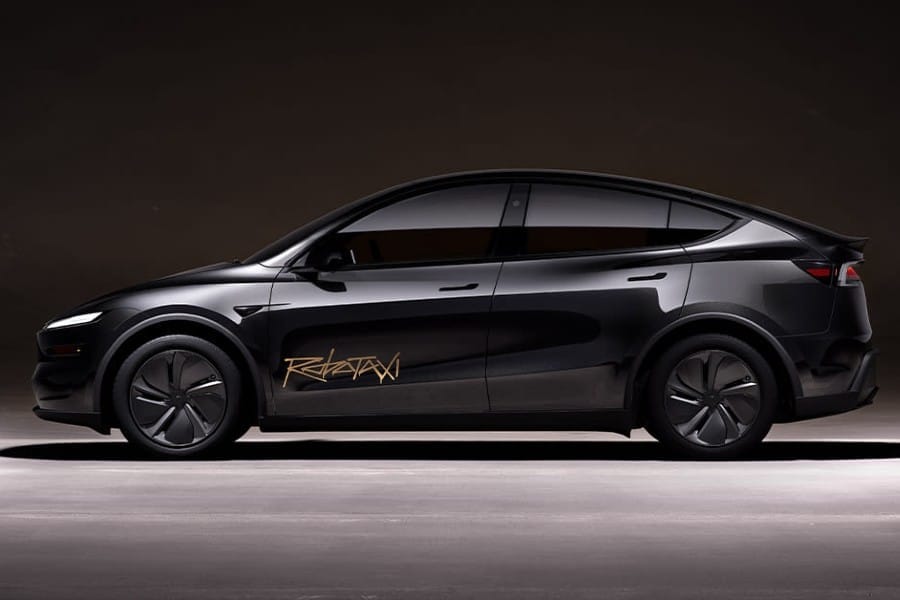
It is a promise that Elon Musk has been pursuing for years: back in 2019, the Tesla CEO announced at the company’s ‘Autonomy Day’ that Tesla would already have one million robotaxis on the roads by 2020, primarily referring to customers’ vehicles that were to be made available to other users via ride-hailing services. In the years that followed, he made fresh announcements about autonomous driving every year. Yet to this day, Tesla still has no vehicles that are permitted to operate at SAE Level 4, meaning completely without a (safety) driver within a defined operational area.
Tesla did in fact launch a so-called robotaxi service in Austin, Texas, in June 2025. However, all of these vehicles have so far been operating with a ‘safety monitor’ on board, i.e. a person who can take over control via a display if necessary. Until now. Because, as Musk has now written on his social media service X: “Just started Tesla Robotaxi drives in Austin with no safety monitor in the car.”
Musk’s announcement suggested that, after years of effort, Tesla has finally succeeded in enabling cars to drive fully autonomously – a development that is not only important for a robotaxi service, but also for the many customers who have booked the ‘Full Self Driving’ system (FSD). The system is intended to allow autonomous driving, but at present it can only be used in a ‘supervised’ version, in which the driver must remain attentive at all times and be able to quickly take back control if the FSD system reaches its limits.
Accordingly, Tesla’s share price immediately rose by around 4 per cent, especially as Elon Musk tied the news from Austin to an appearance at the World Economic Forum in Davos. There, he not only talked about his plans for a Mars mission and the development of Tesla’s Optimus robot. He also said that Tesla had ‘solved’ autonomous driving and announced the next steps straight away: “Tesla’s rolled out robotaxi service in a few cities, and will be very, very widespread by the end of this year within the US,” the Tesla CEO said.
Of course, it must be mentioned that the ‘some cities’ currently refers only to Austin and San Francisco. And in San Francisco, there is always a driver behind the wheel, meaning the service there has even less to do with robotaxis than in Austin. This has regulatory reasons, as Tesla still lacks approval to operate self-driving cars in California.
But back to Austin and Elon Musk’s post on X: what many readers and media outlets initially took to mean that the robotaxis could legally operate fully independently, without any safety monitor, soon turned out to be a misunderstanding. Just a few hours after the post, which accompanied the statement with a proof video of a self-driving Tesla with no human in the driver’s or passenger’s seat, another video began circulating on social media.
Conductor de seguridad con mando a distancia
The recording shows that there is indeed no longer a safety monitor inside a robotaxi. Instead, such a person sits in another Tesla that follows the supposedly self-driving robotaxi. In other words, the robotaxi appears to drive largely autonomously, but it is not yet allowed to operate entirely on its own – and the safety monitor can intervene via a form of remote control.
Tesla has thus still not achieved full autonomy at SAE Level 4, in which a self-driving car may operate completely without human supervision within a fixed, defined and mapped operational area. And Elon Musk did not lie either – although the combination of text and video initially created the illusion that ‘unsupervised’ journeys were finally working. If one looks at the X post a second time, however, it becomes clear where the misinterpretation arose: Musk had written about vehicles ‘with no safety monitor in the car’ – and there really is no such person on board.
Waymo rolls out service fully in Miami
The situation is very different at Waymo, Google’s sister company: Waymo has been operating at SAE Level 4 without safety monitors for some time, and has now fully rolled out its service to the public in Miami as well. After Phoenix, San Francisco, Los Angeles, Austin and Atlanta, this makes it the sixth city in which robotaxis operate fully autonomously.
The fact that Waymo, unlike Tesla, has long been allowed to operate its vehicles without safety monitors is due to its redundant system of LiDAR, radar and cameras. In other words, critical systems exist multiple times and independently of one another, so that the vehicle can continue driving safely or come to a controlled stop without human intervention, even if individual components fail. Tesla, by contrast, relies exclusively on cameras and AI and dispenses with LiDAR, which has so far meant that the system is classified only as Level 2 to 3 and requires a safety driver.
Tesla CEO Elon Musk counters this criticism by saying that his AI-centred ‘vision only’ approach is just as good for autonomous driving: what matters, he argues, is not the number of sensors, but the ability of neural networks to reliably interpret visual information like the human eye. In addition, dispensing with expensive LiDAR sensors would make the technology more scalable.
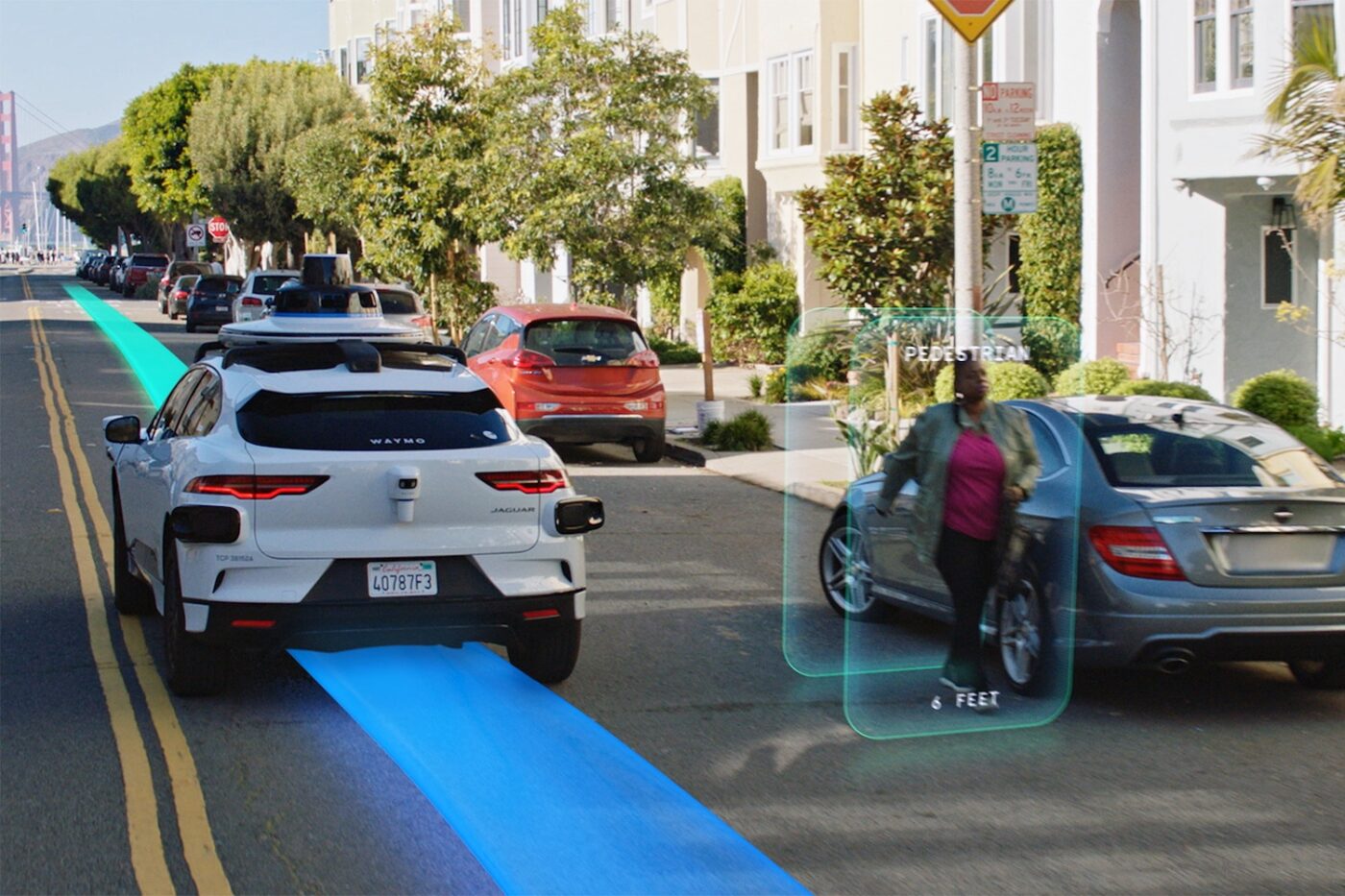
Volviendo a Waymo: antes de lanzarse en Miami, la empresa siguió su proceso habitual de cartografiar las vías públicas con sus vehículos y personal formado a bordo. A continuación, realizó pruebas iniciales con conductores de seguridad antes de introducir gradualmente los viajes sin conductor a partir de noviembre. Inicialmente, el servicio sin conductor sólo estaba disponible para los empleados, pero ahora se ha abierto al público. Como es habitual, los vehículos autónomos pueden reservarse y pagarse a través de la aplicación Waymo.
El área operativa abarca inicialmente 60 millas cuadradas (155 kilómetros cuadrados) e incluye los barrios más famosos de Miami, desde el Design District y Wynwood hasta Brickell y Coral Gables. Waymo tiene previsto ampliar en el futuro su servicio de conducción autónoma a las rutas hacia y desde el Aeropuerto Internacional de Miami.
Miami acoge el lanzamiento de Waymo
"El condado de Miami-Dade da la bienvenida a Waymo a medida que comienza las operaciones de vehículos sin conductor en nuestra comunidad. Como condado que abraza la innovación, vemos el potencial de las tecnologías de movilidad emergentes para ampliar las opciones de transporte y apoyar un futuro más conectado", dijo el presidente de la Comisión del Condado de Miami-Dade, Anthony Rodríguez. "Esperamos trabajar en colaboración mientras nos aseguramos de que estas operaciones cumplen con nuestros altos estándares de seguridad, transparencia y responsabilidad, y que se integran cuidadosamente en nuestra red de transporte para el beneficio de los residentes y visitantes por igual."
Anunciado ya a finales de 2024, Waymo está colaborando con la startup nigeriana Moove en Miami para gestionar su flota. Waymo citó la asociación como una forma de centrarse en el avance de su "Tecnología de Conductor".
Waymo ya ha anunciado sus planes de lanzamiento en numerosas ciudades adicionales este año, incluyendo Dallas, Houston, San Antonio y Orlando. Detroit, Las Vegas y San Diego también están en la lista, junto a Denver, Nashville y Washington, D.C. Y eso no es todo: en octubre, se reveló que Waymo planea expandirse a Londres este año, lo que supone su primera ciudad fuera de Estados Unidos.
0 Comentarios