


Tesla tricks with robotaxi safety driver, Waymo launches in Miami
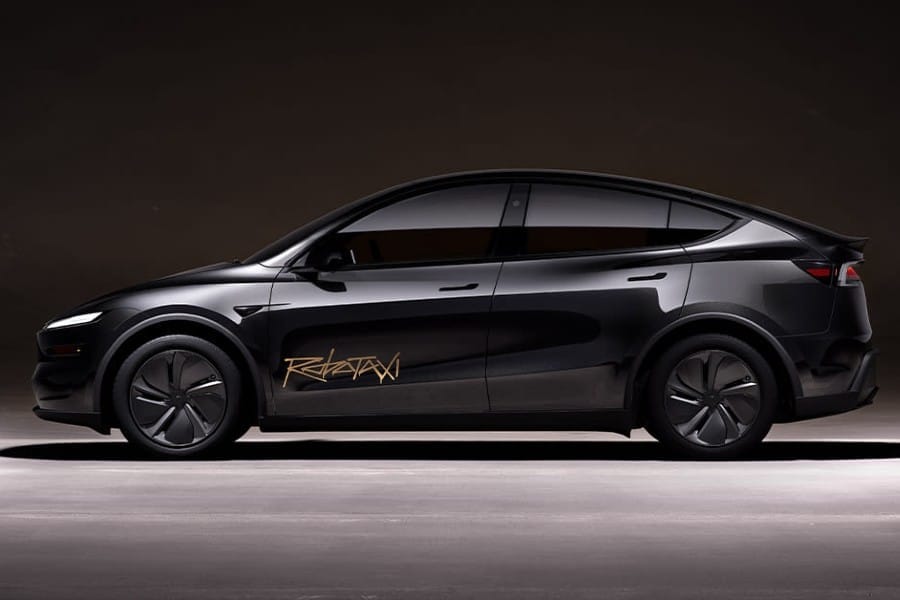
It is a promise that Elon Musk has been pursuing for years: back in 2019, the Tesla CEO announced at the company’s ‘Autonomy Day’ that Tesla would already have one million robotaxis on the roads by 2020, primarily referring to customers’ vehicles that were to be made available to other users via ride-hailing services. In the years that followed, he made fresh announcements about autonomous driving every year. Yet to this day, Tesla still has no vehicles that are permitted to operate at SAE Level 4, meaning completely without a (safety) driver within a defined operational area.
Tesla did in fact launch a so-called robotaxi service in Austin, Texas, in June 2025. However, all of these vehicles have so far been operating with a ‘safety monitor’ on board, i.e. a person who can take over control via a display if necessary. Until now. Because, as Musk has now written on his social media service X: “Just started Tesla Robotaxi drives in Austin with no safety monitor in the car.”
Musk’s announcement suggested that, after years of effort, Tesla has finally succeeded in enabling cars to drive fully autonomously – a development that is not only important for a robotaxi service, but also for the many customers who have booked the ‘Full Self Driving’ system (FSD). The system is intended to allow autonomous driving, but at present it can only be used in a ‘supervised’ version, in which the driver must remain attentive at all times and be able to quickly take back control if the FSD system reaches its limits.
Accordingly, Tesla’s share price immediately rose by around 4 per cent, especially as Elon Musk tied the news from Austin to an appearance at the World Economic Forum in Davos. There, he not only talked about his plans for a Mars mission and the development of Tesla’s Optimus robot. He also said that Tesla had ‘solved’ autonomous driving and announced the next steps straight away: “Tesla’s rolled out robotaxi service in a few cities, and will be very, very widespread by the end of this year within the US,” the Tesla CEO said.
Of course, it must be mentioned that the ‘some cities’ currently refers only to Austin and San Francisco. And in San Francisco, there is always a driver behind the wheel, meaning the service there has even less to do with robotaxis than in Austin. This has regulatory reasons, as Tesla still lacks approval to operate self-driving cars in California.
But back to Austin and Elon Musk’s post on X: what many readers and media outlets initially took to mean that the robotaxis could legally operate fully independently, without any safety monitor, soon turned out to be a misunderstanding. Just a few hours after the post, which accompanied the statement with a proof video of a self-driving Tesla with no human in the driver’s or passenger’s seat, another video began circulating on social media.
Safety driver with remote control
The recording shows that there is indeed no longer a safety monitor inside a robotaxi. Instead, such a person sits in another Tesla that follows the supposedly self-driving robotaxi. In other words, the robotaxi appears to drive largely autonomously, but it is not yet allowed to operate entirely on its own – and the safety monitor can intervene via a form of remote control.
Tesla has thus still not achieved full autonomy at SAE Level 4, in which a self-driving car may operate completely without human supervision within a fixed, defined and mapped operational area. And Elon Musk did not lie either – although the combination of text and video initially created the illusion that ‘unsupervised’ journeys were finally working. If one looks at the X post a second time, however, it becomes clear where the misinterpretation arose: Musk had written about vehicles ‘with no safety monitor in the car’ – and there really is no such person on board.
Waymo rolls out service fully in Miami
The situation is very different at Waymo, Google’s sister company: Waymo has been operating at SAE Level 4 without safety monitors for some time, and has now fully rolled out its service to the public in Miami as well. After Phoenix, San Francisco, Los Angeles, Austin and Atlanta, this makes it the sixth city in which robotaxis operate fully autonomously.
The fact that Waymo, unlike Tesla, has long been allowed to operate its vehicles without safety monitors is due to its redundant system of LiDAR, radar and cameras. In other words, critical systems exist multiple times and independently of one another, so that the vehicle can continue driving safely or come to a controlled stop without human intervention, even if individual components fail. Tesla, by contrast, relies exclusively on cameras and AI and dispenses with LiDAR, which has so far meant that the system is classified only as Level 2 to 3 and requires a safety driver.
Tesla CEO Elon Musk counters this criticism by saying that his AI-centred ‘vision only’ approach is just as good for autonomous driving: what matters, he argues, is not the number of sensors, but the ability of neural networks to reliably interpret visual information like the human eye. In addition, dispensing with expensive LiDAR sensors would make the technology more scalable.
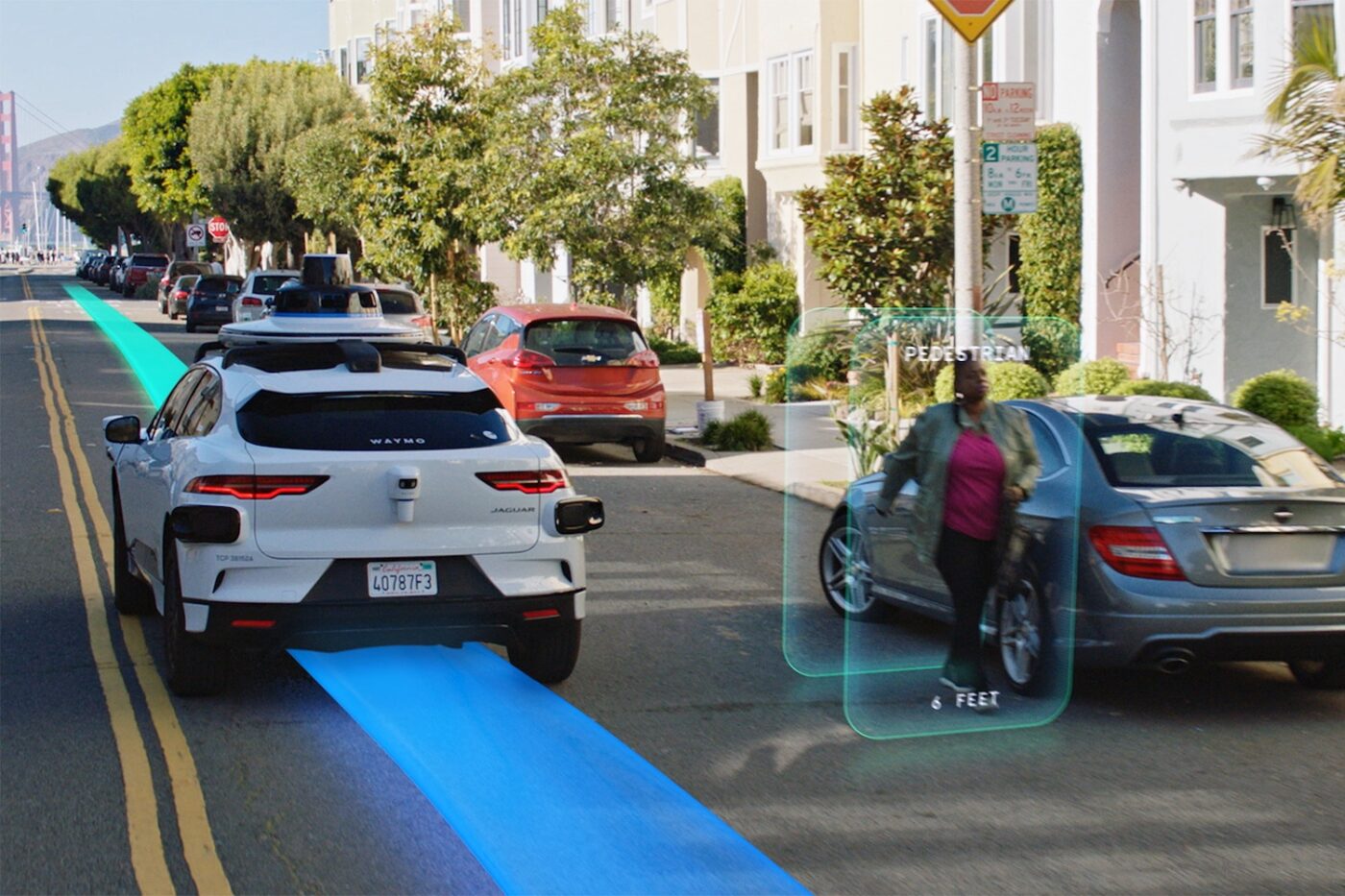
Back to Waymo: before launching in Miami, the company followed its usual process of mapping public roads with its vehicles and trained personnel on board. It then conducted initial tests with safety drivers before gradually introducing driverless rides from November onwards. Initially, the driverless service was only available to employees—but it has now been opened to the public. As usual, the autonomous vehicles can be booked and paid for via the Waymo app.
The operational area initially covers 60 square miles (155 square kilometres) and includes Miami’s most famous neighbourhoods—from the Design District and Wynwood to Brickell and Coral Gables. Waymo plans to expand its autonomous ride service to routes to and from Miami International Airport in the future.
Miami welcomes Waymo’s launch
“Miami-Dade County welcomes Waymo as it begins driverless vehicle operations in our community. As a county that embraces innovation, we see the potential for emerging mobility technologies to expand transportation options and support a more connected future,” said Miami-Dade County Commission Chairman Anthony Rodriguez. “We look forward to working collaboratively while ensuring these operations meet our high standards for safety, transparency, and accountability, and that they integrate thoughtfully into our transportation network for the benefit of residents and visitors alike.”
Announced as early as late 2024, Waymo is collaborating with Nigerian startup Moove in Miami to manage its fleet. Waymo cited the partnership as a way to focus on advancing its ‘Driver Technology.’
Waymo has already announced plans to launch in numerous additional cities this year, including Dallas, Houston, San Antonio, and Orlando. Detroit, Las Vegas, and San Diego are also on the list, alongside Denver, Nashville, and Washington, D.C. And that’s not all: in October, it was revealed that Waymo plans to expand to London this year, marking its first city outside the US.
0 Comments