


Posco y Hyundai desarrollan un nuevo tipo de acero eléctrico para motores eléctricos más eficientes
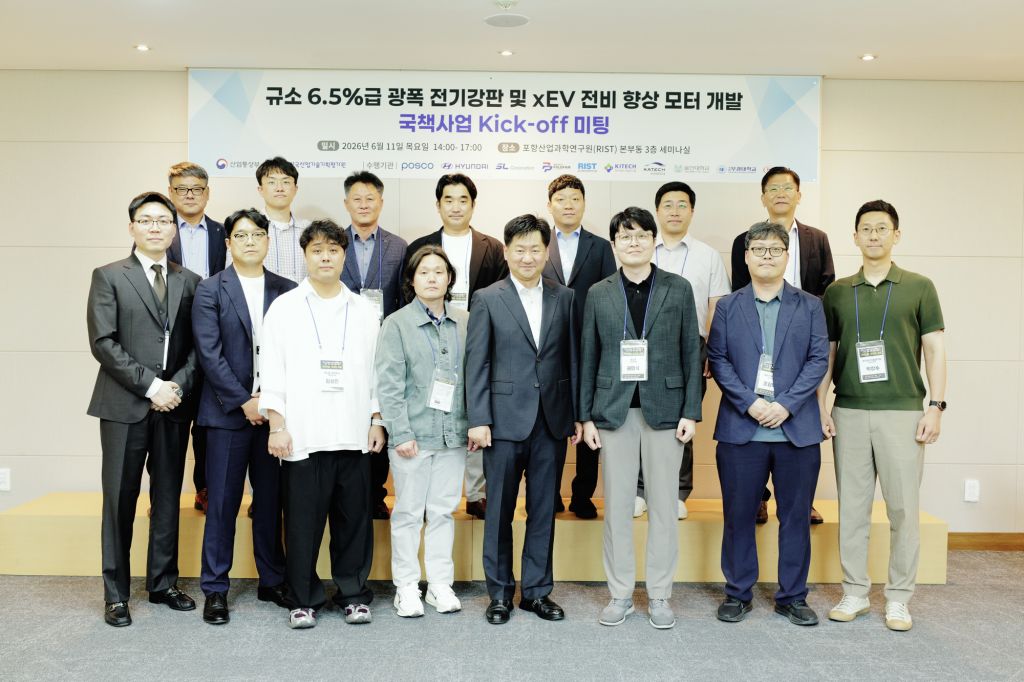
The goal of this research is to develop a high-silicon electrical steel for highly efficient electric motors and test its performance directly in vehicles. The project, funded by South Korea’s Ministry of Trade, Industry and Energy (MOTIE), is coordinated by the Korea Evaluation Institute of Industrial Technology (KEIT). In addition to Posco as the consortium leader, the partnership includes Hyundai Motor, SL Corporation, and several research institutes and universities.
At the heart of the project is the development of electrical steel with a silicon content of 6.5 per cent. A higher silicon content reduces iron losses in the magnetic core of an electric motor, thereby improving its efficiency. However, the material also becomes more brittle, making the production of thin and large-format sheets a technical challenge. The consortium therefore aims not only to advance the material but also to optimise manufacturing processes for motor cores and drive units. It will also test the technology in near-series electric powertrains. The ten partners formalised their collaboration by signing a Memorandum of Understanding (MoU).
Electrical steel is one of the key materials in modern electric motors – and its composition is therefore a competitive factor for motor efficiency. “This collaboration represents a pivotal turning point where the steel and future mobility industries join forces to usher in the era of electrification,” said Cho Myung-jong, Head of the Future Steel R&D Center at Posco.
The cooperation aligns with Posco’s strategy to strengthen its group position along the electromobility value chain. A principios de este año, Posco agreed a multi-year supply contract with SK On for up to 25,000 tonnes of lithium concentrate from Argentina for electric vehicle batteries and stationary storage systems. This positions Posco as both a material supplier for electric motors and a partner to the battery industry.
0 Comentarios