

Perodua launches Malaysia’s first locally developed electric car
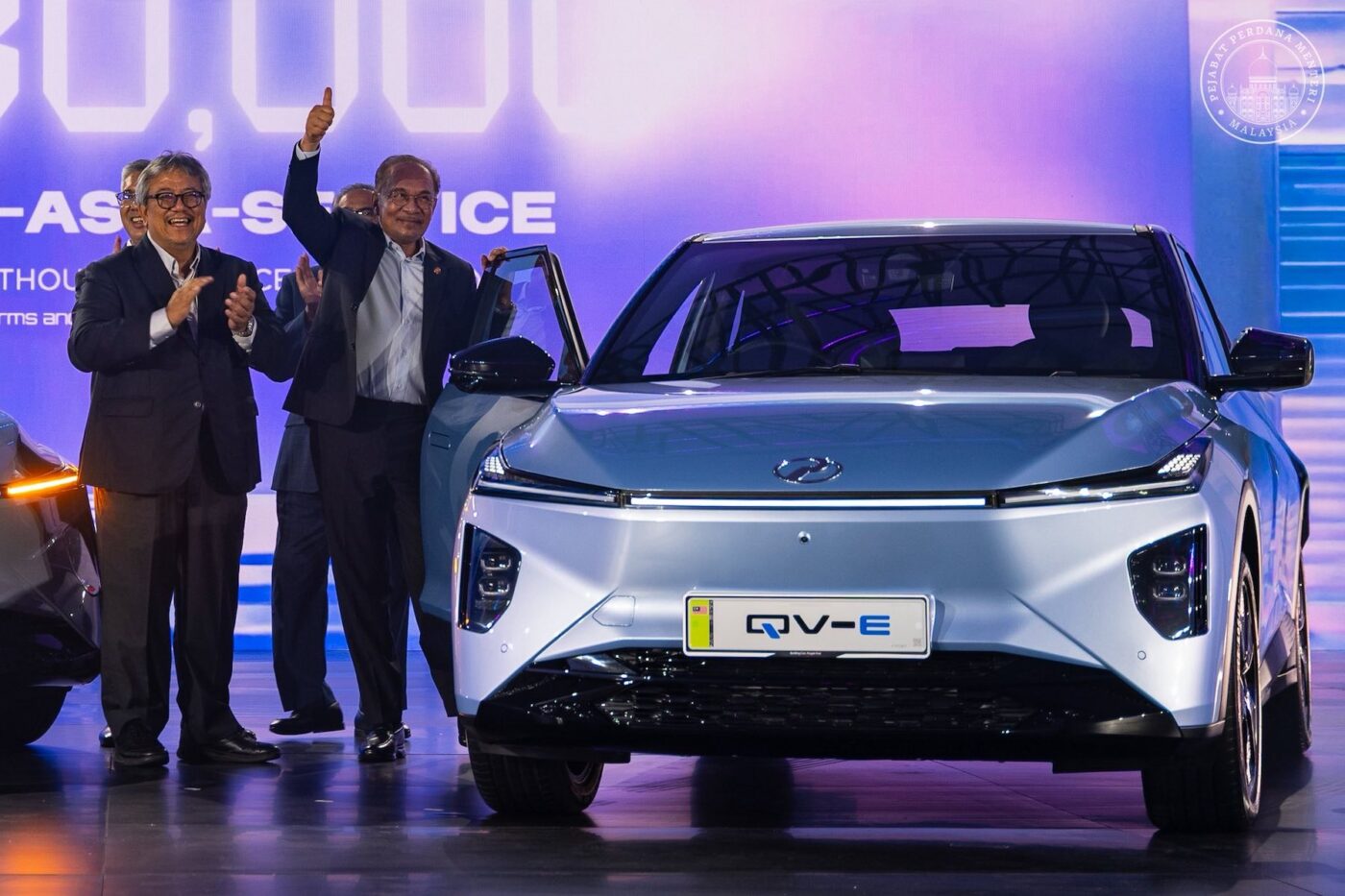
Under the ‘New Industrial Master Plan 2030’ introduced in September 2023, the Malaysian government appointed Perodua to lead the development of an EV ecosystem and launch a fully homegrown electric car by 2025. The QV-E is the result of this initiative.
While Perodua typically relies on Daihatsu platforms, the QV-E uses a new platform co-developed with Magna Steyr. The platform is suitable for A- and B-segment models and compatible with hybrid and range-extended electric applications.
The QV-E is a B-segment, coupé-styled SUV measuring 4.17 m in length, 1.8 m in width and 1.50 m in height, with a 2.68 m wheelbase. It sits low with a ground clearance of 158 mm and offers a tight turning radius of 5.2 metres. The small EV provides 320 litres of boot space with the rear seat up.
Perodua has introduced the QV-E exclusively in a front-wheel-drive configuration, with a permanent magnet synchronous motor delivering 150 kW and 285 Nm of torque, paired with a CATL-made 52.5 kWh LFP battery. The EV accelerates from 0 to 100 kph in 7.5 seconds and offers up to 370 kilometres of range (WLTP).
Charging performance is modest, with peak inputs limited to 6.6 kW on AC and 60 kW on DC. A full AC charge takes around eight hours, while a DC session from 30 to 80 per cent SoC takes about 30 minutes. The QV-E also supports vehicle-to-load (V2L) functionality.
Perodua offers the QV-E solely under a BaaS programme, in a single trim priced at 80,000 ringgit (excluding insurance). Battery rental costs 297 ringgit per month. Standard equipment includes 18-inch alloy wheels, flush-fitted front door handles, pillar-mounted hidden rear door handles, a 10.25-inch touchscreen with wireless Android Auto and Apple CarPlay, a wireless smartphone charger, a six-way power driver’s seat, and a digital IRVM.
On the safety front, Perodua includes a suite of driver assistance systems such as Forward Collision Warning, Autonomous Emergency Brake, Lane Departure Warning, Lane Keep Assist, Adaptive Cruise Control, Highway Assist, Traffic Jam Assist, Blind Spot Monitor and Rear Cross Traffic Alert. The QV-E also features Child Presence Detection, a dashcam, a 360º camera system and six airbags.
Perodua manufactures the QV-E at its plant in Sungai Choh (Selangor), about 40 kilometres northwest of Kuala Lumpur. The company aims to achieve 50 per cent localisation by 2026 and around 70 per cent by 2030. It currently sources components from 52 local suppliers, a figure expected to rise to 70 by 2030.
0 Comments