

VDA and Eclipse Foundation expand software development ecosystem

Initially, the alliance, coordinated by the German Association of the Automotive Industry (VDA), only featured players from Germany’s automotive sector – such as manufacturers BMW, Mercedes-Benz, and Volkswagen, along with the top three suppliers Bosch, Continental, and ZF. The alliance has now become more international, with 32 stakeholders from Europe, Asia, and America joining the initiative. New participants include 42dot, Accenture, AVL, Capgemini, Coretura, Cummins, ECARX, Elektrobit, Infineon, LEAR, LG Electronics, Michelin, MOBIS, Qualcomm, QNX, Red Hat, Schaeffler, Stellantis, Traton, T-Systems, and Useblocks.
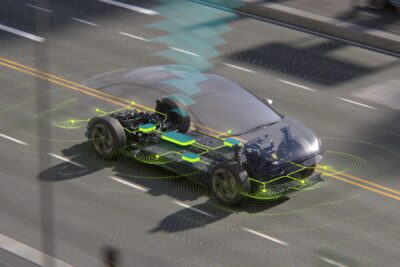
When the alliance was announced in June 2025, its goal was to develop non-differentiating vehicle software based on an open, certifiable software stack—thereby accelerating the transformation towards the software-defined vehicle (SDV). ‘Non-differentiating’ refers to software that has no direct impact on the customer experience. Specifically, the alliance is developing foundational functions for vehicles within the Eclipse SDV Working Group, covering areas such as middleware, communication stacks, storage and security functions, and autonomous driving features. This initiative is also designed to enhance interoperability between suppliers and vehicle platforms.
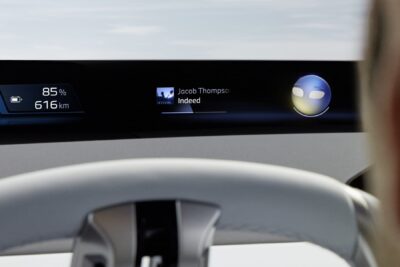
In return, participants will free up resources to focus on developing ‘differentiating software,’ enabling companies to create unique experiences for their customers. Examples include bespoke user interfaces, assistance functions, and individually tailored features and services in the vehicle, such as a personal digital assistant.
“By jointly developing non-differentiating software, manufacturers and suppliers can focus their resources on what truly matters: delivering unique, customer-centric experiences,” said Dr. Marcus Bollig, Managing Director of the VDA.
This approach mirrors the Headless Commerce concept in online retail: here, the backend or basic functions (e.g., shopping cart, product data, payment processing) are separated from the frontend or user experience—that which the customer sees and interacts with. In this model, different companies can use the same backend functions but differentiate themselves through the frontend. In the automotive context, this translates to what the customer experiences in the driver or passenger seat.
The participating companies expect collaborative open-source development to deliver significant benefits: up to 40% less effort for the development, integration, and maintenance of non-differentiating software, freeing up development capacity for innovative functions. Additionally, a up to 30% faster time-to-market is anticipated through the use of shared components in automotive-grade quality.
The development of this non-differentiating automotive software is coordinated by the Eclipse Foundation, a non-profit organisation based in Brussels that acts as a neutral guardian for open-source software. Accordingly, the alliance adopts an open-source approach, where the source code is openly accessible and usable for all participants.

0 Comments