

Tennessee plans tax for public fast chargers
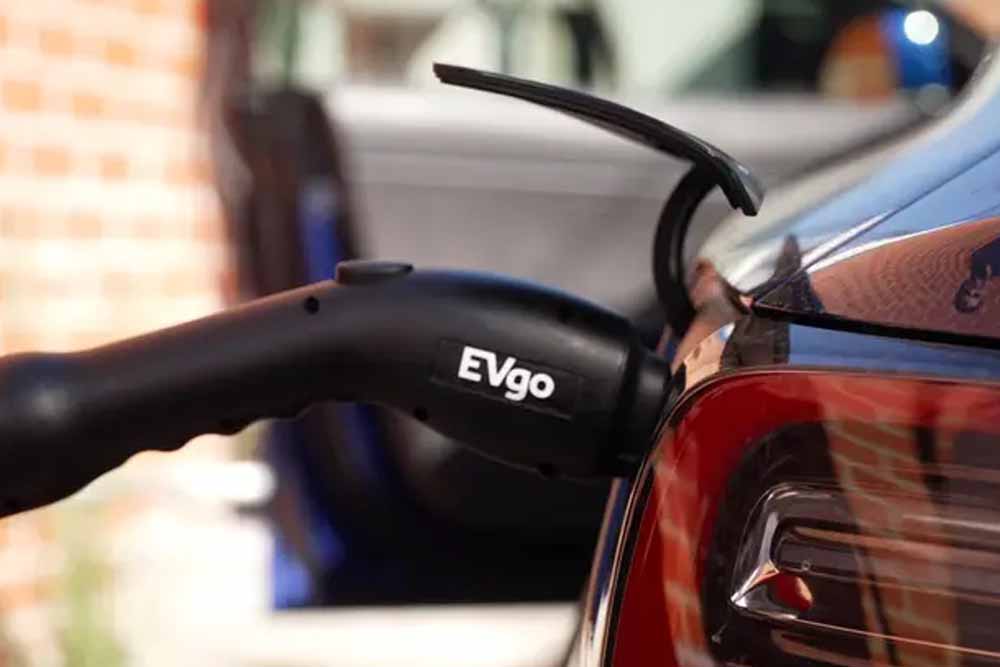
While the proposal has yet to be adopted, it could set a precedent. The draft law is modelled on the fuel tax and would require operators of public fast-charging stations to collect this tax on behalf of the state as part of the charging price.
The current draft proposes a tax of $0.03 per kilowatt-hour, equivalent to 2.5 euro cents per kWh. A charging session with 50 kilowatt-hours would thus incur $1.50 in taxes—or approximately €1.25. Operators may choose whether to add the $0.03/kWh to existing charging prices or account for it differently.
The tax will not apply to all charging stations, however. It targets only publicly accessible DC charging points with a charging capacity exceeding 20 kW. Slower DC chargers and all AC chargers are exempt. As it stands, the levy will not apply to private wallboxes, AC charging points in company car parks, or public AC chargers.
Tennessee has already introduced an annual fee for electric vehicles, hybrids, and plug-in hybrids since 2024. Owners of battery-electric vehicles must pay $200 per year, while hybrid and plug-in hybrid owners pay $100. By 2027, the fee for electric vehicles will rise to $274 per year, as reported by the portal Tennessee Lookout.
The bill was introduced by Republican Senator Page Walley from Savannah. According to Walley, the revenue will be used for road maintenance, just like the proceeds from the fuel tax and the annual fees for electric vehicles. “One of the shortcomings, though, we have discovered, is that all these tourists and folks traveling through our state who are using our roads, many of them obviously will pay the gas tax when they stop and refuel, but those that are using hybrids or EVs and are charging those at charging stations — let’s say, at Buc-ee’s or somewhere else — are not contributing anything to the maintenance of our roads,” Walley said.
The non-profit organisation Electrification Coalition, however, criticises the planned double burden on electric vehicle drivers. “Even with just the registration fee that Tennessee EV drivers pay, that is already much more than what your typical gasoline driver pays in gas tax,” said Anne Blair, Vice President of the Electrification Coalition.



0 Comments