

Spanish central government takes e-mobility funding into its own hands
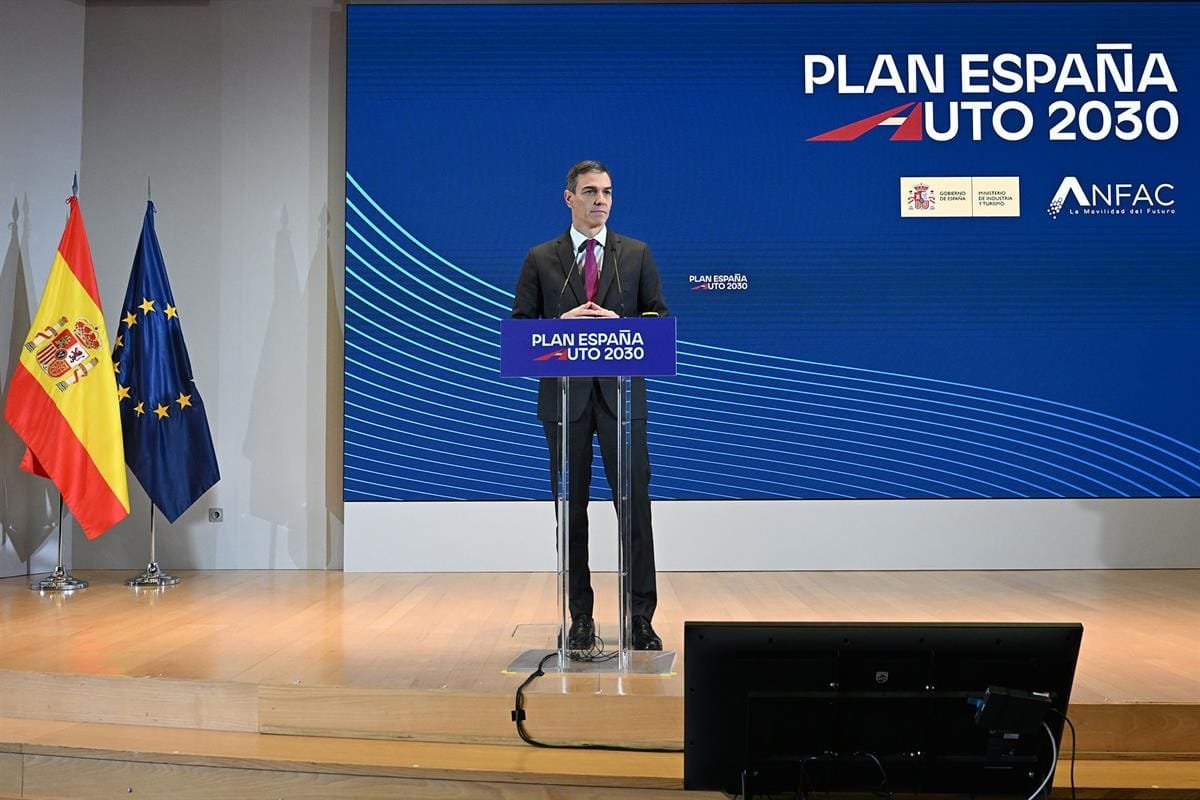
Spain is restructuring its EV incentives around three pillars and redefining responsibilities in the process. Central to this shift is the ‘Plan Auto+’ programme, which will allocate €400 million in direct subsidies to consumers in 2026, aimed at reducing car prices. These grants will be managed by the central government, unlike the Moves III incentive scheme, which expires at the end of 2025 and was administered by the autonomous regions. ‘Plan Auto+’ will replace the Moves programme at the turn of the year.
The new 2030 plan also includes a programme called ‘Moves Corredores’, with a budget of €300 million dedicated to installing charging stations. An additional €580 million will be allocated in 2026 to the existing PERTE eMobility incentive programme, which supports projects in electric vehicle and battery production. The latter is classified as industrial subsidies.
‘Cars built here, affordable for Spaniards”
Prime Minister Pedro Sánchez has emphasised that the ‘España Auto 2030’ plan is the result of a public-private partnership, supporting both supply and demand. It introduces ‘significantly more business-friendly regulations for the sector,’ accompanied by incentives to boost production and sales. During the roadmap’s presentation, Sánchez stated: “We are here today so that Spain can produce electric cars that are as competitive as our capabilities allow—and affordable for Spaniards.” He added: “The electrification of the automobile is here to stay. The goal is for everyone to benefit.”
Spain’s automotive industry contributes nearly 10% to the country’s GDP and supports almost two million direct and indirect jobs. This makes Spain the second-largest car manufacturer in Europe. However, in terms of electrification, the country has been relatively slow, as highlighted by the portal Forocoches Electricos: “Although the Moves III programme has enabled the purchase of 170,000 electric cars, with numbers set to double again in 2025, the starting point remains low. Two major obstacles persist: the limited number of charging stations and cumbersome bureaucracy, which hinders expansion.”
Previous incentive scheme had structural weaknesses
The Spanish government launched Moves III in 2021 and topped up by €400 million in December 2022, bringing its total budget to €1.2 billion. With further top-ups in 2024 (€1.55 billion) and 2025 (€400 million), the funds allocated to Moves III have grown to €1.735 billion over the years. However, the programme suffered from structural weaknesses, with some applicants waiting up to two years to receive their incentives. Disbursement was handled by the autonomous regions. The government had intended to reform the system last year but was delayed due to the country’s devastating floods.
The time for reform is finally here: Sánchez views the overhaul as a plan of national significance, aimed at ensuring ‘Spain has done its homework by the end of the decade.’ The measures are the result of closer collaboration and dialogue with the private sector. However, not all details have been finalised. For instance, it remains unclear whether the purchase grants will be paid directly at the dealership or through a central authority. No information has been provided about the amount of the grants either. Additionally, as Forocoches Electricos points out: “It is also unclear what will happen to the thousands of car owners who purchased vehicles under MOVES III but have yet to receive their funds.” These details will be clarified once the final guidelines are published.
Sánchez firmly commits to e-mobility
Madrid has made it clear that the cost of electric vehicles must decrease to make the transition to e-mobility truly attractive in Spain. “We want to produce electric cars in Spain that are affordable for our country’s middle and working classes—and ensure these groups are not excluded from the Green Deal,” Sánchez explained. Currently, purchasing an electric car represents a significant financial burden for many families. The government must thus act transparently and decisively to support this process. The Prime Minister reiterated: “Spain will not waver in its commitment to electric mobility.”
Economic interests also play a major role: Spain is the production hub for Volkswagen Group’s upcoming family of electric compact cars. Sánchez sees this as a significant opportunity for both industry and consumers: “Next year, we will see a range of electric models priced under €25,000. This is the path to the future, and the Spanish government aims to walk it together with industry.”
Proven distribution system after the floods
In 2026, the Auto+ plan will provide the aforementioned €400 million in direct purchase subsidies for electric vehicles. This annual budget aligns with previous Moves funding levels. However, by centralising programme administration, the government aims to ensure a faster and more uniform process. The goal is to ‘ensure that payments reach families when they need them,’ according to officials. The model is based on the ‘Reinicia Auto+’ plan, introduced to mitigate the impacts of the flood disaster, which, according to the government, helped ‘95% of applications from Valencia residents’ to be processed within a year of the tragedy.
The second pillar of Spain’s 2030 roadmap focuses on infrastructure. In 2026, a new programme called ‘Moves Corredores’ will launch with a budget of €300 million. It remains unclear whether this sum is intended solely for 2026 or beyond, as the duration of the programme has not been specified. The initiative will fund chargers in so-called ‘shadow zones’—road sections where necessary charging stations are still lacking, as the government has stated. Additionally, Madrid plans to ‘drastically reduce’ the licences and permits required for installing charging stations and will establish a centralised website for charging infrastructure. To date, the government has supported the expansion of charging infrastructure in Spain with a total of €600 million through various programmes (Moves III, Moves Fleets, and Moves Singulares).
Over half a billion euros in industry support
The third component of the government’s plan is another funding round under the PERTE programme—an industrial aid scheme aimed at boosting innovation and competitiveness in the e-mobility and battery sectors. An additional €580 million will be made available for 2026. “The focus is now on becoming a leader in battery manufacturing and recycling, and transforming the entire value chain: from design to large assembly plants, including SMEs that ensure component supply,” Sánchez told the industry. In previous PERTE funding rounds, Spain has already disbursed over €3 billion, attracting numerous major projects.
lamoncloa.gob.es, forococheselectricos.com (both in Spanish)
This article was first published by Cora Werwitzke for electrive’s German edition.

0 Comments