

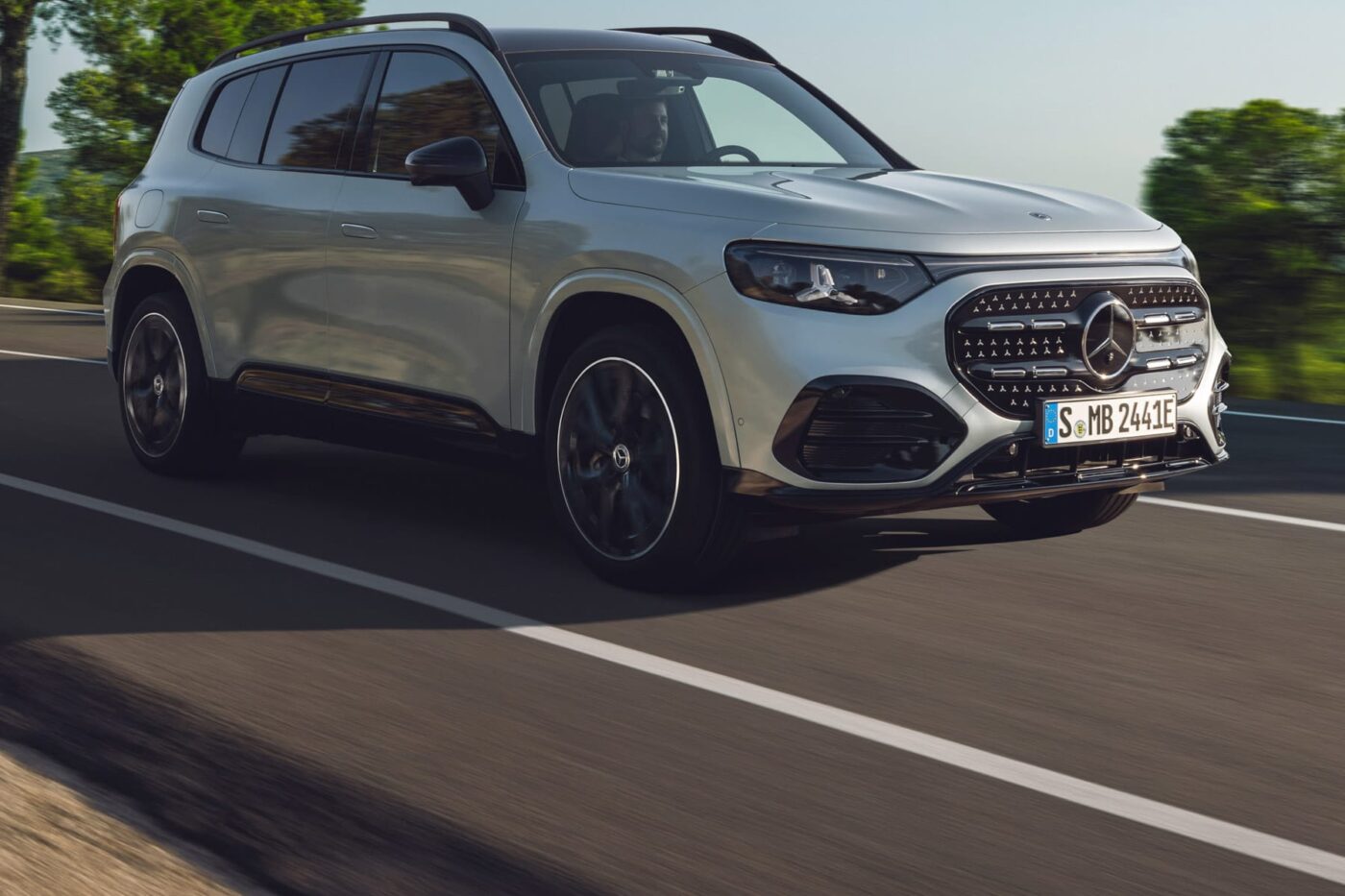
World premiere of the Mercedes GLB: the practical number three
Just a few weeks before its world premiere, Mercedes released its own images of the new GLB, taken in its own climatic wind tunnel, with the car concealed under a thick layer of ice. Even then, it was possible to see that the new GLB generation, which will initially launch as a purely battery-electric vehicle and, like the CLA, will later also be available as a 48-volt hybrid, would feature a less angular design than its predecessor. However, to retain its high practicality, the upright rear window remains. The GLB is still unmistakably a GLB.
Now, at its world premiere, the ice has melted, revealing the full design of the new GLB. Mercedes states that with the GLB, “striking design meets everyday practicality.”
“The all-new GLB embodies our philosophy of Sensual Purity in a particularly powerful way. It expands our Entry Luxury portfolio and ushers the iconic Mercedes-Benz design into a new era. With its sculptural proportions, emotional light signature, and modern architectural interior,” said Mercedes Chief Designer Gorden Wagener of his latest creation. “A SUV with character, sensual, and soul.”
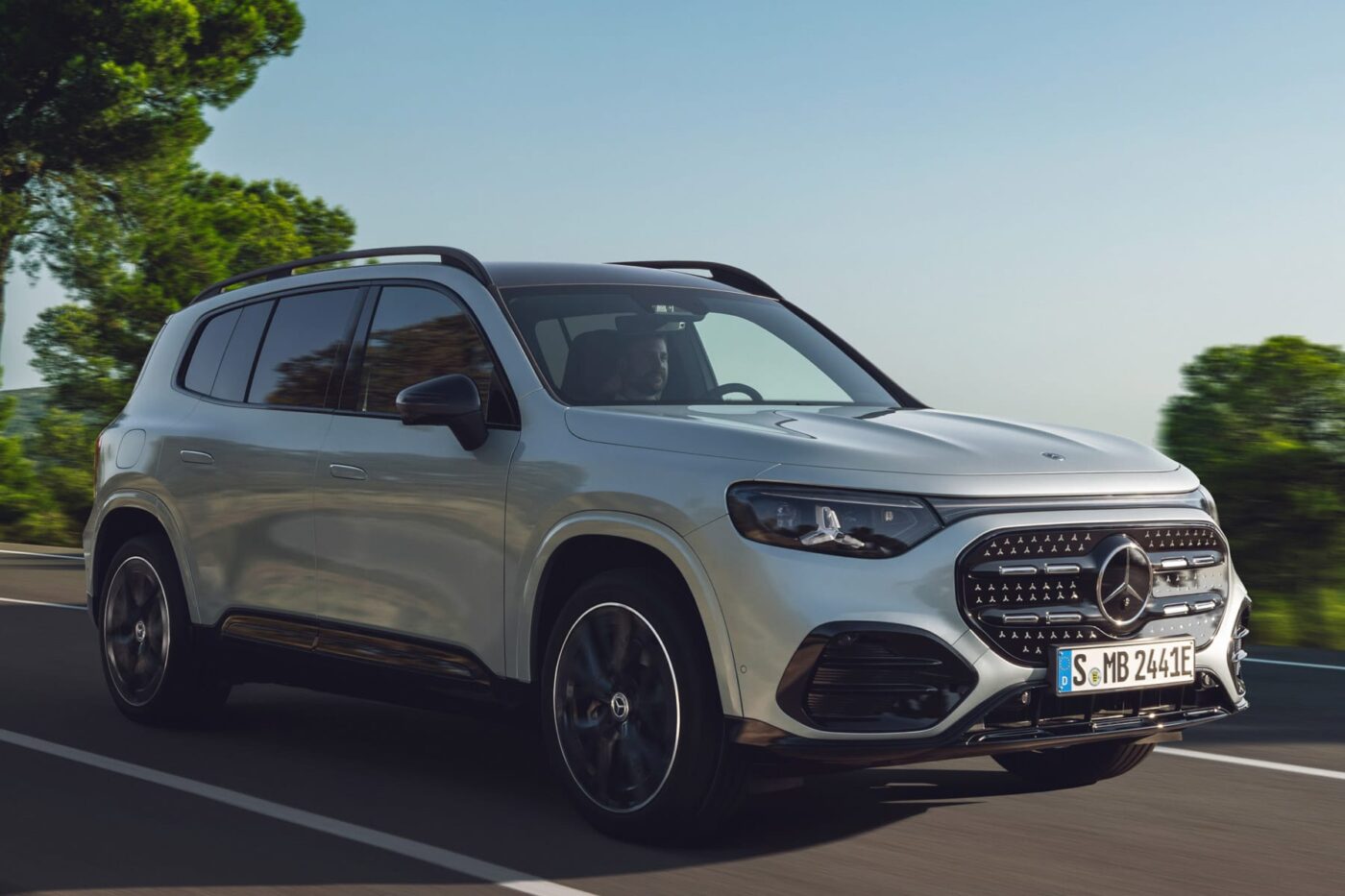
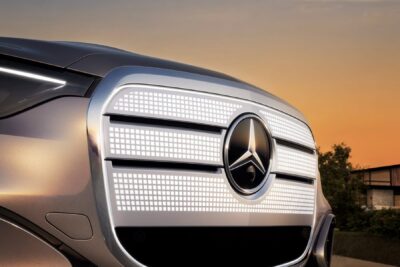
While Wagener and his team omitted the continuous light strip at the front of the CLA models for the GLC unveiled at the IAA, the new GLB features such a light strip. As with the CLA, it neither connects to the bonnet nor the radiator grille, which Mercedes has reintroduced as a defining design element even in its electric models. Additionally, the black (and fully enclosed in the electric GLB) grille, adorned with numerous Mercedes stars, is differentiated from the CLA by two horizontal black slats, further emphasised by chrome inserts. This is apparently intended to underscore the SUV’s more robust character. However, in my opinion, the result is a rather busy front end. Compared to the cleaner design of many Asian models, the Mercedes stands out sharply, whether for better or worse.
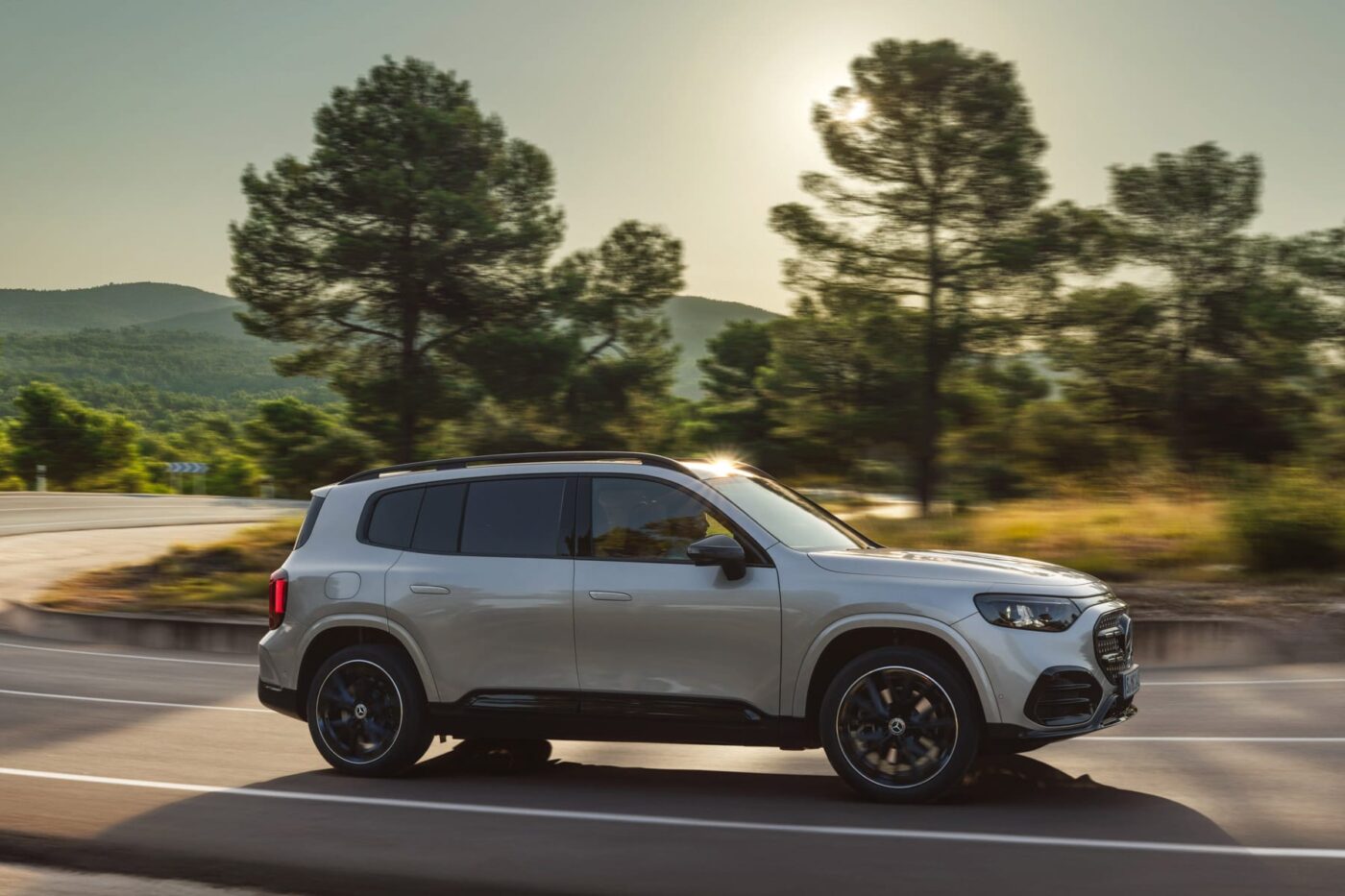
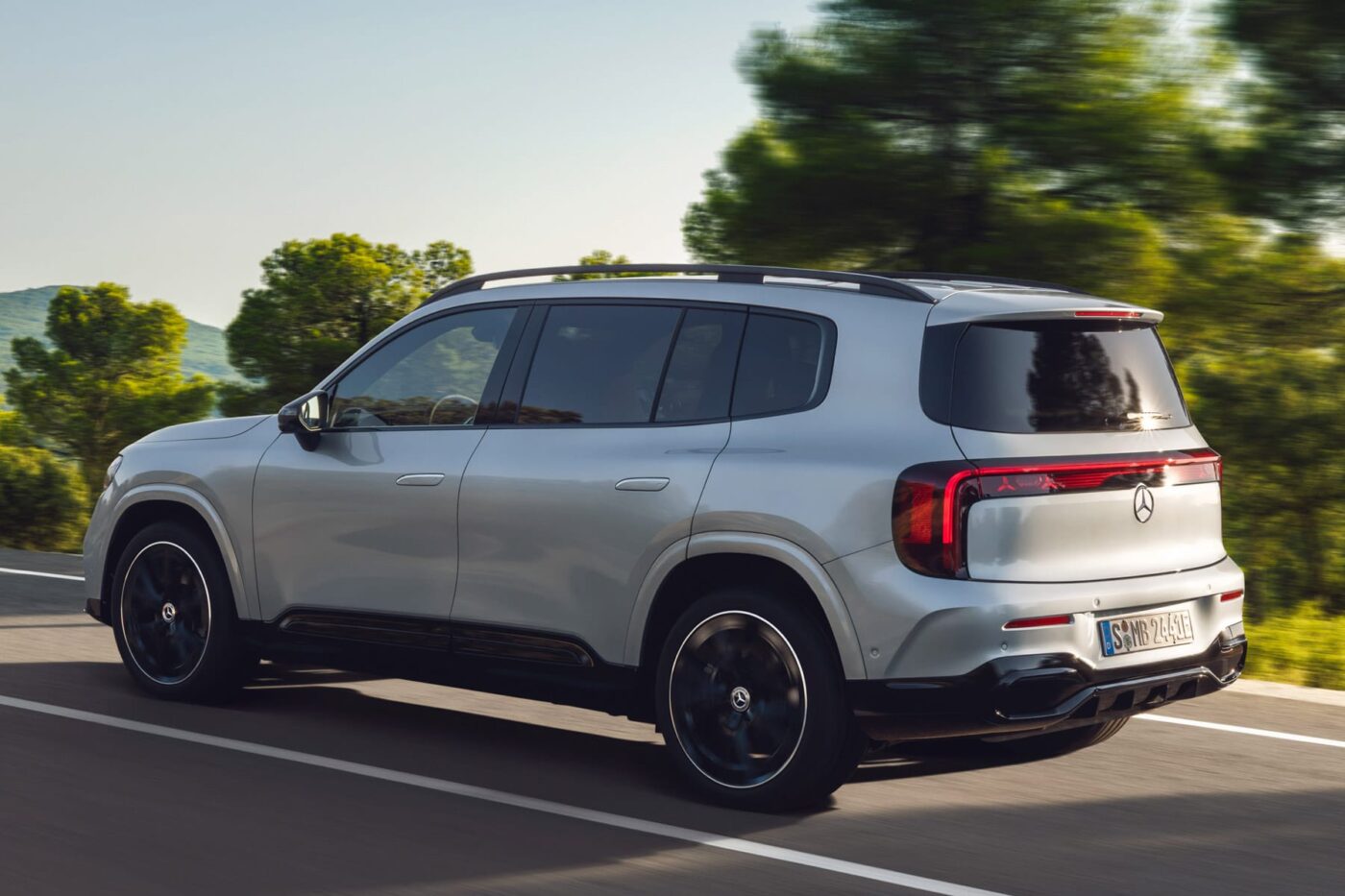
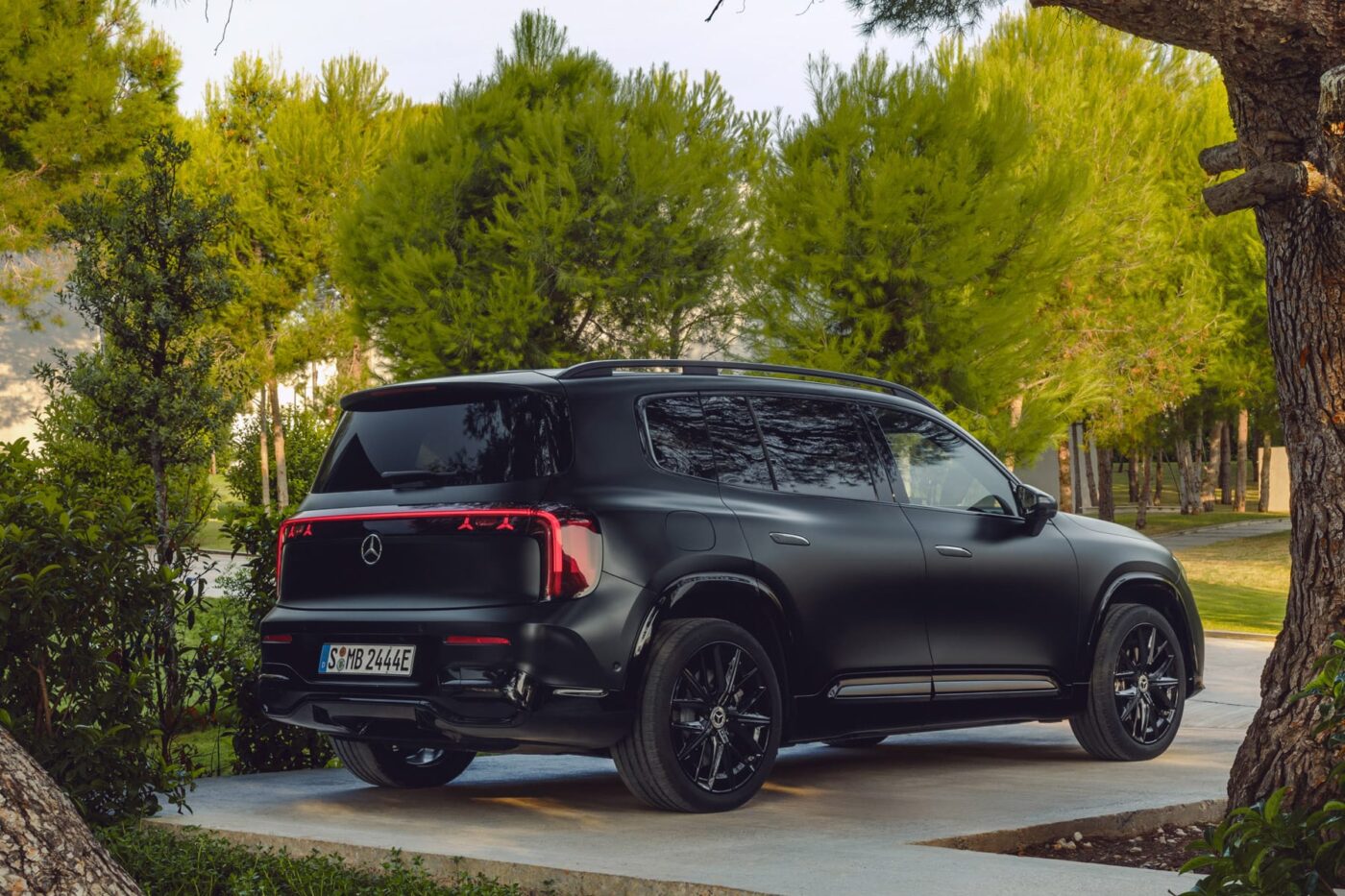
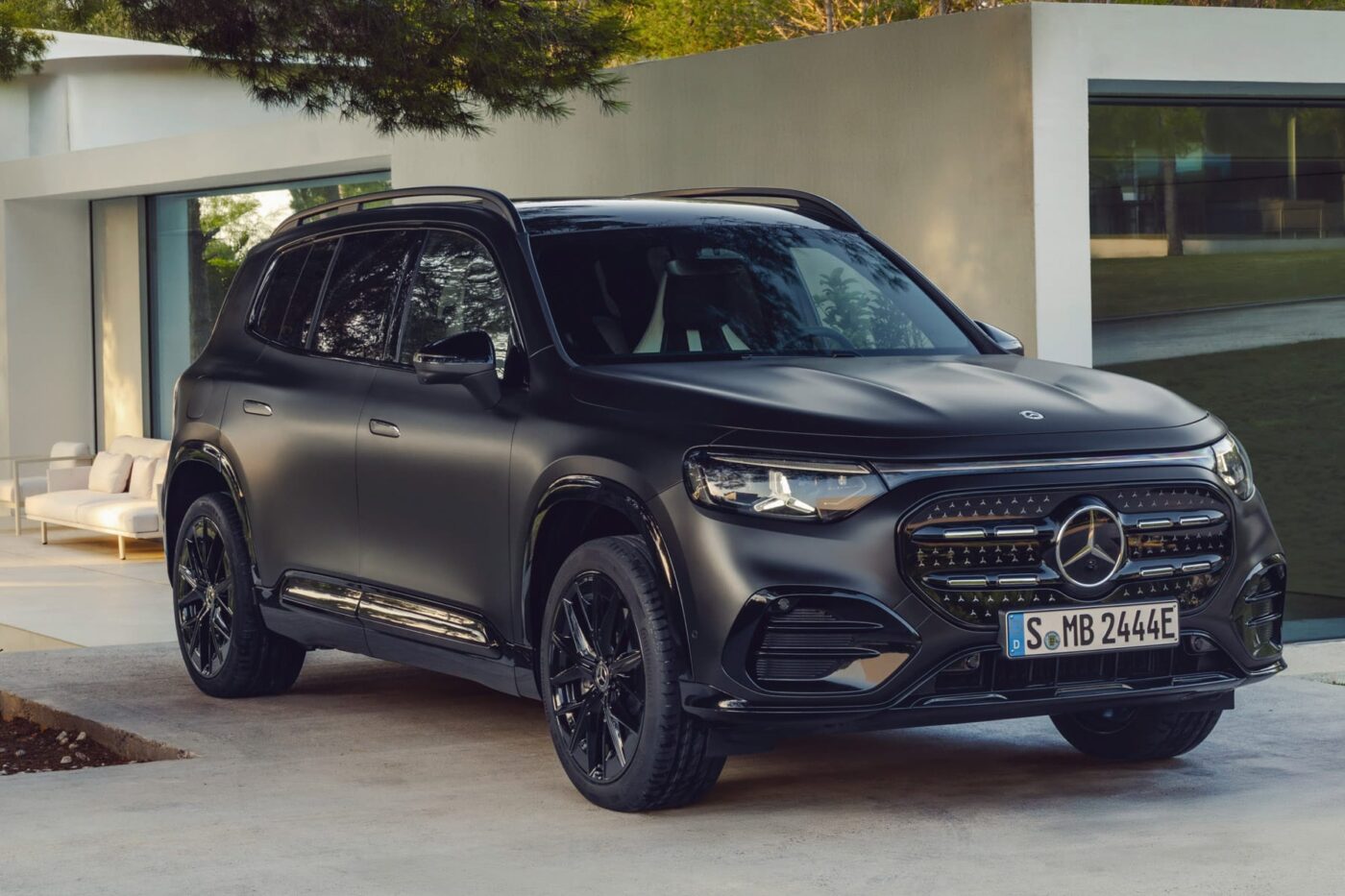
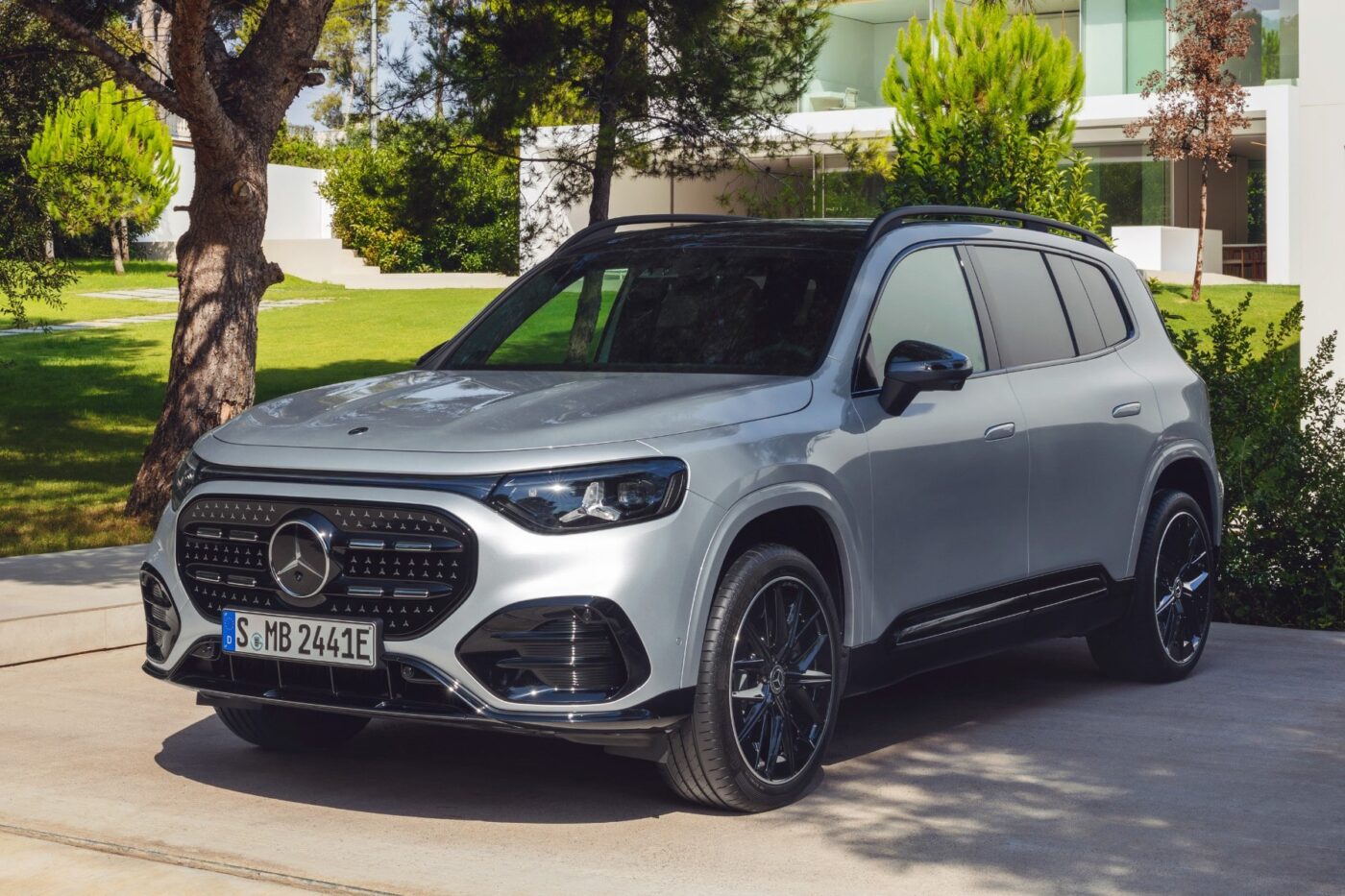
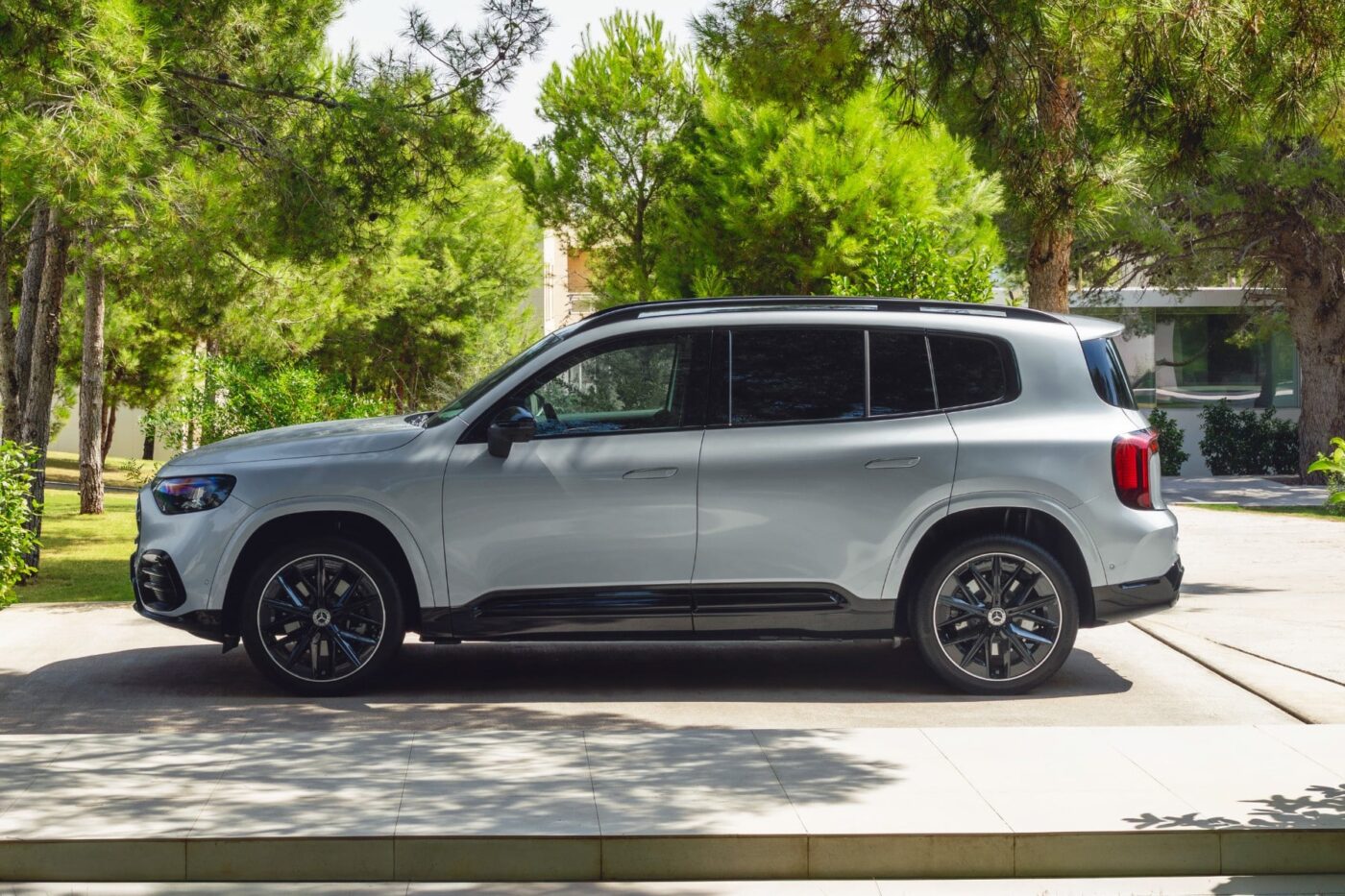
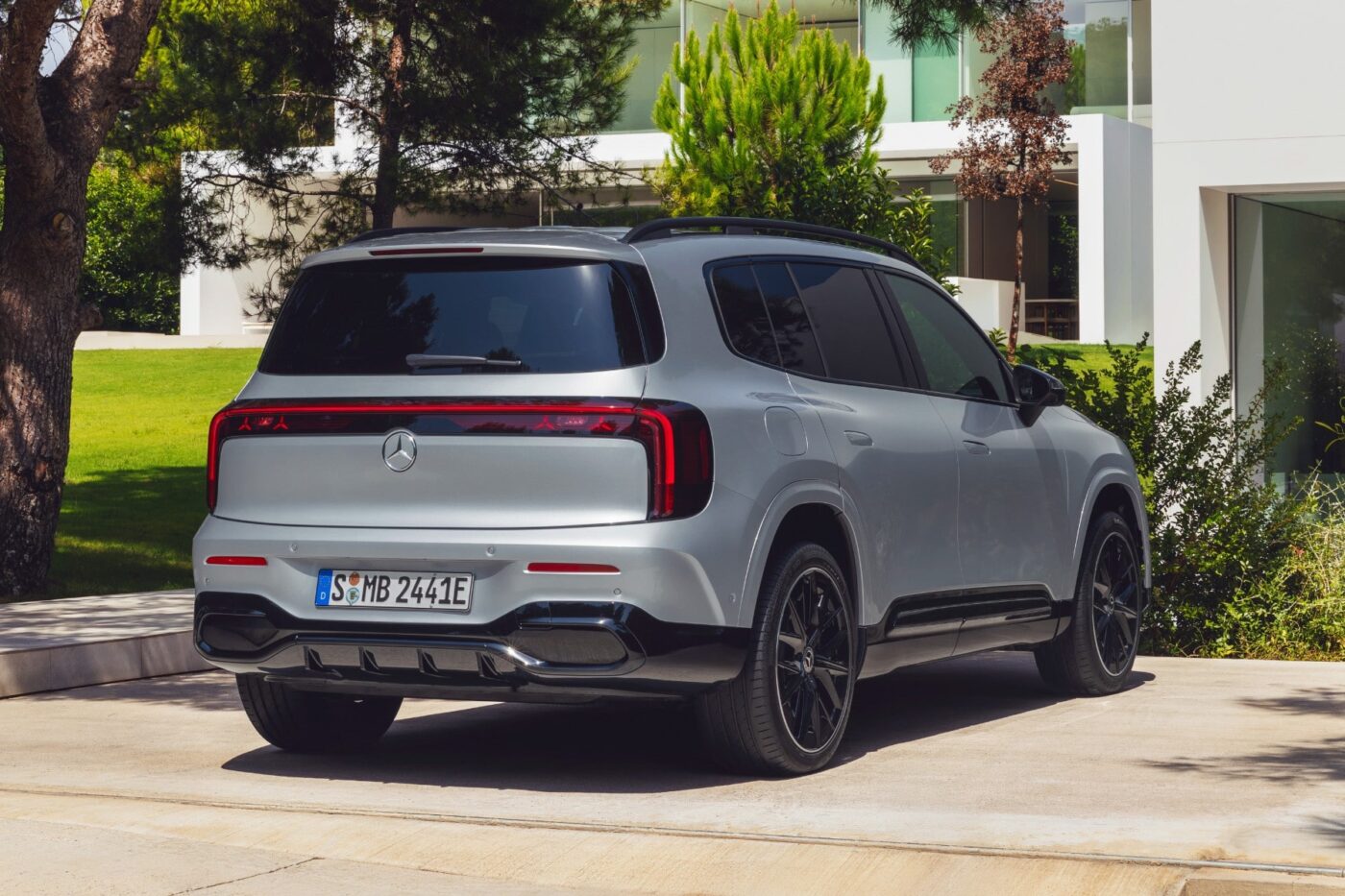
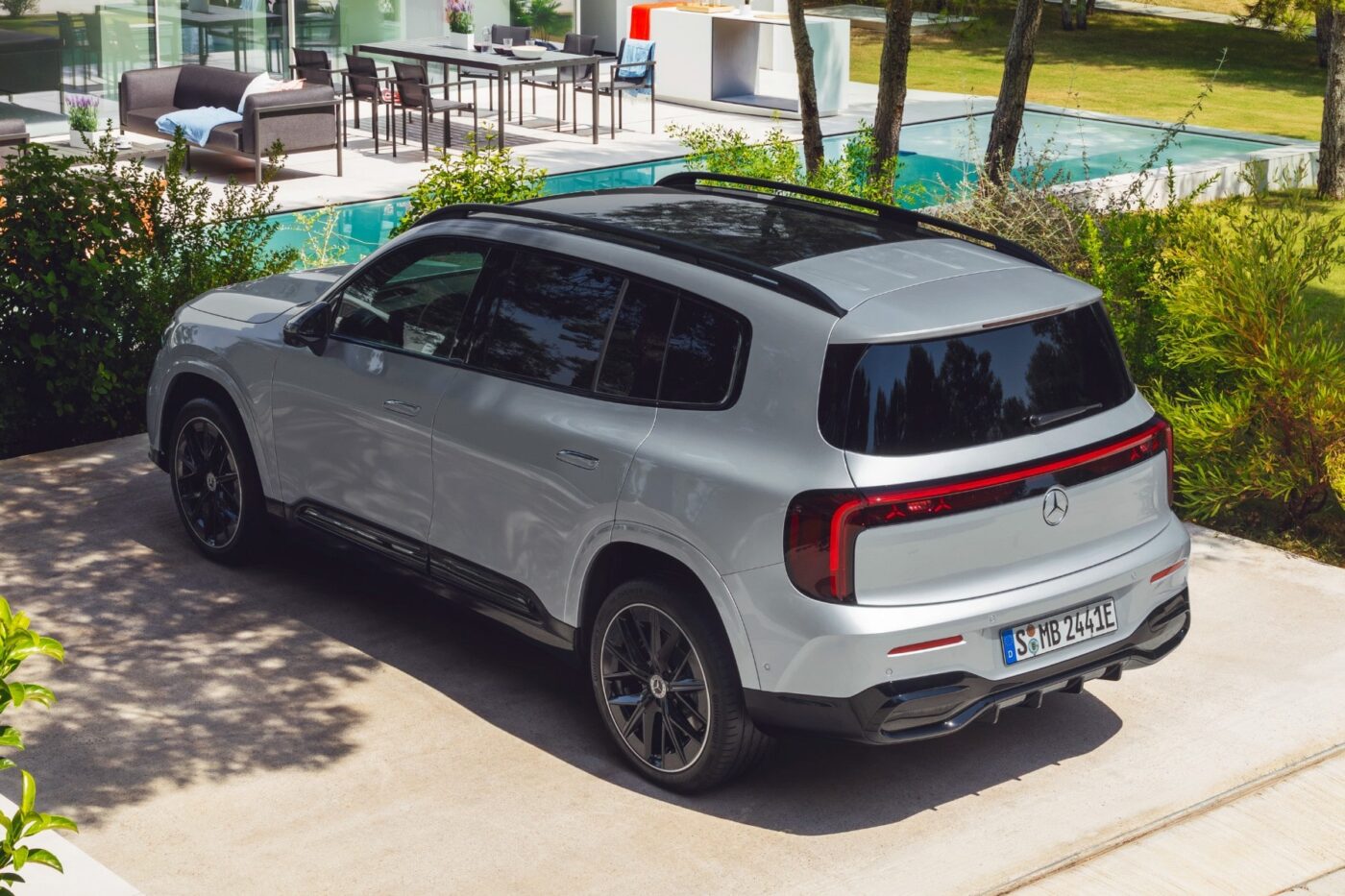
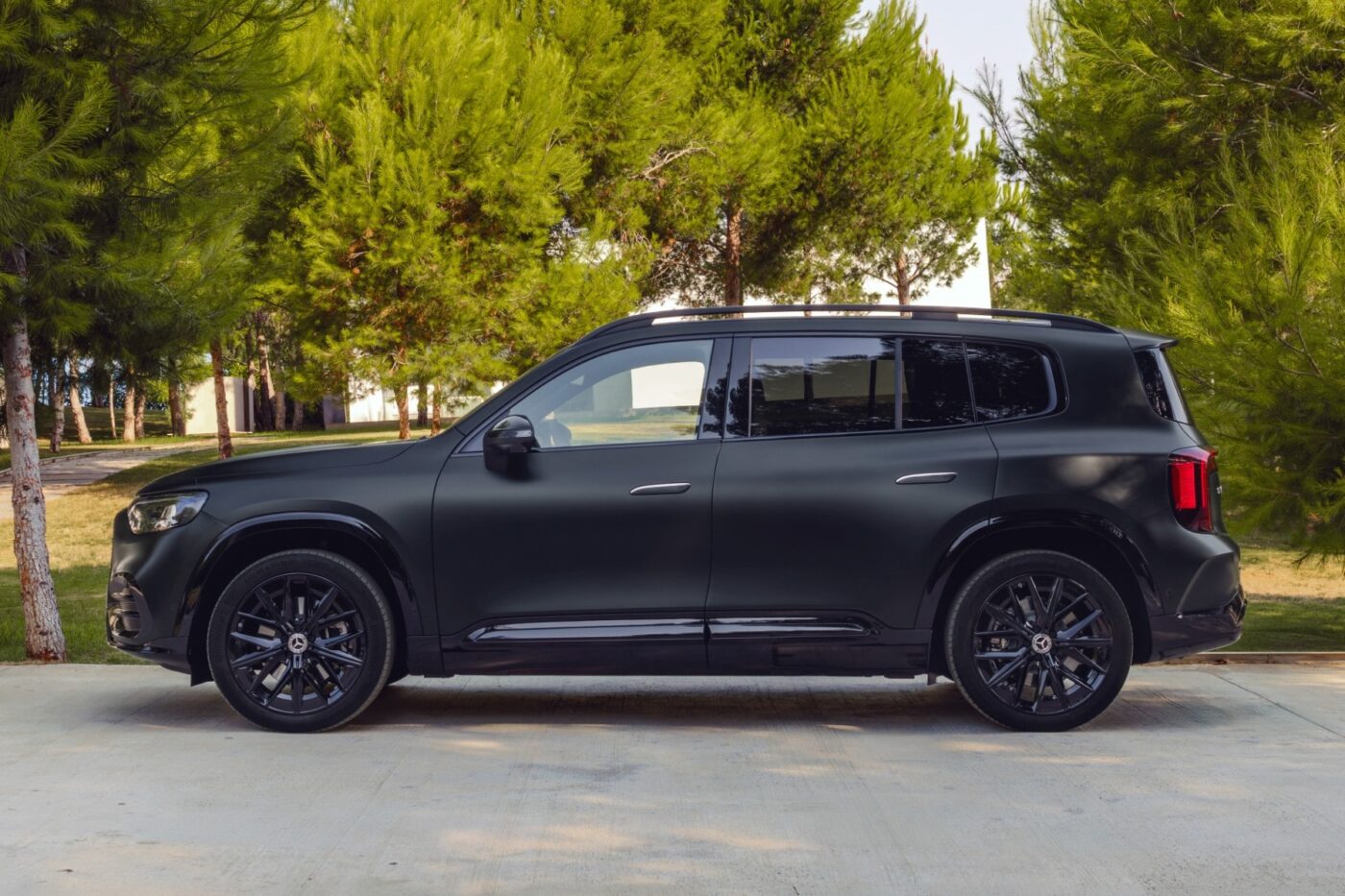
In profile, however, the new GLB cannot hide its identity. The somewhat rounded front is followed by a long bonnet, which is necessary for the upcoming hybrid version and is, in any case, part of Mercedes’ increasingly combustion-engine-like design language. The cabin, with its nearly horizontal roofline and steep rear, clearly echoes the predecessor, whose electric version was previously called the EQB. Unlike many models in this segment, the GLB is optionally available as a seven-seater. And if the rearmost row of seats is not in use, the versatile model offers ample space for luggage, but more on that shortly.
At the rear, the new GLB bears a certain resemblance to the Smart #5. Although the two models were developed completely independently and use different platforms, in the Geely-Mercedes collaboration around Smart, the German manufacturer still contributes to the design from Gorden Wagener’s department. Whether it’s the rear lights, the lines at the C-pillar with the rising window line, or the design element at the lower edge of the doors, the similarity is striking. One detail already noticeable in the climatic wind tunnel images is that Mercedes has positioned the rear windscreen wiper at the bottom of the window, which looks rather out of place for a Mercedes priced at nearly 60,000 euros. A Kia EV4, which starts at 37,590 euros, hides the rear windscreen wiper elegantly in the roof spoiler.
Leaving aside the design details, which are ultimately a matter of taste, let’s turn to the technology under the bonnet. Here, there are essentially no surprises—the drivetrains of the MMA platform are well-known from the CLA and its estate variant. Mercedes is also launching the GLB with the larger battery: initially, the ‘GLB 250+ with EQ technology’ and the all-wheel-drive ‘GLB 350 4MATIC with EQ technology’ will be available—though we will omit the cumbersome ‘with EQ technology’ suffix from now on.
| GLB 250+ | GLB 350 4MATIC | |
|---|---|---|
| Drive | RWD | AWD |
| Power | 200 kW | 260 kW |
| Torque | 335 Nm | 515 Nm |
| Acceleration | 7.4 s | 5.5 s |
| Top speed | 210 kph | 210 kph |
| WLTP range | 631 km | 614 km |
| Battery | 85 kWh | 85 kWh |
| DC charging power | 320 kW | 320 kW |
| DC charging time 10-80% | 22 min | 22 min |
| Price | 59,048 euros | 62,178 euros |
Both versions share the 85 kWh NMC battery. The GLB 250+ with its 200 kW rear-wheel-drive powertrain is the range champion of the entire model line, hence the ‘+’ in its name. Mercedes states a WLTP range of 631 kilometres for this variant. That is no surprise after the CLA’s 781 kilometres, and the Shooting Brake’s 761 kilometres. The GLB is significantly taller, and its steep rear end is far from aerodynamically optimised. However, this enhances its practicality, which is a weakness of the lower-slung CLA. Thus, the two MMA models complement each other. The all-wheel-drive version achieves up to 614 kilometres on the WLTP cycle. As with the CLA, the differences here are minimal, thanks to the technology: the front electric motor, with its 80 kW, can be disengaged in a flash via a decoupler and is only activated when needed. It means the 4MATIC model mostly operates as a rear-wheel-drive vehicle, and the permanently excited synchronous motor is Mercedes’ in-house development, featuring a two-speed transmission and silicon carbide inverters, optimised for efficiency.
There are no differences in charging performance: the 800-volt system enables charging power of up to 320 kW. It allows the battery to be charged from 10 to 80 per cent in 22 minutes, with Mercedes also stating that 260 kilometres of range can be added in ten minutes. The GLB can only use 400-volt DC charging stations for an additional charge, as the necessary DC converter is only available as an option. AC charging is optionally available up to 22 kW. Like the GLC, the GLB also supports bidirectional charging; with a bidirectional DC wallbox, it can be used for Vehicle-to-Home or even Vehicle-to-Grid applications—at least once Mercedes enables the bidirectional charging function via an over-the-air update.
It is likely, though not yet confirmed, that the GLB 200 will follow the two launch variants. This model will feature a 58 kWh LFP battery in the underbody, capable of charging at up to 200 kW, or reaching 80 per cent charge in 20 minutes. The range and price of this variant are not yet known. In the CLA, the range drops from 741 to 541 kilometres with the LFP battery. With the same 240-kilometre difference, the GLB 200 would likely offer around 490 kilometres of standard range. In the case of the CLA, the LFP battery is about 6,000 euros cheaper.
This would put the base GLB at around 53,000 euros, as the prices for the two variants with the larger battery are already known: Mercedes is already accepting orders, and the models can be configured online from 8 December. In Germany, the GLB 250+ starts at 59,048 euros, while the GLB 350 4MATIC is available from 62,178 euros. As an example, Mercedes quotes a monthly leasing rate of 305 euros for private customers—over 36 months and 15,000 kilometres per year, but with a hefty 20 per cent down payment.
Up to 1,715 litres of storage space and a two-tonne towing capacity
Compared to the CLA Shooting Brake, the GLB 250+ is around 2,000 euros more expensive, while the difference for the 350 4MATIC is less than 1,000 euros. In return, the SUV offers significantly greater practicality. While the CLA estate can accommodate up to 1,290 litres with the rear seats folded down, the GLB can hold up to 1,715 litres (or 1,605 litres in the seven-seater). The standard boot capacity is 540/480 litres (five-/seven-seater). The new generation has increased its standard boot space, whereas the previous five-seater could hold a maximum of 495 litres. However, the maximum loading volume has only increased by five litres.
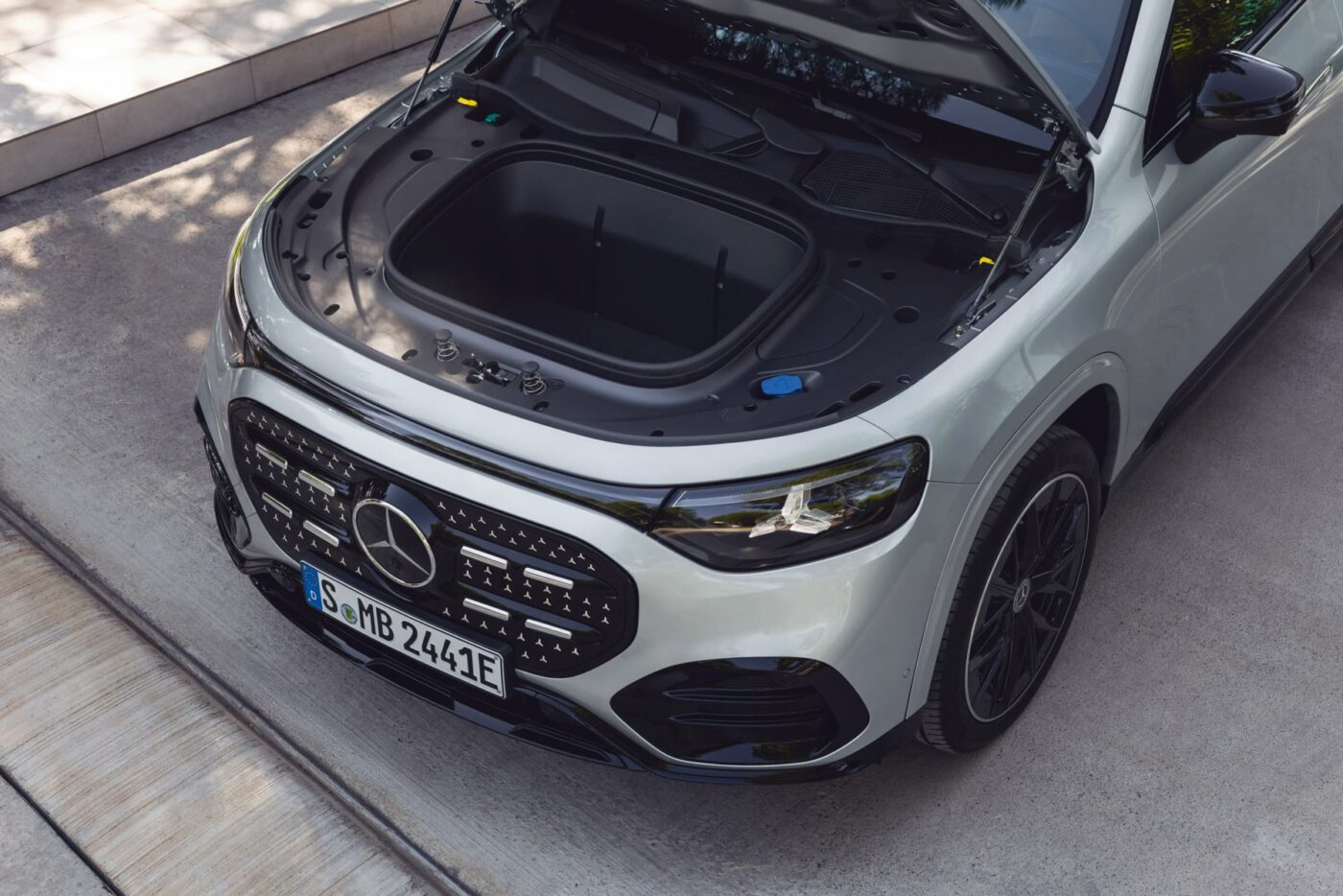
There is also an entirely new storage compartment: with 127 litres (104 litres according to ISO 3832), the model boasts the largest front boot (frunk) in the new model family. “Enough space for a crate of drinks, or three footballs, or a compact tent,” Mercedes said. “Those who opt for the version with two additional seats in the third row can travel to the next league match with an entire tennis team or pile the neighbour’s children in and haul them to the school festival.”
Let’s take a quick look at the dimensions, as the new GLB has grown once again. At 4.73 metres, it is 4.8 centimetres longer than the previous EQB and a full 9.8 centimetres longer than the old GLB: the old GLB and the EQB were essentially the same car, but the electric version was distinguished by a unique design and different bumpers. The width of 1.86 metres (+2.7 cm) and height of 1.69 metres (-1.4 cm) show the same differences compared to the old GLB/EQB.
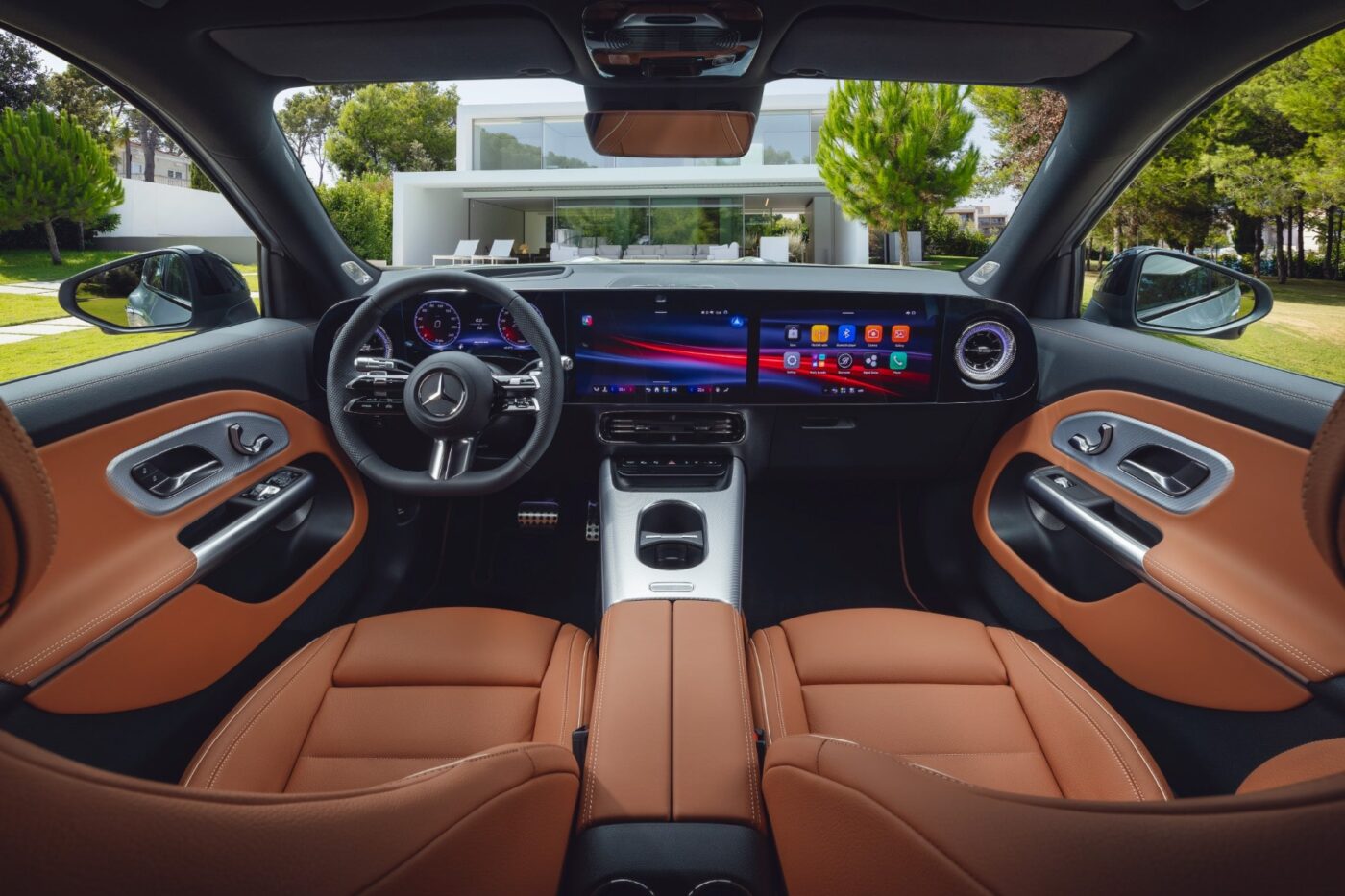
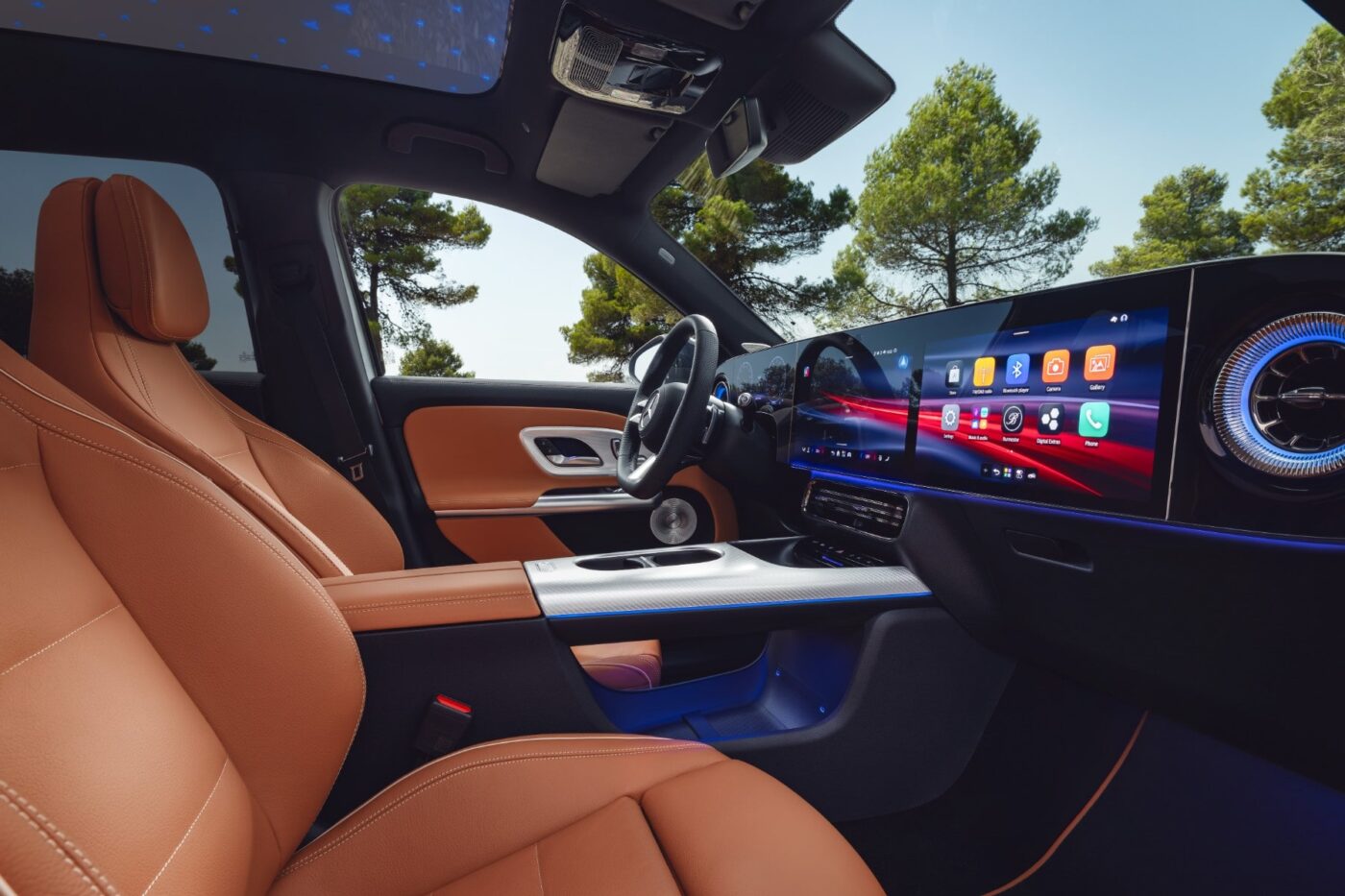
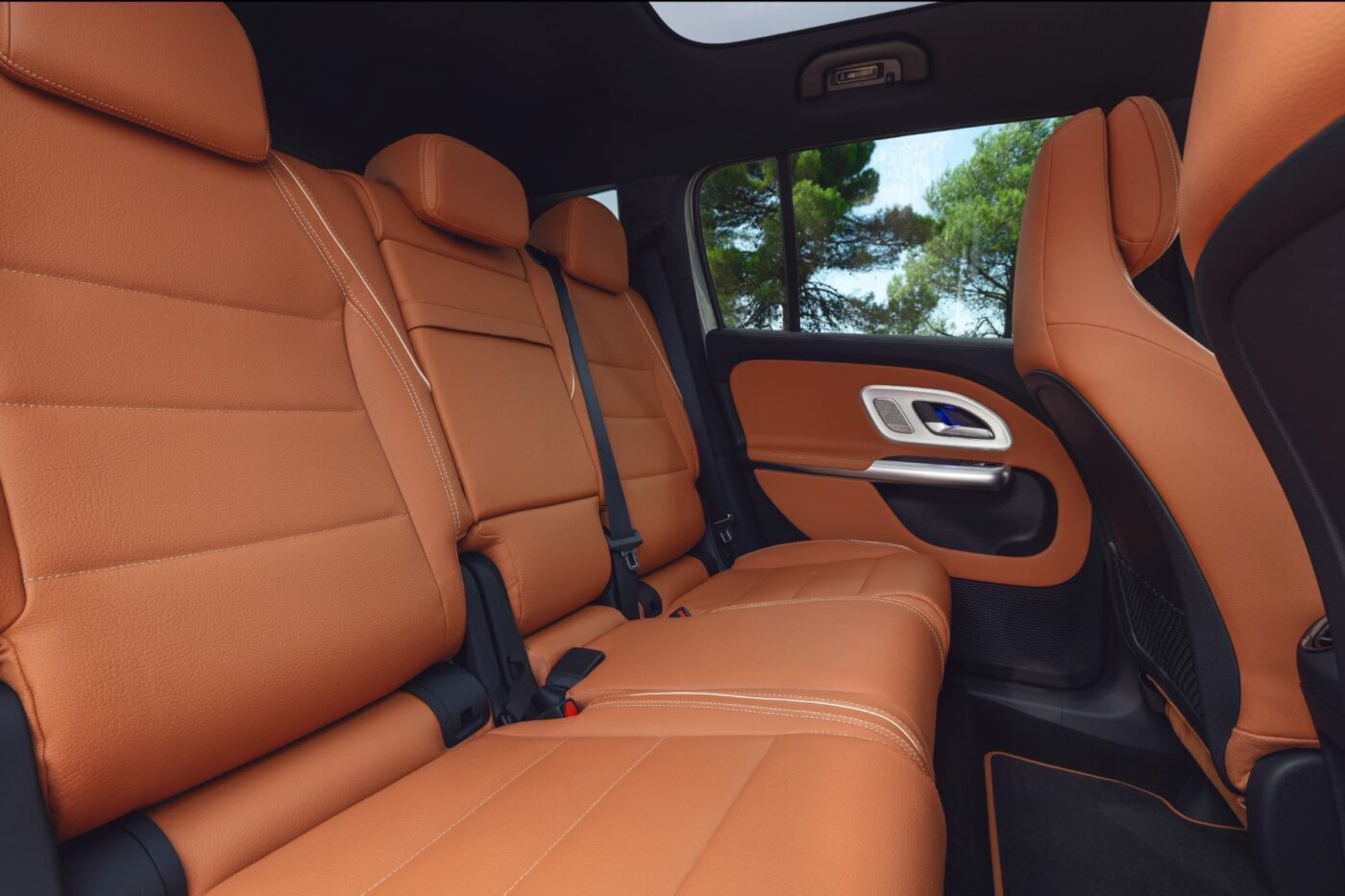
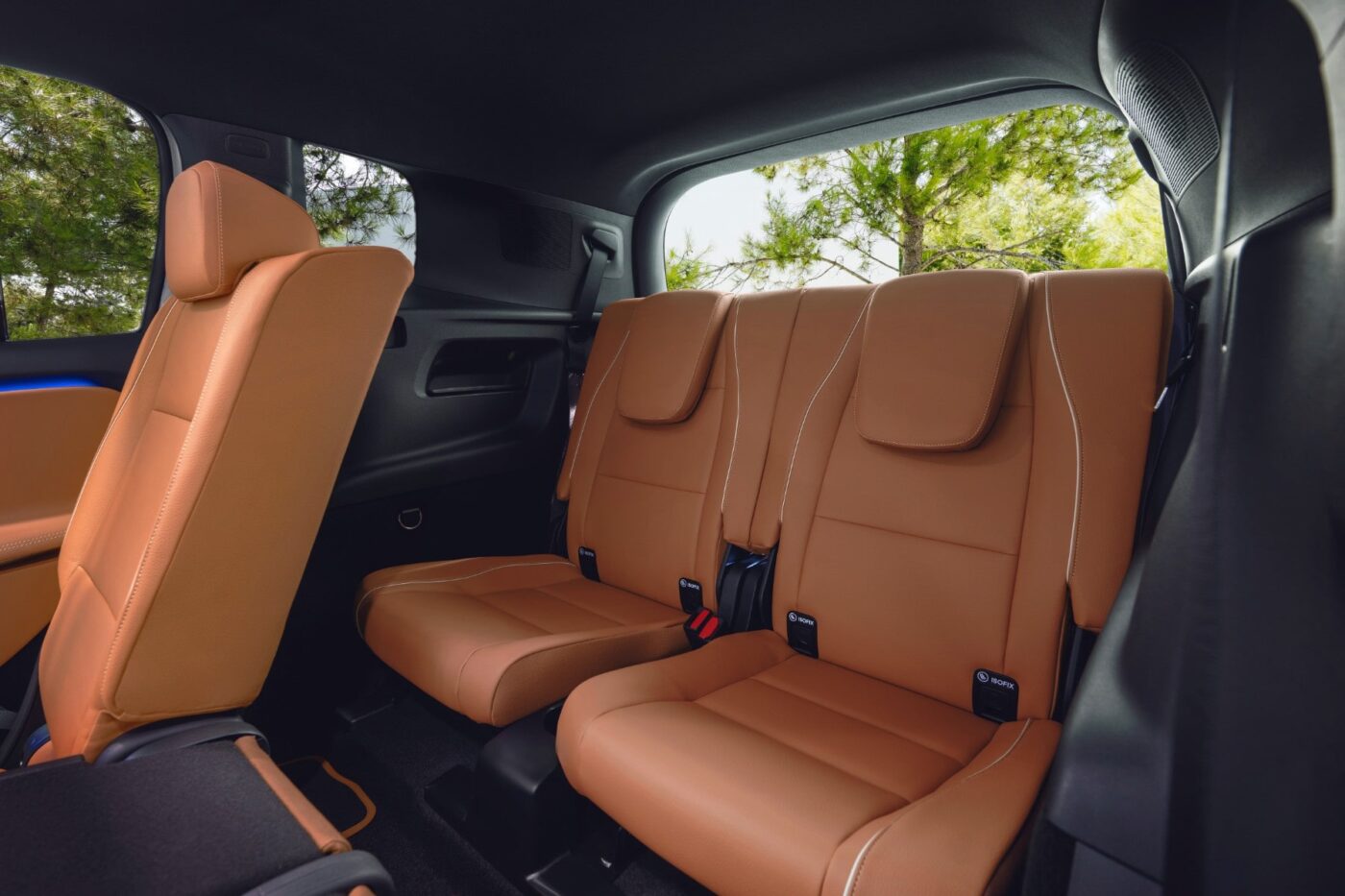
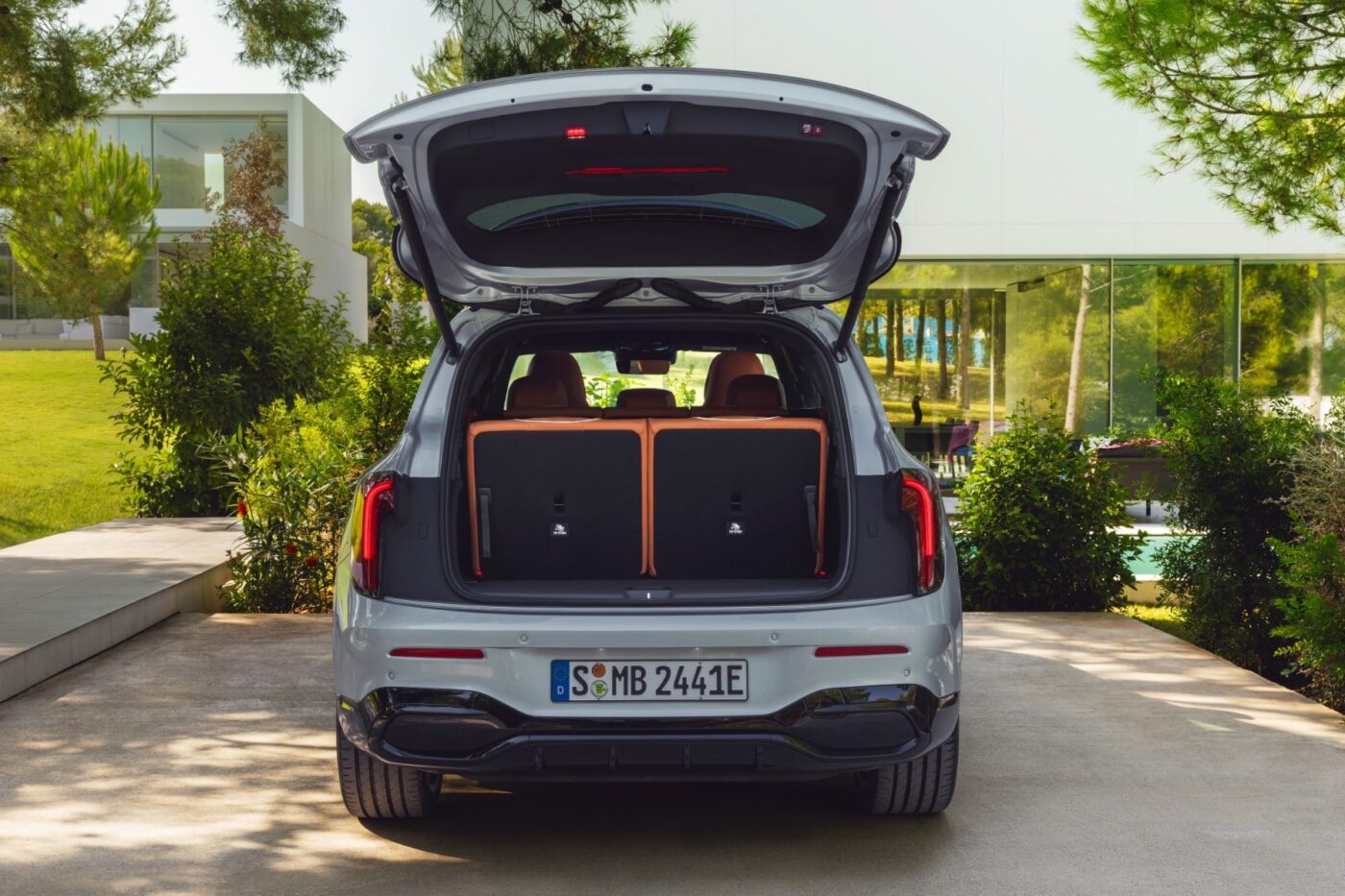
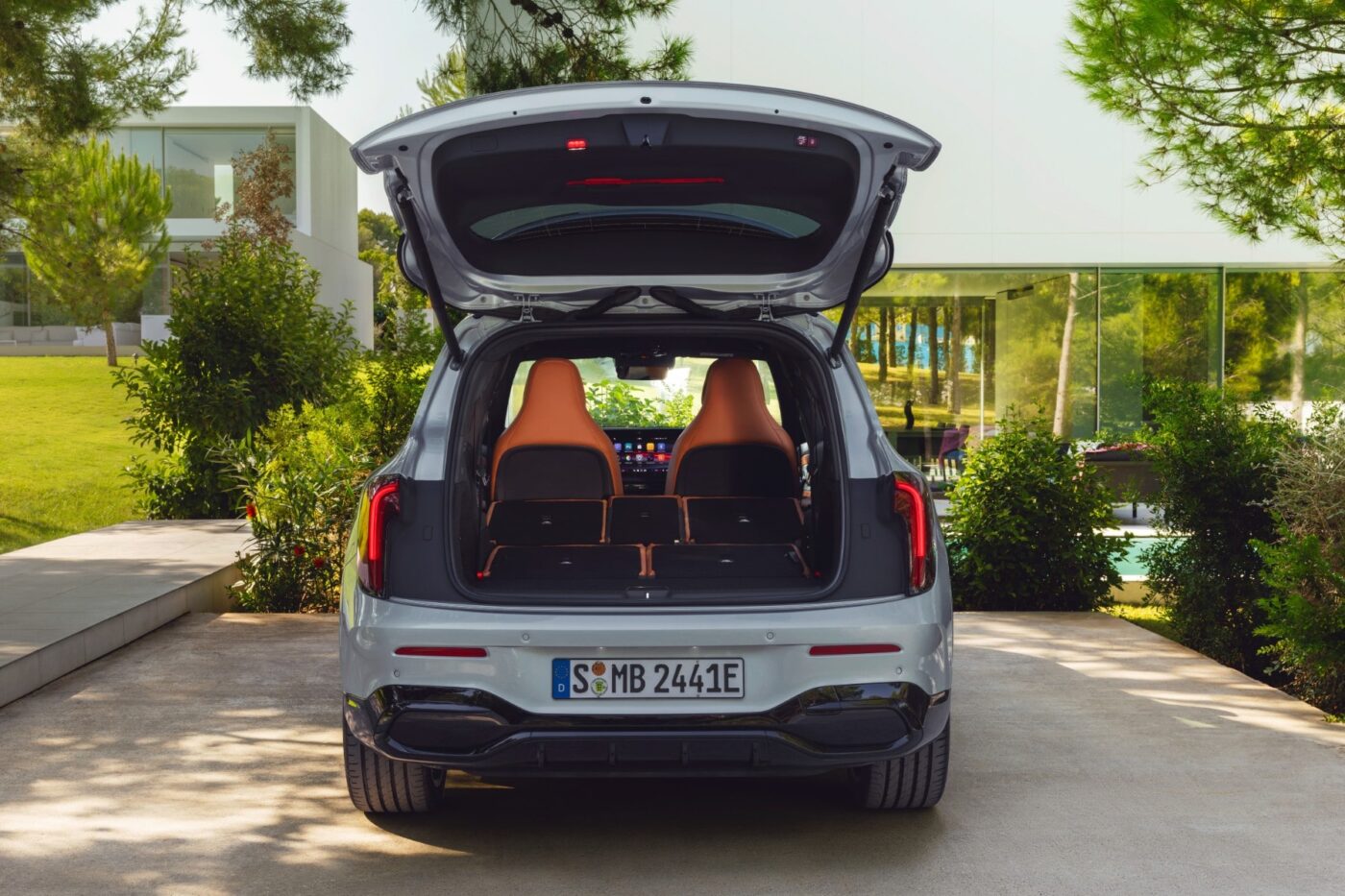
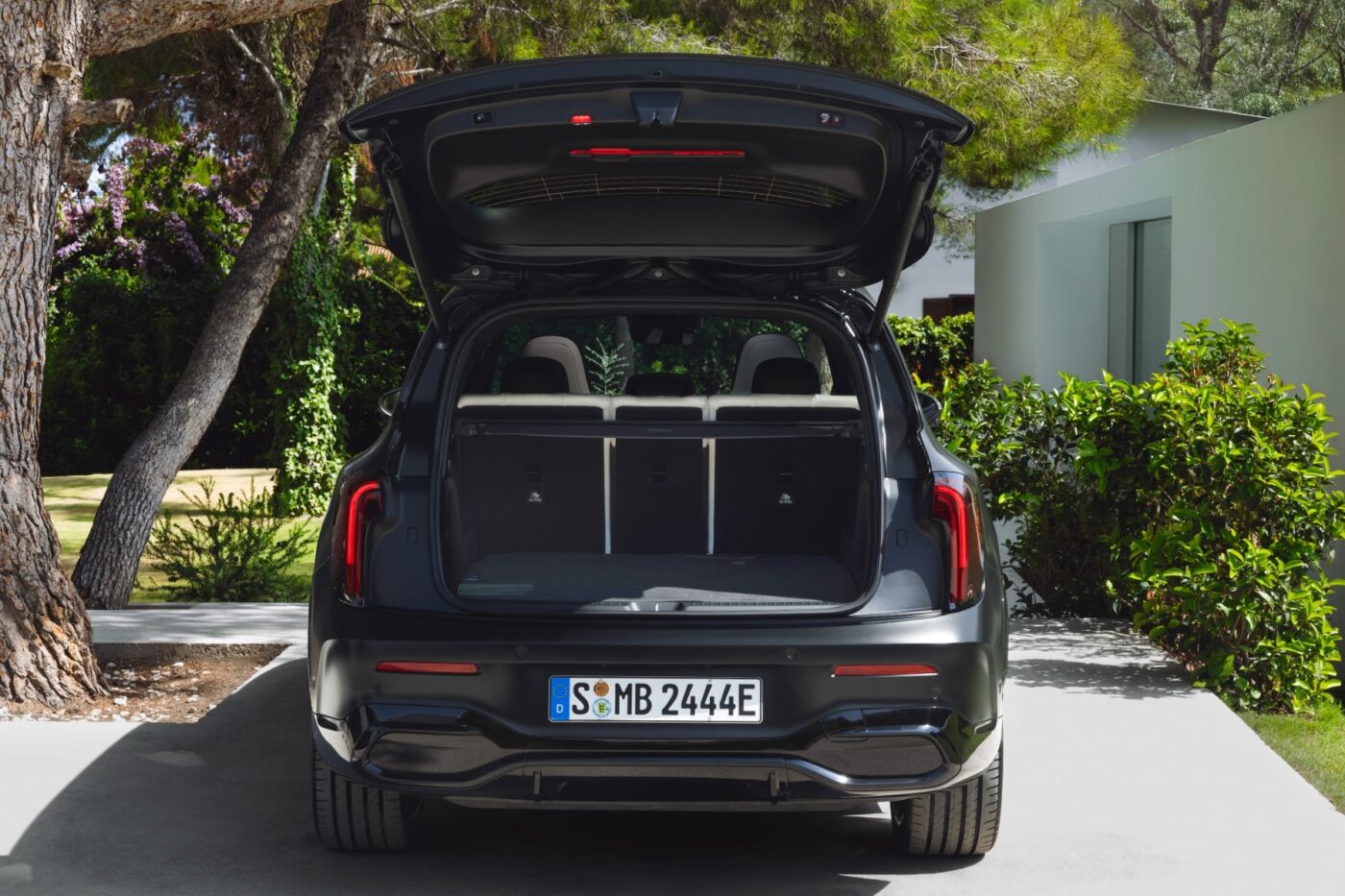
The two additional single seats in the optional third row comfortably accommodate passengers up to 1.71 metres tall, according to Mercedes, three centimetres more than the predecessor. Access to the third row is also easier than in the previous model. “This is due in part to the Easy Entry function’s 32-millimetre longer adjustment range and the enlarged rear door cuts,” the German manufacturer explained. “Another plus for everyday use: the doors extend over the sills. This not only increases entry comfort but also keeps the door cut-outs (and thus your trousers) free of dirt.” Additionally, the increased wheelbase (+60 millimetres to 2.89 metres) ensures that passengers in the middle row have more space. There is also an improvement in towing capacity—now up to two tonnes for the GLB 350 4MATIC.
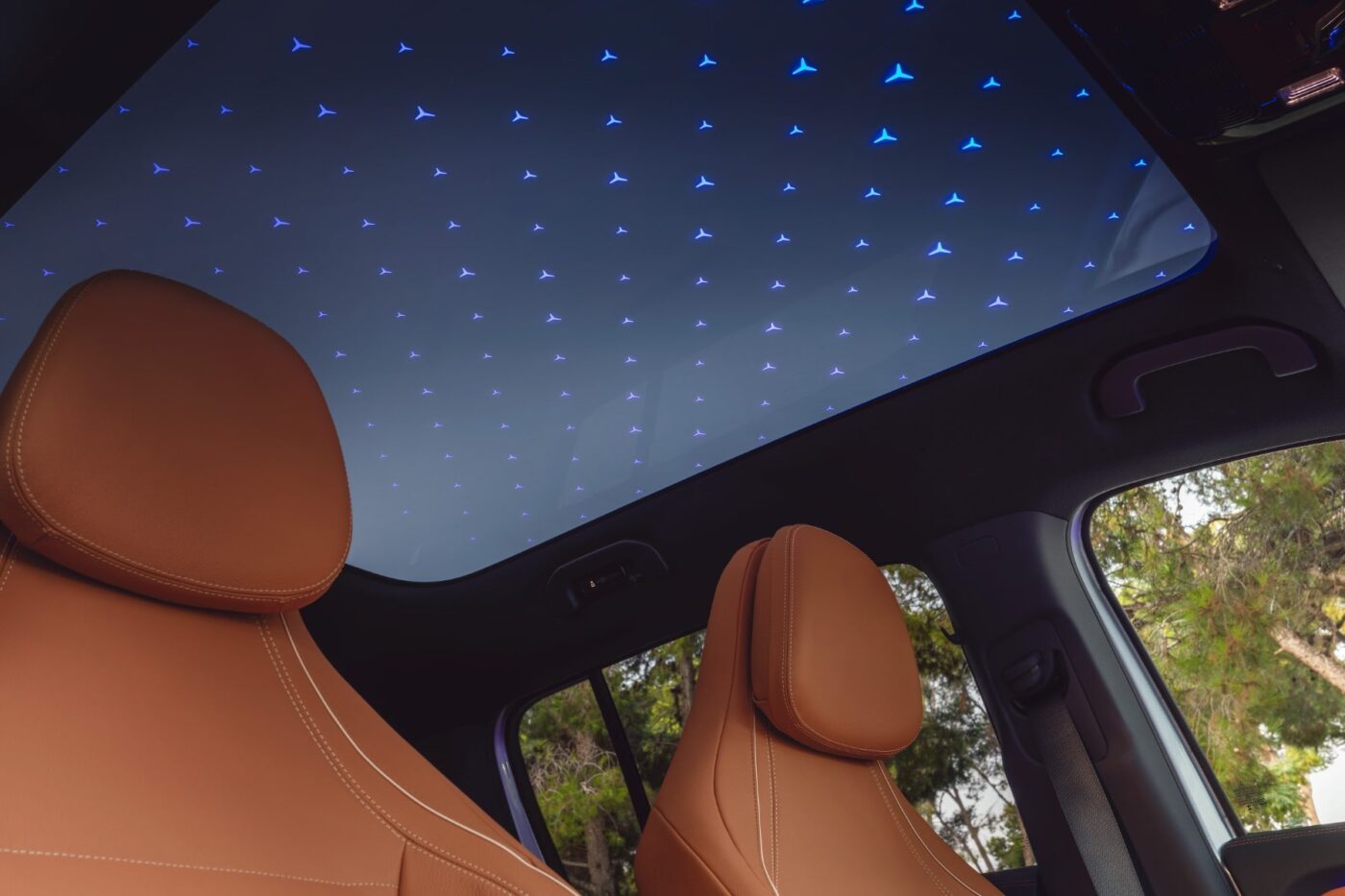
Mercedes has already released images of the interior from the icy wind tunnel tests. Here, too, the SUV follows the CLA’s template, featuring the massive Superscreen that spans the entire dashboard. Between the front passengers, a floating centre console will be introduced. At the same time, occupants in the new model are said to enjoy more headroom, despite a large panoramic roof with a starry sky design.
Mercedes also highlights the new heat pump in the GLB; hence, the images of the iced-up vehicle from the wind tunnel. Based on a twenty-minute drive at minus 7 degrees Celsius, the interior is said to heat up twice as fast as in the predecessor. At the same time, Mercedes claims that only half the energy is required for the heating process. The heating starts automatically as soon as someone enters the car. At the heart of these improvements is a new heat pump, which incorporates insights from the efficiency-focused ‘Vision EQXX’ programme. Even if the angular model doesn’t look it, the new GLB has also been optimised for efficiency.

1 Comment