

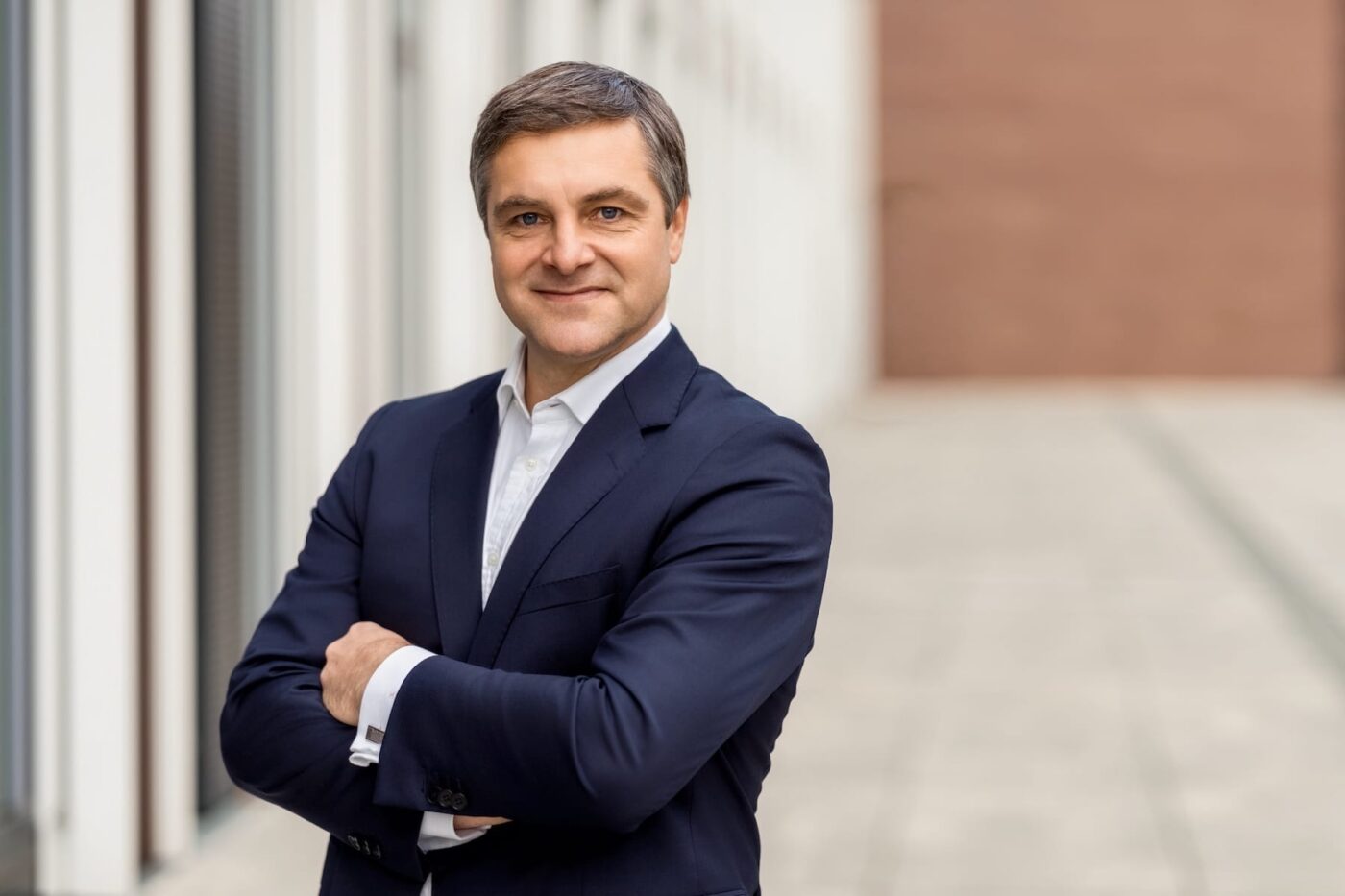
Former VW manager Martin Roemheld appointed as new Head of e-mobility at EnBW
Martin Roemheld is a true veteran of the industry and brings a wealth of experience to EnBW mobility+, Germany’s leading fast-charging provider with over 8,000 fast-charging points currently in operation. His career began in 2000 at BMW, where he would eventually contribute to the development of charging solutions before joining Volkswagen in 2018. At the Wolfsburg-based company, he served as Head of E-Mobility Services and established charging services for the ID. series – as well as founding Elli, the charging subsidiary of the VW Group. Most recently, Roemheld was responsible for the global transformation of BP Pulse’s product portfolio for charging systems.
From 1 January 2026, Martin Roemheld will take up his role at EnBW mobility+. With this appointment, EnBW is filling the top position at its charging subsidiary following a considerable delay. The leadership role had been vacant for a year. Jürgen Stein left the position at the end of 2024 to focus on his role as Chief Innovation and New Business Officer at the parent company, EnBW. In the interim, EnBW mobility+ was led by a leadership team comprising CCO Lars Jacobs, CFO Fabian Kneule, and CTO Volker Rimpler. As the new CEO, Martin Roemheld will report directly to Dirk Güsewell, EnBW’s Executive Board Member for Critical Infrastructure and Customers.
Continued emphasis on high-power charging
This appointment presents an opportune moment to explore how Martin Roemheld assesses the development of the eMobility market in Germany and what his plans are for EnBW mobility+: “As an engineer, one is rarely euphoric, but I am genuinely excited to get to know the team and join the market leader,” Roemheld told electrive. “What matters to me is that EnBW mobility+’s strategy aligns 100 percent with my belief in how electromobility can achieve mass-market adoption. This means focusing entirely on high-power charging and building a business model that can operate profitably without subsidies and at customer-friendly prices.”
Martin Roemheld also brings a global perspective to the role. In his previous position at BP Pulse in London, he served as Global Product Chief, working with a team spread across New Zealand, China, Europe, and the Americas. This experience provided him with valuable insights, particularly regarding the varying speeds of market development. “Working in London was an important step from the automotive industry into the energy sector, which significantly broadened my horizons,” Roemheld said. He is now looking forward to joining EnBW, a company ‘that possesses complete expertise across the entire electricity value chain—from generation and transmission to distribution. This made it a logical next step for me, both personally and professionally.’
Battery-electric vehicles must be uncompromisingly suitable as primary vehicles
The relevance of his new role is further underscored by a quote from Martin Roemheld’s past: “At VW, I once stated that a battery-electric vehicle must be uncompromisingly suitable as a primary vehicle, which naturally requires the infrastructure to form a seamless customer system.” It is precisely this charging infrastructure that Roemheld now aims to help develop at EnBW mobility+.
Roemheld is convinced that concerns such as range anxiety, allegedly inadequate public charging infrastructure, or debates about delaying the planned phase-out of internal combustion engines ‘miss the mark.’ He has been driving an electric vehicle for 13 years but only installed a home wallbox two years ago—and previously managed perfectly well using public charging infrastructure, which, as he notes, was far less developed in the past than it is today.
However, Roemheld is confident that the emotional debate about cars needing to ‘gurgle and roar’ is fading. Increasingly, people are purchasing electric vehicles ‘because e-mobility offers more affordable mobility.’ This is evident in lower charging costs and significantly reduced maintenance expenses. He hopes for a snowball effect as more people realise that electric vehicles are entirely suitable for everyday use and that the total cost of ownership is at least comparable to, if not lower than, that of an internal combustion engine vehicle.
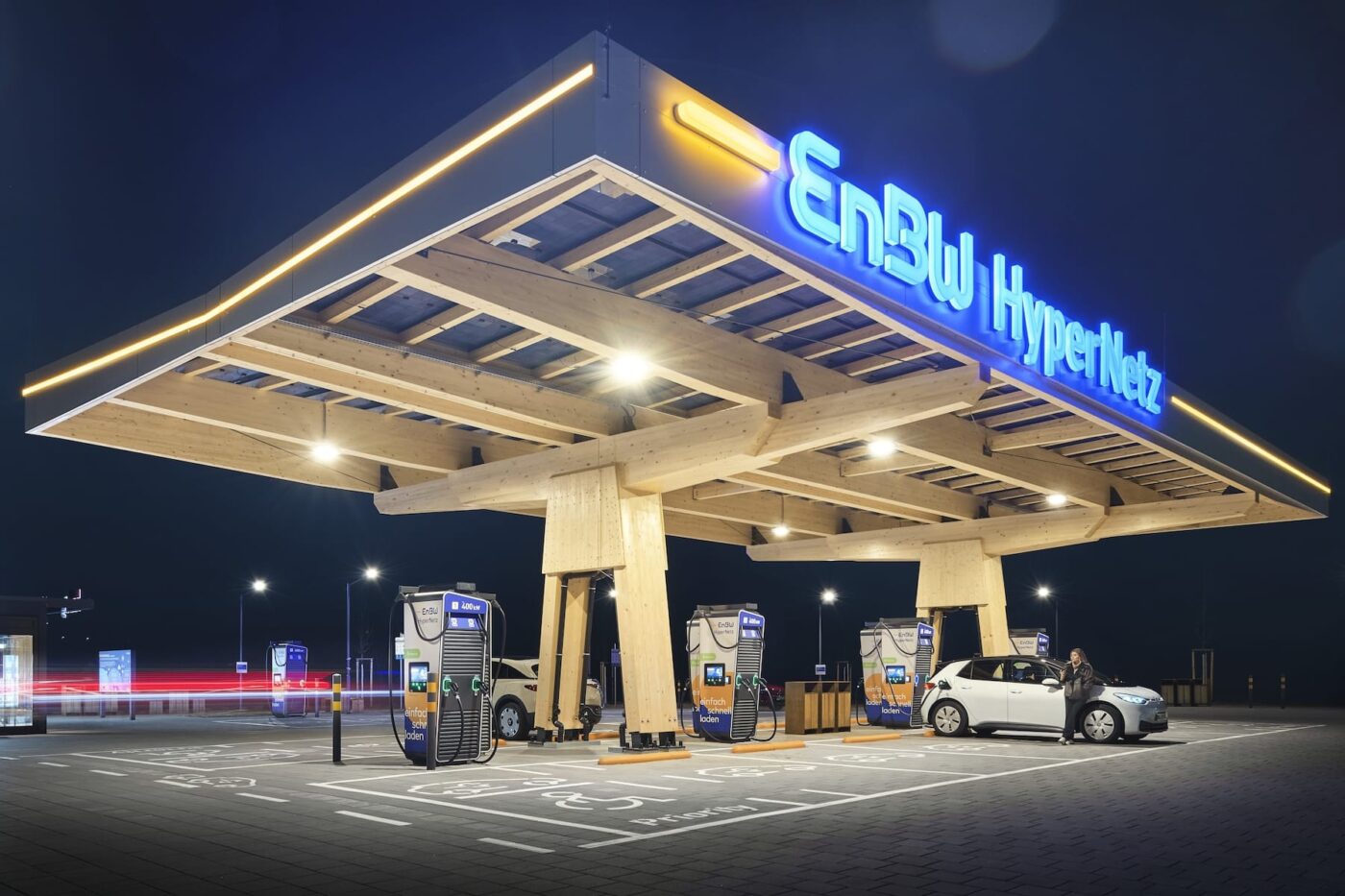
Roemheld now hopes that the federal government’s newly announced electric vehicle subsidy will genuinely increase the uptake of electric cars among households with low and middle incomes. “If e-mobility becomes accessible to all segments of society, it will complete the circle for EnBW’s charging infrastructure, allowing us to offer an attractive charging solution to residents of multi-family buildings without their own charging facilities.”
Roemheld anticipates that in a fully electrified world, far more than half of the population will “rely exclusively on public charging.” He believes it is their responsibility to develop products that are more attractive to this customer group than internal combustion engine vehicles. “To put it bluntly, the kilowatt-hour is not a product for me,” he emphasises. Rather, the kilowatt-hour is merely a “carrier of products.” EnBW mobility+ already offers various subscription models that cater to whether a customer can charge frequently at home—or little to none at all. Additional products for different usage scenarios could soon follow. “We must develop products that convince people living on the third or seventh floor of a multi-family building!”
“Counting plugs achieves little”
In March, EnBW surprised the industry by announcing that it would operate ‘over 20,000’ fast-charging points in Germany by 2030, instead of the previously targeted 30,000. When asked about this, Roemheld downplayed the significance of ‘counting plugs,’ arguing that technological progress is now so rapid that ‘everything we discussed five years ago is completely outdated.’ Instead, mindsets are evolving quickly: just a few years ago, the plan was to ‘pave’ multi-family residential areas with AC charging infrastructure. However, the utilisation of these charging points would be so low that they would simply not be economically viable. “Our EnBW Hypernet was initially built with 150 and 300 kW charging points. Now, we are already at 200 and 400 kW, and at the IAA, we saw vehicles capable of charging at one megawatt.”
The number of required charging points thus depends on various factors, such as the number of electric vehicles, charging power, battery size, range, and geographical distribution. It is impossible to predict exactly how many charging points will be needed in five years. While it is unlikely that the megawatt charging standard (MCS), developed for trucks, will soon enter the passenger car sector, the industry is already working on significantly higher CCS charging capacities beyond the current 400 kW: “On the infrastructure side, 500, 600 kW, and even megawatt chargers have been announced,” said Martin Roemheld.
New control room to support scaling
EnBW mobility+ is well-prepared for further increases in charging power: “As charging power increases, charging times will shorten. For me, the key question is how energy throughput is distributed across the plugs, how the system functions physically, and what peaks we will see.” To better manage its extensive charging network and address such challenges, the company has recently established a central control room, or operations centre. This facility not only ensures smooth operations but also generates valuable data. “The data we collect helps us learn from every location and continuously optimise our infrastructure,” explains Roemheld.
One thing is clear: faster charging times will impact the utilisation of charging points. At the same time, this could enable more electricity to be sold in a single day—assuming a significant increase in the number of electric vehicles on the market. Ultimately, EnBW mobility+ faces the challenge of recouping its recent annual investments of around 200 million euros. To achieve this, the new CEO, Martin Roemheld, aims to develop the right products.
This article was originally published by Florian Treiß for electrive’s German edition
0 Comments