

Good-bye tariffs: EU publishes guidance on minimum price mechanism with China
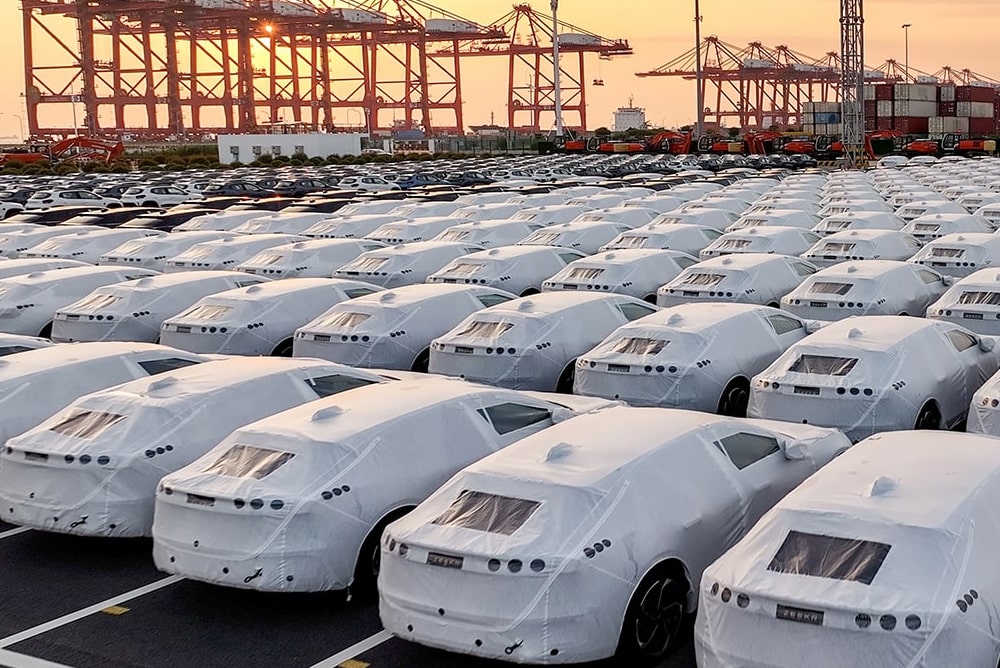
Brussels and Beijing are taking this step to resolve their dispute over the import of electric vehicles. Since 2024, the European Union has imposed additional tariffs on electric cars from China, which vary depending on the manufacturer and range from 7.8 to 35.3 per cent, on top of the standard 10% import duty. A replacement mechanism is now set to follow, intended to continue protecting the EU market from competitive distortions caused by heavily subsidised electric vehicles from China: Chinese OEMs will be exempt from tariffs if, in return, they commit to not selling their electric cars in Europe below a defined minimum price.
On Monday, the Commission published guidance setting out how Chinese manufacturers must proceed. According to the document, applications must be submitted to the EU, with ‘specific MIPs are required for each model and configuration option.’ The guidance document further states that there are two possible methods for determining the minimum prices:
- Based on the so-called CIF price of the exporter concerned during the investigation period that led to the introduction of the measures, increased by the corresponding margin of the imposed countervailing duties. In other words, the minimum price must be at least as high as the previous price that included tariffs.
- Based on the sales price of unsubsidised, EU-produced BEVs of the same or a very similar product type, including selling, general and administrative expenses (SG&A) and an appropriate profit margin. In other words, the minimum price must be at least as high as that of comparable models produced in Europe.
Industry experts expect that there will be little change in the level of surcharges. “Consumer prices are therefore unlikely to fall,” writes the German Frankfurter Allgemeine Zeitung. “The decisive difference compared with the current punitive tariffs is that Chinese carmakers could retain the difference between the original price and the agreed minimum price themselves, instead of paying tariffs to the EU.”
China’s Ministry of Commerce welcomed the breakthrough in a statement on the social media platform X. It said that both sides had made progress in their talks on the EU’s anti-subsidy investigation into Chinese electric vehicles. The parties had agreed that it was ‘necessary to provide general guidance on price undertakings for Chinese exporters exporting battery electric vehicles for passengers (BEVs) to the EU,’ the ministry wrote.
According to the Chinese authorities, the initiative contributes to implementing ‘the consensus of the China-EU Summit and properly resolv[ing] the EU’s anti-subsidy case concerning Chinese battery electric vehicles.’ The breakthrough demonstrates ‘have the ability and willingness to properly resolve differences through dialogue and consultation under the framework of WTO rules and maintain the stability of automotive industrial and supply chains in China, the EU, and the whole world.’
The European Union avoids self-congratulation or any exuberant statements. “The Guidance Document provides Chinese exporters of BEVs to the EU with general guidance on the submission of price undertaking offers. It covers various aspects to be addressed in a possible undertaking offer, including the minimum import price, sales channels, cross-compensation, and future investments in the EU.” It does not state when the minimum prices are expected to replace the tariffs.
A brief look back: Reuters learned in mid-December that negotiations between the two sides had resumed. While both parties had already confirmed in mid-April 2025 that they were once again discussing the introduction of minimum prices instead of punitive tariffs, the issue then went quiet. It was not until December that momentum returned: China’s Ministry of Commerce welcomed the renewed talks but at the same time called on the EU not to conduct separate negotiations with individual manufacturers.
That statement was clearly aimed at the review initiated by the European Commission in December of the anti-subsidy tariffs on electric vehicles built in China by Volkswagen, with the prospect of replacing the tariffs with an individual minimum price undertaking. The focus was primarily on the Cupra Tavascan, which VW Anhui builds for global markets. Because the Tavascan rolls off the production line in China, the additional tariffs set by the European Commission in October 2024 apply on import. For VW Anhui, this amounts to an additional duty of 20.7 per cent on top of the ten per cent base tariff, totalling 30.7 per cent.
That the minimum price mechanism is now implemented was far from certain for months. Until now, the EU had only entered into minimum price agreements for certain raw materials, not for complex products such as complete vehicles, as Reuters recalled in December. The Commission had also consistently stated that it considered minimum prices insufficient to offset the damage caused by subsidies. China, for its part, has repeatedly insisted that its manufacturers are simply ‘significantly more competitive’ than their European counterparts.
x.com, policy.trade.ec.europa.eu, faz.net
This article was first published by Cora Werwitzke for electrive’s German edition.
0 Comments