

Joint letter to EU Commission: Brussels urged to avoid funding gap as heavy-duty charging rollout accelerates
The letter is addressed to Commission President Ursula von der Leyen and Commissioner for Sustainable Transport and Tourism Apostolos Tzitzikostas, calling on them to ensure continuity of funding beyond the current framework. The signatories point to the expected exhaustion of the Alternative Fuels Infrastructure Facility (AFIF) as a critical risk for the sector and warn that a break in EU-level support for zero-emission heavy-duty vehicle infrastructure could undermine the rollout of electric and hydrogen trucks across the continent.
“AFIF is proving to be an effective tool in meeting critical infrastructure needs along the TEN-T network, accelerating compliance with the Alternative Fuels Infrastructure Regulation (AFIR) and de-risking much-needed investments,” the letter states. The organisations argue that future support must cover the full infrastructure chain required for zero-emission trucking, including public charging and refuelling points, depot charging, grid connections and energy storage solutions, all of which are essential for the daily operation of electric and hydrogen trucks.
Specifically, they call on the Commission to ‘swiftly prolong the AFIF for 2026 and 2027 to ensure strategic funding for ongoing infrastructure rollout across the EU,’ and ‘assess the potential for the AFIF funding to structurally support depot charging.’ The latter is currently not eligible for AFIF funding. But it should be, the signatories argue, as they consider it ‘essential for the transition to zero-emission road transport.’
AFIF was launched under the Connecting Europe Facility Transport programme to accelerate the deployment of alternative fuels infrastructure along the TEN-T network. Since its introduction, the funding instrument has enabled around €3 billion of investment across the EU, supporting public charging infrastructure, depot charging, hydrogen refuelling stations and electrification projects in ports and airports.
The signatories state that AFIF funding has played a central role in expanding charging and refuelling networks along major freight corridors and in logistics hubs, helping to create the conditions for the market entry of zero-emission heavy-duty vehicles. However, current discussions in Brussels indicate that no dedicated successor instrument is planned before the next EU Multiannual Financial Framework begins in 2028, raising the prospect of a funding gap in the interim years.
Recent funding rounds underline pace of deployment
The warning comes despite significant commitments made under recent AFIF calls. In early February 2025, the Commission selected 39 projects as part of the second phase of the facility, allocating nearly €422 million in grants. The funding supports new charging stations, hydrogen refuelling stations and decarbonisation measures at airports and ports.
For road transport, the Commission said the selected projects would enable the installation of around 2,500 charging points for light-duty vehicles and 2,400 charging points for heavy-duty vehicles along the TEN-T road network. The figures highlight the scale of infrastructure required to support the transition to zero-emission freight transport.
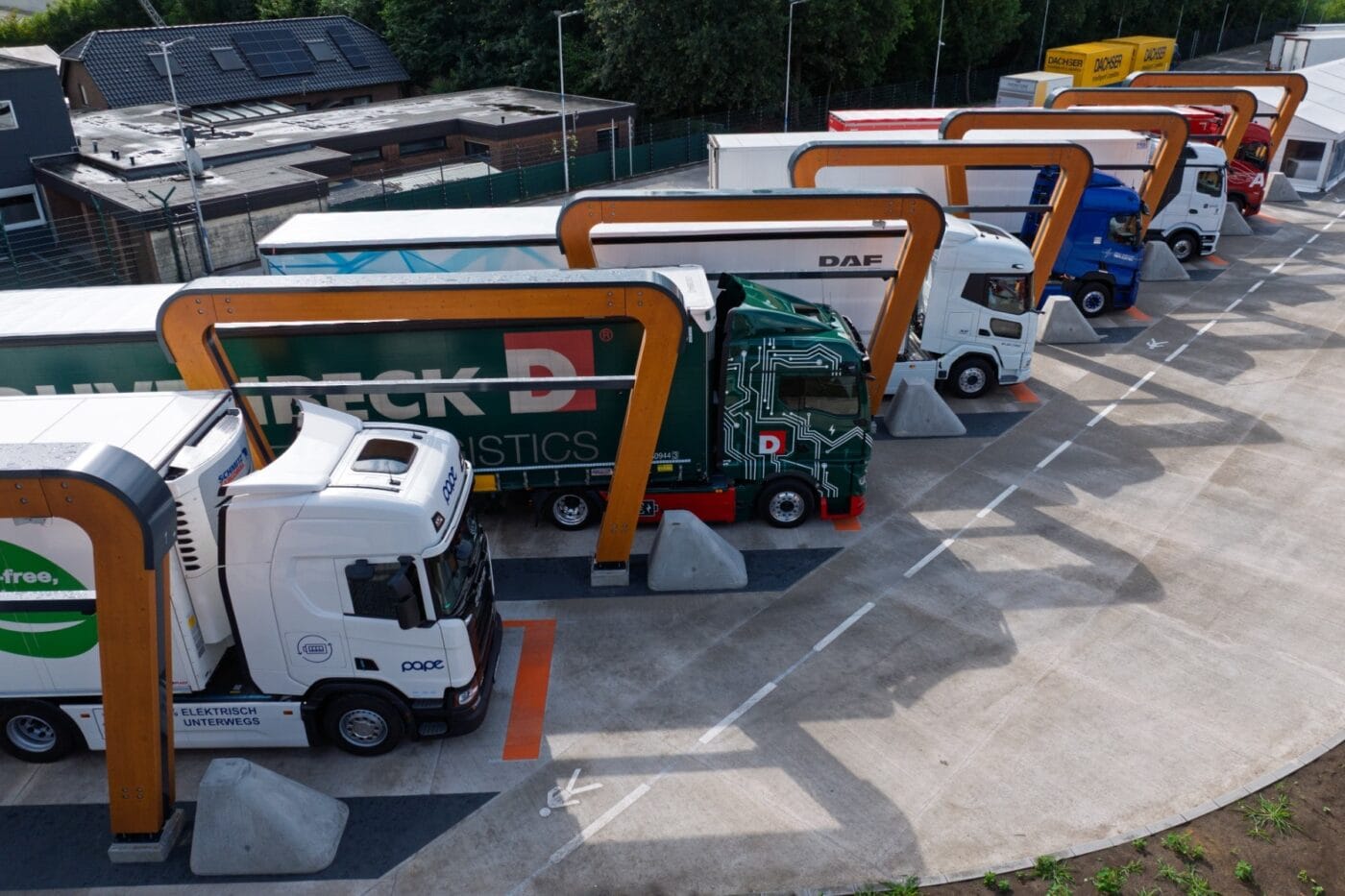
One example is truck charging operator Milence, which received €111 million for two projects, including the construction of 64 truck charging parks across nine EU countries. The projects cover 256 Megawatt Charging System points and 236 CCS charging points, as well as additional charging sites in Poland.
Further funding awarded in 2025 supports cross-border charging projects coordinated by E.ON Drive Infrastructure, spanning Central, Eastern, Western and Northern Europe. In addition, AFIF funding covers 35 hydrogen refuelling stations, the electrification of airport ground handling equipment and the greening of ports, including ammonia and methanol bunkering facilities.
“Now is not the time to pull the plug and stop the momentum”
For 2024–2025, AFIF had a total budget of €1 billion. In November 2025, the European Commission had already confirmed that most of the remaining AFIF budget had been earmarked and that the facility was approaching full allocation. Moreover, the Commission clarified that AFIF, in its current form, would not extend beyond 2025 and that no equivalent EU-level funding instrument for heavy-duty charging and hydrogen refuelling infrastructure had been secured for the period before 2028.
This confirmation added to concerns among industry stakeholders that project pipelines could stall in the absence of EU co-financing.
Against this backdrop, the organisations behind the January 2026 letter argue that a pause in funding would send the wrong signal to the market. IRU EU Director Raluca Marian said: “What signal would the EU send to the market if it pauses funding precisely when deployment is finally taking off?”
She added that the challenge is particularly acute for transport operators. “Companies may be ready to invest in more expensive zero-emission vehicles, but with the sector’s thin margins, such investments are not realistic if the availability of charging infrastructure is not guaranteed.”
Marian stressed that EU support is “vital — and especially targeted support for depot charging, which will remain the backbone of commercial vehicle charging by ensuring operational control and predictable costs”.
From the manufacturers’ side, ACEA’s Chief Commercial Vehicles Officer Thomas Fabian emphasised the need for alignment between infrastructure rollout, vehicle availability and operator investment cycles. “If Europe is serious about decarbonising road transport, it must ensure continuous support for heavy-duty charging and refuelling infrastructure,” he said, warning that “a break in funding would risk slowing adoption and weakening Europe’s industrial competitiveness at a critical moment.”
T&E Fleets and Freight Director Stef Cornelis pointed to the impact of AFIF-backed projects already underway. “From Portugal to Romania, truck charging infrastructure projects are kicking off thanks to AFIF,” he said, adding that the funding is ending “at a time when reliable charging across the continent is key to enabling Europe’s logistics sector to switch to electric”. Cornelis concluded: “Now is not the time to pull the plug and stop the momentum.”
iru.org, transportenvironment.org, transportenvironment.org (letter, PDF)

0 Comments