

China bans electric door unlocking systems from 2027
The Ministry of Industry and Information Technology (MIIT) has announced that approval regulations will be updated to enforce this change. From 1 January 2027, all new vehicles introduced to the market must comply with the updated requirements. Models that have already been approved or are nearing approval may continue to be sold with existing door handles until 2029, by which time they must be retrofitted to meet the new standards.
The new regulations address safety concerns associated with flush-mounted door handles integrated into the vehicle body. These handles typically rely on an electric door unlocking system rather than a mechanical one. In accident scenarios, they can fail to open if the electrical circuit is disrupted, as mechanical redundancies are often absent. To address this, the new regulations mandate that car doors must be mechanically operable from both inside and out. Additionally, sufficiently large recesses for gripping, as well as small instructional labels indicating the door-opening method and handle location, will likely be required. This aims to resolve issues such as cumbersome operation and door failures after accidents, as reported by the state news agency Xinhua. Such door handles are particularly common in battery-electric vehicles and plug-in hybrids (referred to as New Energy Vehicles in China), but the new regulation applies to all powertrain types.
However, a significant caveat remains: it is still unclear how these regulations will be implemented in practice—or more specifically, what exact requirements will be set for mechanical door opening. No specific vehicle models with door systems that will become non-compliant have been named. Given that manufacturers have already developed a variety of retractable door handle designs, it is possible that not all variants will be banned under the new rules.
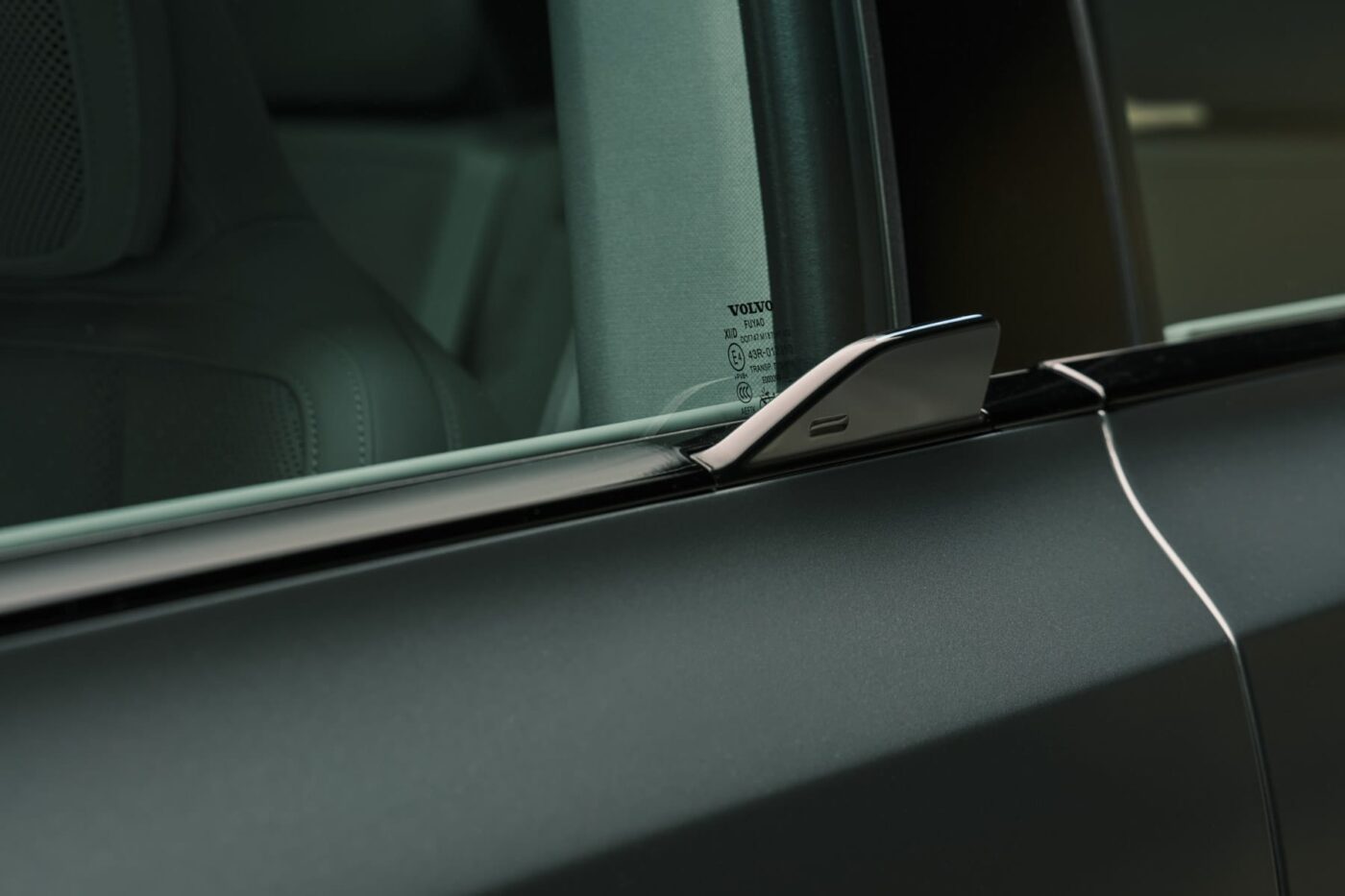
For example, the retractable door handles in the Tesla Model 3 and Model Y feature an external mechanical lever but electronically unlock the door. Inside, there is a button for electric unlocking; however, some models only include a hidden cable-pull solution for mechanical emergency unlocking, which can be difficult to operate in an accident and may not be immediately obvious to occupants. In the Mercedes EQS, for instance, the entire door handle must first extend electrically before it can be used—this will likely no longer be permitted from 2027. The Zeekr 7X, in its top trim, even features a dual door opener: small buttons inside and outside not only electrically unlock the door but also open and close it electrically. However, it also includes flush-mounted door handles as a standard solution for other trim levels. Volvo, meanwhile, has developed small sensor-activated flaps for its new EX60 to replace traditional exterior door handles entirely. While the Swedish manufacturer emphasises that it aims to maintain functionality even in an accident via a dedicated safety circuit, this solution is unlikely to meet China’s requirements for mechanical unlocking.
By 2027, car manufacturers will need to adapt the door handle designs of their new models. As China is a critical market for electric vehicles, it is likely that door handles for models sold there will align with Chinese standards globally—developing different variants would simply be too costly. This applies to models like the Volvo EX60, which no longer features conventional door handles. However, in some models, automatically extending door handles are only included in higher trim levels, while base models are equipped with manual door handles featuring mechanical unlocking—these would likely remain permissible in China.


0 Comments