SINEXCEL launches one-stop solution for e-truck charging
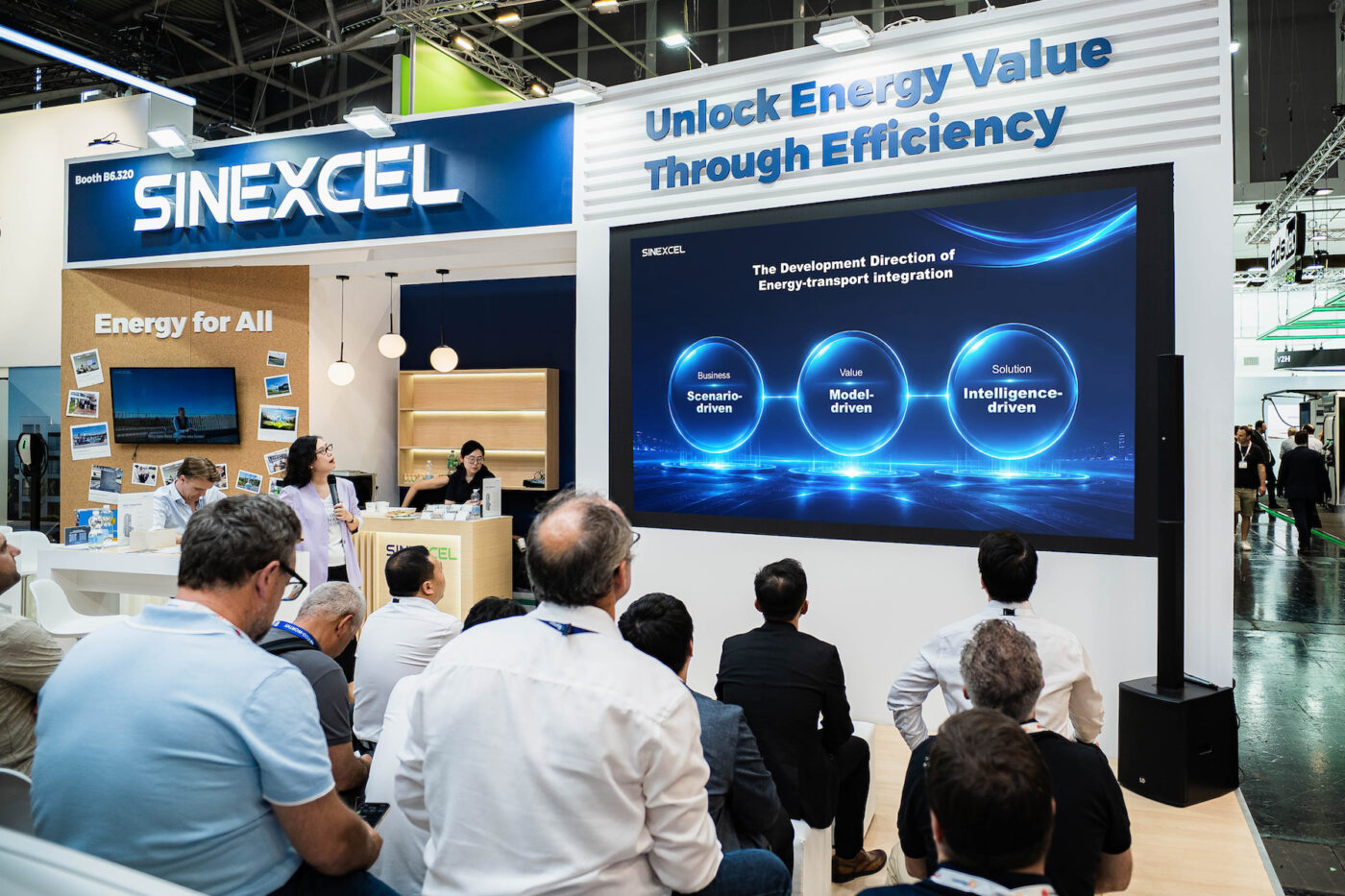
According to Celine Li, General Manager of Global Marketing at SINEXCEL, regulation is a major driver of growth. “The policy and regulation are pushing the whole industry to expand faster than ever,” says Li. She points to the EU’s target of reducing carbon dioxide emissions from new heavy-duty trucks by 90% by 2040 and forecasts suggesting there could be around two million electric heavy-duty trucks on European roads by then.
SINEXCEL estimates that investments in charging infrastructure—including charging hardware, energy storage, and software—could unlock a charging infrastructure market worth tens of billions of euros and a power trading market worth hundreds of billions of euros for zero-carbon electric truck fleets.
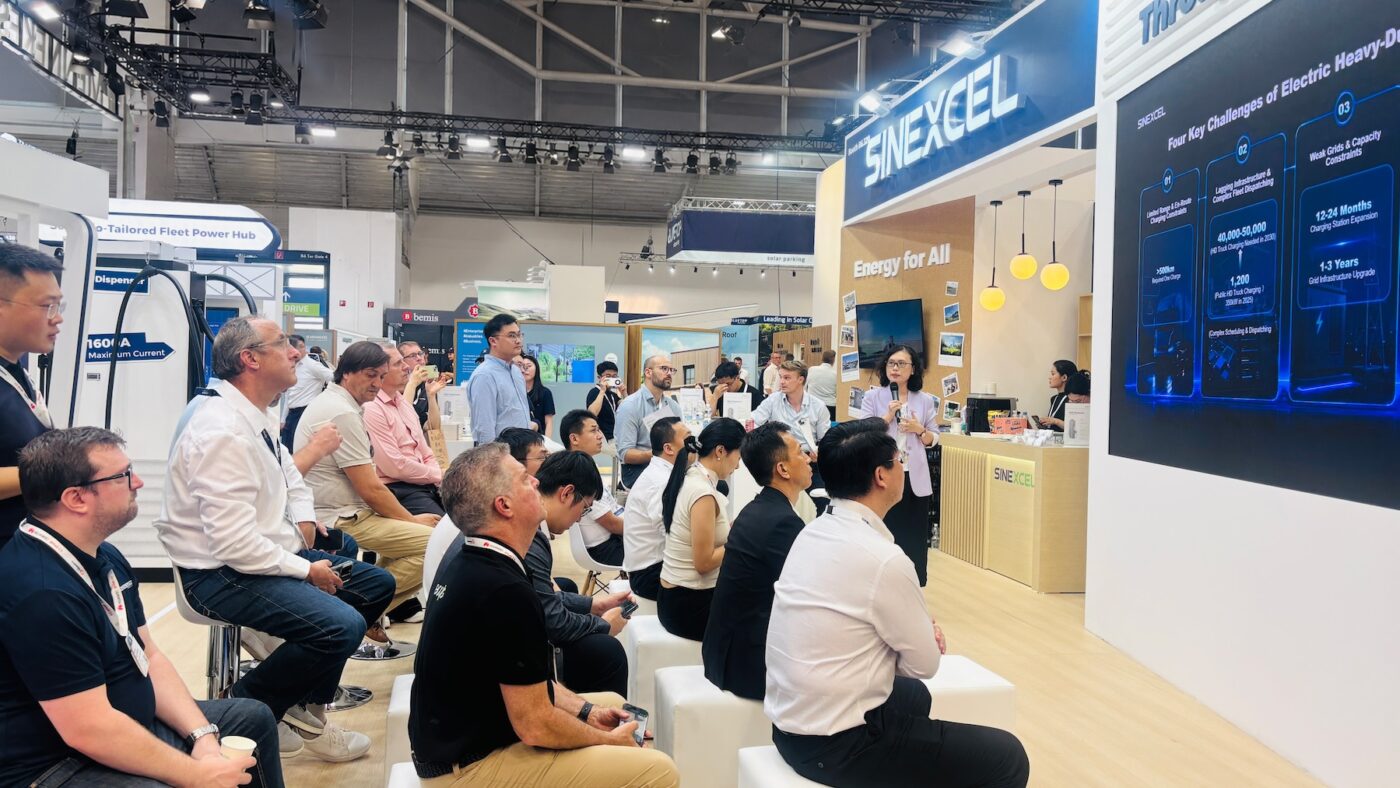
Li identifies four key challenges: vehicle range limitations for long-haul transport, insufficient charging infrastructure, grid constraints and total cost of ownership.
“The charging infrastructure is lagging far behind,” she says. According to Li, existing grid capacity often cannot support high-power truck charging, while grid upgrades can take between one and three years.
Scenario-driven charging
To address these challenges, SINEXCEL has developed what it describes as a scenario-driven, model-driven and intelligence-driven solution based on experience gained in China.
“We designed a solution that’s based on the lessons we learned from the Chinese best practice,” says Li.
The scenario-driven approach aligns charging infrastructure with transport operations. Depot sites use lower-power chargers for overnight charging, while high-power charging stations are designed to serve drivers during the mandatory 45-minute rest breaks required under European regulations.
A model-driven platform, the solution integrates vehicle and depot lifecycle costs with diversified revenue streams—including freight operations, energy arbitrage, and policy incentives—to deliver predictable and quantifiable fleet ROI.
Through a unified site–route–network architecture, this integrated power and transport management platform intelligently coordinates charging, energy storage, and vehicle dispatch, optimizing both energy utilization and fleet productivity while reducing total operating costs.
Powered by an intelligence-driven hardware-software integrated architecture, the solution seamlessly combines core charging and energy storage equipment with an intelligent energy management platform to enable intelligent energy orchestration across a network of charging sites. Through coordinated charging, peak-valley energy arbitrage, and participation in power markets, it consistently unlocks dynamic revenue-generating potential for charging hubs.
Backed by nearly 20 years of expertise in charging and energy storage, SINEXCEL spearheads the global market for megawatt-level chargers and is recognized as a BNEF Tier 1 power inverter manufacturer.
Looking ahead, Li expects charging infrastructure to evolve beyond its traditional role. “We are moving from the electrifying vehicle to the full electrification of the whole transportation system,” she says.
This is a sponsored article and the client is responsible for the content. If you’d like to inquire about similar opportunities, please get in touch via [email protected].