

TU Eindhoven unveils ultra-low-maintenance battery-electric vehicle
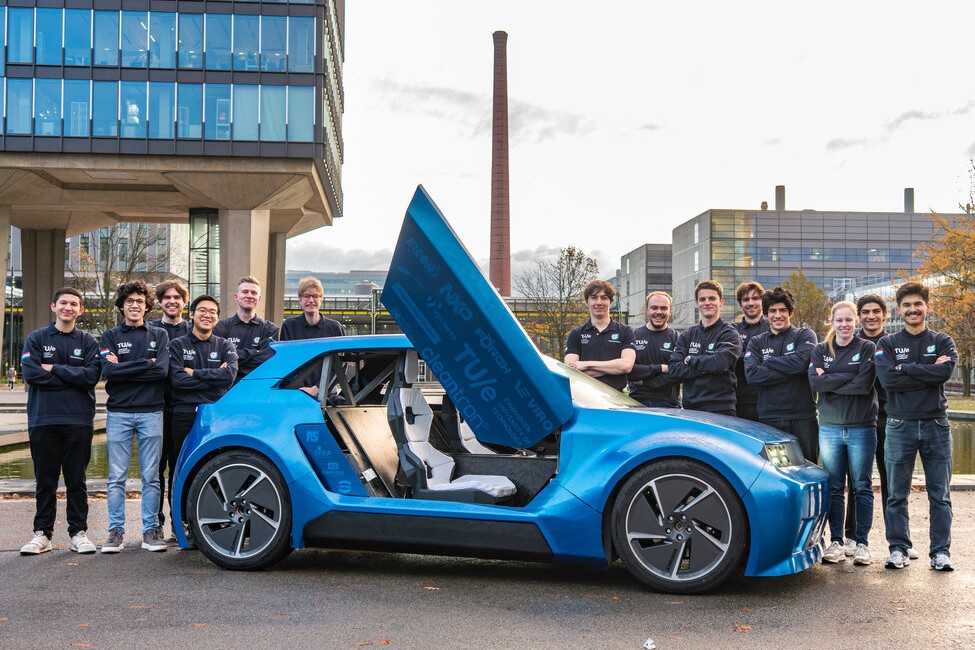
The TU Eindhoven is renowned for its electric vehicle research. The latest innovation from the TU/ecomotive student team is a battery-electric vehicle named Aria, designed to be exceptionally easy to maintain. “Users can repair the car themselves and are no longer dependent on the manufacturer for minor fixes,” the students explained. The key lies in its modular design: the concept features detachable components, including the battery, body panels, and interior electronic elements.
“If something breaks, the user only replaces the faulty part. With clear manuals, standardised components, a built-in toolbox and an app that reads out the car’s status, you can perform maintenance yourself,” the team stated. This approach extends to the 13-kWh battery, which comprises six modules, each weighing twelve kilograms. These modules can be manually removed and replaced as needed.
The bodywork is also thoughtfully engineered: the outer panels can be detached, providing quick access to underlying components. The students’ primary objective is to revolutionise the repairability of electric vehicles. “That is urgently needed: electric cars are becoming increasingly difficult to repair. Batteries are often integrated into the chassis, parts are not standardised and are hard to obtain for independent garages.”
According to team leader Taco Olme, this undermines the sustainability credentials of electric vehicles. He thus welcomes the European legislation adopted in 2024, which grants consumers the right to repair products more quickly, affordably, and easily.
“The new European rules are a step forward, but they mainly focus on household appliances and consumer electronics. EVs still fall through the cracks. With ARIA, we show what is possible and hope to encourage the EU to apply those rules to passenger cars as well,” he said. “At the same time, we want to show the automotive industry that sustainable and practical design really is achievable. If we can build this within a year, there are opportunities for the industry.”
This article was first published by Cora Werwitzke for electrive’s German edition.

7 Comments