

MAN to deliver electric trucks with electric trucks
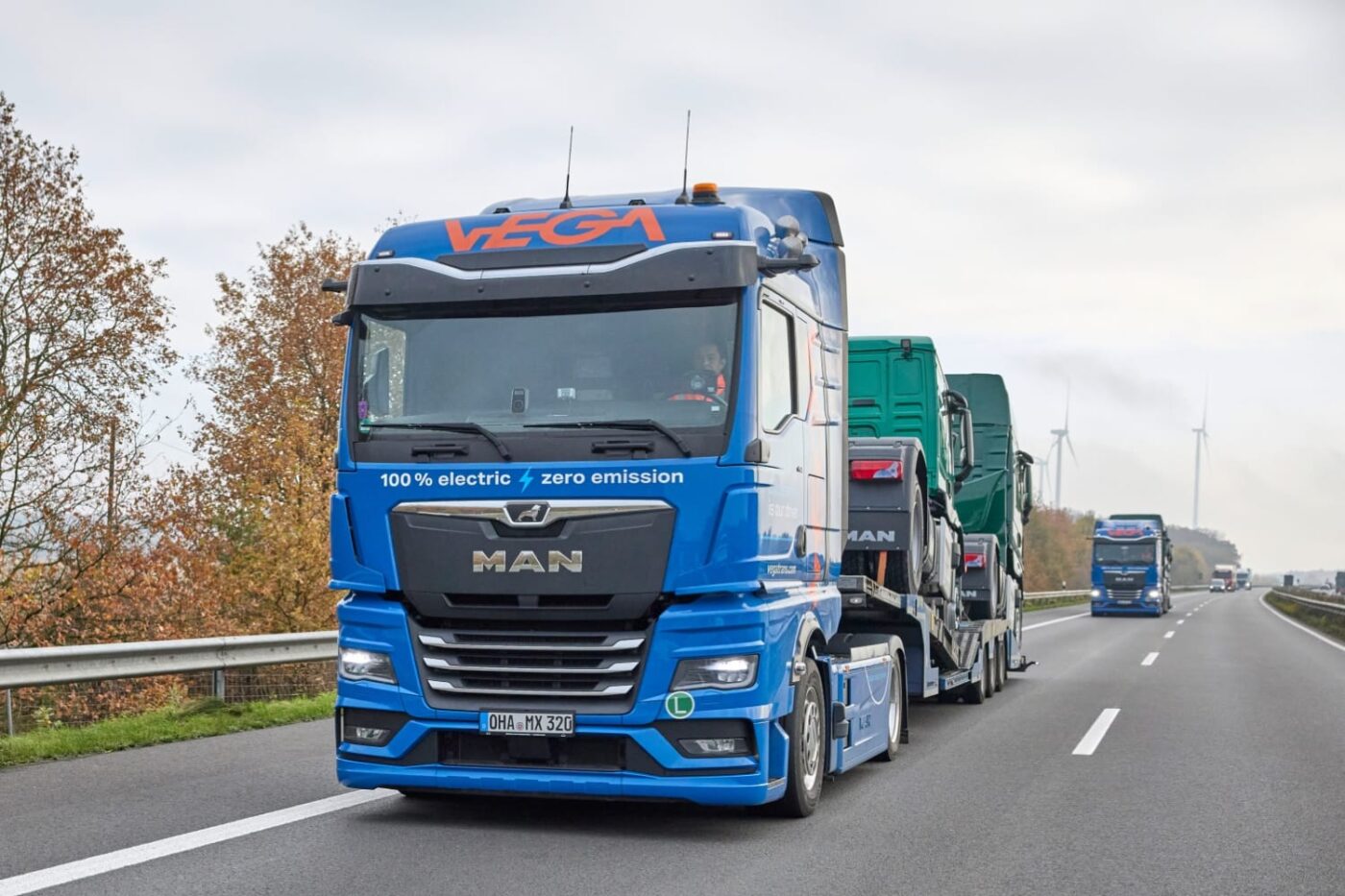
Following a successful trial phase with two battery-electric trucks of the MAN eTGX model, VEGA plans to steadily expand its fully electric transport operations. By the end of 2026, an additional 30 to 40 eTGX units are expected to be deployed for similar tasks. According to company representatives, the initiative, dubbed ‘Electrifying Outbound’, will reduce CO₂ emissions by approximately 2,700 tonnes annually. VEGA, a long-standing partner in MAN’s factory logistics, is headquartered in Salzburg, Austria, operates ten branches across Europe and Asia, and employs over 1,000 people.
The partners describe their new approach to factory logistics as follows: “Every week, MAN eTGX trucks deliver around 30 to 40 brand-new trucks from the VEGA rail terminal in Rheine near Osnabrück within a radius of 300 km using fully electric power and thus with zero local emissions.” The delivery of new vehicles from MAN’s production plant in Krakow, Poland, to the rail terminal (covering the majority of the transport route) is also handled electrically by train.
The rail transport to northwest Germany forms part of the ‘LionXpress’ network, which comprises two rail routes serving Germany and Austria. MAN reports that this approach already delivers significant CO₂ savings: “Since the project started in June 2023, VEGA has transported over 11,000 trucks by train in a more climate-friendly way, saving 6,000 tonnes of CO₂. In total, the two LionXpress train concepts have saved around 10,400 tonnes of CO₂ in the transport of over 22,000 trucks.” VEGA’s patented loading system also enables rail transport of trucks up to 4.2 metres in height.
The introduction of battery-electric trucks for new vehicle deliveries now electrifies the entire logistics chain from the production plant to the end customer. Previously, this final leg was primarily handled by diesel trucks. “With the two eTGX trucks, we are gaining valuable experience in demanding real-world operations, which involve different routes and unloading locations every day,” explains Franz Blum, CEO of VEGA. “The battery range and operational suitability of the vehicles have proven to be excellent. We are using these findings to electrify further transport routes together with our partners.”
“VEGA has been a strong and innovative partner for our outbound logistics for many years,” added Michael Kobriger, Board Member for Production and Logistics at MAN Truck & Bus. “Together, we are working consistently on solutions to further reduce the carbon footprint of our products. The combination of electric trucks with other zero-emission means of transport shows how climate-friendly supply chains can be intelligently implemented.”
The ‘Electrifying Outbound’ initiative is part of MAN’s broader sustainability strategy, which aims to cut CO₂ emissions from vehicle delivery by 30% by 2030. Beyond electrifying the last mile and expanding rail logistics, the manufacturer plans to integrate other areas, such as spare parts distribution. For inbound logistics, MAN is also advancing electrification, having issued a tender in April 2025 for the future use of battery-electric trucks on approximately 40 routes.
Meanwhile, MAN’s logistics partner VEGA has set an ambitious target: to make the entire outbound logistics chain for the commercial vehicle industry CO₂-free by 2030. To achieve this, the Austrian company will deploy another ten eTGX units this year and plans to expand its electric truck fleet by a further 20 to 30 eTGX units in 2026. The MAN eTGX features a fifth-wheel height of 950 mm—a unique selling point among electric trucks that enhances its suitability for vehicle delivery.
VEGA intends to use the electric trucks not only for MAN’s factory logistics but also for pre-carriage of new trailers from other customers, including Krone and Schmitz, to its rail terminal in Rheine. Additionally, further concepts for CO₂-free logistics within the Traton Group, MAN’s parent company, are in development.
VEGA’s strategy relies on combining rail transport—using a specialised loading system for trucks and trailers (‘r2L Connectors’)—with battery-electric and hydrogen-powered trucks for last-mile deliveries. The Salzburg-based logistics specialist is investing over €30 million in its own charging and solar park network across its ten European branches to minimise reliance on public charging infrastructure. A further €80 to 100 million is earmarked for transitioning its existing fleet from fossil fuels to battery-electric and hydrogen vehicles.
Additionally, VEGA has acquired a stake in a German company specialising in green hydrogen production to remain at the forefront of this emerging technology.
This article was first published by Cora Werwitzke for electrive’s German edition.
0 Comments