

VW confirms innovation centre in Dresden
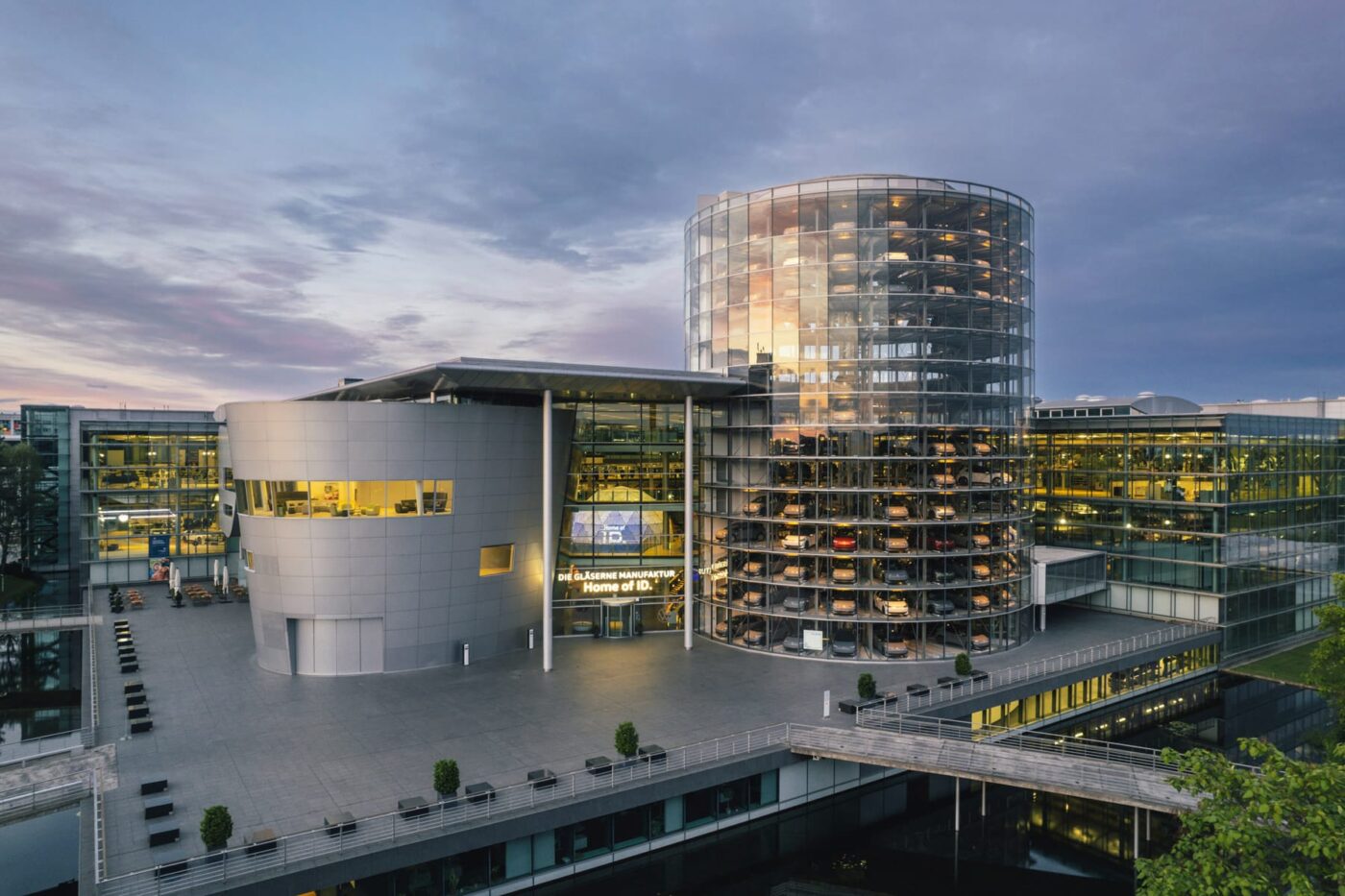
These technology fields are expected to include artificial intelligence, robotics, microelectronics, and chip design. “A letter of intent signed by the parties involved stipulates, among other things, that Volkswagen will make extensive spaces in the Manufaktur available to TU Dresden,” the German carmaker announced. “Over the next seven years, both partners will invest more than €50 million in research, technology development, and four new endowed professorships.”
The plan has essentially been known since the beginning of the week, when the German Handelsblatt first reported on the letter of intent. As clarified on Monday, it is only a letter of intent and not a final contract, even though the cooperation is set to begin in less than a month. That is reportedly due to outstanding issues. For instance, the partners have yet to agree on how to divvy up the costs of around €50 million. Volkswagen’s latest statement does not provide further details on this matter.
What is certain is that VW will remain active in Dresden not only through the innovation centre, as the factory is set to “be retained as a Volkswagen delivery and research location, as well as an experience hub.” Following Volkswagen’s Autostadt in Wolfsburg, the Gläserne Manufaktur is the second-largest vehicle delivery location for Volkswagen in Germany—with around 3,500 vehicles delivered in 2025.
Regular operations planned for 2027
The focus will shift to the new campus. The timeline envisages that the production line for the ID.3 will come to a standstill from January 2026, while the conversion of the building into an innovation campus will be prepared in parallel. The first joint research projects with TU Dresden are set to begin in mid-2026, with regular operations commencing in 2027, according to VW.
The end of vehicle production in Dresden naturally raises questions about the future for employees—particularly as the innovation campus will require different skill sets. However, with the retention of the development and delivery location, Volkswagen’s existing jobs will also be preserved. VW has now stated that, as of early 2026, ‘all remaining 230 employees will initially retain their jobs in Dresden.’
“This number will continue to decline in the coming years due to the retirement of older employees. For those employees whose roles will be phased out in the coming months and years, the company is offering socially responsible alternatives, such as transfers to the Zwickau and Chemnitz sites, partial retirement schemes, or termination agreements. Additionally, employees have the option to transfer to the main plant in Wolfsburg.”
Reports earlier this week suggested that there are around 60 employees who are not needed at the innovation centre but have not accepted any offers. For the employees of the Gläserne Manufaktur, Volkswagen’s job guarantee until 2030 still applies. “If no role can be found, employees may, in the worst case, have to stay at home on continued pay,” the article stated—a scenario that management naturally seeks to avoid.
The end of production in Dresden is part of the ‘Future Volkswagen’ programme, which aims to reduce VW’s production capacity in Germany by more than 730,000 vehicles per year by 2028 and achieve a socially responsible reduction of 35,000 jobs by 2030. “The decision to end vehicle production at the Gläserne Manufaktur after more than 20 years was not an easy one. However, from an economic perspective, it was absolutely necessary,” said VW Brand CEO Thomas Schäfer. “All the more important is the fact that we have been able to develop a viable future concept for the site in recent months—with a clear perspective for the years ahead.”
Saxon Minister President Michael Kretschmer added: “The cooperation between Volkswagen and the Free State marks a turning point for Saxony as an industrial location. The realignment of the Gläserne Manufaktur will not only create an innovation campus of national significance—we are also sending a clear signal about our state’s ambition to be at the forefront of future technologies. The close partnership between Volkswagen and TU Dresden combines excellent research, industrial strength, and entrepreneurial courage. This is precisely the combination we need to secure our competitiveness and unlock new growth dynamics.”
This article was first published by Sebastian Schaal for electrive’s German edition.

0 Comments