

Ionity and Ekoenergetyka enable charging at up to 500 kW in Norway
Collaboration between Ionity and Ekoenergetyka began in the summer of 2023. At that time, Ionity ordered high-power chargers with a capacity of up to 350 kW. Following initial installations in Croatia, Slovenia, and Finland, more than 300 power units, with a total capacity exceeding 116 megawatts, have since been delivered. This is equivalent to around 331 high-power charging (HPC) stations, each with a 350 kW output. Now, both companies are taking the next step.
Ekoenergetyka announced six months ago that Ionity was testing a new high-performance charging system under real-world conditions. In this setup, two DLBS-type power cabinets dynamically distribute a total capacity of 800 kW in increments of 66.7 kW across six fast-charging points. The first pilot installations across Europe were expected to follow in autumn.
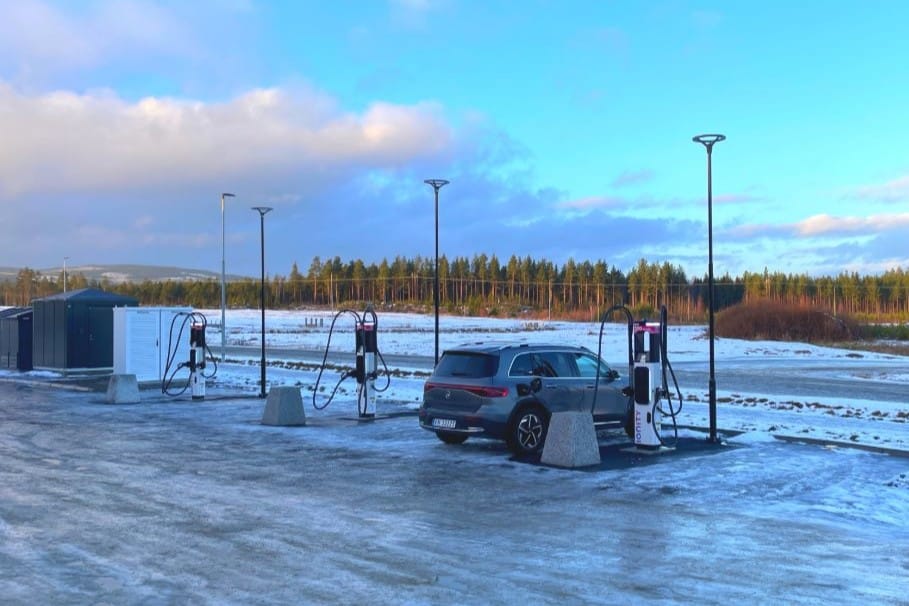
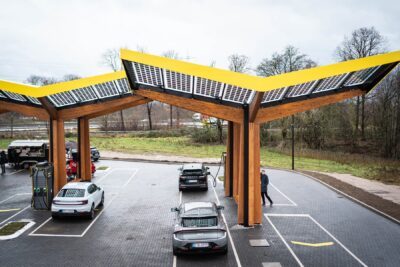
As part of a pilot project, this system has now been commissioned for the first time at Ionity’s site in Elverum, which is “perfectly placed on the key Østerdalen route for long-distance journeys between Oslo, Trondheim and the wider inland region.” Here, two DLBS power units were combined with three Sat 400 fast chargers, each offering two CCS charging points.
The standout feature of this location is its charging capacity: until now, Ionity charging parks with Alpitronic charging columns have achieved a maximum of 400 kW. The high-power charger from Ekoenergetyka now enables charging capacities of up to 500 kW, provided the electric vehicle can handle this power output. While six DC charging points are available on-site, only one vehicle can utilise the full capacity if it is charging alone at one of the three fast chargers. It remains unclear how the total capacity of 800 kW is distributed when multiple EVs charge simultaneously.
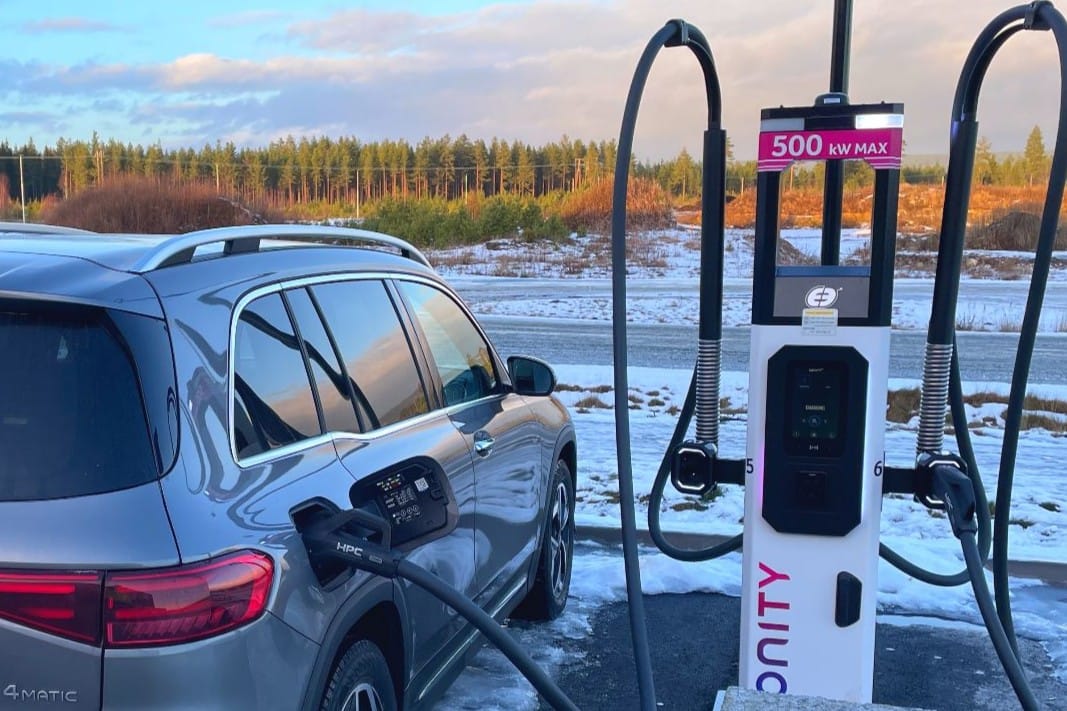
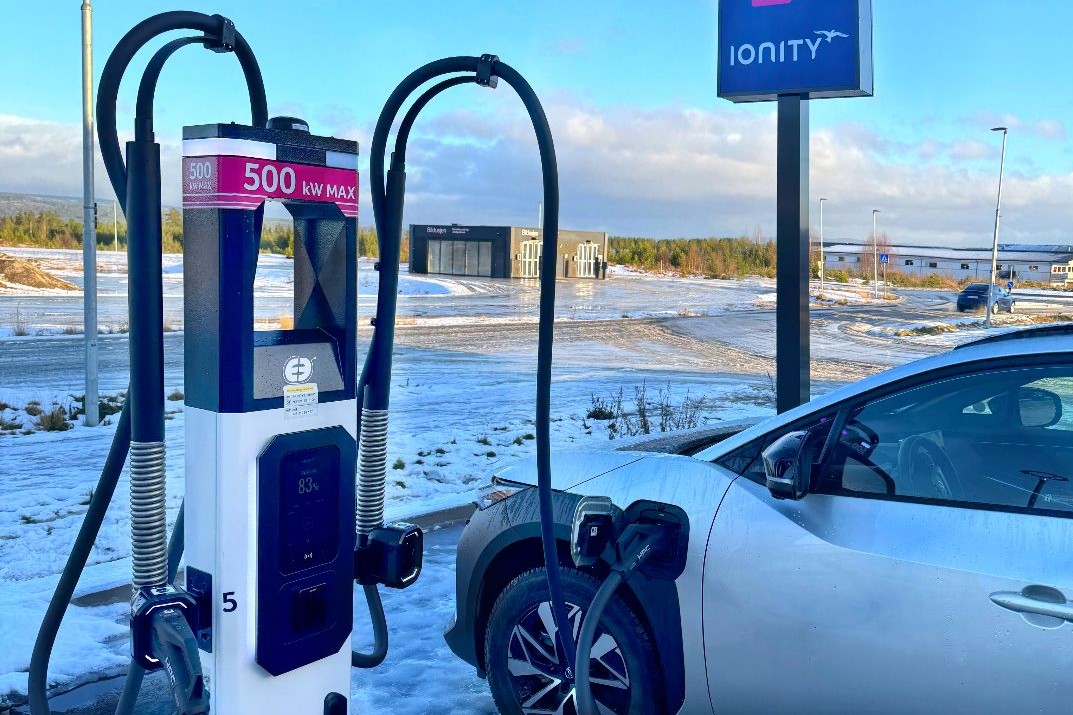
In addition to the six new charging points, Ionity also offers two charging points with over 400 kW each, though no further details have been provided. While Ionity is not the only provider at this location, there are also 28 Tesla Superchargers, eight charging points from Kople with up to 180 kW, and four 200 kW charging points from Recharge. It now offers the highest power class available.
Since April of this year, it has been known that Ionity is not stopping at 500 kW. The fast-charging joint venture announced in spring that it plans to commission its first megawatt charging systems from Alpitronic later this year. Although the term ‘megawatt charging system’ is used, this does not refer to MCS charging for electric trucks but rather for electric cars. A single switchgear cabinet in this system, with four columns each offering two CCS charging points, can simultaneously supply up to eight electric vehicles, with dynamic power distribution across the individual charging points. According to Ionity, a single vehicle can be charged at up to 600 kW when occupancy is low. However, it remains uncertain when and where the first sites will be opened to the public.
This article was first published by Daniel Bönnighausen for electrive’s German edition.

0 Comments