

Vertical Aerospace unveils Valo flying e-taxi
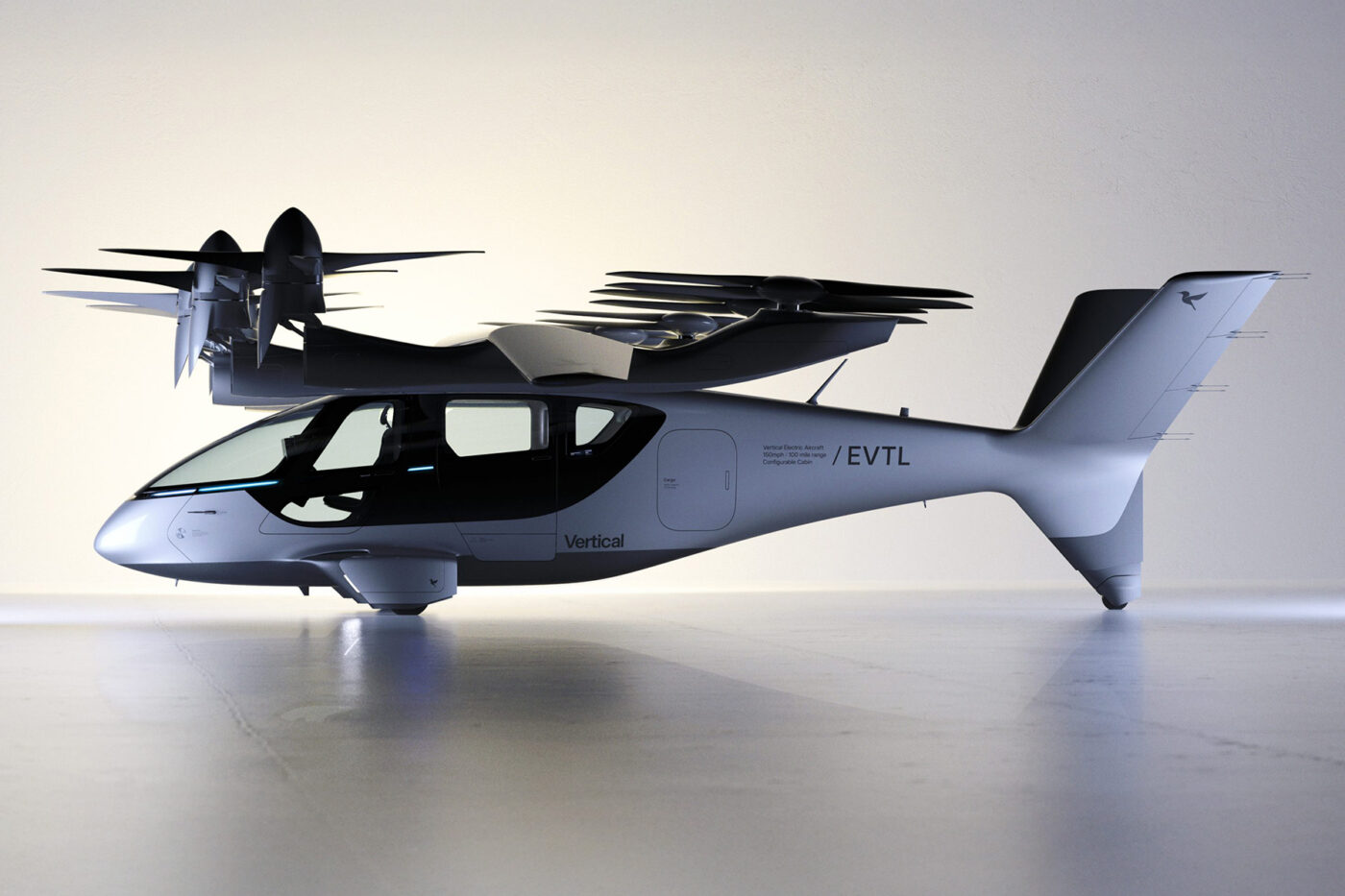
The Valo eVTOL differs from its predecessor primarily through its new design, which Vertical Aerospace states is based on insights from its existing test programme and direct feedback from airlines and operators. The new aircraft has been developed for flights of up to 160 kilometres (original specification: 100 miles) at speeds of up to 240 km/h (150 mph). Among its first commercial routes, company representatives highlighted key connections between airports and city centres.
Vertical Aerospace has collaborated with several partners from the aerospace industry to develop the Valo, including Honeywell, Syensqo, and Aciturri. Key features of the model, designed for commercialisation, include a more aerodynamic cabin for four passengers, an underfloor battery system, a redesigned wing and propeller architecture, and improved materials.
Regarding the powertrain, Vertical Aerospace states that the battery consists of eight liquid-cooled underfloor battery packs, which can be recharged in approximately twelve minutes for ‘short missions’. The aircraft also features eight electric propulsion units (EPUs), each equipped with multiple electrically isolated circuits for redundancy. The company specifies the total payload as 550 kilogrammes.
Customer interest in the Valo is already strong, with Vertical Aerospace reporting 1,500 pre-orders for the aircraft—including from American Airlines, Avolon, Bristow, GOL, and Japan Airlines. Stuart Simpson, CEO of Vertical Aerospace, comments: “With the introduction of Valo, Vertical is evolving from a prototype developer to an aerospace manufacturer. Valo is the aircraft that will make electric flight a commercial reality—clean, quiet, fast, and designed for daily use. It marks a new era in transport, connecting people in minutes rather than hours.”
In parallel with the Valo, the company is also developing a hybrid-electric variant of the VX4, which offers a range of up to 1,600 kilometres, a payload of 1,100 kg, and capabilities for both manned and unmanned flight operations. According to earlier statements, flight testing of the second-generation hybrid propulsion system is scheduled to begin in the second quarter of 2026.
vertical-aerospace.com (PDF)
This article was originally published by Cora Werwitzke for electrive’s German edition


0 Comments