

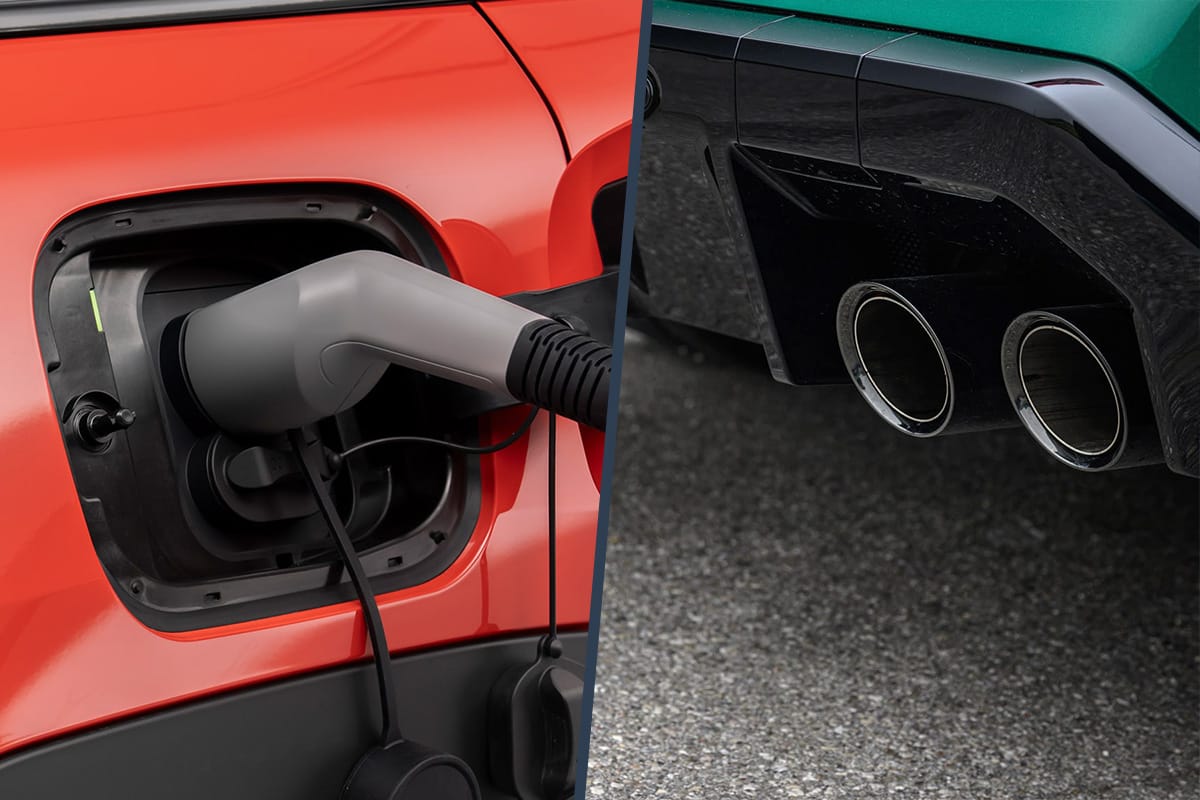
EU Commission weakens CO₂ targets – a little bit
Something was different this Tuesday. When the EU Commission prepares to present proposals for politically significant initiatives, largely complete drafts of the legislative package usually circulate in relevant circles days or even hours before the announcement. However, this was not the case for the ‘Automotive Package’. Ever since EPP politician Manfred Weber pushed last week for a reduction in CO₂ emissions of only 90 per cent instead of 100 per cent by 2035, Brussels has been unusually quiet. Strikingly quiet.
There is a simple reason for that: apparently, there was no final draft until the very last minute that could have been circulated. Negotiations behind closed doors continued until the end, with even the Commission itself lacking genuine agreement on many details. While it had already become clear that the Commission’s original CO₂ target for 2035 would be softened, the extent, measures, and restrictions remained uncertain until the very end.
What the EU Commission ultimately presented in Strasbourg at the seat of the EU Parliament broadly aligns with what Weber announced last week: a CO₂ reduction target of 90 per cent compared to 2021 has been set for 2035, which de facto corresponds to a fleet CO₂ emission of eleven grammes per kilometre—instead of zero grammes. The Commission also does not specify a date for the 100 per cent target, as Weber had similarly suggested. The EU Commission estimates that this will result in 27 to 29 per cent of new registrations still featuring an internal combustion engine after 2035.
Pyrrhic victory for combustion engine supporters?
Not only will the sale of plug-in hybrids and vehicles with range extenders remain permitted after 2035, but new mild hybrids and pure combustion engines may also hit the road. That appears to be a clear victory for conservative forces like Weber and Chancellor Friedrich Merz. However, there is a significant caveat: the conditions, which Weber did not mention, could—and likely will—severely limit this ‘victory’ in practice.
The CO₂ emissions that new combustion engines will produce after 2035 must be offset. A credit system is planned, requiring manufacturers to compensate for new combustion engines, plug-in hybrids, and range extenders sold after 2035. This can be achieved through measures such as using green steel from the European Union in their vehicles or climate-neutral fuels like biofuels or the controversial e-fuels. Up to three per cent of the 2021 reference target (or, in other words, 30 per cent of the remaining permitted emissions) can be credited through clean fuels, while green steel accounts for seven per cent of the reference target or 70 per cent of the remaining permitted emissions.
However, it remains unclear how stringent these requirements will be in practice. Whether a car manufacturer can actually use green steel in their vehicles and power them with e-fuels by 2035 will depend heavily on the availability of green steel and such clean fuels at that time—and on their costs. Consequently, this will determine who can afford such vehicles after 2035.
Small EVs to receive preferential treatment
Other aspects, however, are more concrete: so-called ‘super credits’ are intended to promote small and affordable electric vehicles (EVs). EVs shorter than 4.20 metres will be weighted more heavily in a manufacturer’s fleet emissions calculations. In practical terms that means an ID. Polo would not count as one vehicle in Volkswagen’s fleet emissions calculation but as 1.3 vehicles. “This will enable Member States and local authorities to develop targeted incentives, stimulating demand for small EVs made in the EU,” the Commission states. The proposal is likely to originate from Spain and France. Both countries had already advocated in autumn for maintaining the 2035 CO₂ target with only slight additional flexibility, preferring to promote EVs through measures like super credits.
As with the CO₂ regulations from 2025 onwards, the path to the adjusted 2035 target will also be made somewhat more flexible. Specifically, the previously fixed interim target for 2030 may be extended analogously to the current regulation from 2025 to 2027. Instead of meeting fixed annual targets, manufacturers will be required to achieve the interim targets over the period from 2030 to 2032. If they exceed the target in 2030, this will not immediately result in penalties. There will still be an opportunity to offset the shortfall through greater savings in subsequent years. “An additional flexibility is granted for the vans segment, where the electric vehicle uptake has been structurally more difficult, with a reduction of the 2030 CO2 vans target from 50% to 40%,” the Commission states.
Additionally, the EU Commission plans to introduce specific targets for the electrification of company cars for member states from 2030 onwards—with varying requirements for each country. The goal is ‘to support the zero- and low-emission vehicle uptake by large companies,’ as officially stated. Large companies are defined in accordance with Directive 2013/34/EU. However, how EU countries implement these targets will be left to the member states. The successful company car taxation model in Belgium, which has led to a significant increase in electric vehicle sales, is seen as a blueprint. How Germany will implement this remains to be seen, but company car privileges for EVs are likely to increase.
“As companies’ cars cover higher yearly mileages, it also means more emission reductions. It will also make zero- or low- emissions and ‘Made in the EU’ a pre-requisite for vehicles benefitting from public financial support,” the Commission states. Sixty per cent of new cars and 90 per cent of new vans are registered by companies, so the leverage is significant.
According to the German newspaper Bild, a list from the Commission reportedly sets a 100 per cent EV quota for large customers in Germany by 2035—similarly for France, Finland, Austria, Sweden, Belgium, Denmark, Ireland, Luxembourg, and the Netherlands. For Spain, the quota is set at 66 per cent, while for Bulgaria, it is around 32 per cent. According to the Handelsblatt, the quotas are based on economic strength and the current share of electric vehicles.
A 100 per cent quota here would mean that large customers (including major corporations and car rental companies) would only be allowed to procure and register new battery-electric vehicles. Initially, a 100 per cent quota for corporate customers was discussed as early as 2030. However, this has now been pushed back by five years and applies only to large customers. The fleet customer target for 2030 in Germany is reportedly set at 54 per cent. Fleets of small and medium-sized enterprises are exempt.
New CO₂ regulations for electric trucks too
Furthermore, the EU Commission plans to allocate 1.8 billion euros for a ‘Battery Booster’ to ‘accelerate the development of a fully EU-made battery value chain.’ That includes interest-free loans for battery cell manufacturers and supportive political measures. “These measures will enhance the cost competitiveness of the sector, secure upstream supply chains and support sustainable and resilient production in the EU, contributing to the derisking from dominant global market players,” the Commission states.
Not only in the battery sector but for the entire automotive industry, bureaucratic requirements are set to be adjusted. This aims to reduce the administrative burden on companies, with the Commission estimating annual savings of 706 million euros. Among other things, it is proposed to reduce the number of secondary regulations to be adopted in the coming years and to streamline testing for new passenger cars and heavy-duty vehicles.
The Commission also proposes a targeted amendment to the CO₂ emission standards for heavy-duty vehicles to make compliance with the 2030 targets more flexible—though no specific figures have been provided yet. “The targeted amendment allows manufacturers to collect more emission credits in the years before 2030 than in the current Regulation. While the Regulation currently allows manufacturers to gain credits only when their CO2 emissions are below a linear CO2 emissions reduction trajectory, with the proposal they would be able to generate credits as soon as their CO2 emissions are below their annual CO2 emission target,” the Commission explains.
‘The future is electric’
The rationale behind all these adjustments and regulations is clear: the European automotive industry is not only facing a major technological transformation but also fierce competition—’of unprecedented speed and magnitude,’ as the EU puts it. “It is therefore extremely important to ensure the competitiveness of the industry and supporting it in the transition to clean mobility and the decarbonisation of road transport.” This year’s EU strategic dialogue with the automotive sector has given companies the opportunity to clearly communicate their positions and needs in Brussels. The Commission has thus brought forward the previously agreed review of the regulations by one year and is offering the industry slightly more flexibility. In doing so, the Commission is deviating from its previous course—but only slightly.
The Commission describes the package of measures as ‘the first industrial strategy for the automotive industry.’ “It ensures climate, industrial, and economic coherence. It includes elements and enabling conditions to future-proof a clean and competitive automotive sector and encourages manufacturers to continue investing in zero-emission vehicles,” a Q&A on the ‘Automotive Package’ states. “It provides enhanced flexibility and technology-neutrality in the CO2 standards for cars and vans and a targeted flexibility for heavy-duty vehicles to reach our climate targets and supports the uptake of zero- and low-emission vehicles in corporate fleets. The future is electric.”
What happens next
The crucial point, however, is this: all the changes mentioned here are currently only proposals from the EU Commission and not yet final regulations or laws. To push the ‘Automotive Package’ through, the EU Parliament must first approve it (where Weber’s EPP is the largest group), and the member states must then give their green light in the EU Council.
The latter is far from certain: the Commission has likely framed the ‘Automotive Package’ so broadly to offer something to as many countries as possible. Alongside Germany, six other EU countries (all with relatively low shares of electric vehicles in their new registrations) had pushed for a weakening of CO₂ targets and in favour of combustion engines. Other countries, such as Spain, France, Denmark, and Belgium, are pursuing a significantly more ambitious electric course.
A simple majority is sufficient in the EU Parliament, but a so-called ‘qualified majority’ is required in the EU Council. That means the approval of at least 15 countries, representing at least 65 per cent of the EU population, is needed.
This is far from guaranteed. Changes to the ‘Automotive Package’ are thus possible, as is complete failure. And in that case, the target agreed in 2023 would still apply: zero grammes of CO₂ from 2035!
ec.europa.eu (press release), ec.europa.eu (Q&A), ec.europa.eu (factsheet), handelsblatt.com, bild.de (both in German)

1 Comment