

Mercedes pauses Level 3 driving assistance – for now
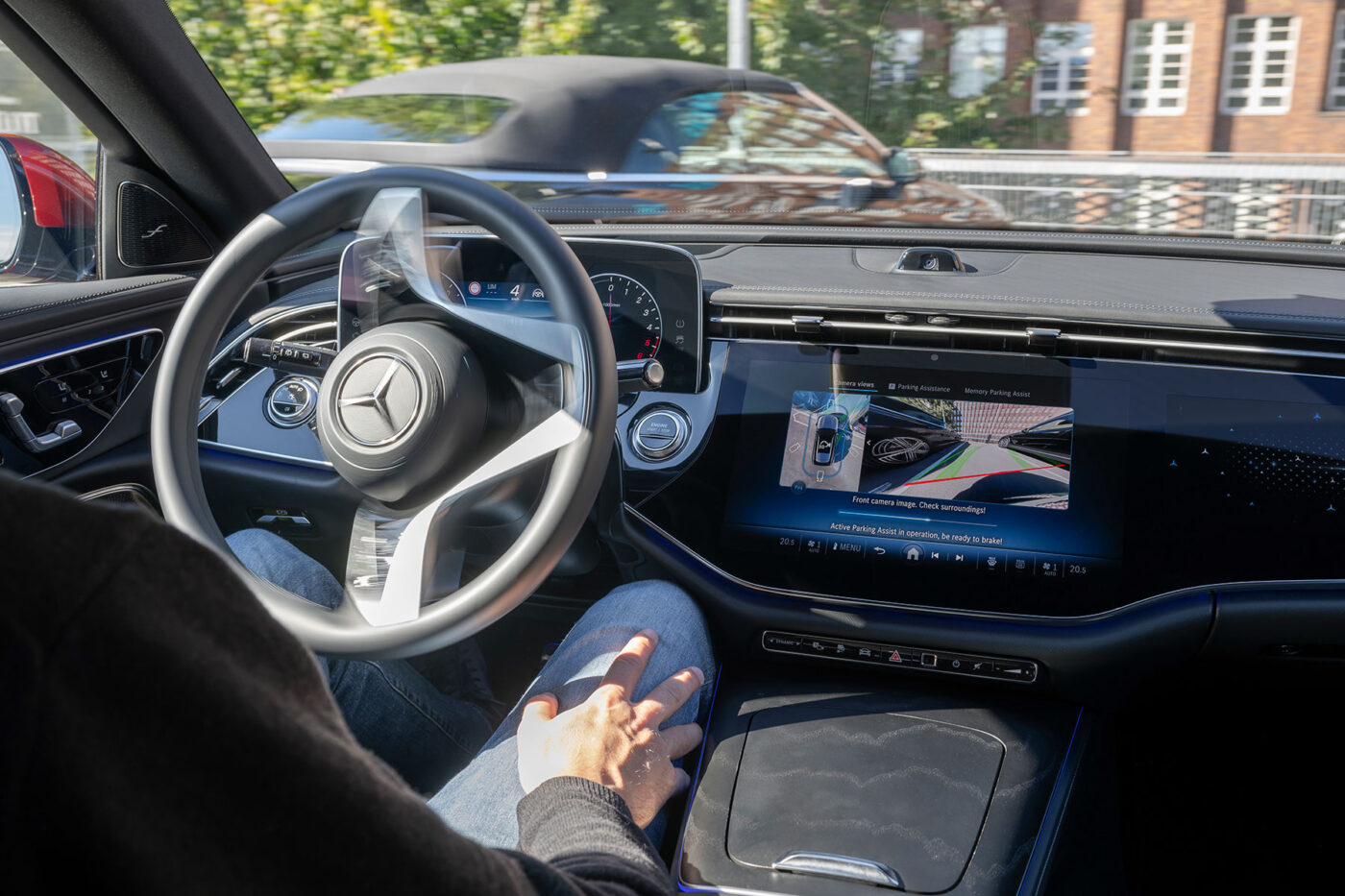
Since 2021, Mercedes-Benz has offered highly automated Level 3 driving under the name Drive Pilot—for a premium of €6,000 to €9,000 in the S-Class and the all-electric EQS. Following an update, the system now permits autonomous driving at speeds of up to 95 km/h on motorways. However, this functionality is only available under specific conditions, such as good weather and the presence of a vehicle ahead. If these conditions are not met or the motorway is exited, the driver must retake control. Otherwise, the system allows ‘hands-off, eyes-off’ operation, meaning the driver can, for example, check their phone—but must be prepared to resume control within ten seconds if prompted by the system.
In essence, this is a complex and expensive system with numerous limitations. As the German Handelsblatt now reports, Mercedes-Benz will no longer offer Drive Pilot in the upcoming facelift of the S-Class, which is set to be unveiled on 29 January. According to the Mercedes blog JESMB, the EQS facelift, planned for October, will also exclude Drive Pilot.
Instead, both models are expected to feature the recently unveiled MB.Drive Assist Pro, an advanced driver assistance system that combines SAE Level 2++ automation with navigation. This system aims to enable partially automated door-to-door driving, similar to Tesla’s Full Self-Driving (Supervised). However, as a Level 2 system, the driver must always remain ready to take immediate control and may never take their eyes off the road—this is referred to as ‘hands-off, eyes-on.’ Additionally, under Level 2, liability for incidents such as accidents remains entirely with the driver, whereas under Level 3, the manufacturer assumes responsibility.
While this may initially appear to be a downgrade—from Level 3 to Level 2—it offers significant practical advantages. Unlike the Level 3 Drive Pilot, which is restricted to specific motorway scenarios, vehicles equipped with MB.Drive Assist Pro can also operate autonomously in urban traffic, navigate complex city situations, brake, accelerate, and handle junctions. However, the driver must occasionally intervene.
Källenius: “It feels like the car is on rails”
In practice, however, the system is already highly sophisticated. Ola Källenius, CEO of Mercedes-Benz, described a test drive in San Francisco during last week’s CES: “It feels like the car is on rails.” He elaborated: “You’re just driving, and it does everything. I drove uninterrupted for more than an hour through pretty heavy traffic on a Sunday in San Francisco, then on to the freeway. It did everything on the freeway, off the freeway, and back into the city again.”
This shift offers a dual advantage for Mercedes and its customers: the German manufacturer can significantly reduce costs while providing partially automated driving in far more scenarios—delivering a much more practical experience than, for example, crawling slowly behind a lorry on the motorway. Since Level 2 systems do not require expensive laser-based lidar sensors, unlike Level 3, the service can be offered at a considerably lower price. For instance, MB.Drive Assist Pro will cost $3,950 (approximately €3,400) for a three-year subscription in the all-electric CLA in the USA. Pricing for the S-Class and EQS has yet to be announced.
Level 4: The ‘long tail’ remains the challenge
However, the shift to Level 2 should not be interpreted as a move away from Level 3—or eventually Level 4. Mercedes has collaborated with technology giant Nvidia for years on systems ranging from Level 2 to Level 4, with Level 4 focusing on fully autonomous driving in defined operational domains, such as robotaxis. According to Källenius, the effort required for Level 4 should not be underestimated: while a 99% functional Level 4 system is relatively achievable today, the real challenge lies in the final 1%—the ‘long tail’ of rare driving scenarios that must also be mastered. Such a system must be absolutely safe, and no shortcuts can be taken. This demands enormous effort in data, validation, and redundancies, as the Mercedes CEO emphasised at CES.
As Nvidia and Mercedes announced in October, they aim to introduce ‘an exceptional Level 4 chauffeur experience’ in the next S-Class, ‘combining luxury, safety, and cutting-edge autonomy.’ The next-generation S-Class is currently expected between 2028 and 2030.
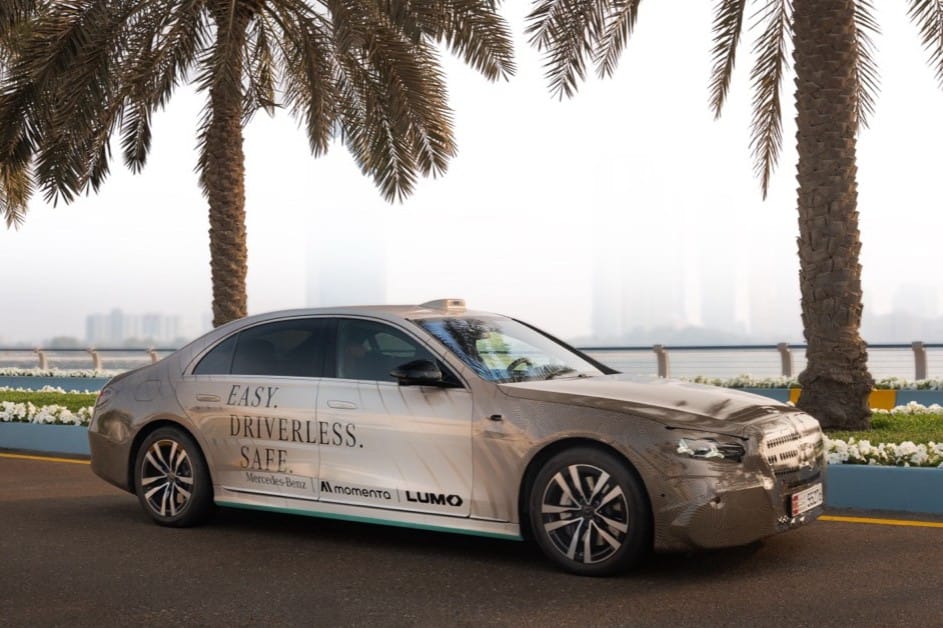
While Mercedes is partnering with Nvidia for automated and autonomous driving in Western markets, its key collaborator for Asian markets is the Chinese specialist Momenta. A local version of MB.Drive Assist Pro, based on Momenta’s technology, was recently launched in China. Additionally, the two partners are currently deploying a Level 4 robotaxi service in Abu Dhabi, United Arab Emirates.
handelsblatt.com (in German), jesmb.de (EQS; in German), youtube.com (Nvidia event with Källenius)
0 Comments