

Changan prepares model offensive for Europe
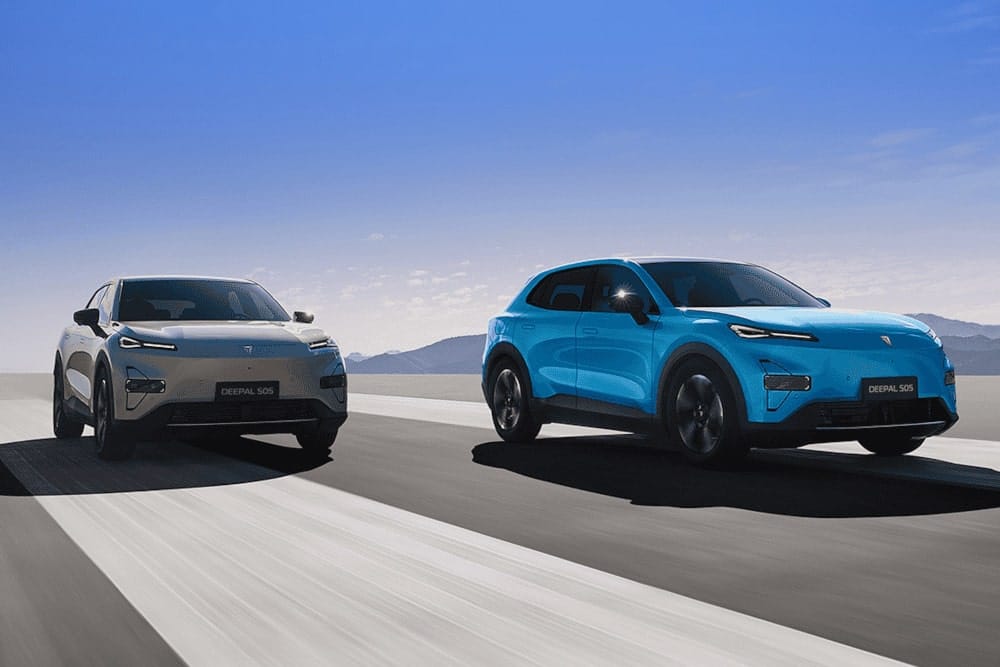
According to Automotive News Europe, Changan is planning to invest two billion euros in Europe by 2030, alongside the introduction of eight models across its three brands: Deepal, Nevo, and Avatr. The report is based on statements by Wang Dong, Deputy Managing Director of Changan Europe. Wang also confirmed the launch of plug-in hybrid variants of the already available Deepal electric models, the S05 and S07, in several European countries. The two models include a mid-size SUV and a slightly smaller compact SUV.
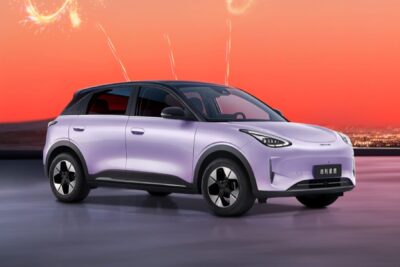
Regarding further new products, Changan’s plans are as follows: three vehicles are expected to arrive in Europe under the Nevo brand within the next three years. These include a small hatchback, a small SUV (available in China as the Q05 in both fully electric and partially electrified versions), and a full hybrid model. Under the Deepal brand, the SUV G318, the saloon L07, and the large van S09 are set for launch. Additionally, the premium brand Avatr is preparing two models for a market debut “in selected European countries,” according to Wang’s statements.
This signals a significant diversification. Until now, Changan has focused solely on introducing battery-electric passenger cars under its Deepal brand in Europe. However, as early as Changan’s European launch event in Mainz in spring 2025, electric models from the sub-brands Avatr and Nevo (at the time still under the core Changan brand) were showcased. The fact remains: Changan currently faces an additional 20% EU tariff on the Deepal S07 and S05, which are imported from China. This makes the increased import of (plug-in) hybrids a logical move from the company’s perspective.
This strategy was also confirmed by Klaus Zyciora, Vice President and Global Head of Design at Changan, in an interview in December. He stated that the company could also sell EREV, PHEV, and hybrid vehicles in the future if sufficient demand exists. Zyciora also mentioned the potential sale of light commercial vehicles. “We will test consumer response and see how competitive our offerings are. Many new products will come to market in the near future.” According to earlier statements, Changan is also exploring locations for a manufacturing plant in Europe, though no updates are available yet.
In principle, Changan aims to target different customer groups with its sub-brands. The Deepal brand is positioned to represent driving pleasure and modern mobility, appealing to “young and young-at-heart” customers. The core Changan brand, however, focuses more on families, while Avatr is intended to occupy a premium segment, priced above the other two brands. The initial data presented by the Chinese manufacturer for the Avatr 11 and Avatr 12, already showcased in Mainz, indicates a higher technical standard compared to the Deepal S07. The Avatr electric models are set to offer up to 425 kW of power and a range of up to 730 km under the Chinese test cycle.
Changan is China’s fourth-largest car manufacturer. The group aims to increase its total sales from 2.9 million vehicles in 2025 to five million by 2030, with expansion into Europe playing a significant role. According to Automotive News Europe, Changan plans to have around 1,000 sales and service locations operational by the end of the decade. Its distribution strategy in Europe varies by market: in larger countries like Germany, the company uses its own national sales organisations in combination with private dealers, while in smaller markets, independent importers are engaged. “National organisations are already established in Germany, the UK, Portugal, and Norway. Italy and Spain will follow in January. Plans for France exist, though the company has not provided details. In Greece and Serbia, Changan works with private importers,” the portal summarises.
It is worth noting that Changan was effectively “promoted” to a state-owned car manufacturer in China just six months ago. Although the Chinese automaker was previously considered state-owned through its parent company, this was only indirect. This changed in July 2025, placing Changan on par with FAW, SAIC, and Dongfeng.
Specifically, Changan—or more precisely, the China Changan Automobile Group Co—was officially re-established as a state-owned enterprise last summer with a capital of 20 billion yuan (approximately 2.4 billion euros). Previously, Changan was part of the state-owned China South Industries Group, making it merely a subsidiary of a state-owned company. Now, Changan Automobile operates as an independent car manufacturer under the control of the Chinese central government.
The “promotion” to a state-owned enterprise grants Changan’s management greater financial flexibility but also ties it more closely to decisions made by the State Council. For example: according to reports, the Chinese government banned its state-owned enterprises in 2024 from investing in EU countries that had supported the introduction of additional tariffs on Chinese-made electric vehicles. Private companies like BYD, Nio, and Xpeng were and remain unaffected by such “guidelines.” Changan, however, cancelled a planned event in Milan for its European launch in October 2024, only to reschedule it for March 2025 in Mainz. Italy had voted in favour of the tariffs, while Germany had opposed them.
More and more Chinese manufacturers are adopting the tactic of increasing hybrid imports to Europe. In 2025, Chinese hybrid vehicle imports to the EU surged by 155%. In contrast, imports of electric vehicles, which are already subject to high tariffs, increased by only 12% last year. While the absolute numbers of Chinese hybrids in the EU are not yet significantly higher than those of pure electric cars, industry observers note that the strong growth in hybrid imports reflects a logical strategic shift by Chinese manufacturers to offset tariffs on battery-electric vehicles (BEVs). This trend is also evident globally: hybrids now account for a third of Chinese passenger car exports worldwide, according to a recent article in The Economist.
Against this backdrop, the European Commission is reportedly considering the introduction of additional tariffs on Chinese hybrid vehicles, similar to those on pure electric cars.
automobilwoche.de (in German)
0 Comments