

Europe’s EV capital Oslo changes pricing model for AC Charging
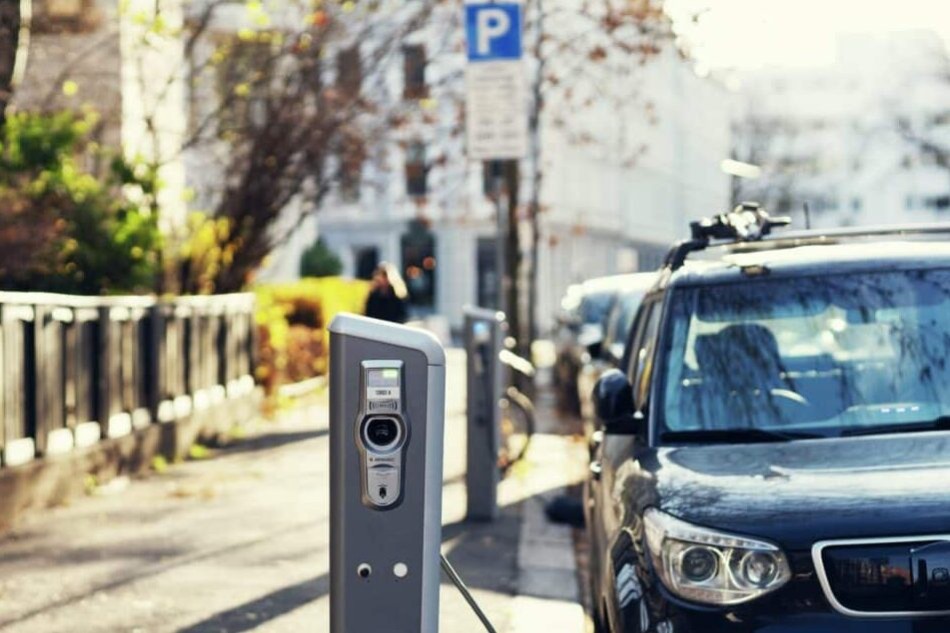
Norway has long been regarded as a pioneer in electric mobility, and its 2025 annual statistics further cement this reputation: an impressive 96 per cent of new cars registered last year were electric vehicles (EVs)—in Oslo, the share was even higher. Moreover, thanks to years of strong EV adoption in Norway, battery-electric cars have now surpassed diesel cars in the overall vehicle fleet. The implication is clear: those without a private charger must consistently rely on available public charging points.
To ensure EVs vacate charging spots promptly after charging, Oslo previously relied on a time-based pricing model. In Germany, where metering regulations are strict, such models are now rare. However, in the early days of e-mobility, it was often unclear whether public charging was billed by time or energy consumption. Legally, only the latter is now permitted.
City council paves the way for pricing model change
In Oslo, EV owners with slower-charging vehicles felt particularly disadvantaged by the existing system. The local Electric Car Association of Oslo and Akershus had long campaigned for a fairer, consumption-based model. Their efforts have now paid off: as announced by the Norwegian Electric Car Association, Oslo’s City Council this week approved a new, consumption-based pricing model, which is expected to take effect in autumn 2026.
“At last! We’ve been waiting for this for a long time,” says Per Maltun from the Electric Car Association of Oslo and Akershus. “There are many EV drivers in Oslo who don’t have their own parking space. For them, street charging is their home charging. We’ve received numerous complaints from members frustrated with the unfair pricing model.” Maltun believes the new model is a significant improvement: “The old model didn’t account for how much electricity the charging station actually delivered, putting slower-charging EVs at a disadvantage. With the new model, EV drivers pay based on the actual amount of energy delivered to their battery.”
The new charging price will be calculated based on three components. The most important factor is the actual energy consumption in kilowatt-hours. This primary price component is based on the spot price the city pays for electricity and is updated daily. In addition, there is an operational cost fee (in 2025, this was 0.81 kroner per kWh, approximately 0.07 euros) and a third component: a time-based parking fee. The latter varies depending on when, how long, and where (city centre or outskirts) charging takes place.
Leaving charging station quickly saves on parking fees
For the first five hours, the parking fee is set at 12 kroner per hour in the city centre and 10 kroner per hour outside it, approximately one euro and 90 cents, respectively. From the fifth hour onwards, the fee doubles. This applies between 09:00 and 20:00, Monday to Saturday. Outside these hours and on Sundays, the parking fee is waived. This system acts as an anti-idling measure but is more comprehensive, as it applies from the first hour of charging and decreases the sooner the vehicle is moved away from the charging station.
| Parking fee up to the 5th hour | Parking fee from the 5th hour |
|---|
| City centre between 09:00 and 20:00 (Monday – Saturday) | 12 kr/hour | 24 kr/hour |
| Outside the city between 09:00 and 20:00 (Monday – Saturday) | 10 kr/hour | 20 kr/hour |
Source: Norsk elbilforening
It has not yet been finalised how residents with parking permits will be treated. Since they pay a flat fee to be exempt from city parking charges, they would effectively be charged twice if the parking surcharge at charging stations were applied. The City Council has stated that it aims to find a solution where residents with parking permits are exempt from the parking fee when charging in their own neighbourhood. However, the means to implement this are currently lacking.
Biggest effort lies in new signage
Regarding the timeline: “We currently expect a realistic start date to be autumn 2026,” said Sara Teige Kalsås, Mobility Advisor at Oslo’s Agency for Urban Environment, speaking to the Norwegian Electric Car Association. She estimates that the rollout will take around three months. The most time-consuming tasks will be updating the signage at all charging stations and conducting some technical tests. The charging stations themselves will require only minimal changes.
Meanwhile, the Electric Car Association has calculated example prices for Oslo residents. Here is their estimate for a vehicle charging outside the city centre on a Monday afternoon or evening for three hours at a charging power of 7.4 kilowatts:
| Evening after 20:00 | Daytime between 09:00 and 20:00 | |
|---|---|---|
| Energy consumption at a spot price* of 1.29 kr (0.11€) | 28.6 kr (2.51 €) | 28.6 kr (2.51€) |
| Operational surcharge of 0.81 kr per kWh | 18 kr (1.58 €) | 18 kr (1.58 €) |
| Parking fee outside the city | 0 kr (0 €) | 30 kr (2.63 €) |
| Total price | 46.6 kr (4.09 €) | 76.6 kr (6.72 €) |
*Average spot price in Oslo in 2025 according to Nord Pool.
elbil.no (in Norwegian)


0 Comments