


Daimler Buses builds public charging stations at Munich’s Central Bus Terminal
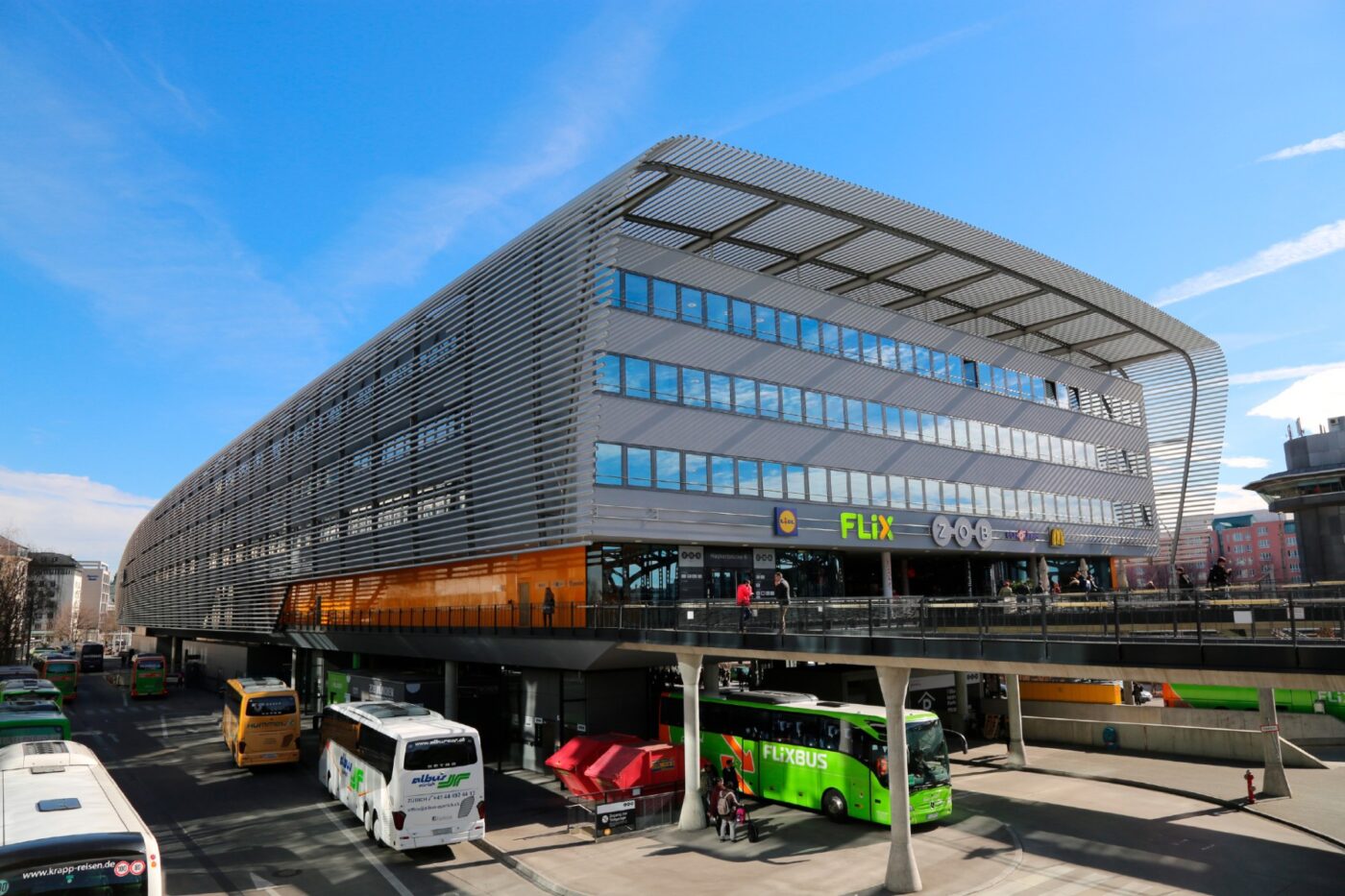
Daimler Buses will install four public charging stations with a capacity of up to 600 kW at Munich’s Central Bus Terminal by the end of 2026. To achieve this, the manufacturer has signed a contract with Wealthcap, the real asset and investment manager acting as the owner’s representative for the ZOB in Munich.
Daimler Buses announced its first public e-bus charging stations in October 2025 as part of a pilot project with the city of Cologne, Germany. The implementation is being carried out by Daimler Buses Solutions GmbH, a wholly owned subsidiary of Daimler Buses.
Steffen Germ, CEO of Daimler Buses Solutions, stated: “E‑buses at the Munich ZOB can charge exactly where they already stop. Timetables remain unchanged, and charging time integrates seamlessly into regular dwell time. This makes deploying fully electric buses in long‑distance and intercity transportation significantly easier.”
According to Daimler Buses, the construction of its own charging stations aims to further improve the public charging infrastructure for its first battery-electric intercity bus, the Mercedes-Benz eIntouro. The model has been available for order since spring 2025, with the first customer vehicles set for delivery in the second half of 2026.
The planned charging stations at Munich’s Central Bus Terminal will offer a capacity of up to 600 kW. In total, four charging stations are planned, two of which will be installed in 2026, with the remaining two to follow later. “Bus operators will be able to charge their e‑buses — regardless of brand — using green electricity,” said Daimler Buses. The necessary dwell times at the bus terminal—for passenger boarding and alighting, ticket inspections, or luggage handling—can thus be used simultaneously to recharge the batteries.
Within Daimler Truck AG, there is already extensive experience in building charging infrastructure. The company is involved in the joint venture Milence, which is constructing high-power chargers suitable for heavy-duty vehicles along motorways and freight corridors. Some Milence charging hubs near motorways may also be suitable for buses, though a charging stop at the port of Antwerp-Bruges is not ideal for tourist e-bus routes. Additionally, through its charging subsidiary Daimler Buses Solutions, founded in 2023, the company has primarily advised its city bus customers or planned, built, and handed over turnkey charging infrastructure.
Daimler Buses Solutions GmbH is now set to electrify not only bus depots but also publicly accessible parking areas. The subsidiary finances the charging stations and their operation itself, collaborating closely with ‘experienced parterns’ during construction. The investment is refinanced through the sale of electricity. “Following commissioning, Daimler Buses Solutions will assume maintenance and technical operations with its own service team. Property owners thus benefit from turnkey charging infrastructure — without requiring their own investments or significant effort.”
For Daimler Buses, the projects in Cologne and Munich are just the beginning, even though specific targets, such as a planned number of charging points by 2030, have not been disclosed. On top of expanding infrastructure, the right vehicles are also needed: Daimler Buses plans to include battery-electric coaches in its portfolio by the end of the decade, with fuel-cell coaches to follow in a subsequent step.
This strategy also applies to trucks: among other reasons, due to the current state of infrastructure, Daimler Truck has postponed its fuel-cell truck—despite functional prototypes in customer trials—to the 2030s. Until then, the focus remains on battery-electric solutions, supported by the existing but still expandable infrastructure.

0 Comments