

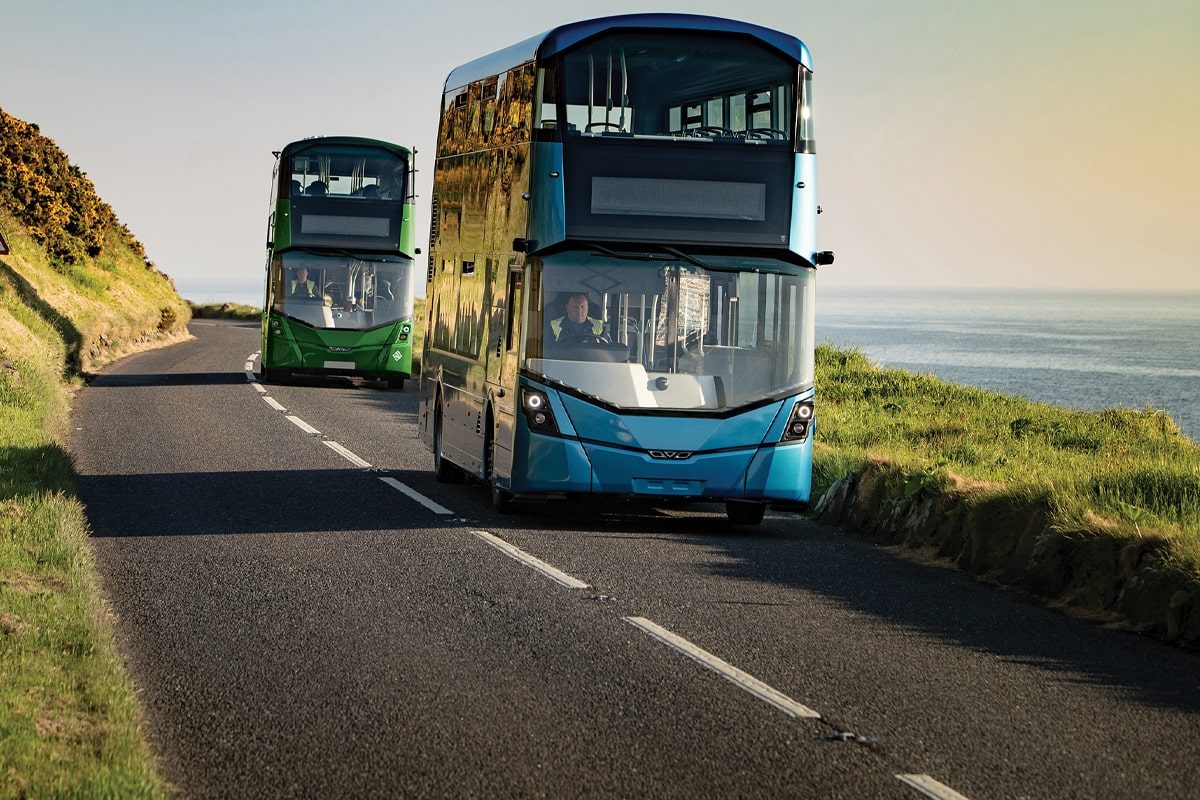
Wrightbus CEO: “Battery-electric has won the short-term battle”
While UK bus manufacturer Wrightbus sells mainly electric buses, hydrogen remains in the mix. The company continues to see hydrogen as part of the zero-emission future, albeit a smaller part than battery-electric.
“Last year was a good year for hydrogen,” CEO Jean-Marc Gales said during his interview with electrive. Yet the balance of power is clear. “Out of nearly 1,200 buses we will sell this year, hydrogen units account for around 80,” Gales explained. Diesel is at a similar level, while the vast majority — about 85 per cent — are electric.
Since 2022, the company has sold around 300 hydrogen buses: 170 in the UK, including single- and double-deckers, and 130 single-deck models in Germany. Customers there include Cologne, Saarbrücken, Cottbus and regional operators around the Rhineland.
Funding remains decisive. Orders in Germany slowed when subsidies were paused, but could return, the Wrightbus CEO believes. “Now that funding is available again, and I believe by 2027 we will again sell hydrogen buses in Germany,” Gales said. He expects hydrogen demand to be driven not only by city buses but also long-distance applications.
Nevertheless, the outlook for 2025 underlines the shift away from H2 technology: “At the moment, we have no hydrogen orders for next year. Demand is almost entirely electric, with some diesel still in the mix,” Gales confirmed.
H2 development continues
One focus is a 6×2 hydrogen coach currently in development, aimed at routes where fast charging is impractical. “From Heathrow to Gatwick, or Cork to Dublin, coaches run 24/7. You cannot stop them for hours to charge,” Gales explained. The model will combine a fuel cell above 200 kW with a new tank and battery system, giving long range and rapid refuelling. “Hydrogen could be a really good field application for heavy machinery and coaches,” he argued.
The H2-powered coach could hit the road sometime next year. Wrightbus just recently announced a £5 million investment in the model. It would be the UK’s first hydrogen-powered coach, capable of travelling up to 1,000 kilometres on a single refuel.
Meanwhile, the company’s hydrogen double-decker bus Streetdeck Hydroliner is already in its second generation (it first debuted in 2020), which was presented earlier this year. It has a range of over 482 kilometres, while refuelling only takes eight minutes. The heart of the bus remains a fuel cell from Ballard.
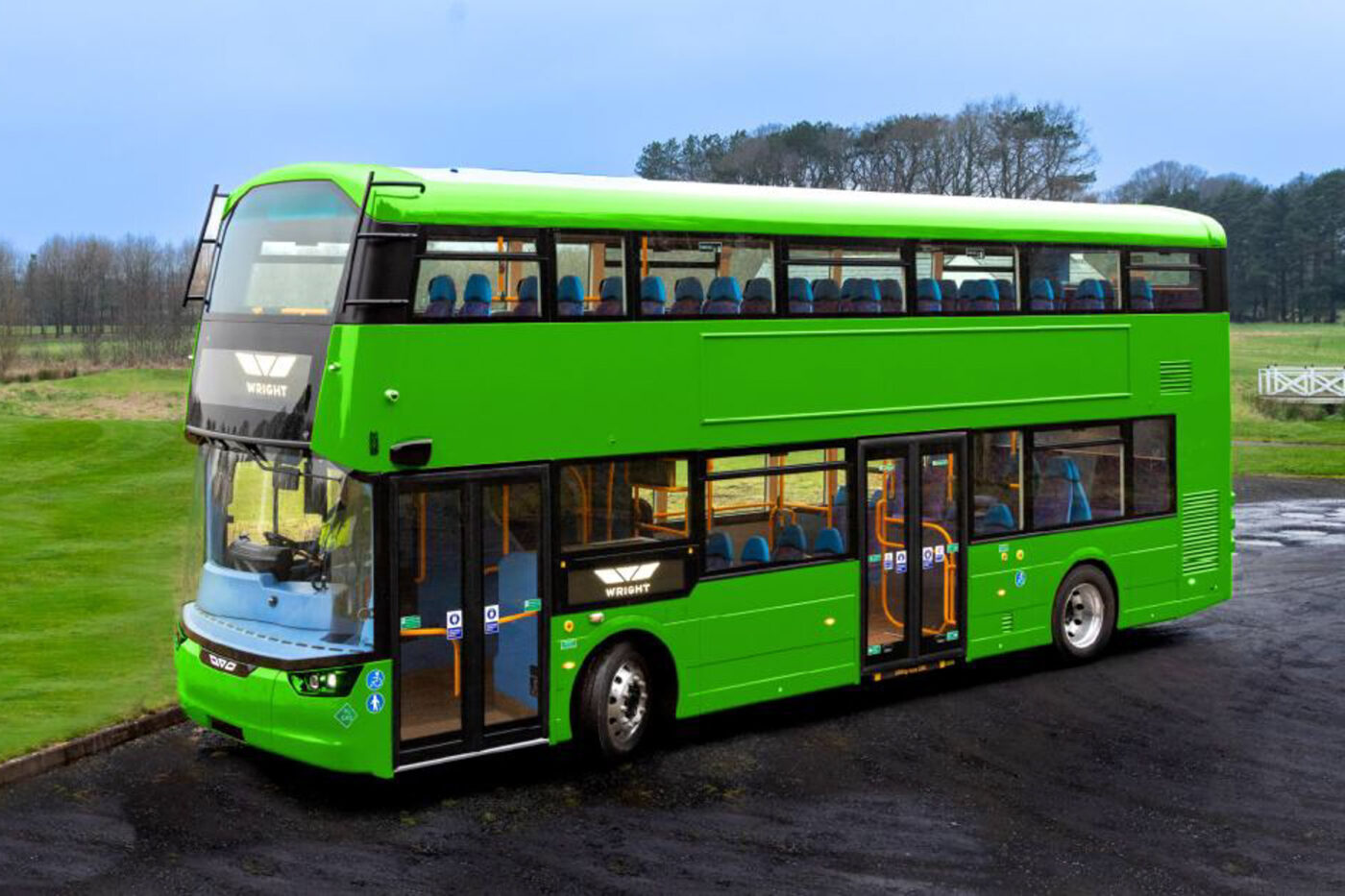
For Gales, the logic is clear: “Battery-electric has short-term won the battle for zero emission. But with the right infrastructure and funding, hydrogen will return — particularly in niches where batteries struggle.”
Battery-electric buses take the lead
While hydrogen plays a supporting role, battery-electric buses are Wrightbus’ main growth engine. “We are sold out until the third quarter of next year for electric and diesel buses,” Gales said. Demand is particularly strong for the company’s new generation of double- and single-deckers equipped with CATL battery packs. The double-deckers for London use a 440 kWh pack, while single-deckers for long routes carry 528 kWh.
London is a central market. Its stringent safety, HVAC and braking standards push technical development and create high demand. “Our buses are the most efficient on the market, in kilowatt hours per kilometre. That makes them extremely attractive,” Gales said., adding that the company is leading in electric double-deckers worldwide, ahead of Chinese rival BYD.
Beyond the UK, Wrightbus is regaining ground in Asia-Pacific. New double-deck and single-deck models are being tailored for Hong Kong, Singapore, New Zealand and Australia, where HVAC demands are higher and routes longer. “In Hong Kong, air conditioning can consume 40–50 kW alone, so you need the larger 528 kWh pack for longer routes,” Gales explained.
Flexibility is key. Provincial UK routes require different versions from London due to length and passenger numbers, meaning six development projects are ongoing simultaneously. “There are even London routes that need the 528 pack for autonomy. So we offer a 528 kWh single-deck bus for use both London and provincial routes,” Gales said.
With orders booked into late 2026 and a product line tested against what Gales refers to as the toughest global standards, the company sees battery-electric as the dominant technology for years to come.
Repowering and diversification
Alongside new vehicles, Wrightbus is carving out a business in repowering diesel buses. Its NewPower division, founded in 2024, converts 5–9-year-old diesel buses into fully electric models within three to four weeks. The process replaces drivetrain, electronics, HVAC and driver display, while offering an OEM warranty.
“It costs less than half of a new electric bus, but customers get a 10-year warranty and the same drivetrain we use in new models,” Gales said. Each conversion saves around 40,000 litres of diesel per year.
The programme has quickly gained traction, generating about £10 million revenue in its first year, sais Gales. Wrightbus is expanding beyond its own StreetDeck models to include other makes and models, and is exploring repowering early-generation electric buses with modern packs. “Battery quality and autonomy in the first generation was much lower. Repowering them opens totally new avenues,” Gales explained.
Moreover, the new division just recently announced the repowering of the first truck, namely a 19-tonne twin-axle DAF. It was fitted with a “282kWh battery, capable of a range of 290km.” Re-powering a truck will take about four weeks, the engineers say.
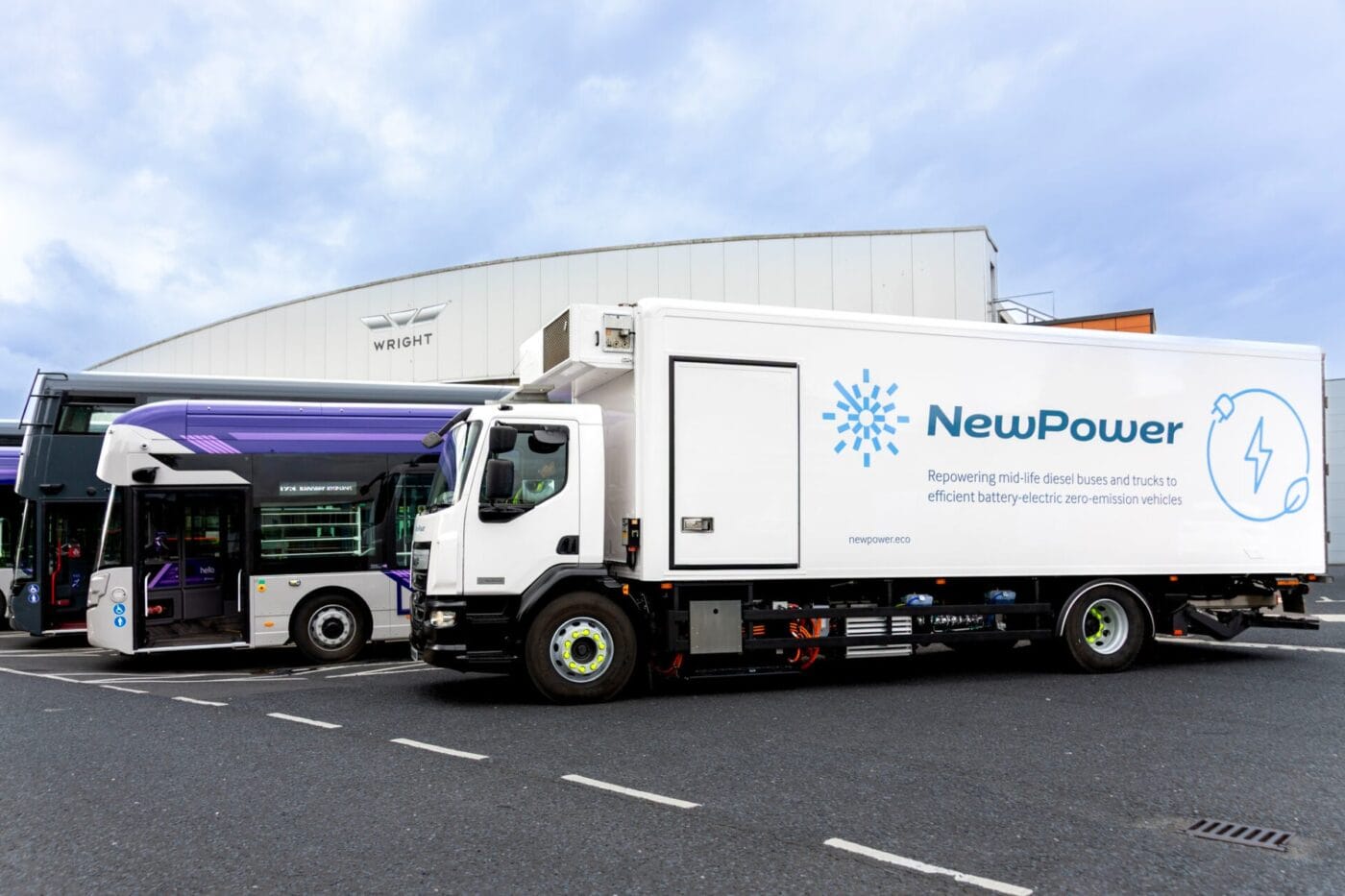
Nevertheless, the competitive repowering field is heating up — Alexander Dennis will offer a re-powering service for its Enviro400 diesel buses in partnership with KleanDrive — but Gales is confident. “We are already delivering, we are OEM, and we can re-homologate even competitor buses. That gives us a cost advantage.” Repowering is also seen as exportable. “We could easily offer it in Germany, Ireland, or even Asia,” he said.
Adding more electric trucks to the mix
Diversification goes further. Under the Rightech brand, launched at the beginning of the year, Wrightbus is entering the small truck market with 7.5-tonne electric models. These trucks, built by partner JAC in China and validated in Northern Ireland, use the same CATL batteries as Wrightbus vehicles and follow similar depot-based duty cycles. “They return every evening like a bus. We can help with depot electrification and use the same service network,” Gales explained.
According to Gales, offering a second brand will allow the company to expand into new markets, such as the Benelux countries. Wrightbus has not sold a single bus there so far, but it has already received orders for the electric trucks. However, the company (or companies) is not bound by names. As Gales explained, in the UK, customers also refer to the trucks as Wrightbus models. And the service centers are also the same. “Support is critical. Whether customers call it Wrightbus or Rightech, they get the same service quality,” Gales said.
The manufacturer has sold the fist two models in the UK – albeit not Rightech trucks, but buses. Because, on top of the RT75 UK and RT75 Europe 7.5-tonne battery-electric trucks, the Rightech also offers two battery-electric buses, the RB9 and RB6. The number stands for the vehicles’ length.
Profitability and expansion strategy
For Wrightbus, growth is matched with financial discipline. “Yes, we are profitable,” Gales confirmed. After administration in 2019, the company has rebuilt fast: from 274 units in 2021 to nearly 1,200 in 2024, with plans for 1,300 in 2025.
A cost-down programme launched in 2023 played a central role. “We talked to suppliers and said: if you want to grow with us, reduce your prices. And they did. Many suppliers have doubled or tripled their sales with us in two years,” Gales said.
The strategy avoids overextension. “Better to choose markets and do them well. Our ambition was to be number one in the UK — and we are. Germany is next, with 130 buses already delivered. Then Asia-Pacific, which could add 30–40 per cent to our revenue,” he explained.
Selective expansion also means saying no. Wrightbus has yet to sell in Benelux, Switzerland or Austria but keeps these on the radar. Trucks will target Benelux, UK, Ireland and Germany, while buses focus on the UK, Ireland and Germany first.
For Gales, the formula is simple: focus, efficiency, and pragmatism. “Electricity has won the short-term battle, but we will remain technology-open. We are the only OEM offering new electric, new hydrogen, and new diesel buses, as well as repowering them. That makes us unique — and profitable.”
1 Comment