

Mercedes-Benz Trucks begins series production of eActros 400
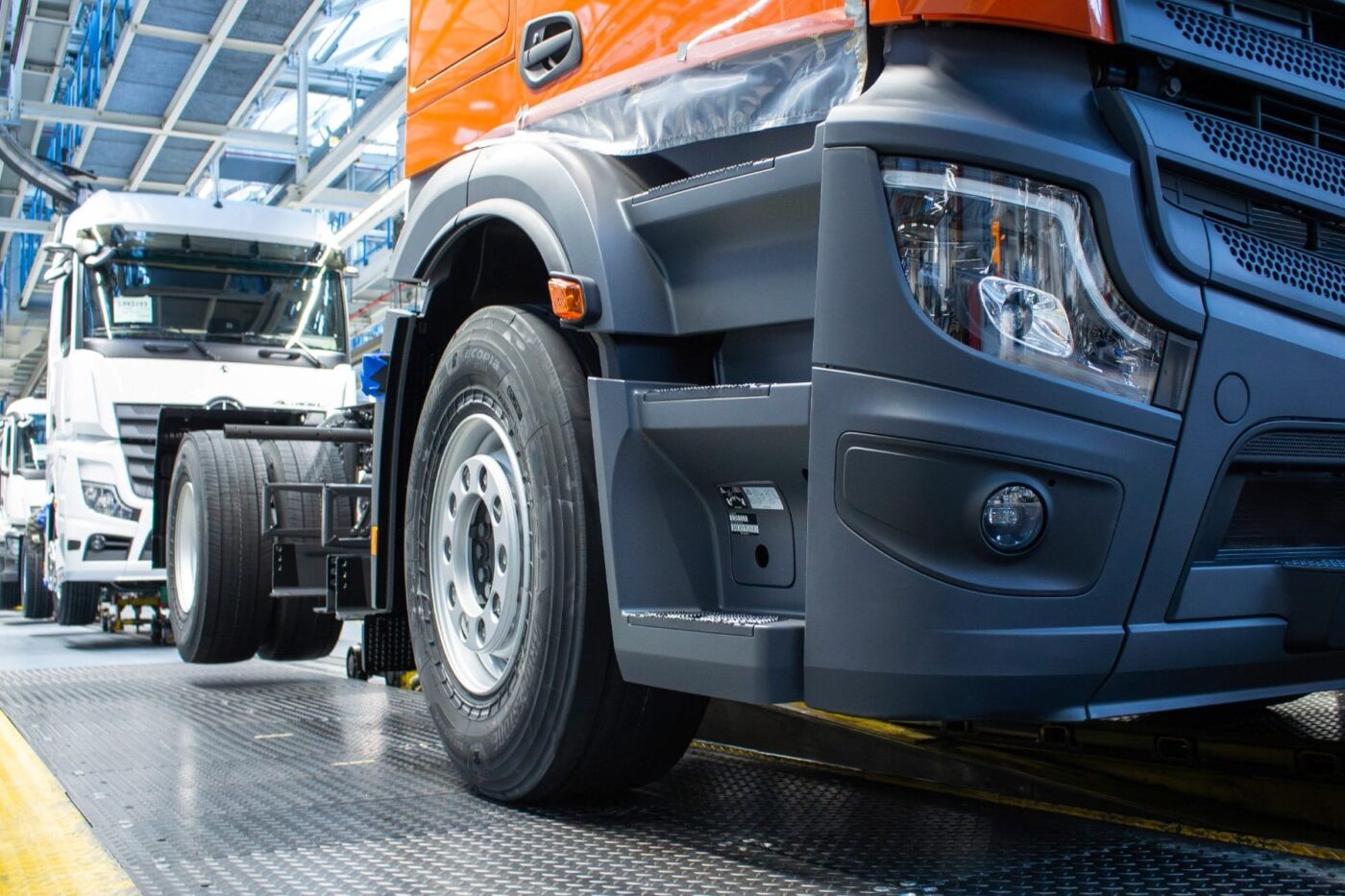
The start of series production for the new eActros 400 marks the beginning of a broader rollout of battery-electric truck (BEV) variants at Mercedes-Benz Trucks. Customers now have more options in terms of body types, wheelbases, and cabs for the electric trucks. The expanded ordering options for heavy-duty long-haul and distribution transport stem from numerous new combinations based on the two models: the eActros 400 and eActros 600. Further details will be announced soon.
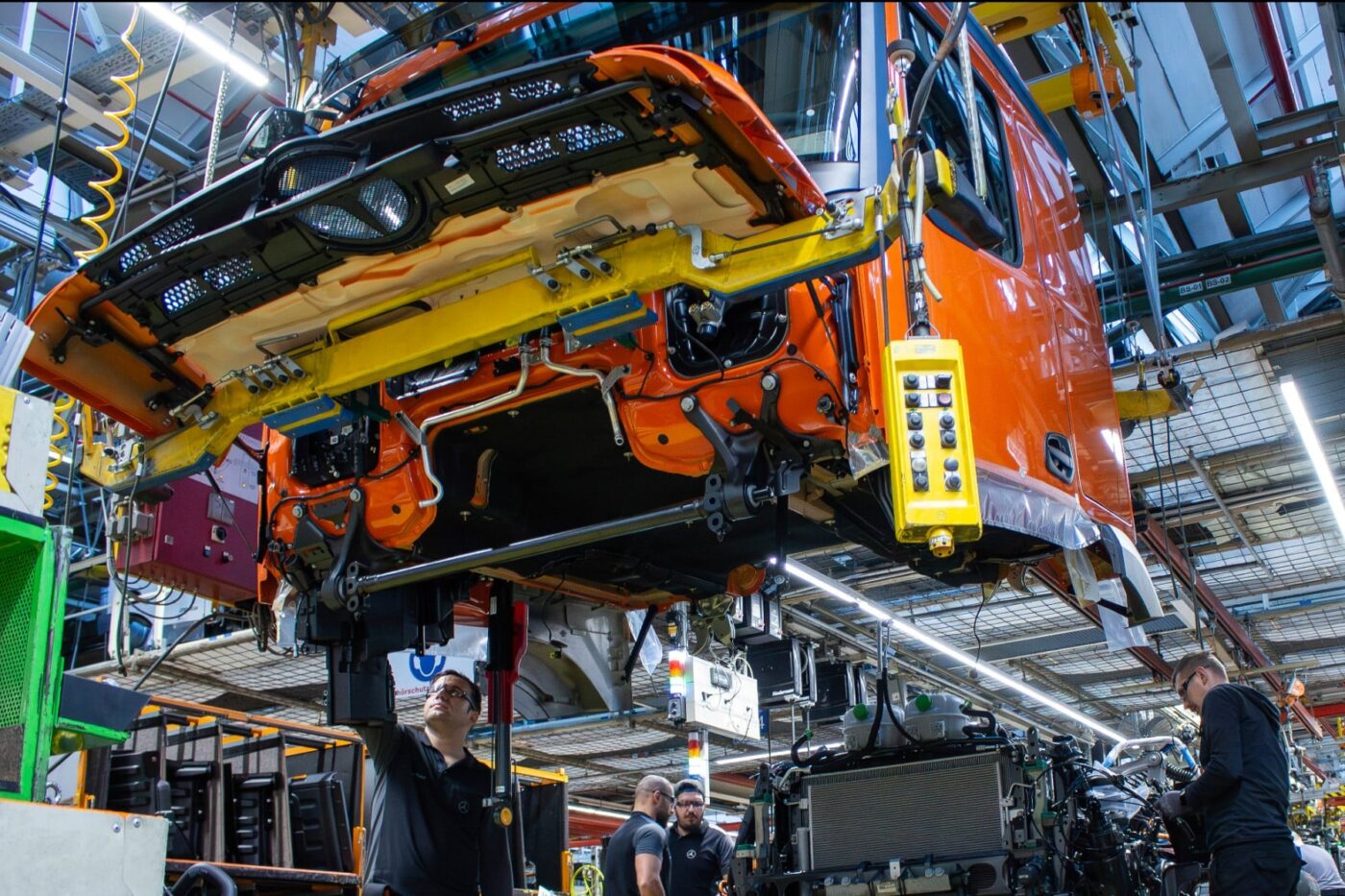
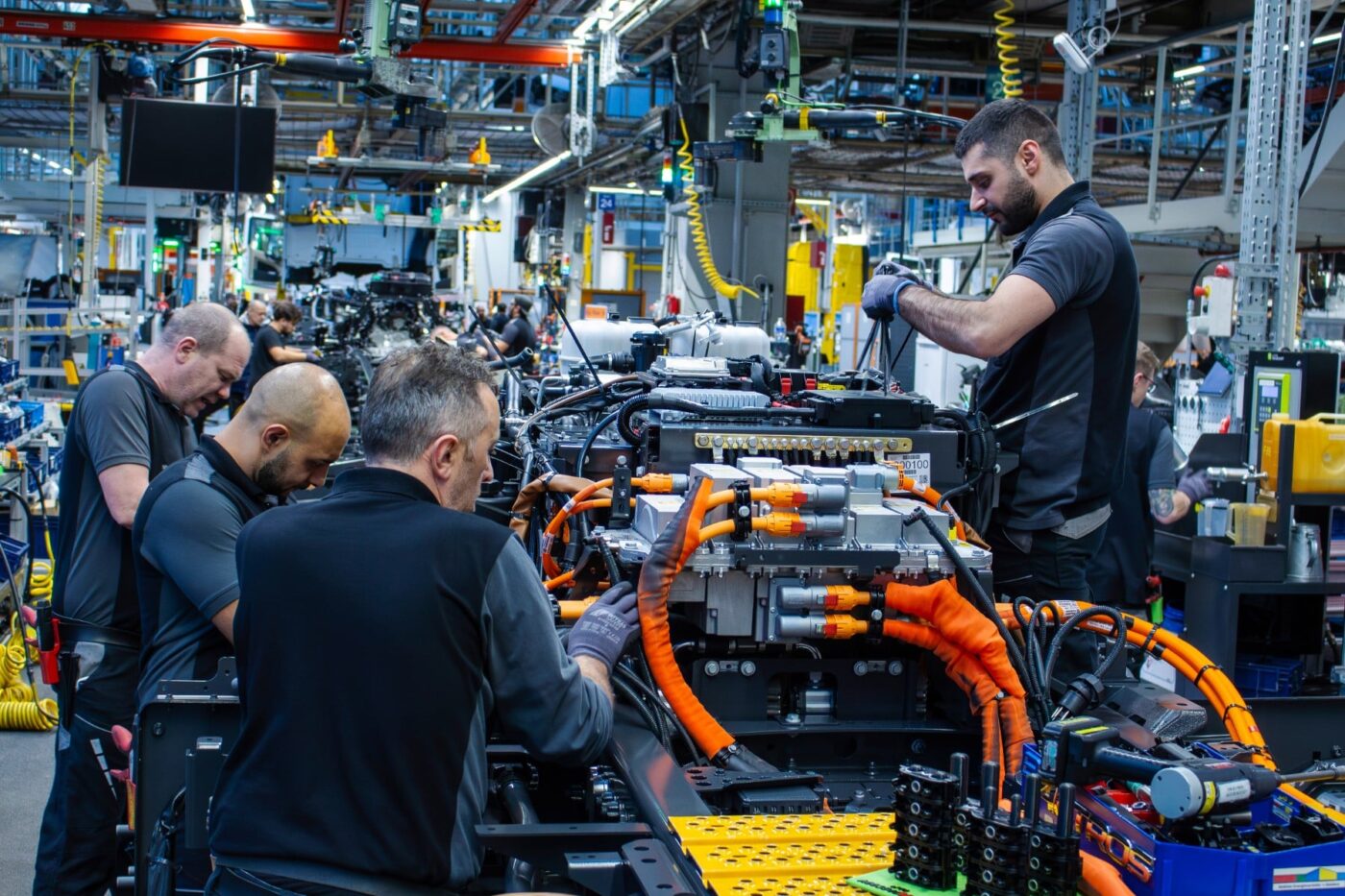
On the production side, the new derivatives are manufactured on the existing assembly line for the Wörth A-series. This now includes the eActros 400, which has entered series production. The battery-electric trucks are built on the same line as models with diesel powertrains, enabling the plant to flexibly respond to market demand. “This enables the plant to respond quickly to market demand and reliably meet the demanding quality standards of Mercedes-Benz,” the manufacturer states. Mercedes-Benz Trucks has not disclosed any planned production volumes in this context.
The company unveiled the new 400 model in early October in Molsheim, France. This model is not a completely new development but rather a derivative of the eActros 600, which was launched in 2024. The latter is the company’s new electric flagship, developed with significant engineering effort. Initially, the eActros 600 was only available as a tractor unit focused on long-haul transport. It is now joined by the new eActros 400, which features one fewer battery pack, as well as additional rigid chassis variants, new wheelbases, and two cab options. The new variants have been available for order since October.
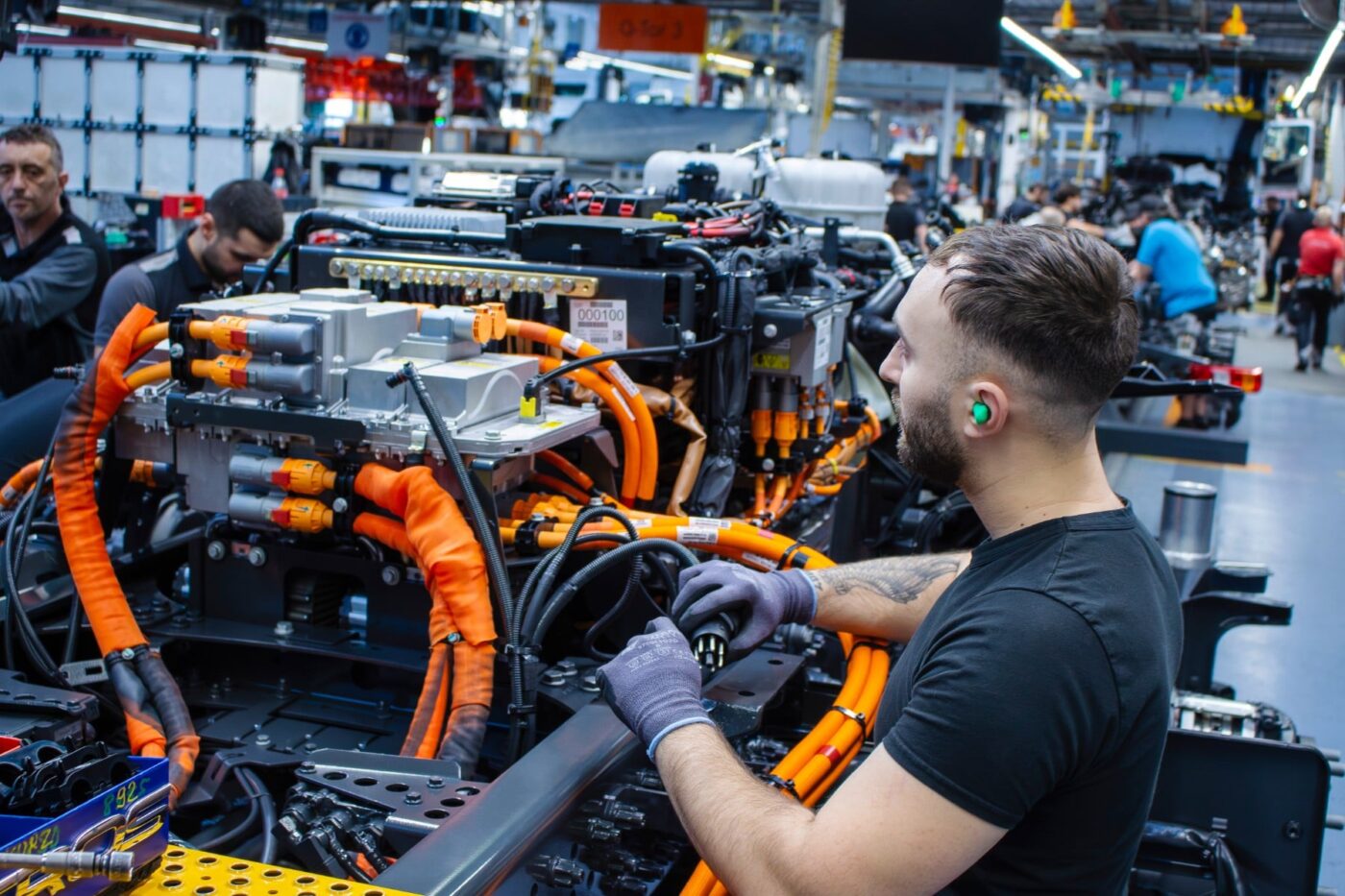
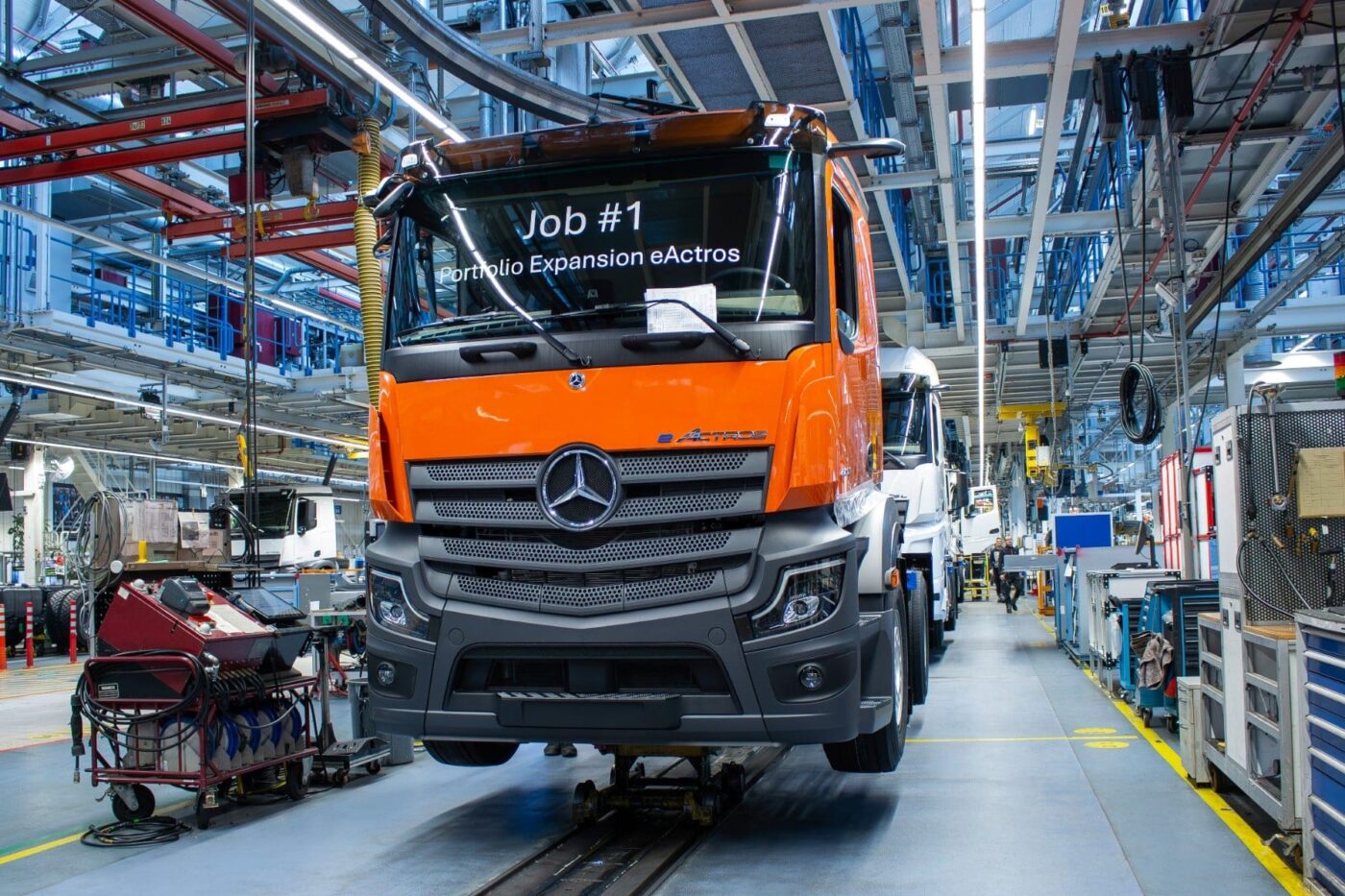
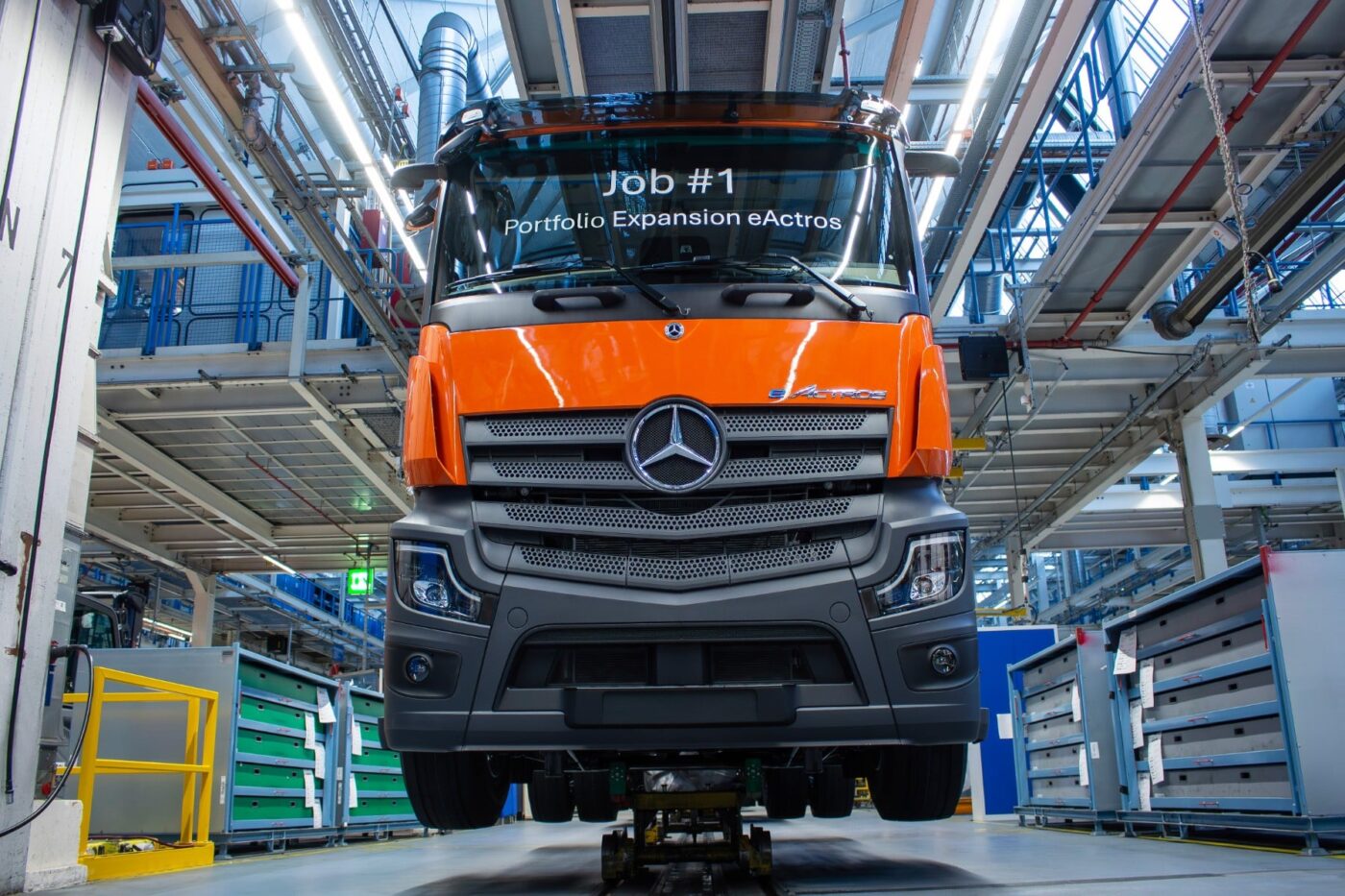
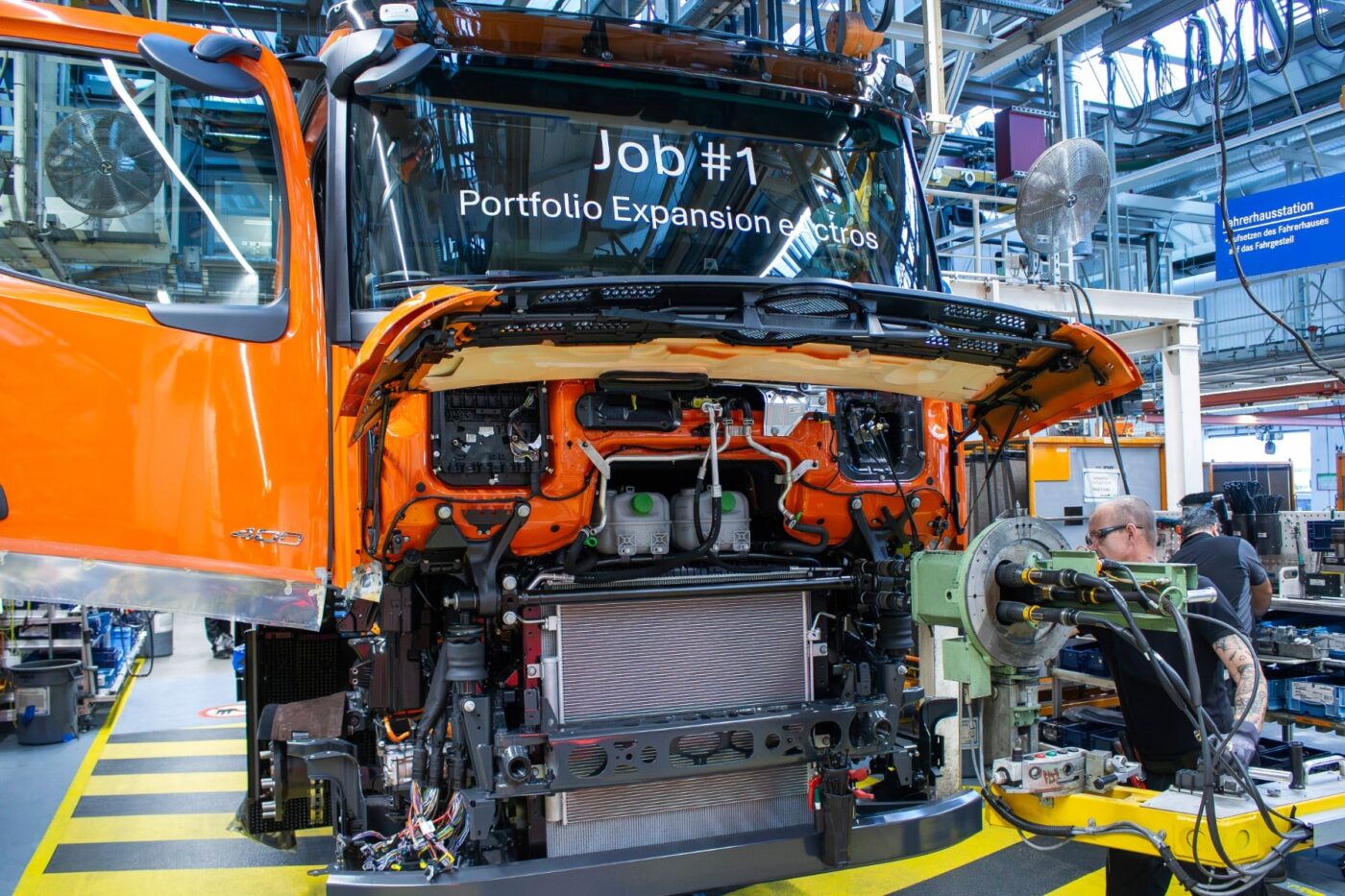
All versions share the technological foundation of the eActros 600, including lithium iron phosphate (LFP) batteries, an 800-volt onboard system, the newly developed e-axle, and the Multimedia Cockpit Interactive 2. The manufacturer refers to this, including the eActros 600, as the second eActros generation. Meanwhile, the first generation of electric trucks is being phased out: production of the pioneering eActros 300/400 will end by the close of the year. Importantly, production of the eEconic variant for municipal use remains unaffected.
Mercedes Shifts Further Towards LFP Batteries
A brief recap: Mercedes-Benz Trucks has been active in the electric truck market since 2021. Initially, the eActros 300/400 for heavy-duty distribution transport was introduced, followed a year later by the eEconic derivative. At the end of 2024, the new flagship eActros 600, featuring entirely new technology, was launched. With the phase-out of the eActros 300/400 by the end of the year, Mercedes is further committing to the LFP battery path, as the outgoing models still use NMC battery packs – the 300 model has three packs (315 kWh), while the 400 model has four (420 kWh). The switch in battery chemistry is driven by the robustness of LFP batteries and the fact that they can utilise over 95 per cent of the installed capacity, unlike other battery cell technologies, as the manufacturer emphasised.
Production in Wörth also differs significantly between the truck generations: the eActros 300/400 series was built on the same line as internal combustion engine models, but had to be moved to a different hall for the installation of electric components. In contrast, the eActros 600 and the new eActros 400 derivative are built entirely on the same line as diesel models. To achieve this, the manufacturer has made substantial investments in its assembly lines in Rhineland-Palatinate. This effort reflects the high hopes the company places in the second generation of battery-electric heavy-duty trucks.
Regarding the technology, the eActros 400 adopts the e-axle with two electric motors and a four-speed transmission from the eActros 600, delivering the same continuous and peak power outputs of 400 kW and 600 kW, respectively. The LFP batteries, featuring cells from CATL, are also identical and provide 414 kWh in this derivative. As only two of the three battery packs are installed, the eActros 400 is 1.5 tonnes lighter than the flagship eActros 600, offering greater payload capacity. The maximum fifth-wheel load of the eActros 400 increases to 9.5 tonnes. When combined with a standard trailer, the eActros 400 achieves a payload of over 25 tonnes, three tonnes more than the eActros 600, and thus matches the payload level of diesel trucks, as the company highlights. The lower payload compared to comparable diesel models had previously been a point of contention for transport operators in certain logistics sectors.
No surprises regarding charging: the eActros 400 can be charged at up to 400 kW via CCS on the left side of the vehicle. Optionally, a second CCS charging port is available on the passenger side. At a sufficiently powerful charging station, the electric truck can recharge from 10 to 80 per cent state of charge (SoC) in 46 minutes. Megawatt charging is not (initially) planned, as electrive learned in Molsheim during an interview with Tobias Jung, the project manager responsible for the eActros portfolio expansion (read the full interview in German here).
No single range figure
Regarding the range of the new derivative, the company emphasises that the increased variety of variants means there is no single range figure. However, for an eActros 400 6×2 with a box body, commonly used in heavy-duty distribution transport, Mercedes-Benz states a range of up to 480 kilometres, noting that this applies to partially loaded vehicles and ideal temperatures (20 degrees Celsius). The partial load is specified because, in distribution transport, goods are typically unloaded halfway through the journey, before the truck returns empty.
For the eActros 600 in long-haul transport, the manufacturer continues to cite the well-known range of 500 kilometres for fully loaded vehicles. However, for the first time, representatives in Molsheim indicated that the eActros 600 could achieve up to 560 kilometres “in its most energy-efficient configuration.” The company has long emphasised that the 500-kilometre figure is conservatively calculated and that the truck often exceeds this range in real-world conditions. Now, management has provided a specific figure for the first time. This is undoubtedly a response to competitors, who advertise ranges of up to 600 kilometres for their (announced) electric trucks. Incidentally, if the eActros 400 were used for long-haul transport under full load, it would achieve up to 330 kilometres. The range topic thus becomes more complex with the portfolio expansion. For this reason, Mercedes-Benz Trucks has introduced a range calculator with adjustable parameters on its website.
Choice of Cabs and Wheelbases
In addition to battery size, driving style, and usage profile, the two cab options now available for several variants of the eActros 600 and eActros 400 also influence range. Customers can choose between the L-cab, featuring the familiar Actros design with a relatively low entry and exit height and a width of 2.30 metres, or the ProCabin, which offers a width of 2.50 metres, a flat floor, and a “spacious feel.” The former is slightly lighter, while the latter is more aerodynamic. Both cabs come as standard with the Multimedia Cockpit Interactive 2, which includes voice control, among other features. The MirrorCam, an alternative to traditional exterior mirrors, remains an optional extra.
Regarding wheelbases and axle configurations, the eActros 400 offers the following options:
- 4×2 tractor unit with a 3,700 mm wheelbase
- 4×2 rigid chassis with wheelbases of 4,000, 5,500, 5,800, and 6,100 mm
- 6×2 rigid chassis with six different wheelbases between 4,000 and 5,800 mm.
The eActros 600 is also becoming more versatile: it will soon be available as a 4×2 rigid chassis with wheelbases of 4,000, 5,500, and 5,800 mm. Additionally, for the 6×2 rigid chassis, four more wheelbases (4,000, 4,500, 5,200, and 5,800 mm) are being added to the existing options of 4,600 and 4,900 mm.
This article was first published by Cora Werwitzke for electrive’s German edition.

0 Comments