

VW ID. Polo to launch in four power levels
Following the debut of the ID. Polo, still camouflaged in its harlequin design just before the IAA in September, selected journalists have now had the opportunity to test-drive the upcoming electric compact car from Wolfsburg during a ‘Covered Drive’ event. During this event, Volkswagen also revealed concrete technical details about the drivetrain—information that was missing during its IAA premiere. While it had already been leaked that the top versions of the VW and its sister models from Cupra and Škoda would deliver 166 kW, Volkswagen had remained silent about the base variant—the long-awaited €25,000 model.
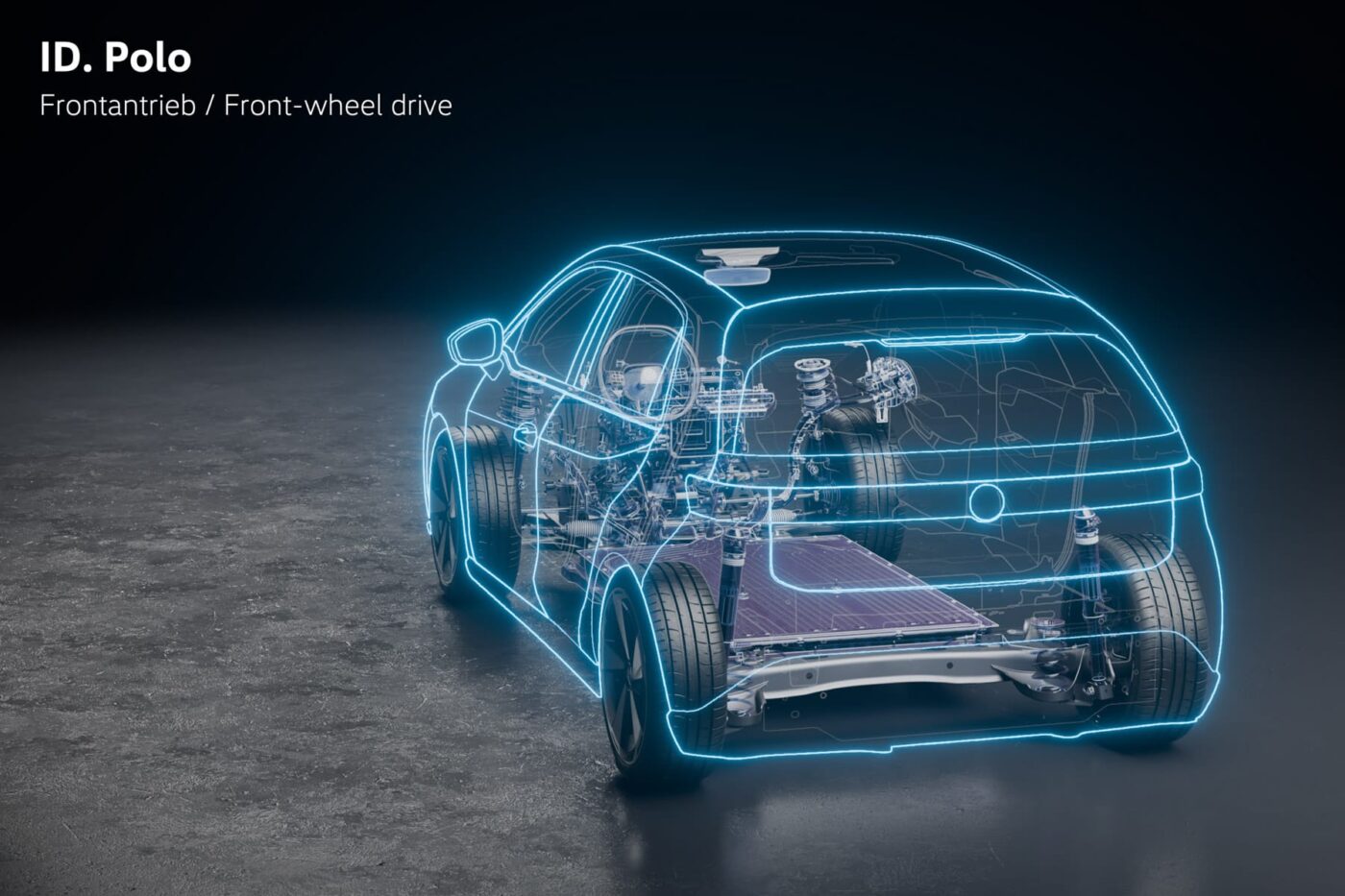
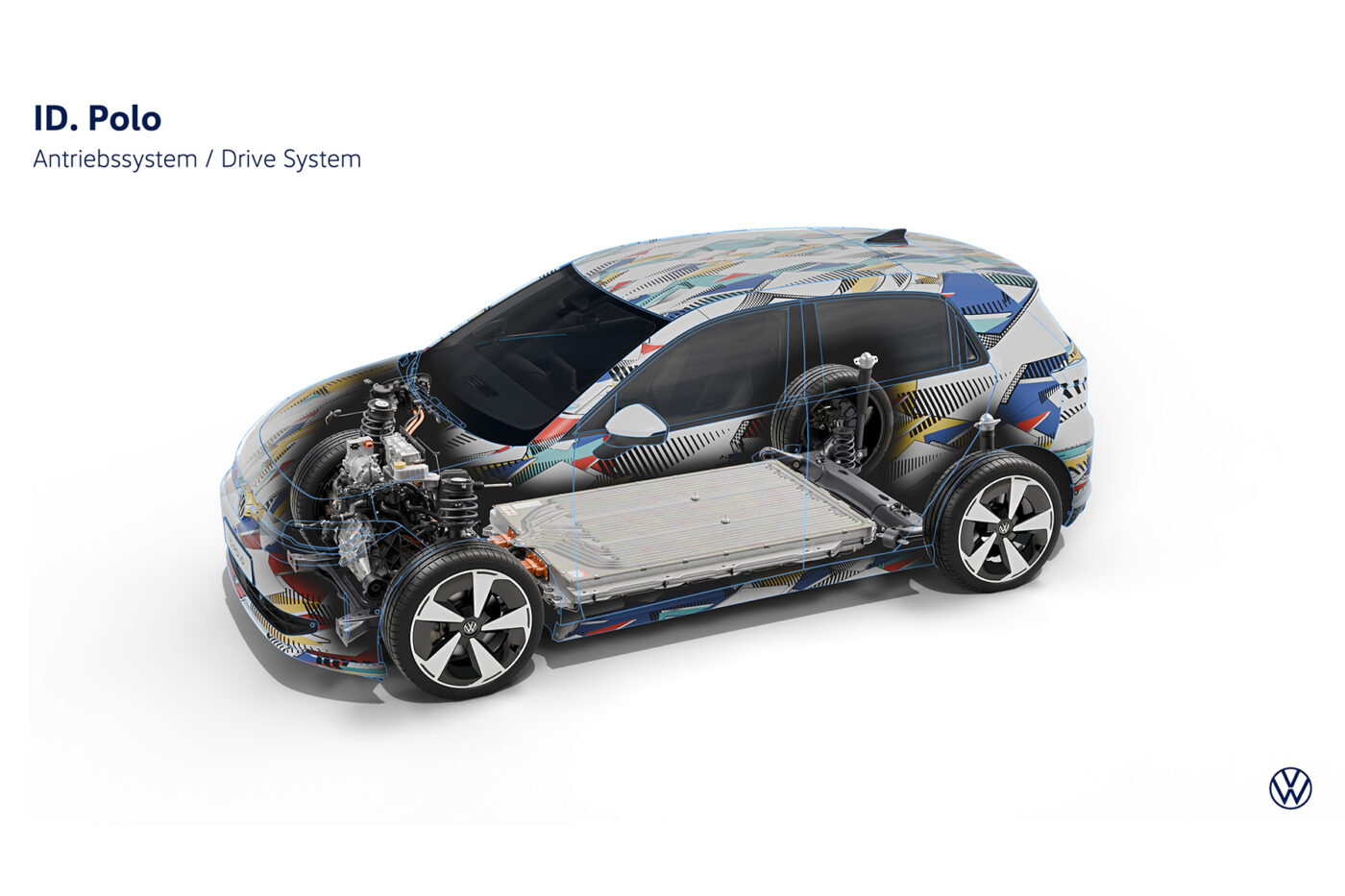
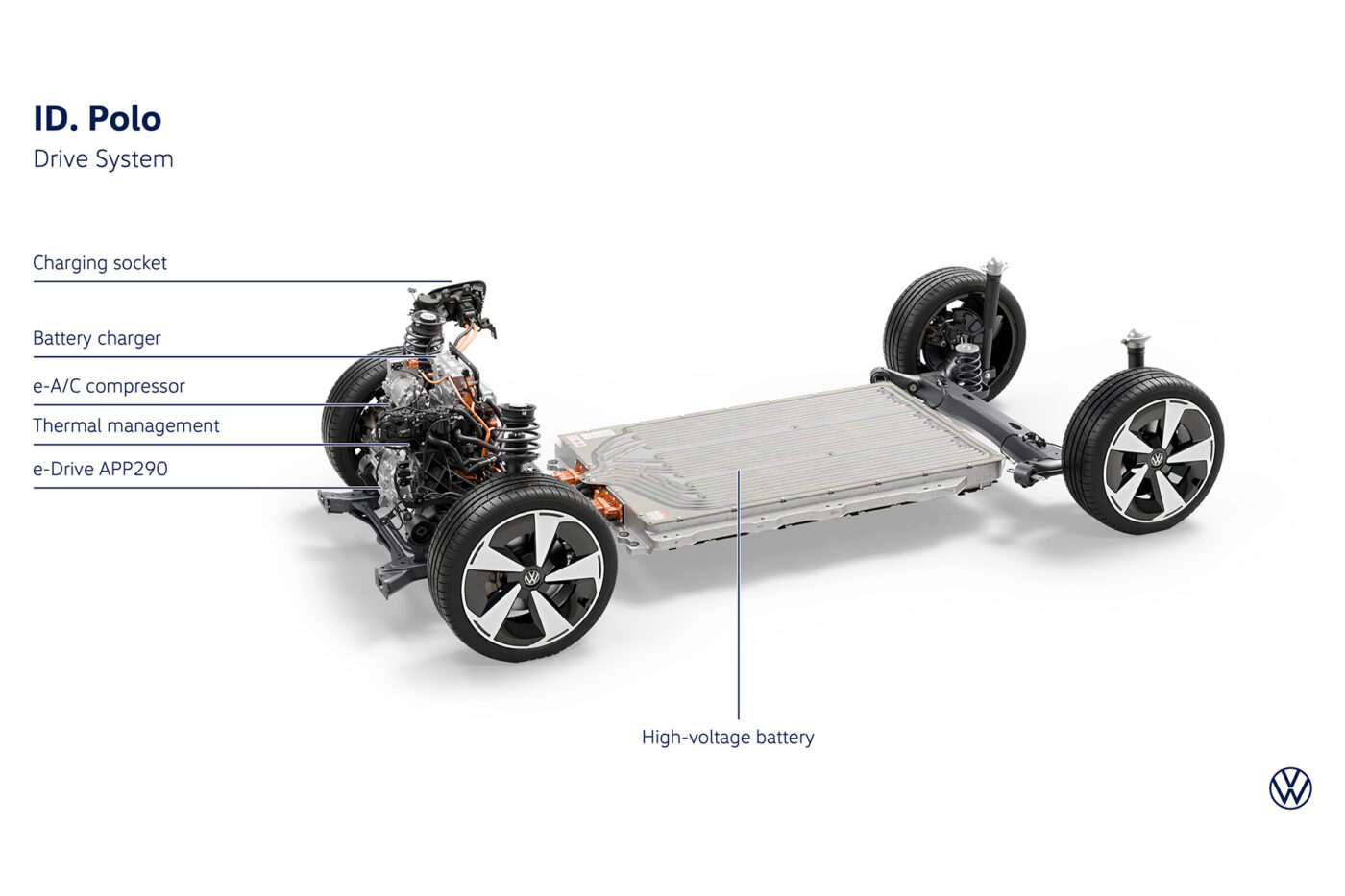
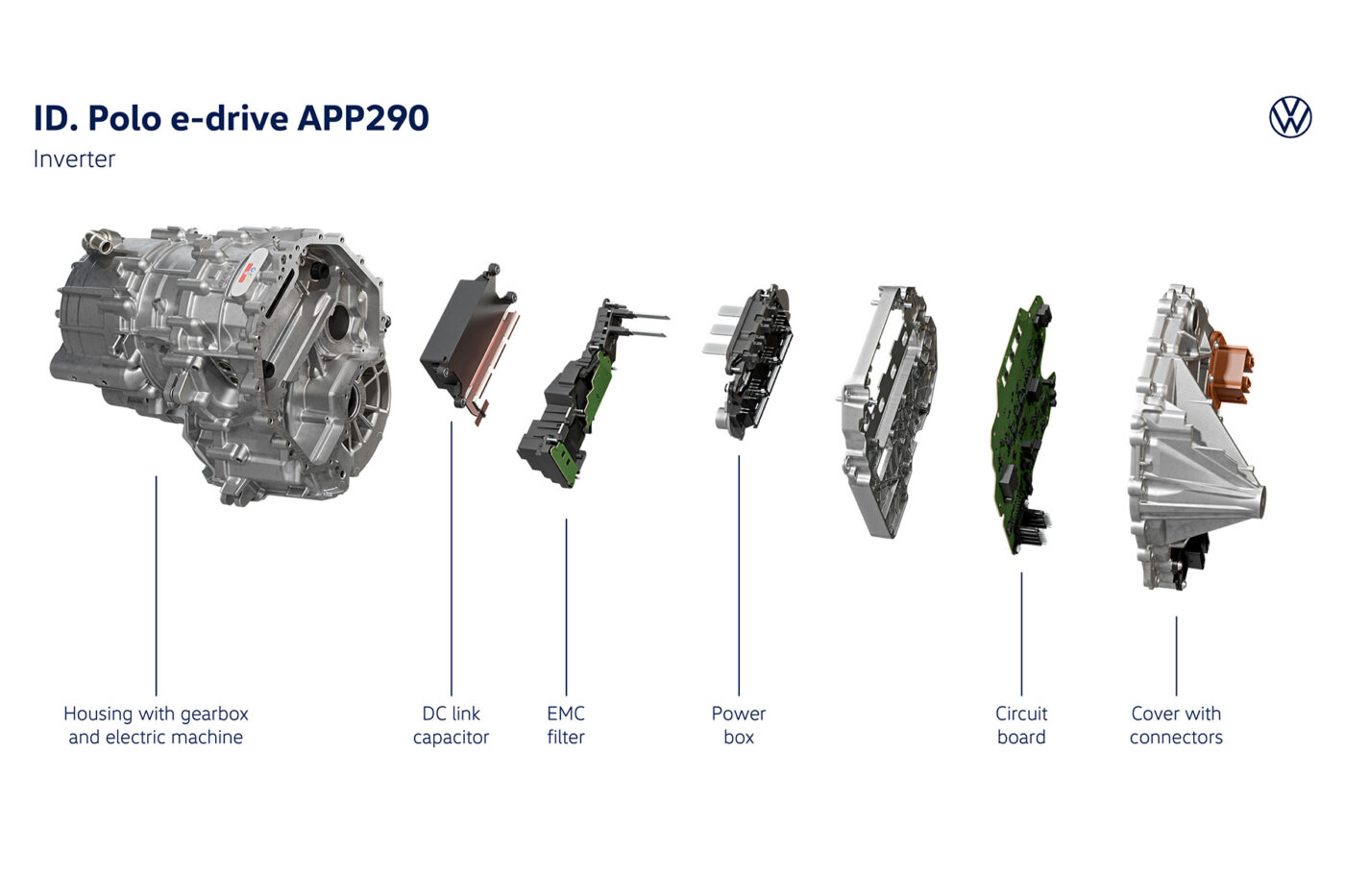
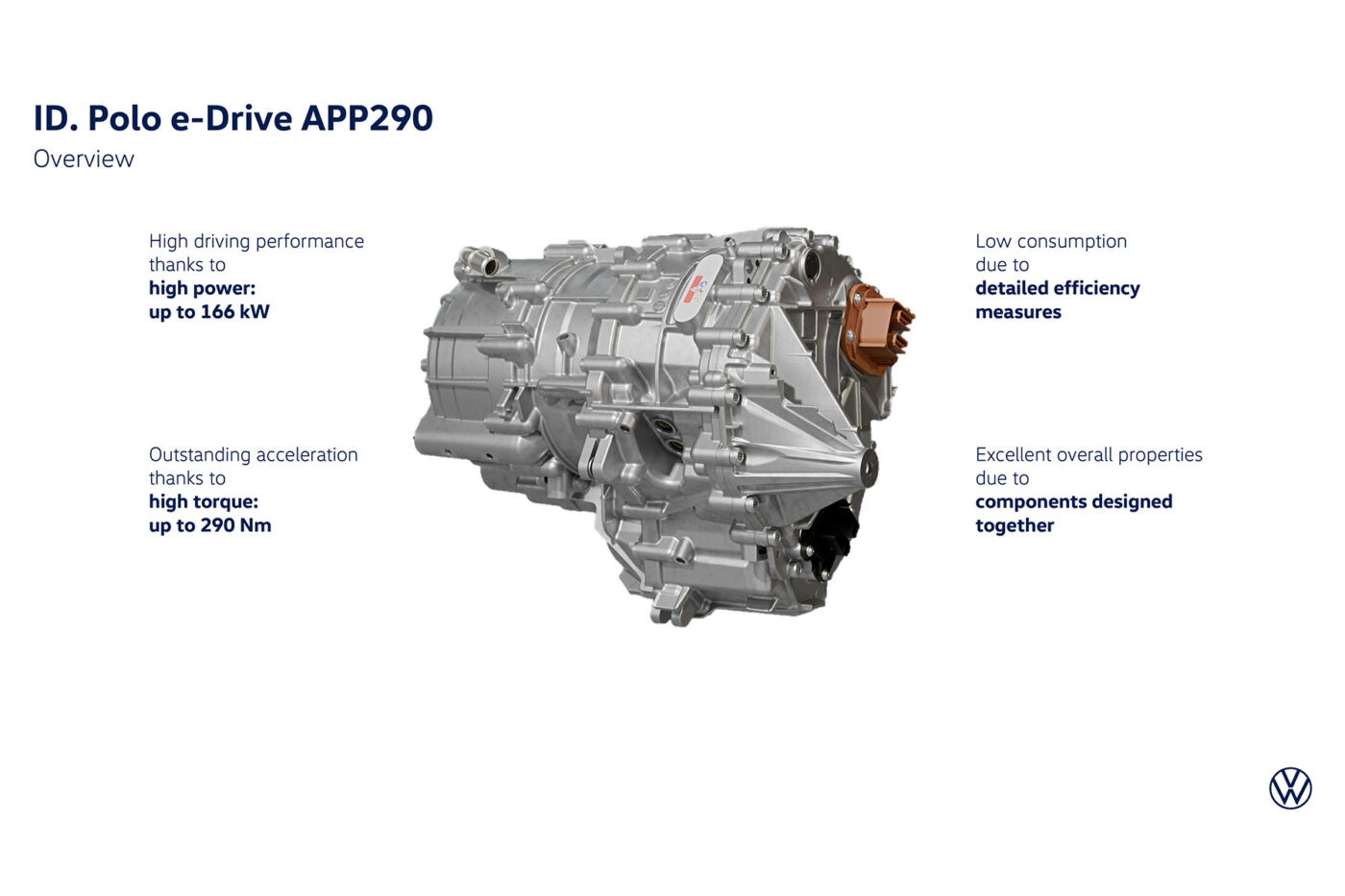
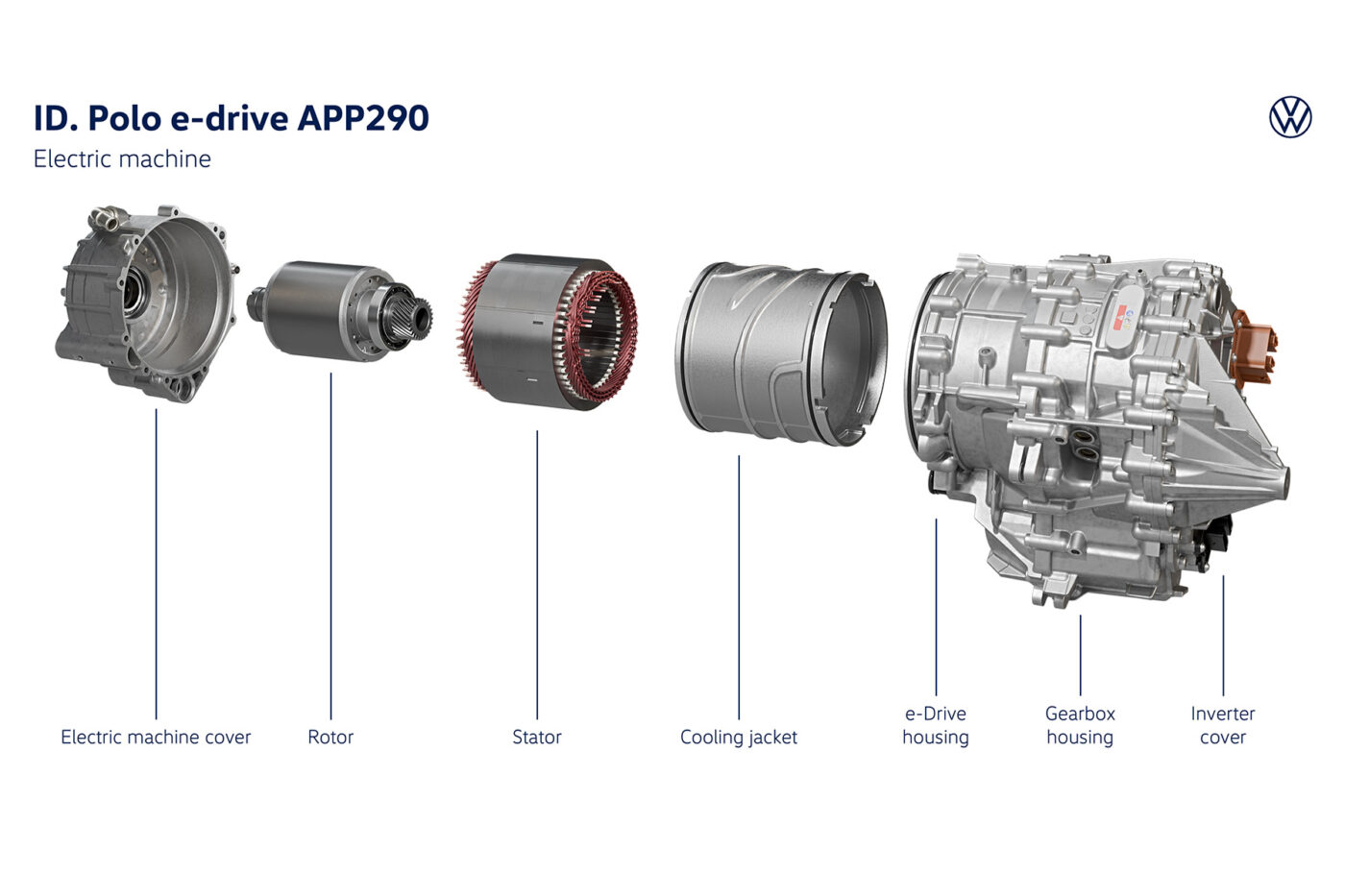
It has now been confirmed that the ID. Polo will be available in four drivetrain variants. The smaller battery will be offered with power outputs of 85 or 99 kW, while the larger battery will be available with 155 and 166 kW—the 166 kW version will be marketed by Volkswagen as the ID. Polo GTI. In all variants, the motor is the APP290, developed specifically for front-wheel-drive models, which, according to Volkswagen’s naming convention, delivers 290 Nm of torque. Also new is the inverter, referred to by Volkswagen as the ‘pulse inverter.’ This component was developed and will be manufactured in-house, contributing to cost savings and enabling the starting price of around €25,000.
In addition to the drivetrains, details about the two battery versions have now been confirmed. Since the presentation of the ID.2all showcar in 2023, it has been clear that there would be two different batteries—an LFP battery for an affordable entry price and an NMC variant for a range of up to 450 kilometres. The two drivetrain versions with 85 and 99 kW will come as standard with the LFP battery, which offers 37 kWh of usable net energy content—Volkswagen has not disclosed the gross value. According to preliminary data, this should enable WLTP ranges of up to 300 kilometres. The exact figures will likely be available at the start of pre-sales, planned for April 2026.
According to Volkswagen, the LFP battery’s maximum charging power is 90 kW, with a charging time of around 27 minutes for a 10 to 80 per cent charge. With a net energy content of 37 kWh, this means 25.9 kWh must be transferred in 27 minutes—equivalent to an average charging power of 58 kW. AC charging is possible at 11 kW, taking just under four hours.
The NMC battery, designed for a (preliminary) range of 450 kilometres, has a net energy content of 52 kWh. During the ID.2all study, no energy content was specified, only the targeted range. At the time, we estimated 55 to 60 kWh, but the actual battery is slightly smaller. While the preliminary range has remained unchanged for the production model, Volkswagen has not fully met its charging time target: in 2023, it was stated that charging would take 20 minutes, but the actual time is 23 minutes with a peak charging power of 130 kW.
| ID. Polo small battery | ID. Polo large battery | |
|---|---|---|
| Drivetrain | FWD | FWD |
| Power output | 85/99 kW | 155/166 kW |
| Torque | 290 Nm | 290 Nm |
| Acceleration | – | – |
| Top speed | – | – |
| WLTP range | approx. 300 km | approx. 450 km |
| Battery capacity | 37 kWh | 52 kWh |
| DC charging power | 90 kW | 130 kW |
| DC charging time 10-80% | 27 min | 23 |
| Price | – | – |
The ID. Polo’s larger battery needs 36.4 kWh to go from 10 to 80 per cent SoC. If this amount is to be transferred in 23 minutes, an average of 95 kW is needed. Given the peak power of 130 kW, this level is likely only maintained briefly, resulting in an average of 95 kW—or the power drops sharply after a longer plateau. Volkswagen has not yet released the exact charging curve.
Both battery variants utilise PowerCo’s standardised cell. This is a prismatic cell of uniform size, which can be filled with different cell chemistries—tailored to the specific vehicle. The unified cells are integrated into the underbody using the cell-to-pack principle, eliminating the modular level found in other MEB vehicles. According to the carmaker, this will reduce cost, installation space, and weight, improve thermal management efficiency, and increase energy density by around ten per cent.
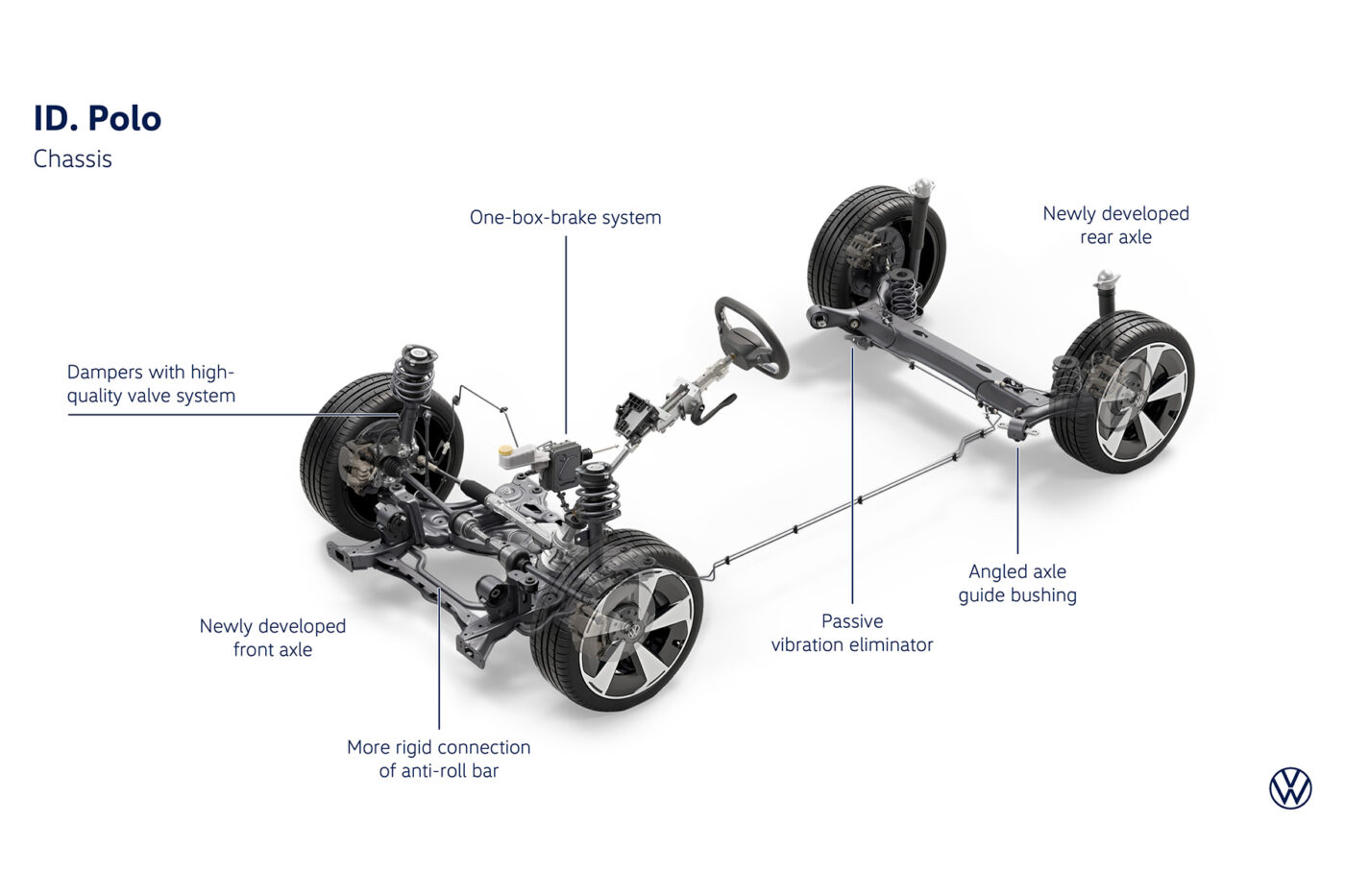
As the front-wheel-drive platform in the MEB is new, the chassis also had to be developed from scratch—allowing it to be precisely tailored to the ID. Polo. However, cost, space, and weight efficiency were prioritised above all else. The ID. Polo features a MacPherson front axle and a ‘particularly compact’ compound crank rear axle. “The interplay between these two new axles is characterised by the highest degree of precision linearity – vehicle handling that conveys maximum feedback to the driver and thus ensures noticeably more safety,” the carmaker said. Volkswagen has not yet confirmed whether the large sub-trunk from the concept, located beneath the main boot, will make it into the production model. However, cross-sectional drawings show a large, empty space between the rear wheels—precisely where the storage compartment is likely located. No images have been released yet—Volkswagen still has details to unveil for the official world premiere.
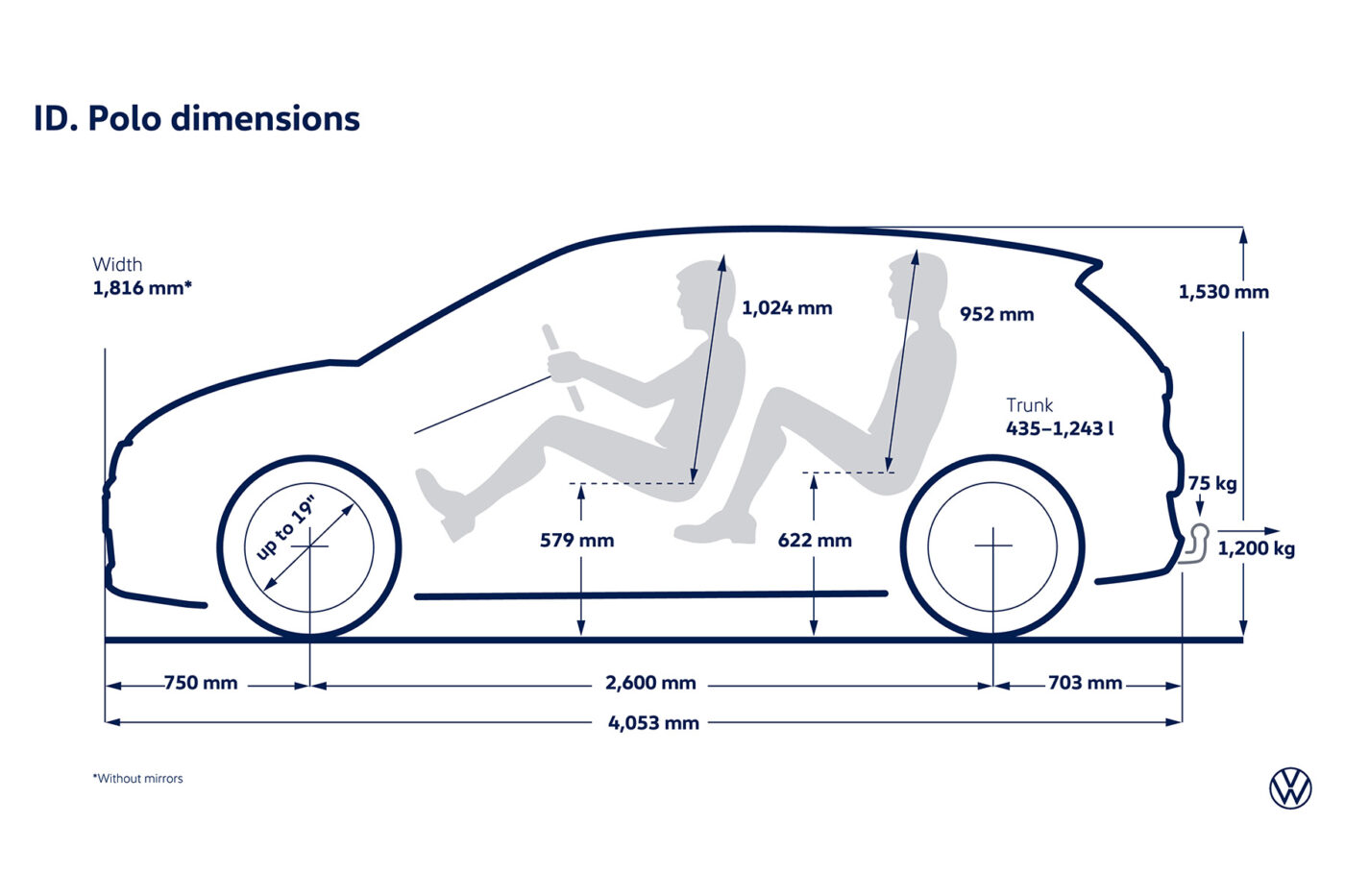
While the ID. Polo GTI will stand out from the standard model with its sportier bumpers, the dimensions of the ID. Polo have been known since the IAA: the model is 4.05 metres long with a wheelbase of 2.60 metres, 1.82 metres wide, and 1.53 metres tall. Newly disclosed are the kerb weights: with the 37 kWh battery, it weighs 1,512 kilogrammes, and with the 52 kWh battery, 1,515 kilogrammes. The fact that LFP batteries, despite their lower energy density, often weigh as much as NMC batteries with higher energy content has already been demonstrated in the Mercedes CLA: there, models with the 58 kWh LFP battery and the 85 kWh NMC battery are nearly identical in weight.
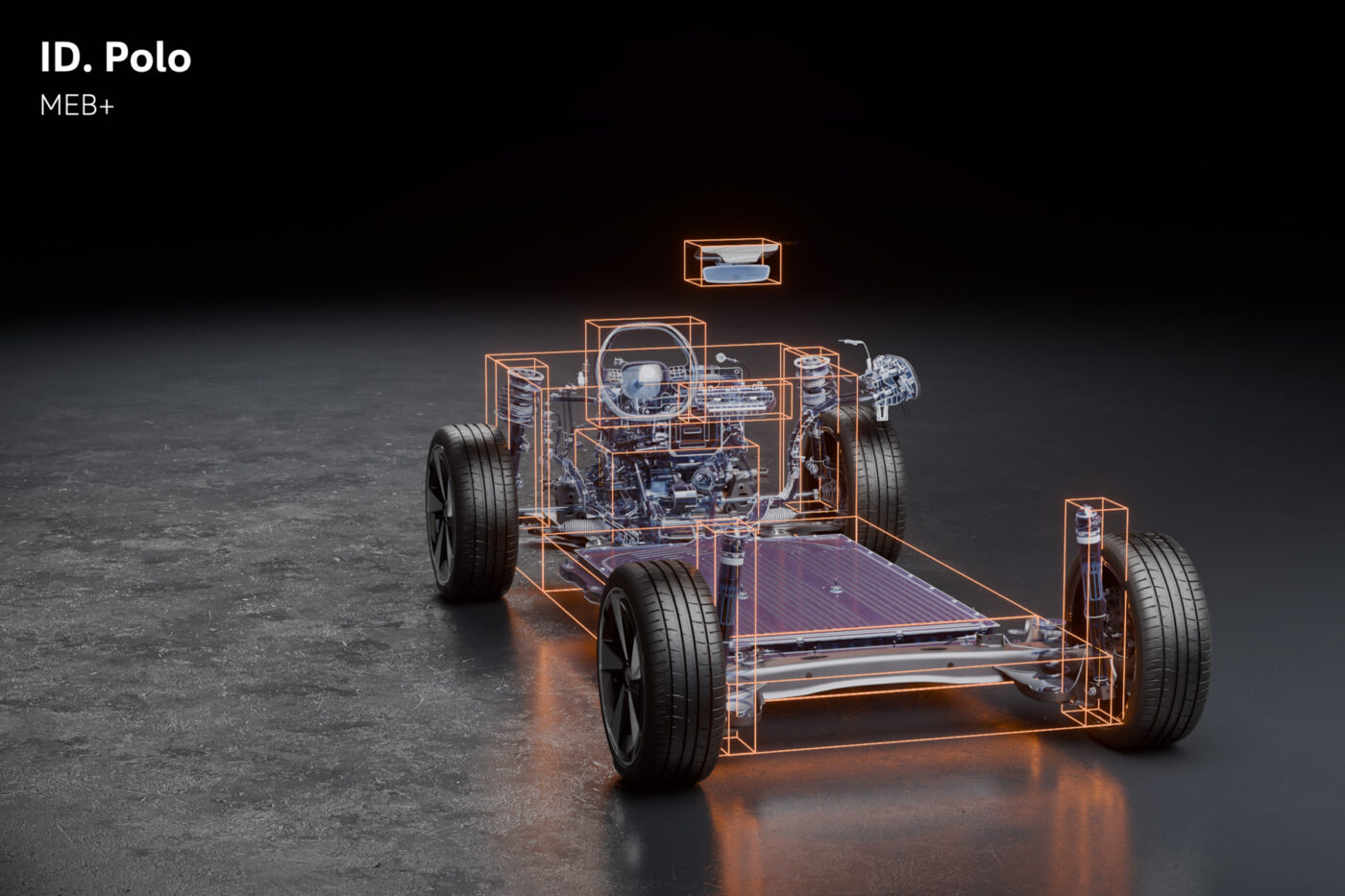
The foundation for the ID. Polo and its sister models is the newly developed front-wheel-drive variant of the MEB+. “Thanks to the completely new and particularly efficient electric drive, the complexity and thus the number of components and weight have been reduced – parameters that have made it possible for Volkswagen to lower costs and consumption. In addition, the electric front-wheel drive on board the ID. Polo offers clear advantages in terms of space,” said Volkswagen. Thanks to the front-wheel-drive concept, the ID. Polo provides space for five people and 435 litres of luggage.
Up to 1.2 tonnes of towing capacity
The ID. Polo is almost exactly the same size as the current internal combustion engine Polo but offers 19 millimetres more interior space. The boot is also larger: the combustion version holds a maximum of 351 litres. “Thanks to this extra space, the four-door and five-seater ID. Polo is now more of an all-rounder than any of its predecessors, specialised in urban environments but equally at home far beyond the city limits,” Volkswagen added. A graphic shows that the ID. Polo will also be offered with a tow hitch—supporting a 75 kg static load and a towing capacity of 1,200 kg.
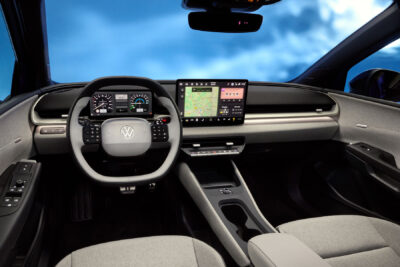
According to Wolfsburg, ‘Every detail of the interior has been completely revamped and redesigned.’ Highlighted features include ‘the ergonomic interplay of digital and physical controls as well as the horizontal architecture of the dash panel.’ The digital cockpit consists of a 10.25-inch screen, while a 13-inch touchscreen for infotainment is positioned in the centre.
Volkswagen has not yet confirmed whether all four drivetrain variants will be available at the start of pre-sales in April 2026. It is likely that initially, only one drivetrain version will be offered, with production complexity increasing later. This could mean that the €25,000 ID. Polo may take some time to arrive, especially if Volkswagen starts with the larger battery first.
Source: Information via email


2 Comments