

Ford discontinues several EVs in US
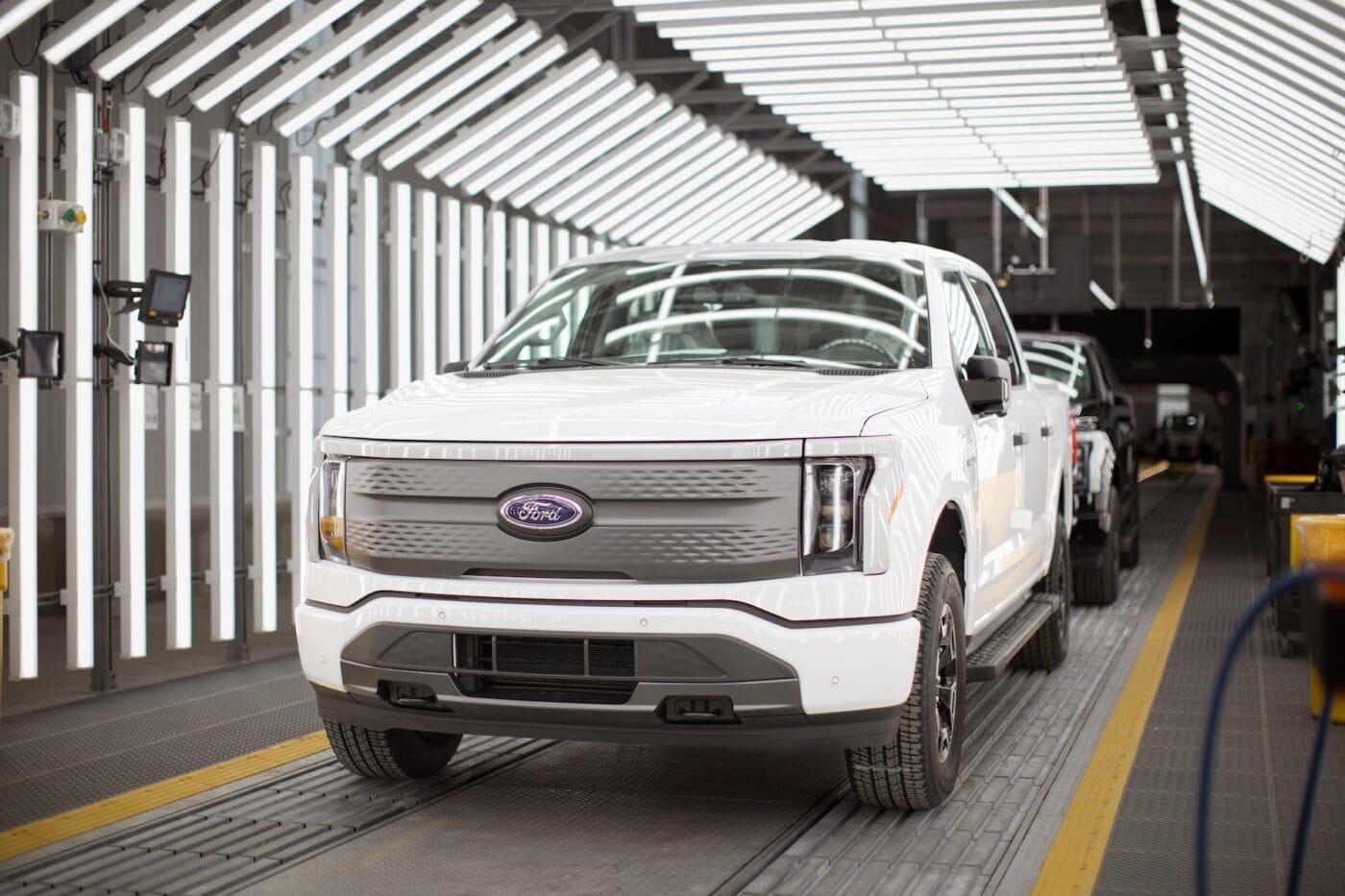
The discontinuation of the battery-electric version of the F-150 had been anticipated for some time. Despite 200,000 pre-orders for the all-electric pickup, customer interest rapidly declined, forcing Ford to suspend production multiple times. The company has now confirmed that the battery-electric version will be replaced by a range extender, the F-150 Lightning EREV. This newly announced model is expected to achieve a combined range of over 1,100 kilometres. Ford emphasises that the extended range is particularly critical for journeys involving heavy trailers—one of the main points of criticism from customers regarding the battery-electric version. However, no further details beyond the range have been disclosed so far.
Ford is also discontinuing a new electric pickup codenamed T3, whose launch had already been postponed several times. Additionally, the company will not proceed with a previously planned all-electric van for Europe and will replace a planned electric van for North America with a new model featuring petrol and hybrid powertrains. Overall, Ford is shifting its focus towards new petrol and hybrid models.
However, Ford is not abandoning the electric vehicle market entirely. Instead, it is discontinuing models or series that are particularly unprofitable or no longer expected to become profitable due to market developments. This includes the T3, once hailed as a “revolutionary” flagship model. “Rather than spending billions more on large EVs that now have no path to profitability, we are allocating that money into higher-returning areas,” said Andrew Frick, head of Ford’s internal combustion engine and EV division. Ford’s EV division, Model e, is expected to reach the break-even point by 2029, “with improvements beginning as early as 2026,” according to the company. To date, the Model e has accumulated billions in losses.
Electric hopes rest on the Universal EV Platform
Ford expects these higher returns from the next generation of its US electric vehicles. In developing new battery-electric models, Ford will fully rely on its Universal EV Platform to produce significantly more affordable electric vehicles for the North American market. However, production models based on this platform will only gradually enter the market from 2027 onwards. By 2030, Ford aims for half of its sales to consist of electric vehicles, hybrids, and range extenders—up from just 17 percent currently.
The effects of Ford’s more cautious electric strategy are also evident in Europe. For the continent, Ford recently announced a new collaboration with Renault to develop affordable EVs—instead of pursuing in-house developments. Ford already offers two electric models based on Volkswagen’s MEB platform: the Explorer and the Capri. However, both vehicles are selling below expectations, likely because they offer little differentiation from VW Group models in key areas such as range and charging performance—and are, on average, slightly more expensive. It remains unclear in which segments and at what prices the electric Fords resulting from the Renault collaboration will be launched.
Back in the US, Ford’s realignment includes write-downs totalling 19.5 billion US dollars. Approximately 8.5 billion US dollars are linked to the cancellation of planned electric models—for the F-150 Lightning, a dedicated supply chain was established, and years of investment were poured into the development of the entirely new T3. Around six billion US dollars are associated with the dissolution of a battery joint venture with SK On, while five billion US dollars are attributed to “programme-related expenses.”
Following the dissolution of the battery joint venture with SK On, Ford plans to repurpose its own plants in Kentucky and Michigan to produce LFP batteries for stationary applications in energy infrastructure and data centres. The company aims to deliver battery energy storage systems (BESS) with an annual capacity of 20 GWh starting from 2027.
“This is a customer-driven shift towards a stronger, more resilient, and more profitable Ford,” said Jim Farley, President and CEO of Ford. “The operational reality has changed, and we are investing our capital in high-growth, high-return areas: Ford Pro, our market-leading trucks and vans, hybrid vehicles, and high-margin businesses like our new battery storage division.”
ford.com, reuters.com, spiegel.de (all three on realignment) ford.com (F-150 Lightning EREV)

1 Comment