

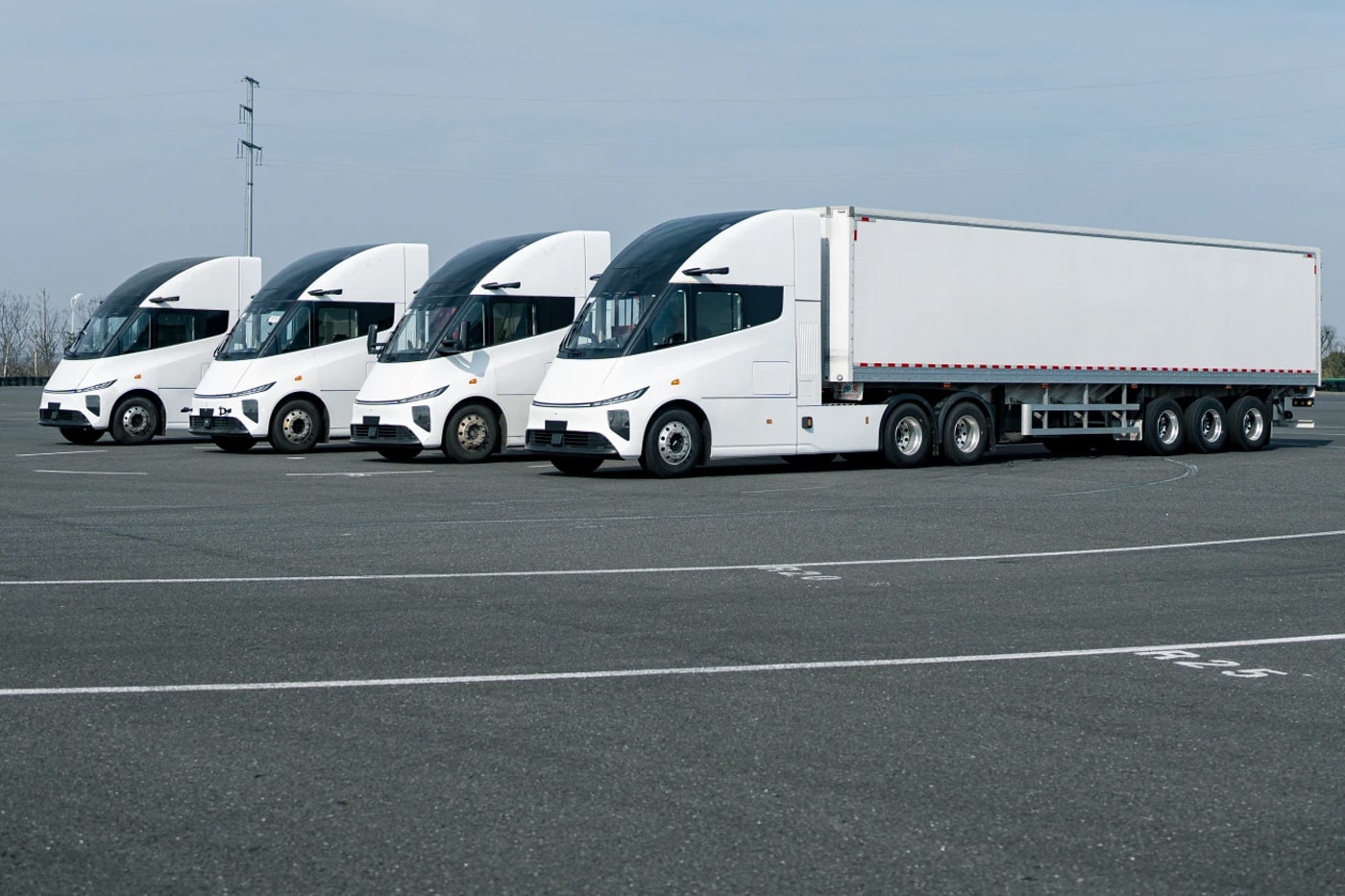
Windrose sets sights on powering 5% of the world’s trucks by 2030
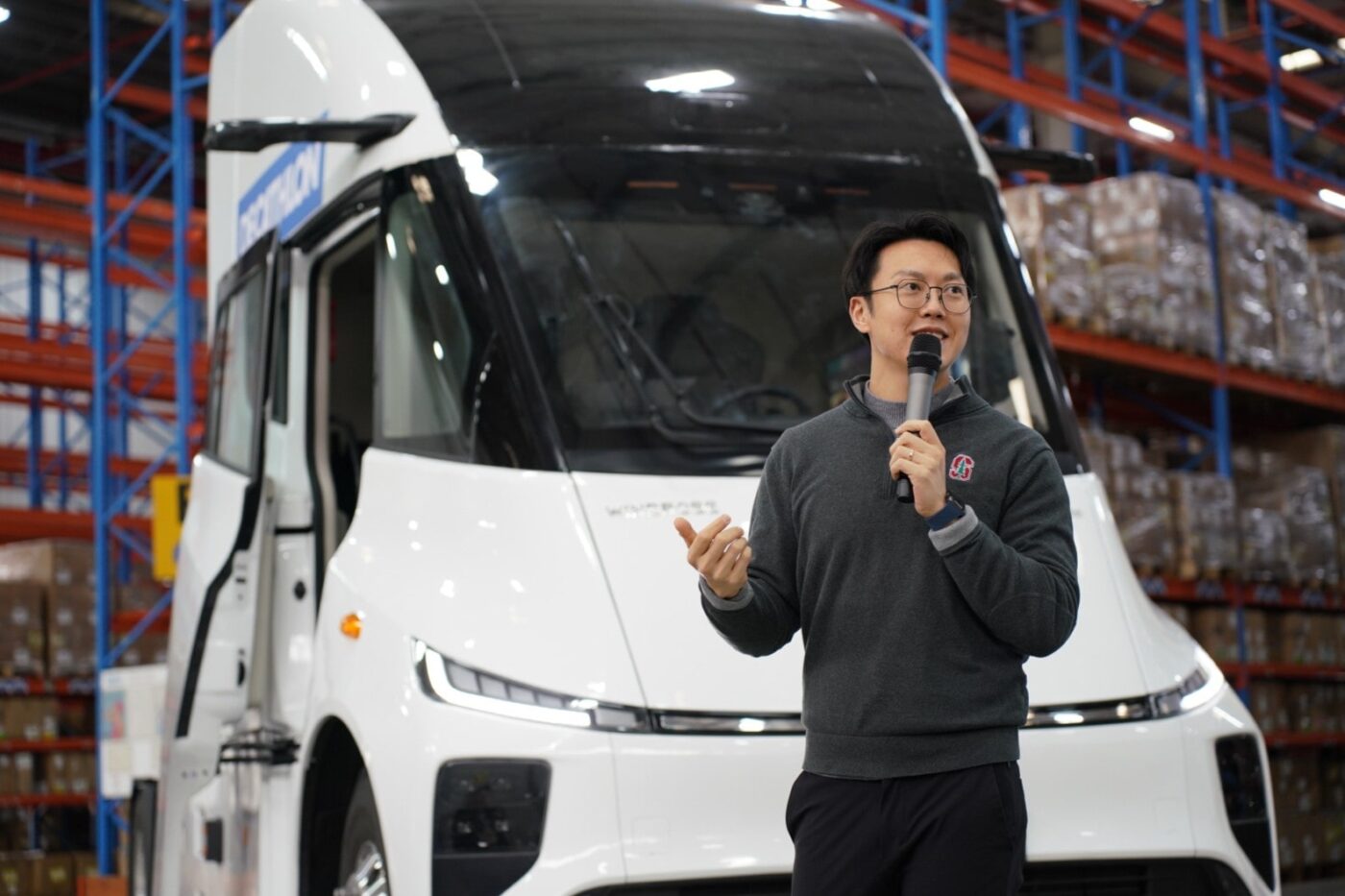
The Chinese company is positioning itself as both an electric truck manufacturer and a powertrain technology supplier. The ambition is to take that technology well beyond Windrose-branded vehicles. “I am less interested in how many trucks are built at Windrose, but rather in how many trucks are equipped with the Windrose power train technology,’ Han said. “In the year 2030, I’m looking at how many per cent of the world’s trucks are powered by Windrose technology design,” Han said. “And I think 2030, that number should be, I hope, at least five per cent of the world’s total trucks.”
On paper, the ambition is striking. Five per cent may sound modest at first glance, but with global forecasts pointing to a rapid ramp-up in electric truck adoption by the end of the decade, the figure translates into a very large absolute number. Projections for 2030 suggest more than nine million battery-electric trucks and buses worldwide, accounting for close to half of new truck sales in some regions, including around 43 per cent in the EU and roughly 42 per cent in Germany. Against that backdrop, Windrose’s target implies a technology footprint spanning hundreds of thousands of vehicles globally.
Han framed the target as an industry integration play. The Chinese manufacturer is working with other heavy-duty and medium-duty manufacturers and has also engaged with trailer and recreational vehicle companies on the use of Windrose designs for electrification. The CEO said the company wants a role comparable to a core technology provider rather than only a standalone vehicle brand.
Addressing market speculation about the company’s finances, Han said the insolvency claims were unfounded. He added that Windrose is ‘receiving another about $100 million in equity investments from a number of strategic investors,’ including real estate developers, telecoms operators and New York-based energy funds. One named investor is PRD, which Han said is building Windrose’s factory in France. He also said Windrose aims to pursue an IPO in New York in the middle of next year – all signs that business is thriving and the company still has deep enough pockets and partners it can rely on.
However, while Windrose repeatedly points to strong partners that are financing factories and infrastructure, these partners will ultimately expect returns. How those obligations will affect Windrose’s cost structure and long-term margins remains an open question, particularly as none of the announced production sites outside of China are operational yet. So the question is how quickly Windrose can move from announcements to tangible deployment. As of today, the five per cent target is not backed by operating factories or serial production outside China, making the timeline particularly ambitious.
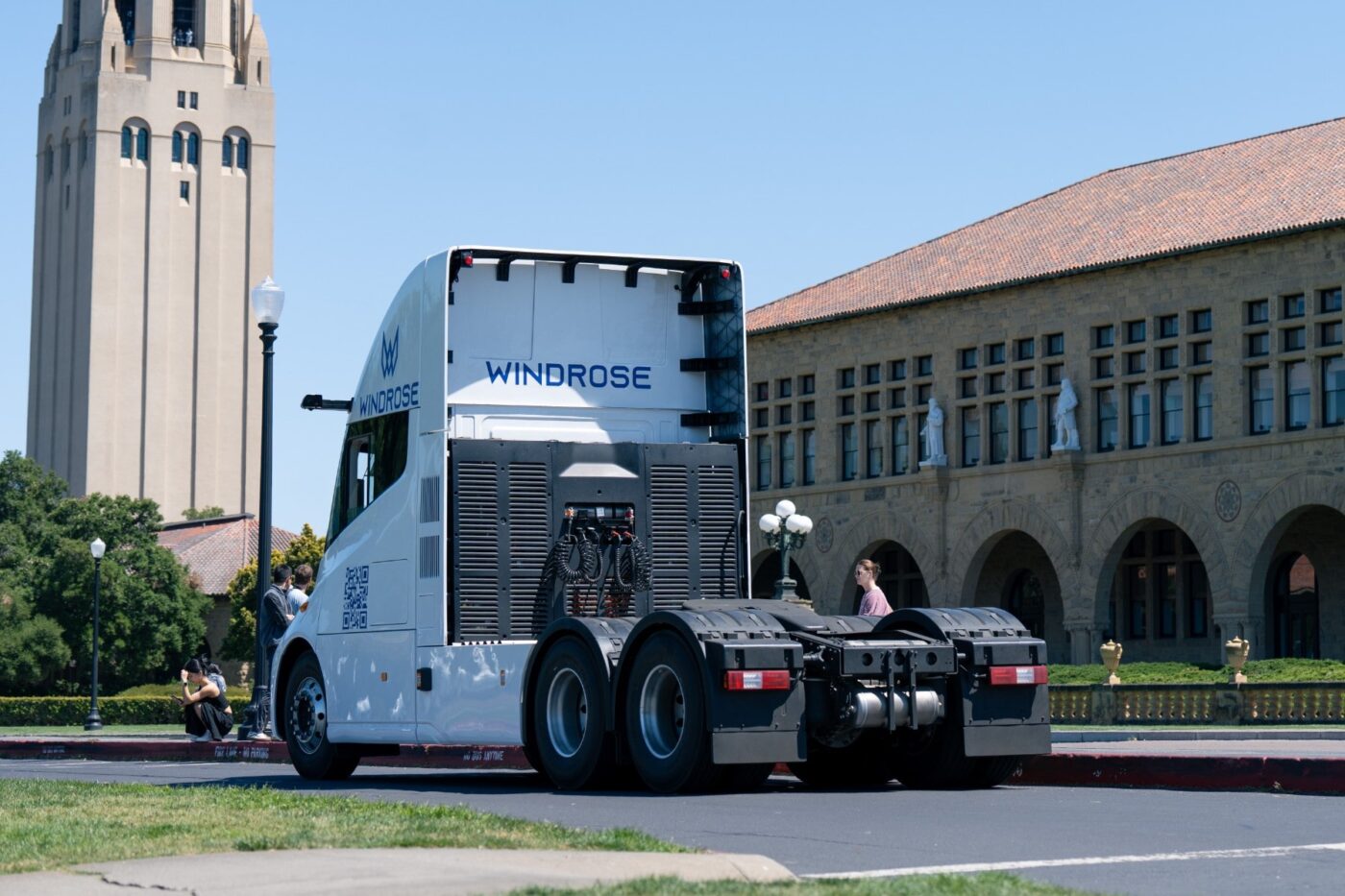
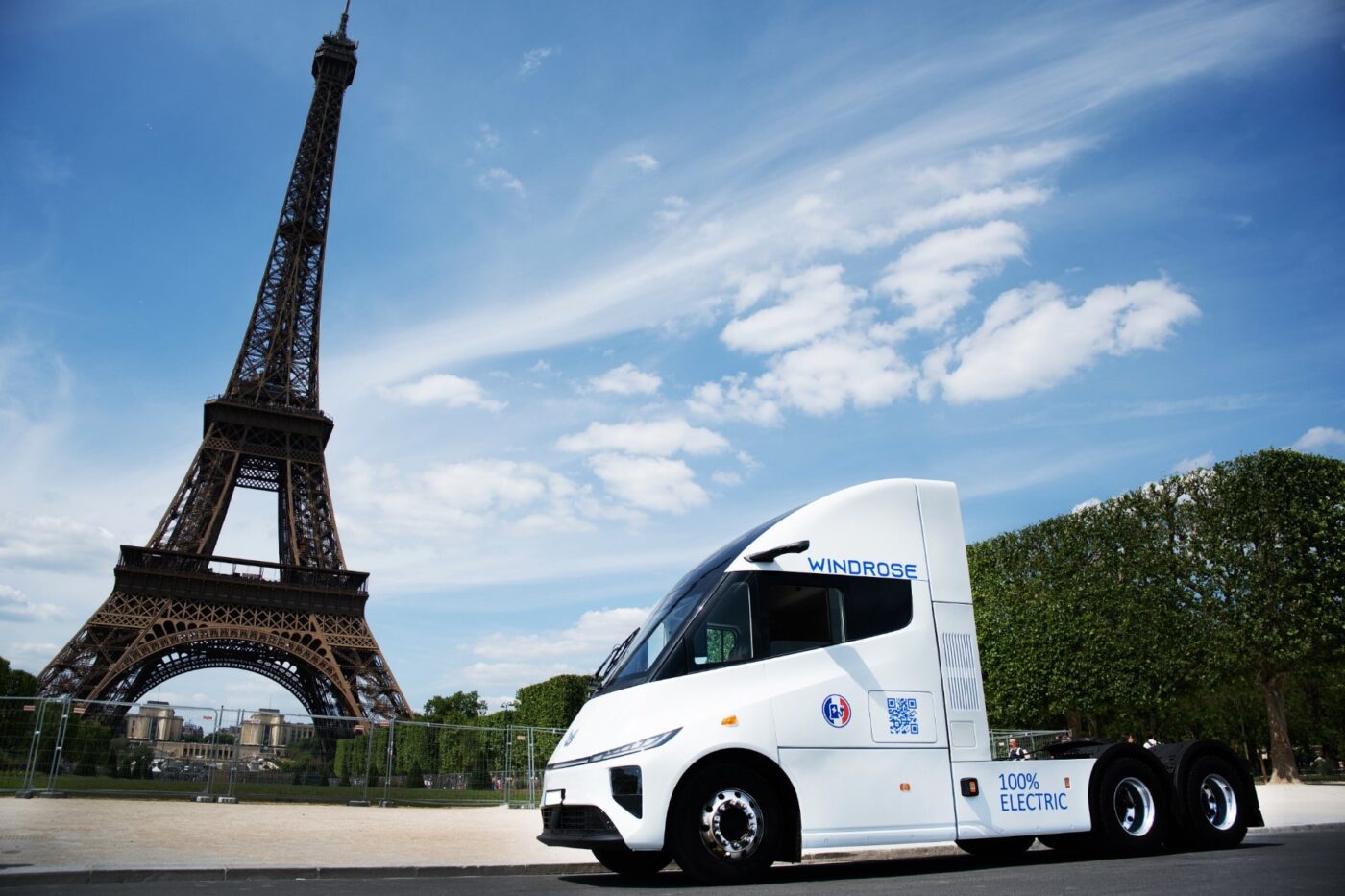
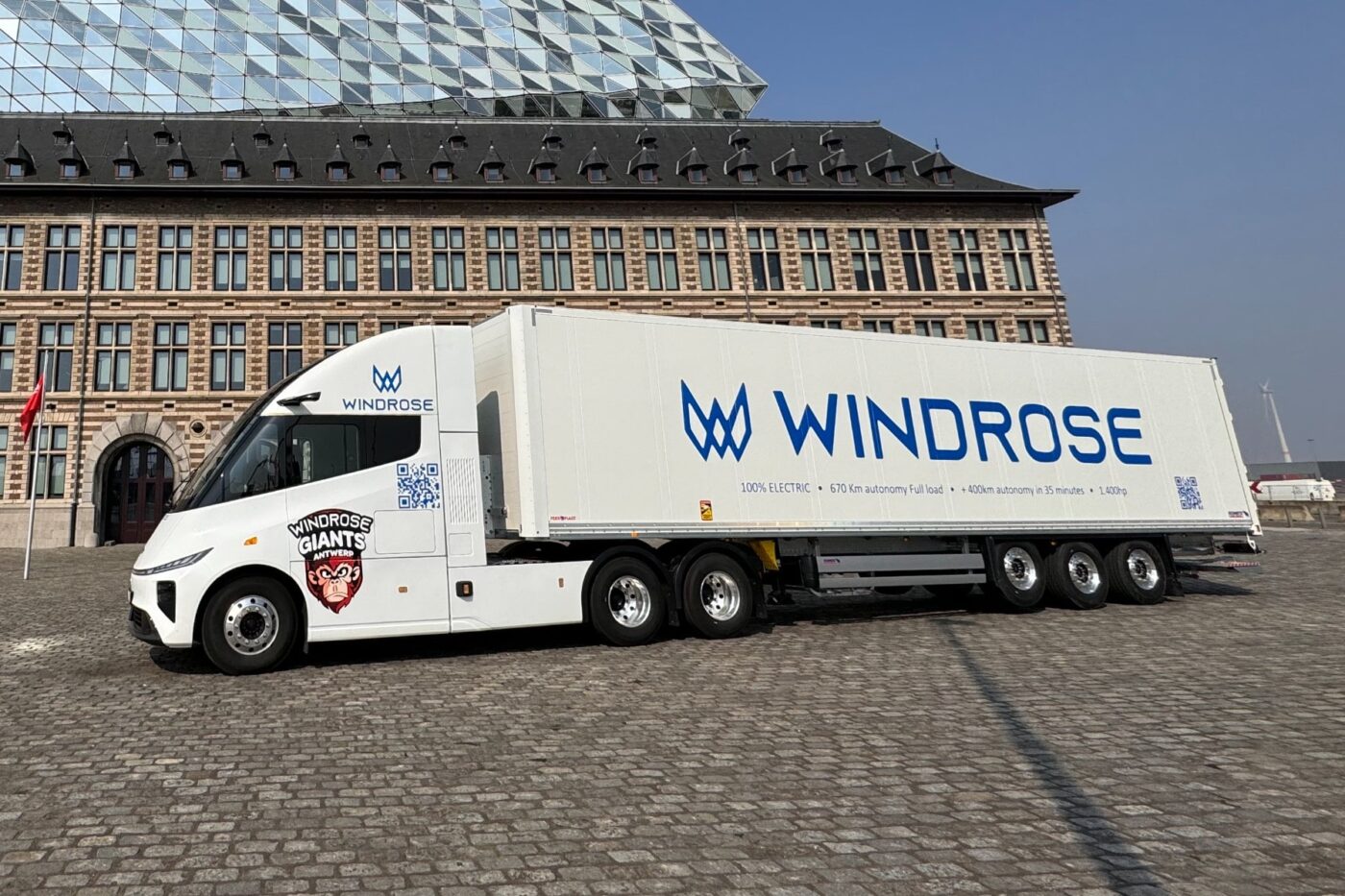
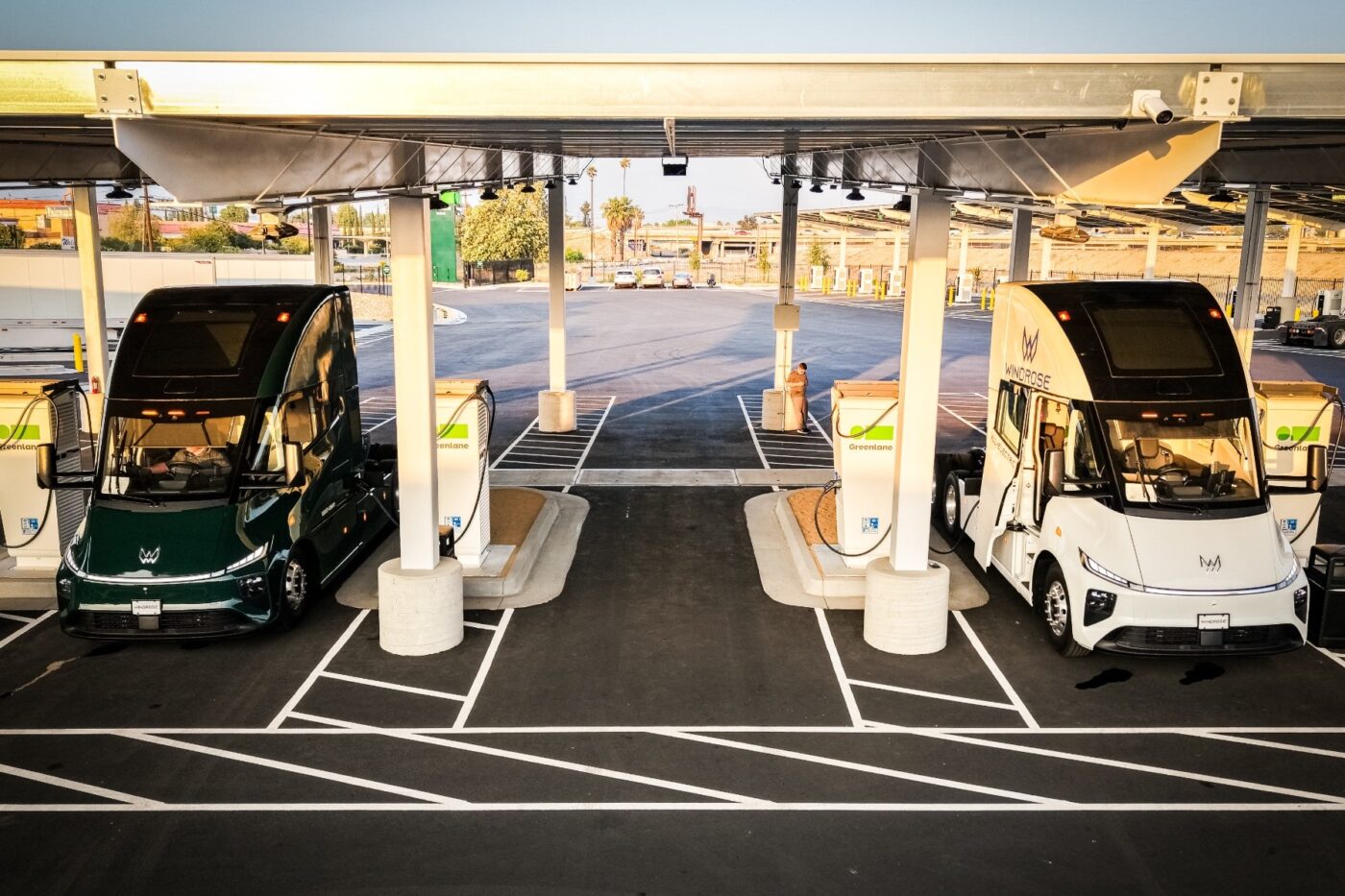

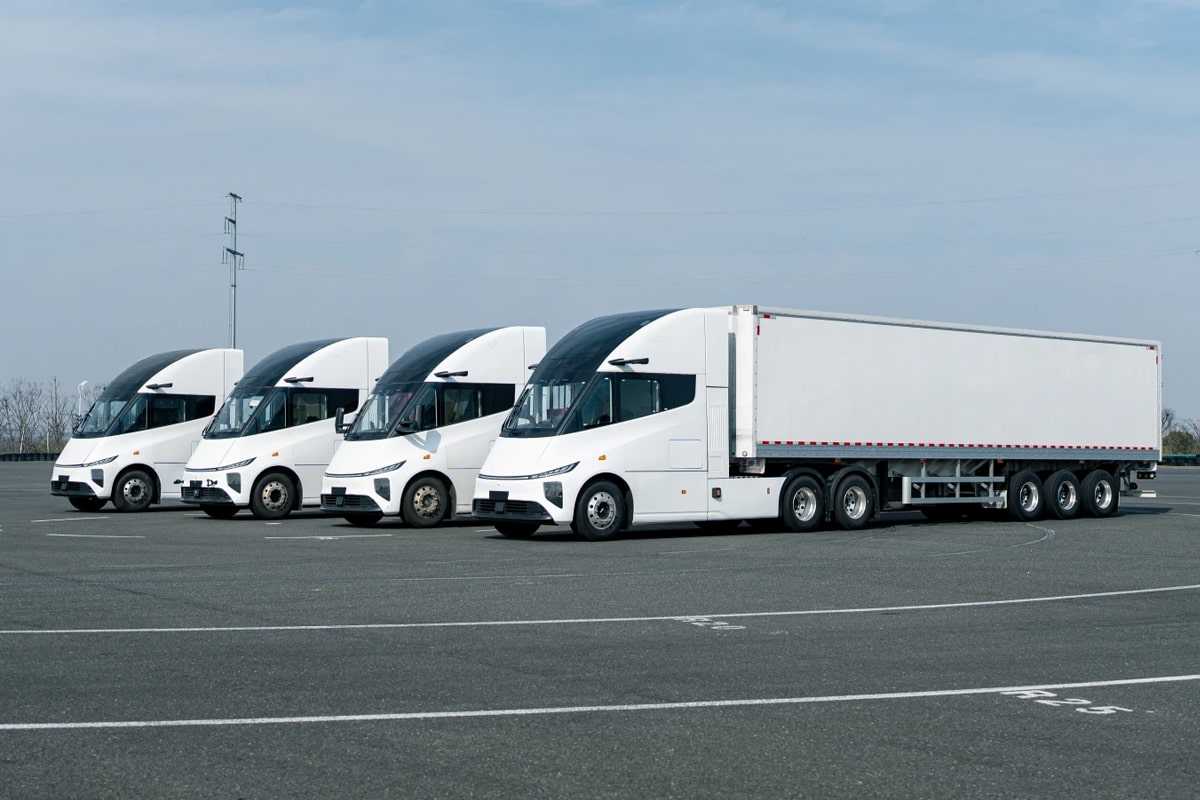
One global platform, three continents
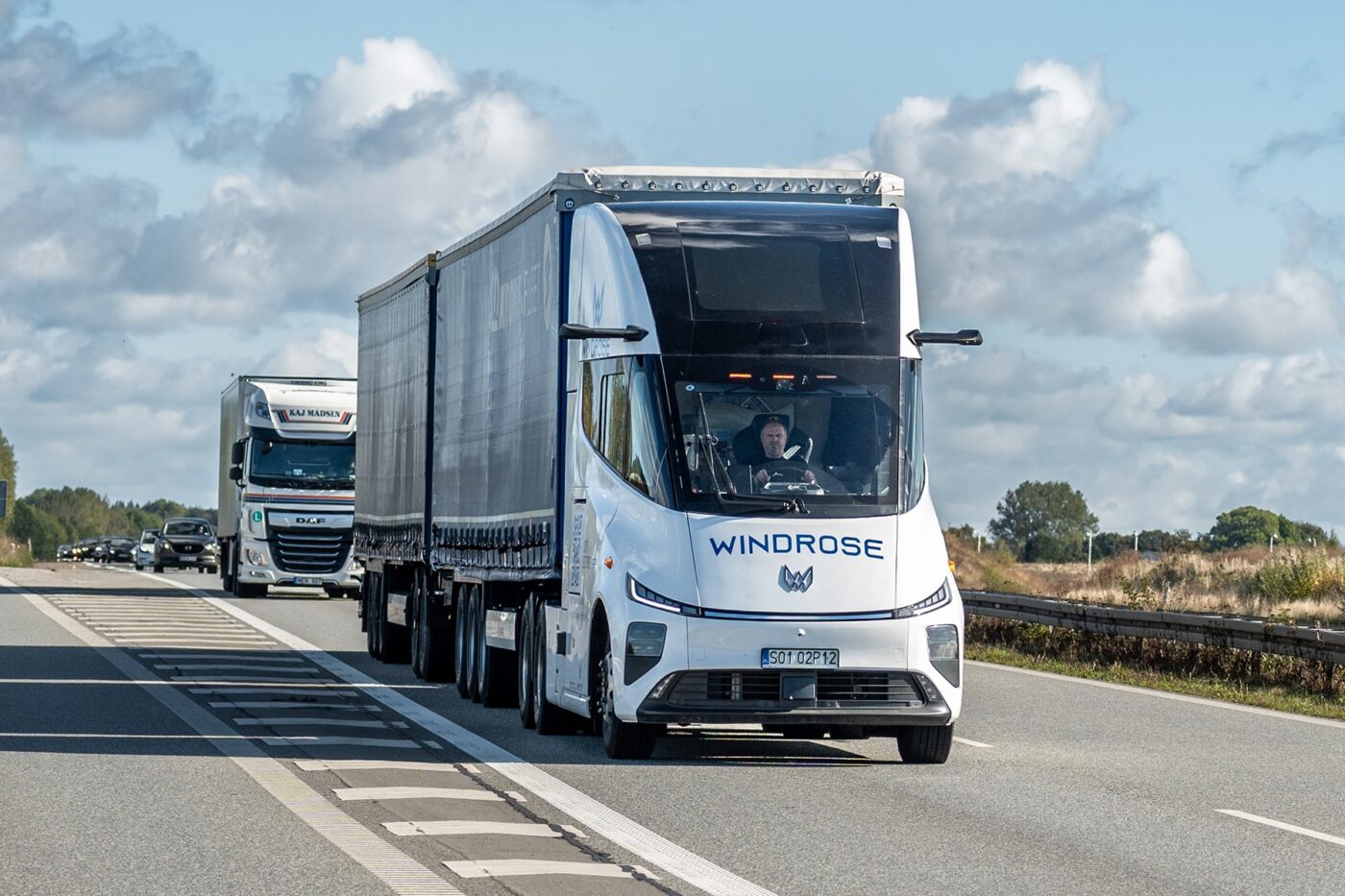
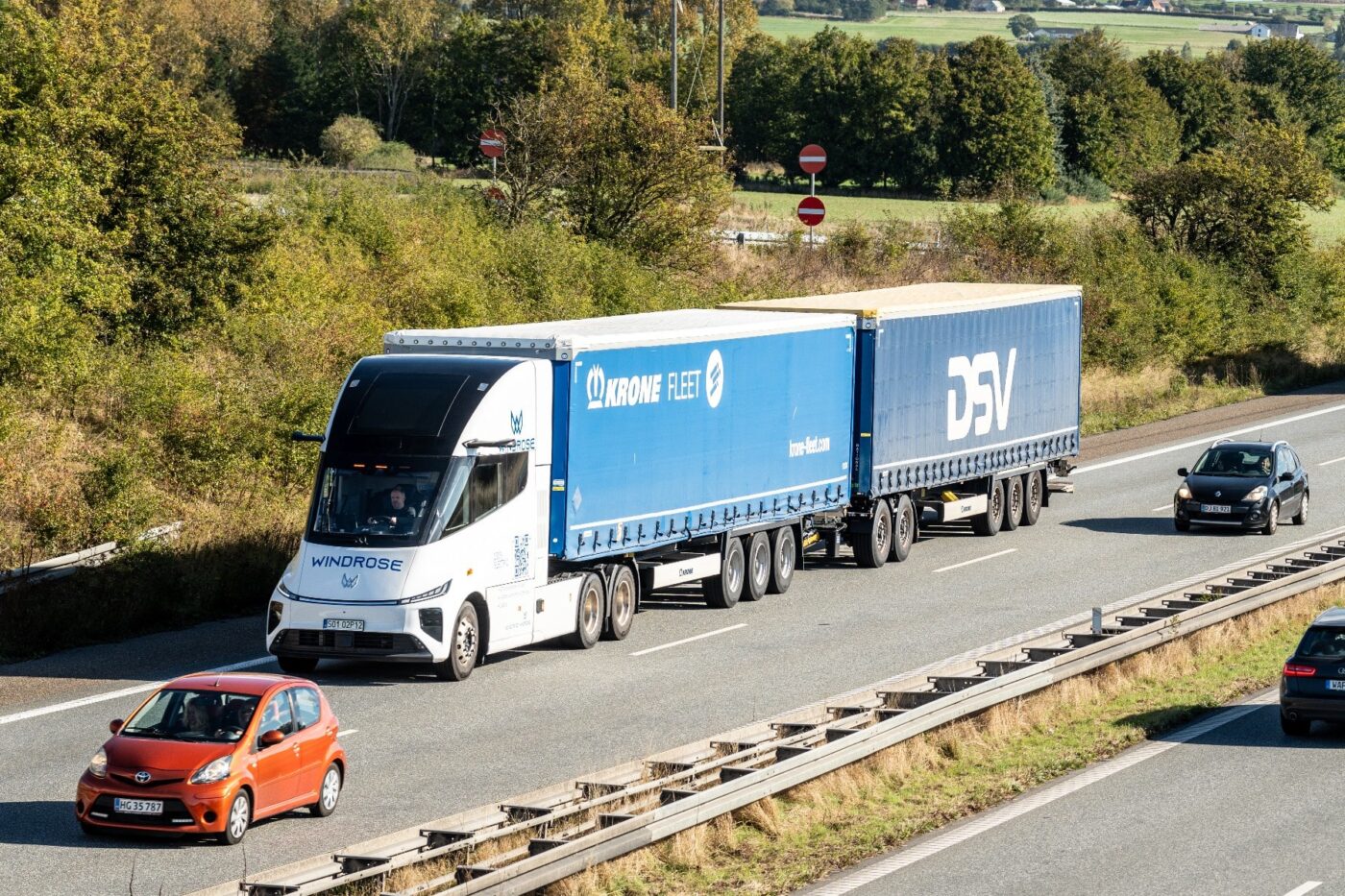
To underpin the technology strategy, Windrose is expanding its long-haul truck roadmap. Han said the newly introduced second-generation model of its all-electric Global E700 is ‘the start of the next three generations,’ with fully loaded range targets of 670 kilometres for the second, 785 kilometres for the third and 900 kilometres for the fourth generation.
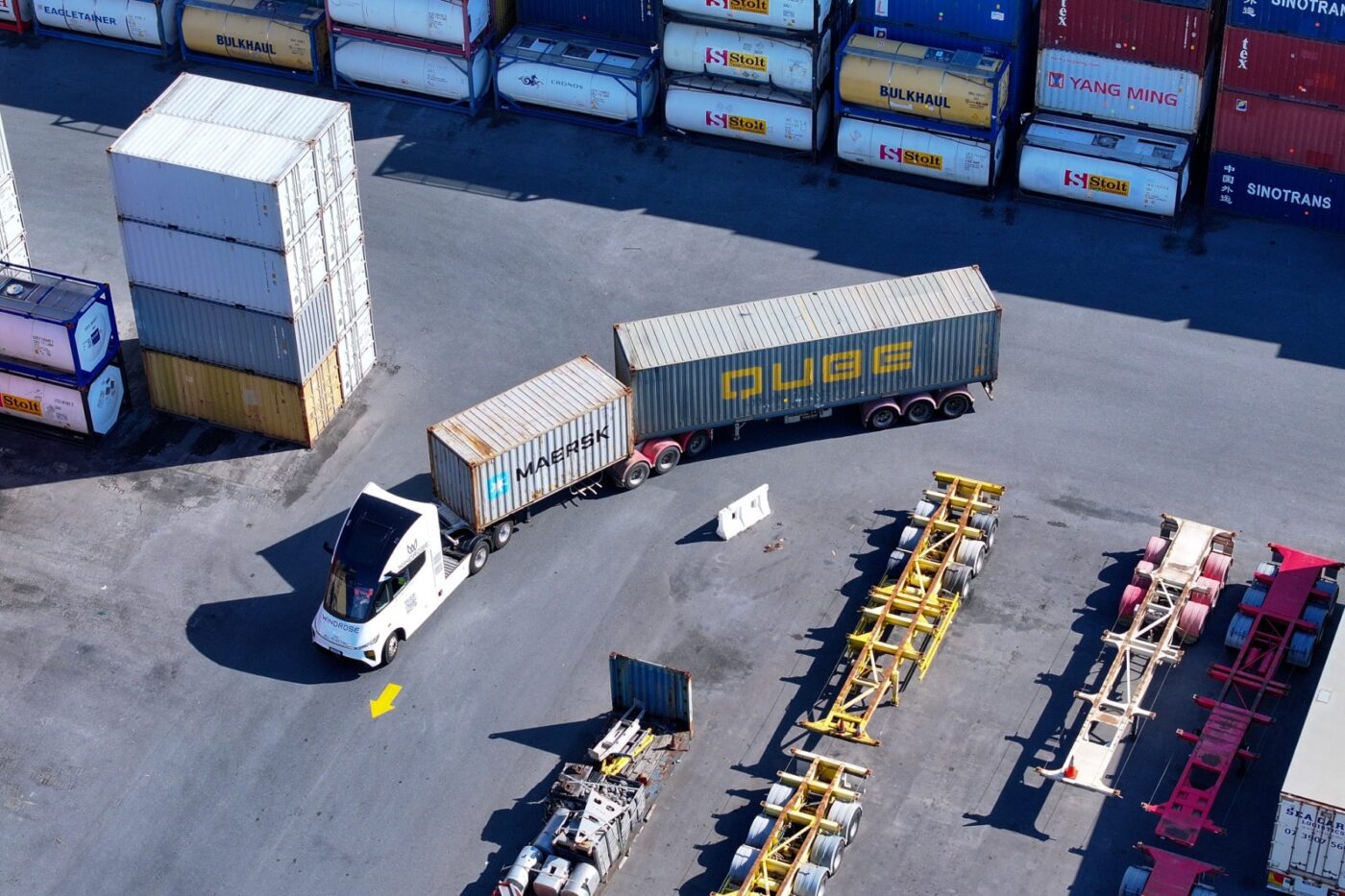
The second generation matches the range and performance of the first-generation model, which Windrose has deployed in an early phase across 22 countries, including China. However, Han stressed that the new generation brings ‘a major improvement for global operations’, with around 90% of component value shared across the US, China and Europe. The aim is to simplify manufacturing and service, and to support one global platform for multiple regions.
In terms of after-sales service work, the company does not aim to work alone. Instead, it has forged partnerships with providers globally, such as the Alliance Automotive Group in France or Raskibe Oy in the Nordics. Han added that Windrose warranties its trucks for up to one million kilometres and expects to achieve diesel parity on total cost of ownership over that distance in its active markets. “We’re the only truck that can achieve diesel parity in all of the markets we’re active in,” he said. He also emphasised that competition among electric truck makers, namely the Tesla Semi, is secondary to replacing diesel, stating: “Diesel fuel is the enemy, not anybody who’s actually trying to do electric trucks.”
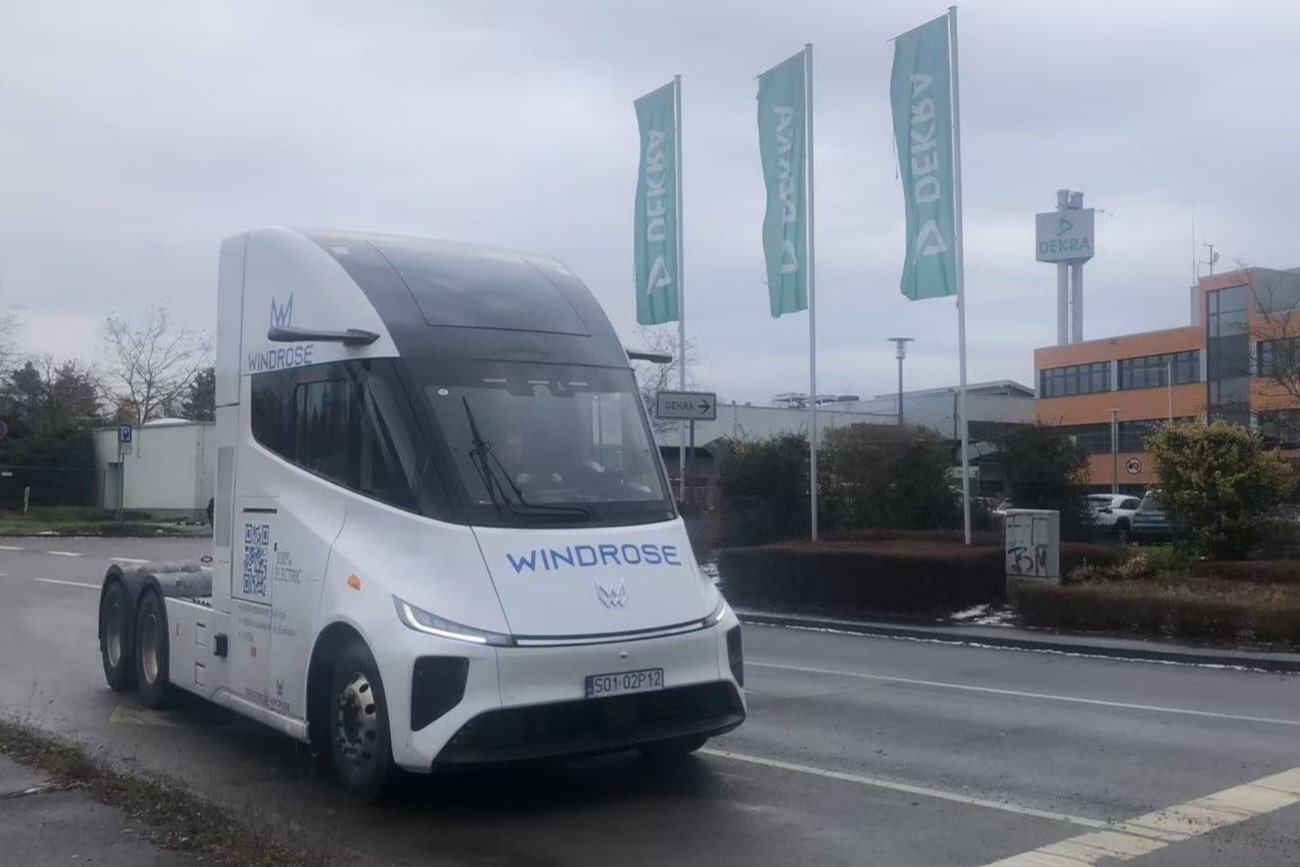
Windrose has obtained full EU homologation after securing all 43 certificates, enabling a broader European launch. Demonstrations of the Gen 2 truck are expected early next year in several locations, including Denmark and Germany, while a Gen 1 truck is undergoing final tests in Finland. Still, despite the regulatory milestone, Windrose trucks remain absent from European roads in day-to-day operations, underlining the gap between approval, demonstration and large-scale commercial deployment.
An ambitious parks concept – but nothing to show for yet
A central element of the scale-up plan is the company’s concept of ‘Windrose Parks’. Han described them as multifunctional sites combining R&D, assembly, repairs and customer charging. “They’re not just a factory, they’re a park,” he said. “A Windrose Park is a multifunctional site where we do R&D, we do assembly, we do repairs, and then we also do charging for our customers.”
Interestingly, Windrose intends to pursue the model in major markets regardless of political change. Asked how Windrose is de-risking investment in the United States, Han replied: “We don’t de-risk.” He argued that attempting to hedge against policy shifts can lead to flawed decisions and said Windrose expects to build at least two Windrose Parks in the United States and at least two in Europe.
The parks are planned along major highway corridors to integrate customer charging into daily freight routes. Windrose also intends to pair sites with renewable generation. Han said the company plans to ‘build windmills on all of our major Windrose parks in Belgium, France, and at least one site in the United States’.
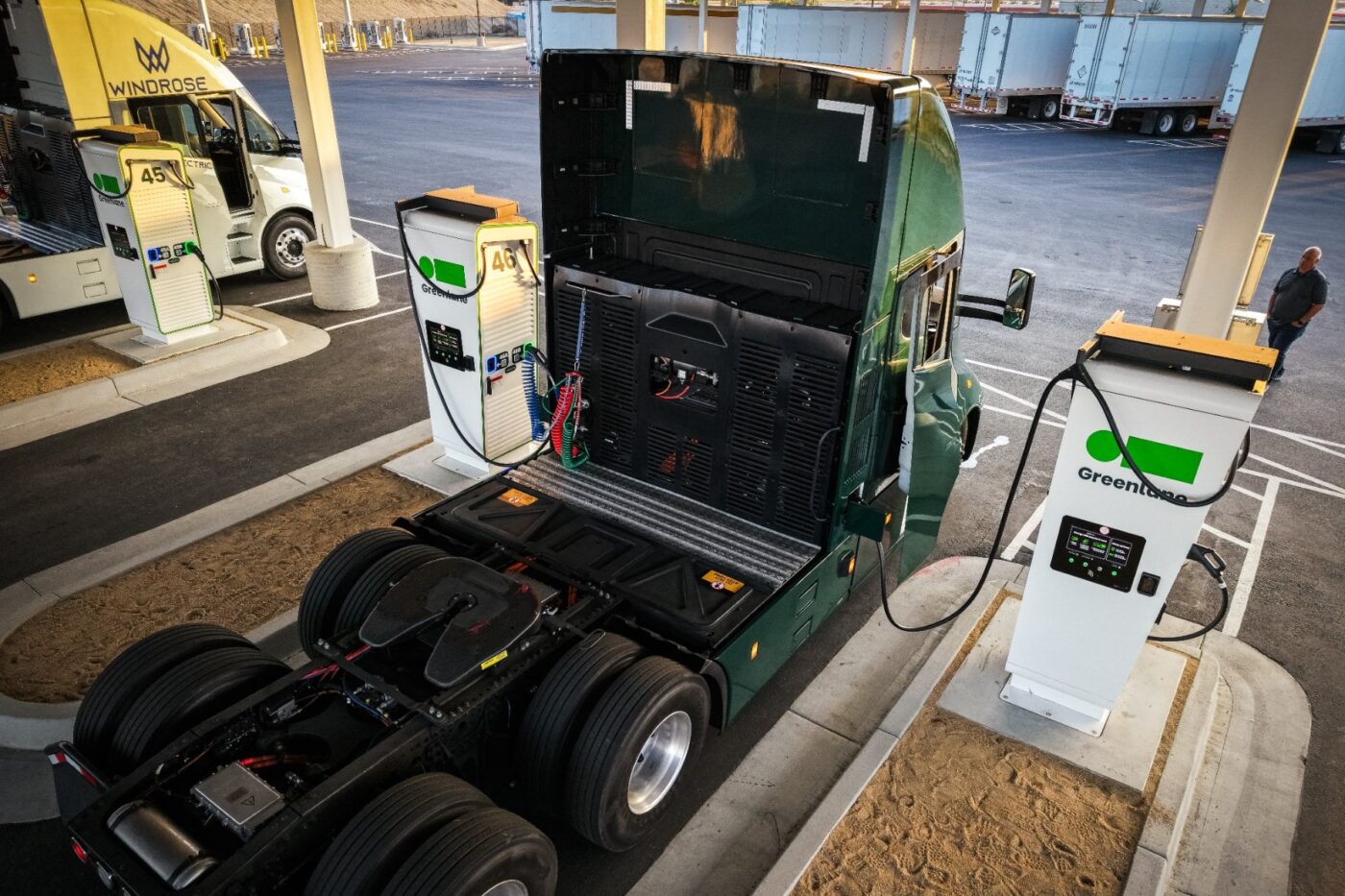
In Europe, Windrose is prioritising markets with abundant electricity and strong investment in charging. Han highlighted the Nordics as a key early region and said the company is working with Circle K on CCS and MCS testing starting in January. Charging strategy will focus on high-voltage DC. Windrose trucks operate at 800 volts and above and can be configured with CCS on one side and MCS on the other in both Europe and North America. Han said MCS is ‘not necessary today, but it will be in five years.’
Yet none of these Windrose Parks has been completed so far. While multiple sites have been announced across Europe and North America, all remain on the drawing board, raising questions about how quickly the concept can be translated into physical infrastructure.
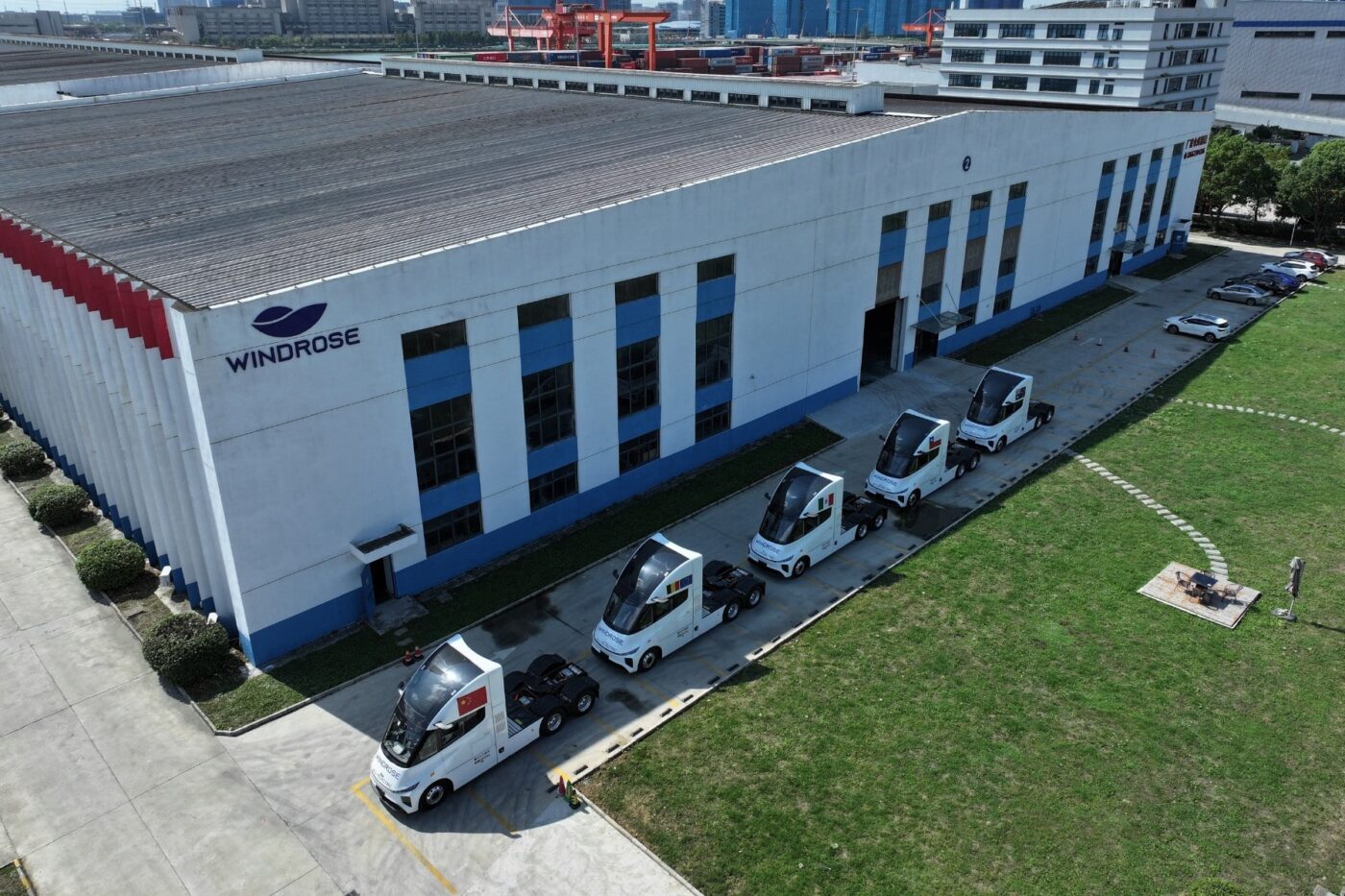
The company recently opened its European headquarters in Antwerp and also set up its first European plant in Belgium. The ‘Windrose Park Belgium’ will be up and running in the second half of next year, Han said. Moreover, in May of this year, it announced that it would invest a total of 175 million euros in France, specifically in Onnaing in the North of the country (and close to the Belgium border). The site is scheduled for commissioning in 2027. In the US, Windrose will set up a factory in Arizona or California, ‘depending on a new site selection,’ as the Windrose CEO specified. That location, too, will open its doors next year. For now, the electric trucks are manufactured in Suzho, outside of Shanghai.
Fast growth plans, steep execution curve
For the coming year, Han provided a detailed regional outlook of 2,000 trucks globally. The plan includes 600 units for Europe and the UK, 300 for North America, meaning the US, Canada and Mexico, 300 for Australia and New Zealand, and 800 across Greater Asia and South America. So far, Windrose is only active in Chile there, but plans to expand to more countries in the region. He added that Windrose expects global capacity to exceed 10,000 trucks per year by 2027.
Compared with the long-term target of equipping five per cent of the world’s trucks, these volumes underline how steep the growth curve would need to be over the following years.
Han said Windrose aims to keep capital requirements under control through smaller facilities and external build partners. The company does not pay upfront capex for new sites, instead relying on partners and investors with industrial real estate experience. Moreover, the Windrose founder emphasised that the company focuses on ‘microfactories’ that are up to 100 times smaller than ‘a traditional Volvo or Daimler factory,’ and that ‘are focused on just the last step of the delivery of the trucks.’
He also highlighted the company’s lean structure, saying Windrose has 133 people and is selling trucks with ‘at least 20% gross margin’. In addition, Han argued that charging revenues at Windrose Parks could help cover site costs. “At all of our Windrose parks, the money from selling cheap electricity to our customers can pay for the factory rent itself,” he said.
Whether charging revenues alone can sustainably offset fixed costs once partners and investors seek returns remains to be seen, particularly in a highly competitive charging market.
Despite the company’s rapid expansion, global partnerships and ambitious production targets, Windrose’s presence on European roads remains largely theoretical. The company has EU approval and demo events scheduled, but so far no one has spotted a Windrose e-truck on a European highway. According to Wen, a vehicle is currently undergoing testing in Finland, and wider test drives across Europe should finally be possible early next year.

0 Comments