

Mercedes delivers fewer battery-electric cars over 2025
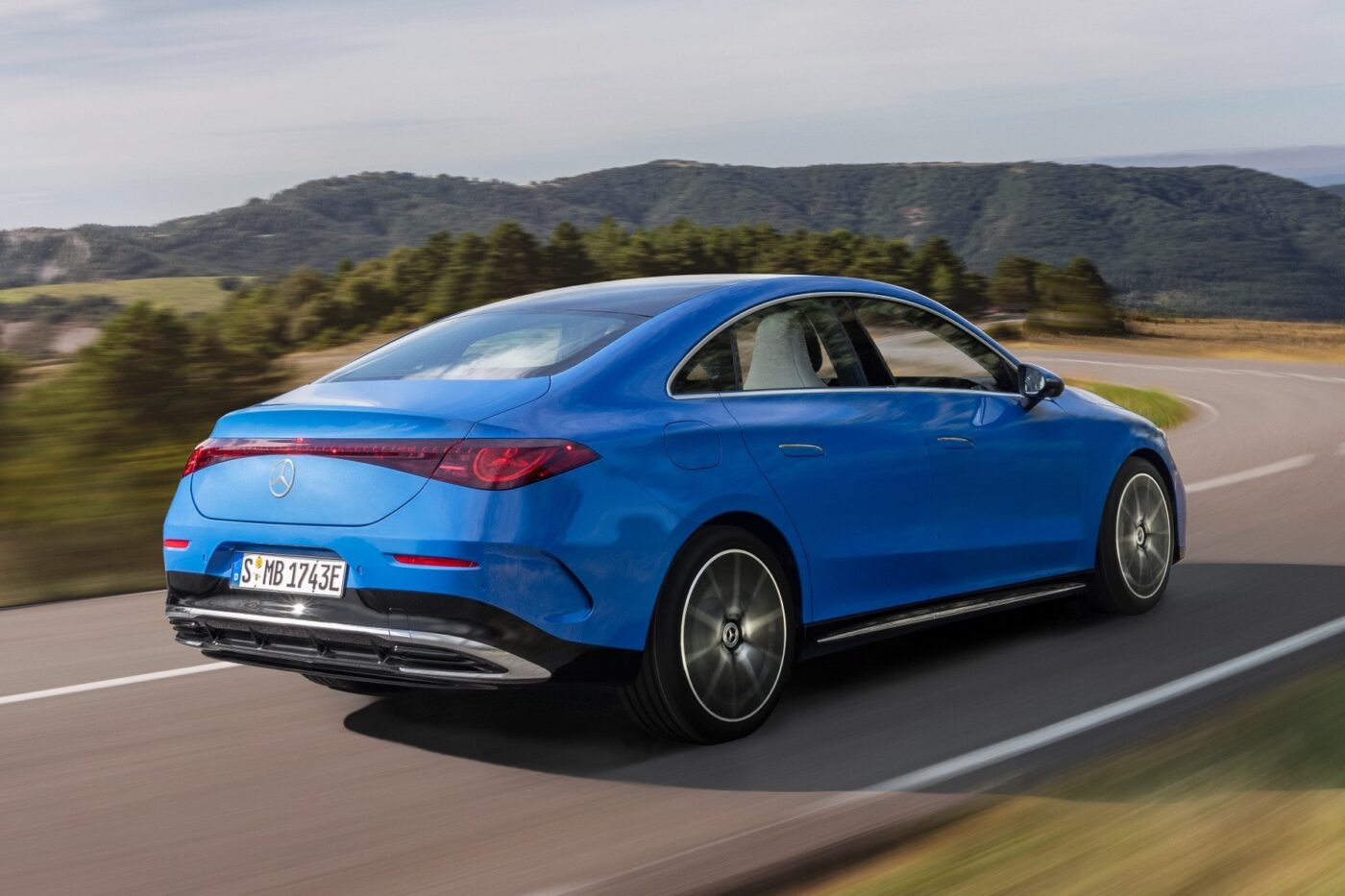
For Mercedes, this is not the first decline: compared to 2023, the Mercedes-Benz Group’s battery-electric vehicle (BEV) sales (including passenger cars and vans) had already fallen by 22 per cent in 2024, and they have now dropped by another nine per cent. As a result, the Mercedes-Benz Group delivered fewer electric vehicles in 2025 than the Mercedes-Benz Cars passenger car division did in 2024.
For comparison: in 2023, the passenger car division delivered 222,600 electric cars, representing a 73 per cent increase at the time. In 2024, Mercedes-Benz Cars recorded 185,100 battery-electric vehicles (BEVs), a 23 per cent decline. With the latest nine per cent drop, the passenger car division delivered 168,800 new electric cars in 2025.
However, towards the end of the year, Mercedes reported a significantly improved trend: “Fourth quarter Battery Electric Vehicle (BEV) sales increased by 3% compared to Q4 last year and 18% compared to the prior quarter, mainly driven by the new electric CLA,” the company stated. Indeed, the 50,400 BEVs delivered in Q4 2025 marked the first time since Q4 2023 that Mercedes surpassed the 50,000 mark.
As global sales of plug-in hybrids (PHEVs) rose by nine per cent to 368,600 vehicles, the decline in BEV sales was effectively offset, resulting in a net zero per cent change for electrified vehicles worldwide at Mercedes-Benz Cars.
In total, 168,800 BEVs and 368,600 PHEVs amounted to 537,400 electrified vehicles, which Mercedes categorises as ‘xEVs’. Out of 1.8 million Mercedes passenger cars sold across all drive types (also down by 9 per cent), this represents a share of 29.8 per cent. However, pure electric cars accounted for only 9.4 per cent of all sales, while plug-in hybrids made up 20.4 per cent.
Mercedes did not provide a breakdown by drive type for either regional distribution or the three segments: ‘Entry’ (all derivatives of the A- and B-Class, including EQA and EQB), ‘Core’ (all derivatives of the C- and E-Class, including EQE and EQE SUV), and ‘Top-End’ (AMG, Maybach, G-Class, S-Class, GLS, EQS, and EQS SUV). As a result, no precise figures on electric vehicle sales are available. The company’s statement only highlighted specific points: “In Europe, Mercedes-Benz Cars achieved its highest-ever sales of electrified vehicles (xEV) in 2025, resulting in a 40% xEV-share. In many markets, including France, Denmark, India and Australia, the company sold more Battery Electric Vehicles (BEV) than ever before.” However, Mercedes did not disclose where performance was weaker, leading to the overall nine per cent decline.
While there is no exact overview of individual models, the company emphasised the “strong order intake” for the CLA, which led to a high order backlog by the end of 2025. “This momentum now extends to the wider portfolio: The CLA Shooting Brake, the all-new electric GLB and the highly efficient electrified models of the CLA are now also available to order in Europe, offering customers the full range of choices,” Mercedes wrote. “The all-new electric GLC celebrated its world premiere at the IAA in Munich with order books already filled well into the second half of 2026.”
“Following the outstanding start of the new CLA, demand for the new all-electric GLC is now also significantly exceeding our expectations,” said Mathias Geisen, Head of Mercedes-Benz Sales and Marketing. “This strong momentum is also demonstrated by one of the most successful years in AMG’s history and the best-ever sales for the G-Class. It confirms the attractiveness of our products.”
Mercedes-Benz CEO Ola Källenius added: “In 2025 we kicked-off the biggest product and tech launch program at Mercedes-Benz with cutting-edge electric-drive systems and intelligent software. The all-new CLA underscores the depth of quality and innovation in our products. And the best is yet to come: In 2026, 140 years after we invented the automobile, we continue our launch program with unwavering commitment and team spirit to build the world’s most desirable cars.”
While the Mercedes passenger car division is only expecting growth again in 2026, Mercedes-Benz Vans achieved a 46 per cent increase in electric van sales in 2025. A total of 28,500 fully electric vans and transporters were delivered in the previous year, representing a global electric share of eight per cent out of 359,100 total deliveries. In Europe, the share was even higher at eleven per cent.
“The development is mainly driven by the full availability of the electric van portfolio and is proving that Mercedes-Benz eVans match customers’ needs,” Mercedes stated. Last year, the van division provided a first glimpse of the VLE, the first model based on the newly developed, modular, and scalable van architecture. Its world premiere in Stuttgart is scheduled for 10 March 2026.
“Amidst a highly dynamic and volatile market condition, we closed the year with a solid sales performance, thanks to our strong product portfolio. We want to sincerely thank our customers for their continued trust and loyalty in our brand,” said Sagree Sardien, Head of Mercedes-Benz Vans Sales & Marketing. “We are looking forward to 2026, where we will begin a new era at Mercedes-Benz Vans, presenting our all-new electric VLE that will reinvent the privately positioned van segment.”
1 Comment