

Mazda discontinues the MX-30 R-EV
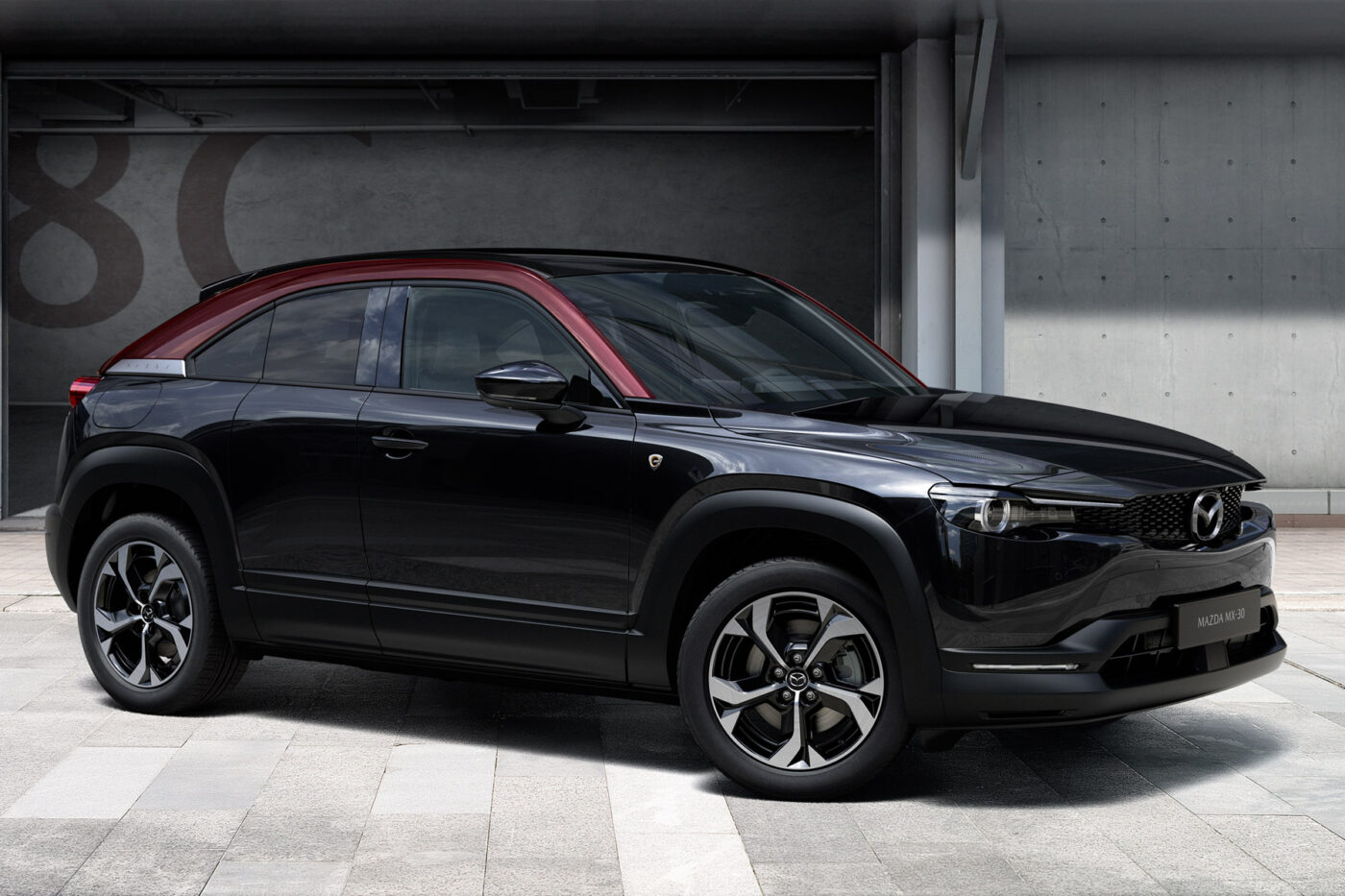
A Mazda spokesperson told Autocar that the MX-30 R-EV was discontinued due to a ‘combination of reasons,’ including shifting consumer trends and production priorities. The spokesperson added that the R-EV had ‘sold relatively poorly in Europe.’ Production of the MX-30 R-EV for the Japanese market has been temporarily suspended but is set to resume this summer.
The MX-30 was Mazda’s first fully battery-electric vehicle and was introduced in October 2019. The Japanese carmaker had devised a special concept called ‘rightsizing’ to counter the trend towards ever-larger and more expensive batteries—its battery was designed to be only as large as necessary, and Mazda also avoided an unnecessarily powerful drivetrain. While this approach initially seemed logical, it confined the MX-30 to the role of a second car for individuals with their own wallbox. With a battery capacity of just 35.5 kWh for a range of 200 kilometres and a DC charging power of only 37 kW, the battery-electric version of the MX-30 was neither suitable for long distances nor appealing to those reliant on public charging. In the USA, the battery-electric version was withdrawn from the market in summer 2023 due to lack of success, and in Germany, Spain, and the Netherlands, it was discontinued at the end of 2024.
However, the Mazda MX-30 R-EV, introduced in January 2023, remained available for order. The range-extender model had been planned from the outset, with space reserved in the engine bay for the small internal combustion engine. The MX-30 R-EV features a Wankel rotary engine that generates electricity for the battery. While the vehicle has a significantly smaller battery of 17.8 kWh and an electric range of just 85 kilometres, the total range is claimed to exceed 650 kilometres.
Now, this version has also been discontinued—for the same reasons. Its high price likely contributed to its low sales: both variants of the MX-30 were priced from €35,990 in Germany, which was considered steep for the performance offered.
That said, the MX-30 platform, which debuted in 2019, is now showing its age. Given the typical seven-year model cycle still common in the industry, the series is likely nearing the end of its lifespan. Additionally, the concept of rear-hinged half-doors has failed to gain traction, regardless of drivetrain limitations. However, some of the demand issues may indeed stem from the R-EV’s powertrain: in Japan, only the production of the range-extender model is being paused. The petrol-powered MX-30, sold exclusively there, appears unaffected.
For its electric vehicles, Mazda is now temporarily relying on third-party technology: the electric sedan Mazda6e and the recently unveiled SUV variant CX-6e are based on models from its Chinese joint-venture partner Changan, which also manufactures the Mazda-designed vehicles in China. It was revealed earlier this week that the next Mazda-developed electric platform, ‘Skyactiv EV Scalable Architecture’, is likely to be delayed until at least 2028.
0 Comments