

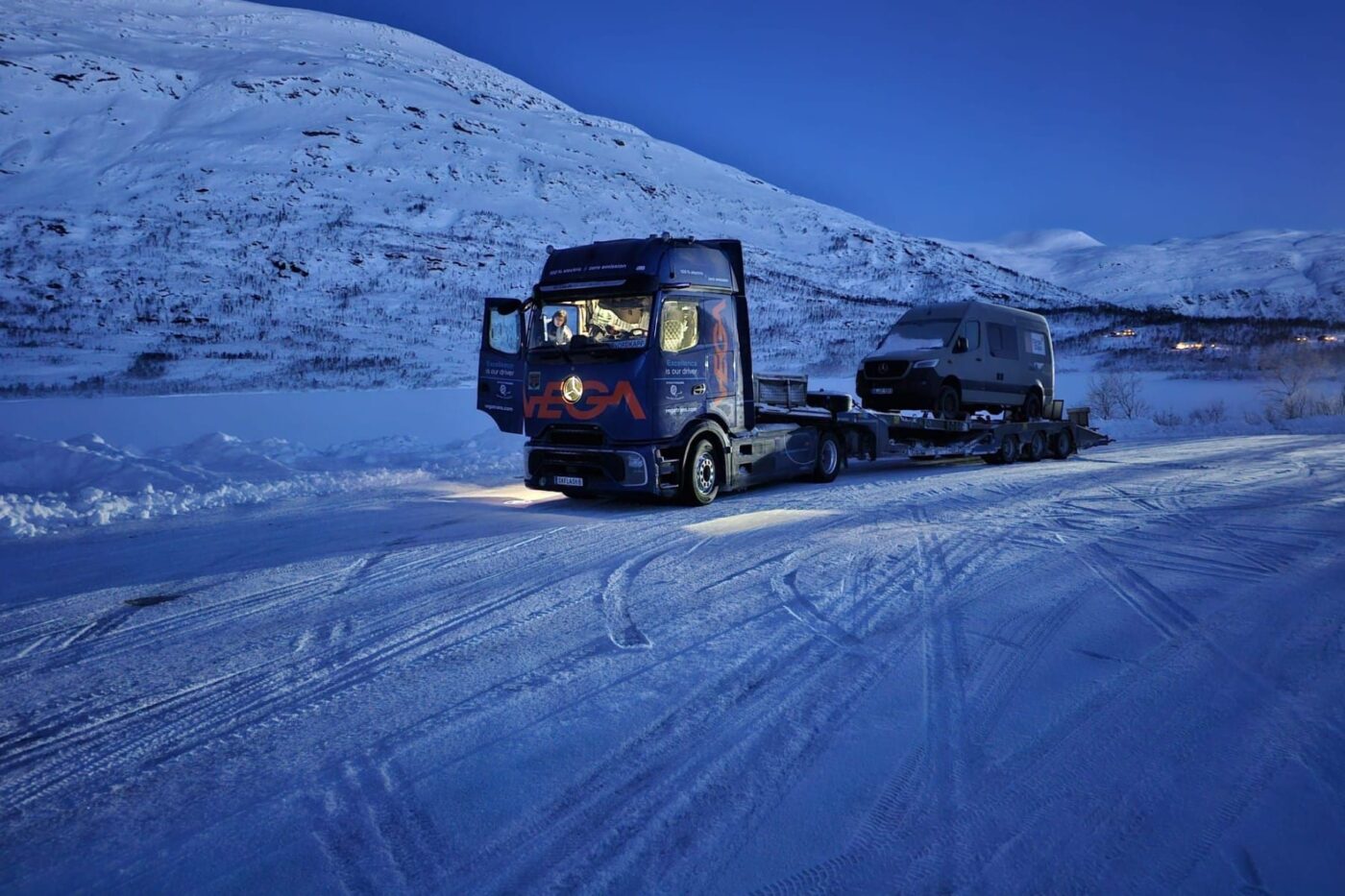
Winter adventure: Austrians make it to the North Cape and back in an electric truck
While many people celebrated Christmas Eve at home, unwrapping gifts or setting the table, Herbert and Silvia Salentinig set off from Salzburg, Austria. Ahead of them lay thousands of kilometres, snow, ice, and temperatures far below freezing. Their first milestone: arriving at the starting line of the eNordkappChallenge 2025 in Oldenburg (Germany) with their battery-electric tractor unit on time. The event has established itself as an annual spectacle for hardened e-mobility enthusiasts. From Oldenburg, the journey spans nine days and roughly 3,500 kilometres north: first through Denmark to Sweden, then through the heart of Lapland, all the way to the northernmost point of Europe.
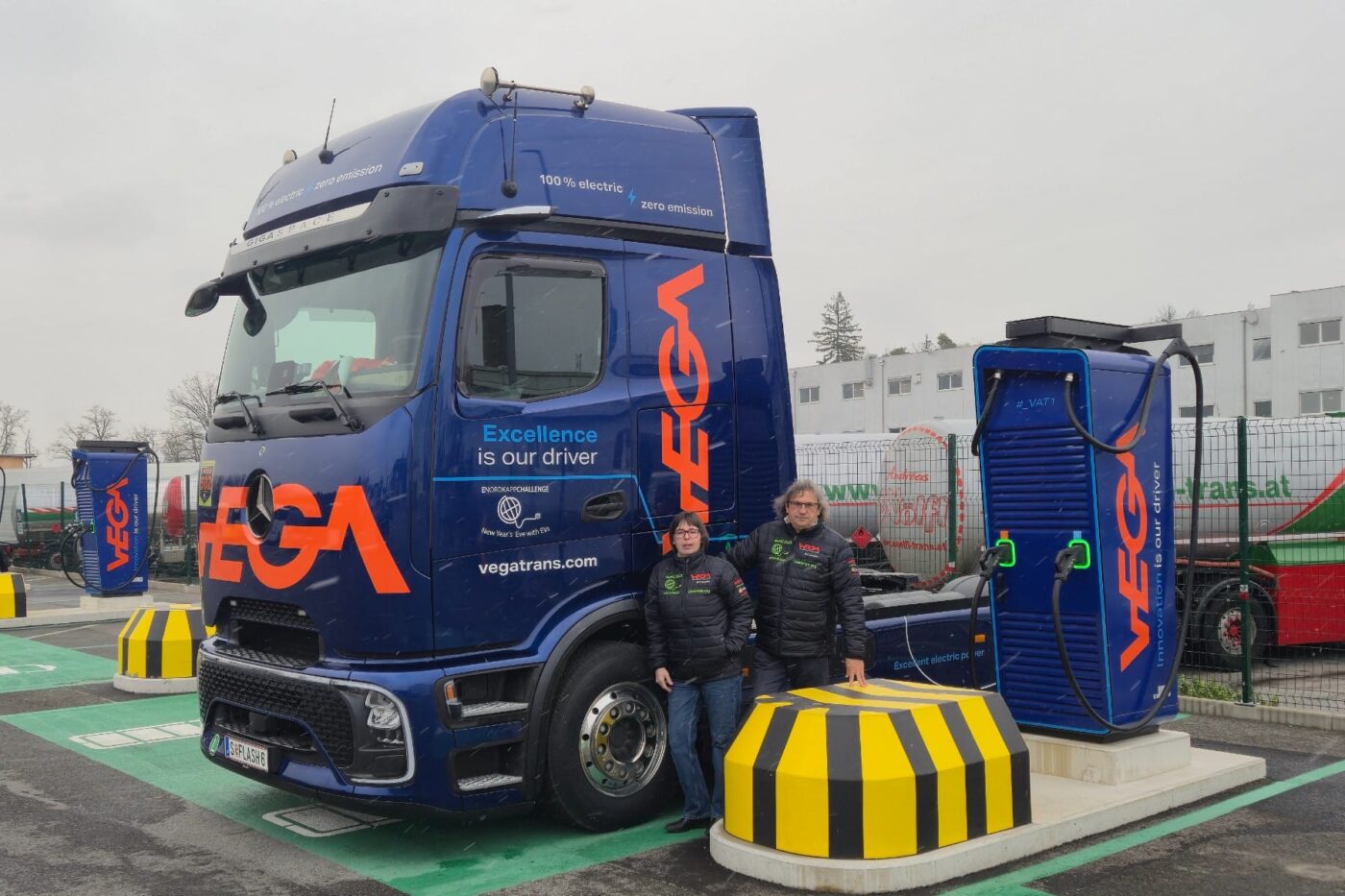
This beginning alone makes one thing clear: for the couple, taking part is more than a technical test. It is a personal journey, a shared decision, and a project they deliberately tackle as a married couple. The idea did not arise spontaneously. Herbert Salentinig is the Managing Director of the logistics company Vega International Car-Transport & Logistic-Trading and has been deeply involved in electromobility for heavy-duty transport for years. The company already operates a growing fleet of electric trucks, has built its own charging infrastructure, and sees itself as a pioneer in this field.
When the eNordkappChallenge was mentioned, it was quickly clear to him: this was more than a PR event. “Our owner drew our attention to it and said: ‘This would be something for you,’” Salentinig recalls. He was not just referring to himself—but also to his wife, Silvia. For her, this meant a special commitment: she obtained her HGV licence specifically for this project. At 66 years old. “I didn’t just want to come along; I wanted to drive myself,” says Silvia Salentinig. Her husband adds: “I’m someone who has to try things out for myself. Only then can I speak about them credibly.” For both, tackling the challenge together was a matter of course. “We are a team in life—why not here too?”
Starting on Christmas Eve – because planning Is everything
The official start of the eNordkappChallenge took place at the end of December in Oldenburg. To arrive on time, Herbert and Silvia Salentinig set off on 24 December, as mentioned earlier. “Christmas Eve, in the afternoon,” Salentinig says. No staging, no grand gesture—just pragmatic planning. This early departure symbolised the entire journey. After all, anyone travelling to the North Cape in a battery-electric truck in winter cannot afford spontaneous decisions. Charging points, range, and time windows—everything had to be carefully considered. Yet, unforeseen events still occurred.
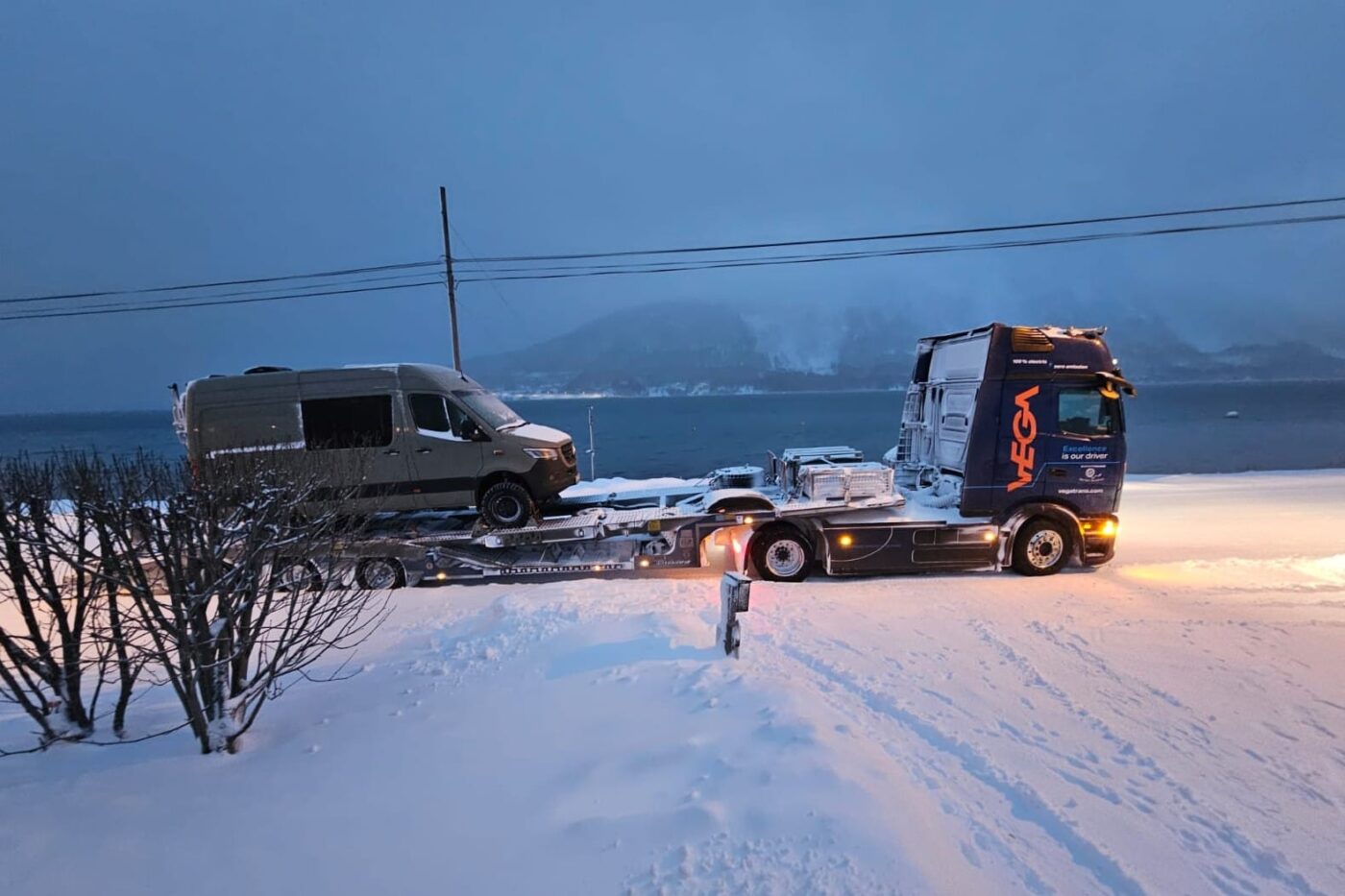
Along the way, the couple were not just drivers but also navigators, technicians, and problem-solvers. “We planned the next leg intensively every evening,” says Silvia Salentinig. “It’s completely different from travelling by car.” The route along Sweden’s Inlandsvägen and onwards towards Finland demanded everything from the team. Icy roads, darkness, short days, and temperatures as low as minus 41 degrees. The eActros 600 was not travelling empty but with a trailer and a realistic total weight of around 32.5 tonnes.
Taking along a rather impractical trailer
The trailer, too, was deliberately chosen for its impracticality. “I took the most impractical trailer we have,” explains Salentinig. A twin-tyred car transporter with a high tare weight and poor rolling behaviour in snow. “If we’re doing this, we’re doing it properly.” As Salentinig explains, it is not just the small wheels that are problematic. Due to the twin tyres, snow forms a wedge between them—and slows the vehicle down.
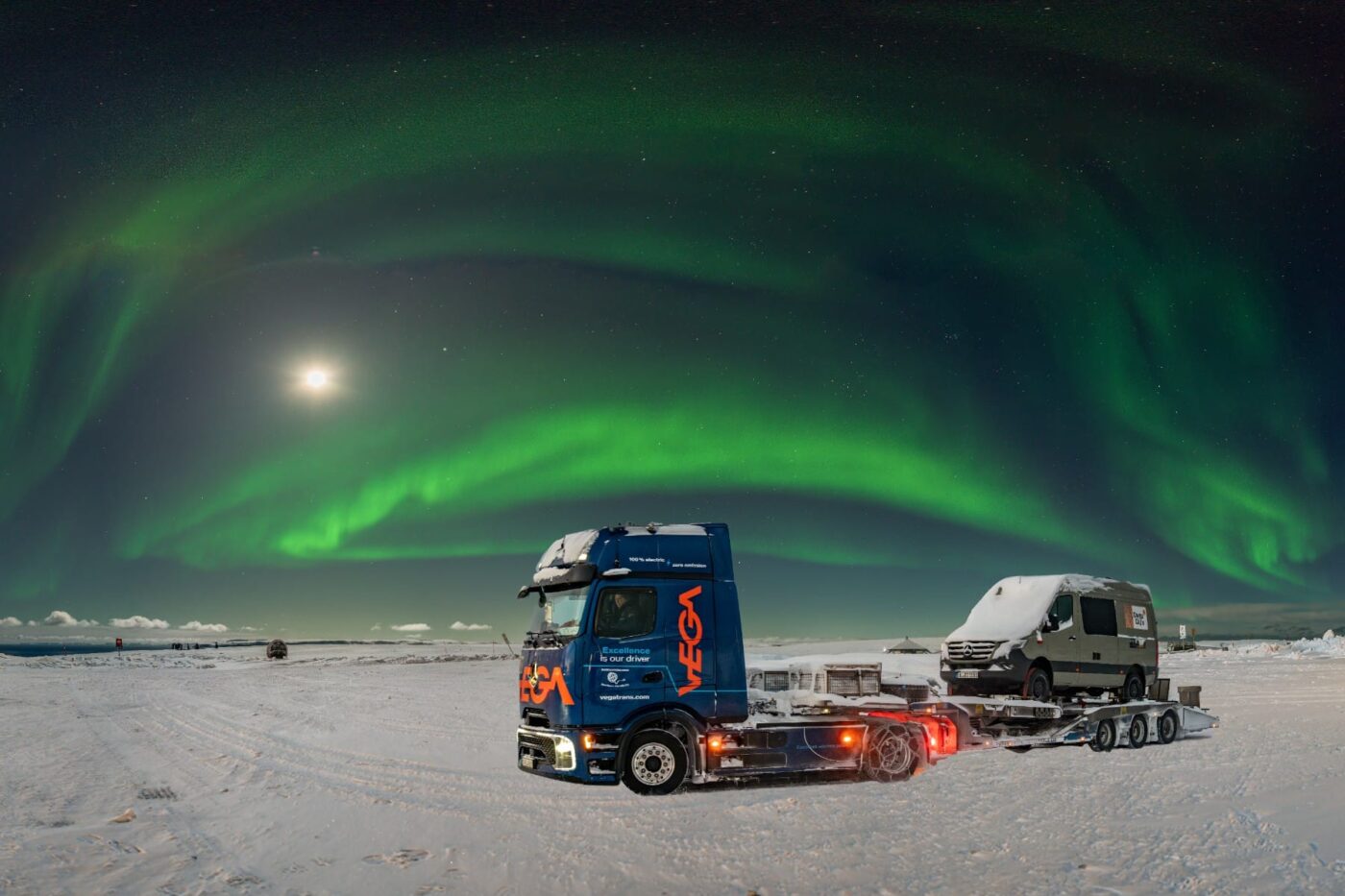
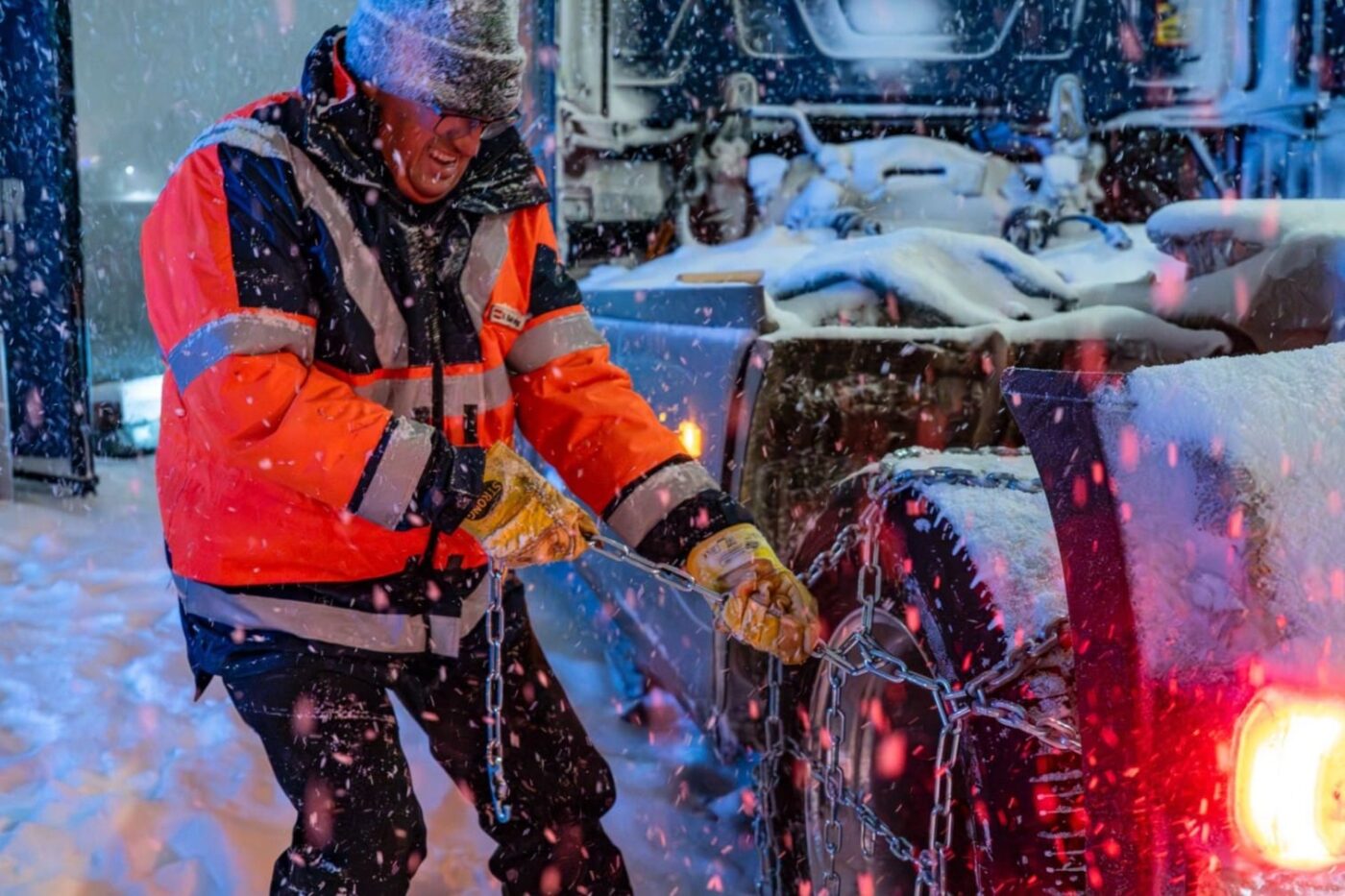
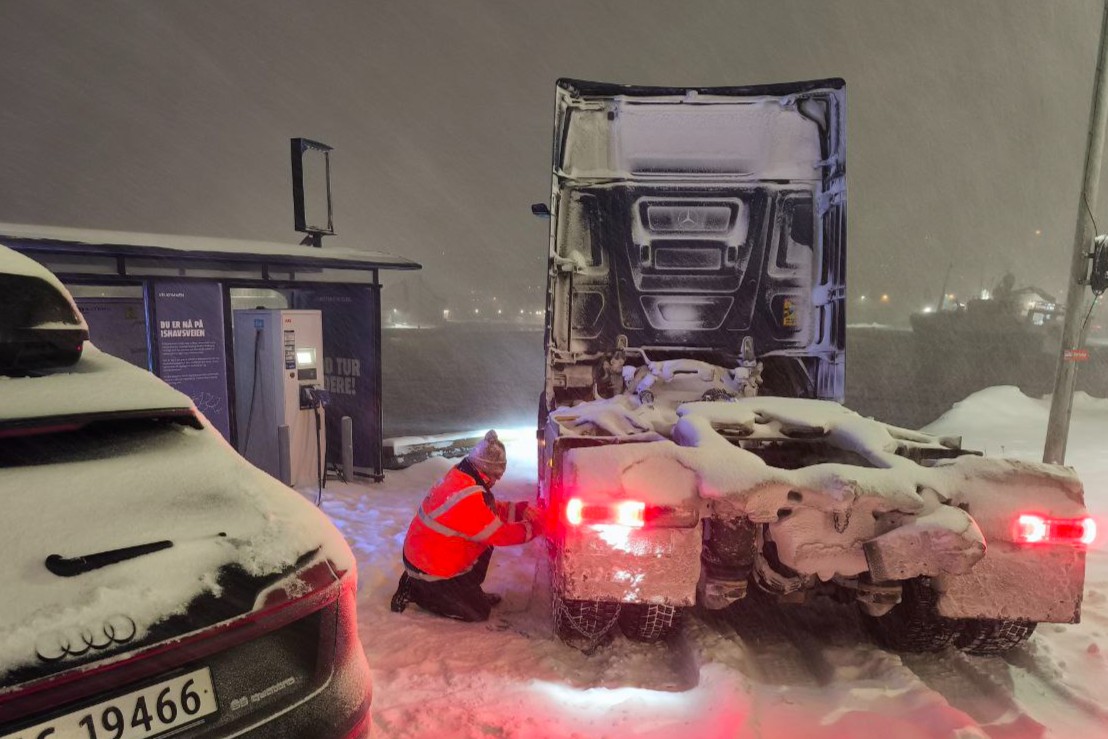
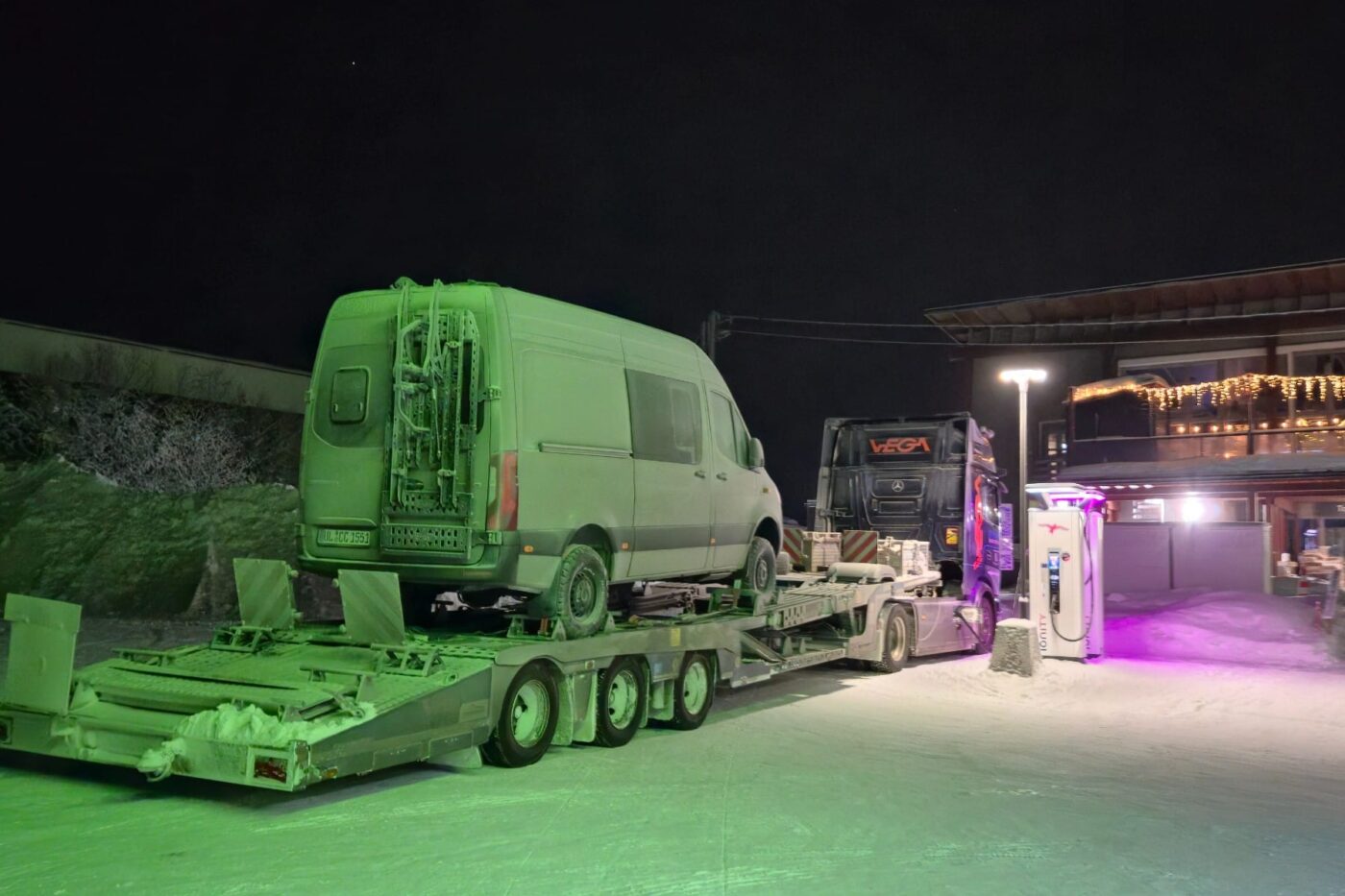
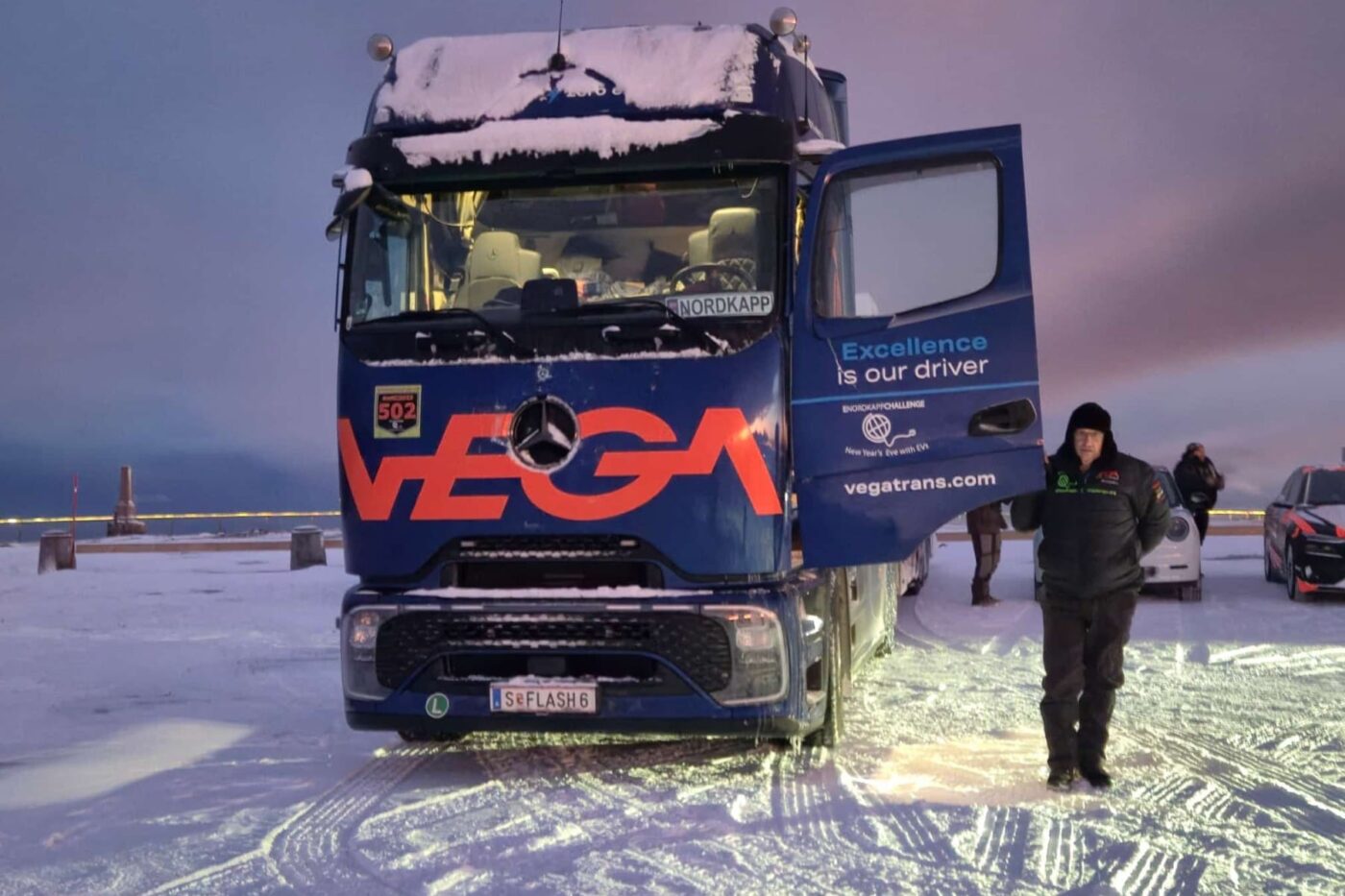
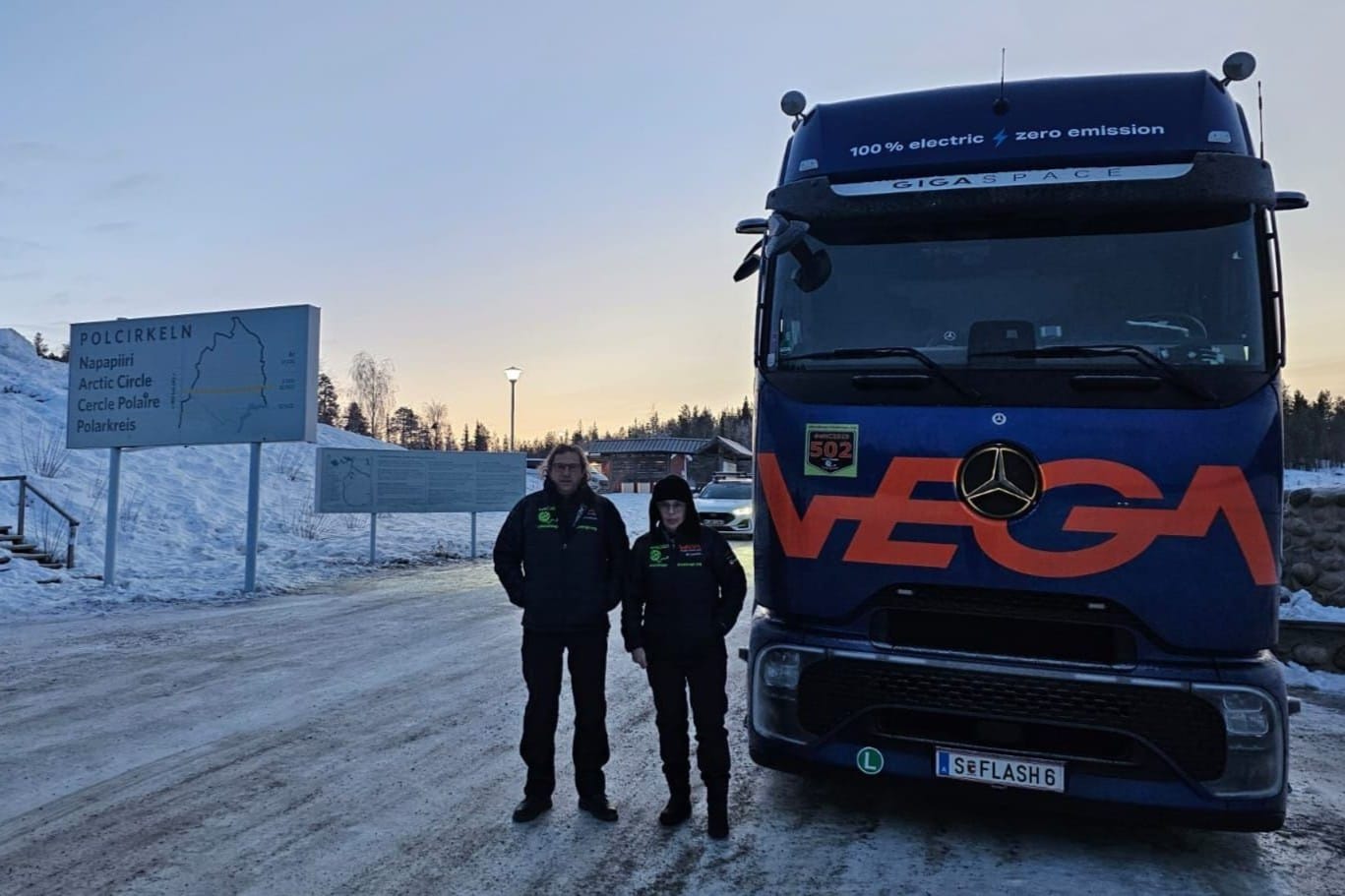
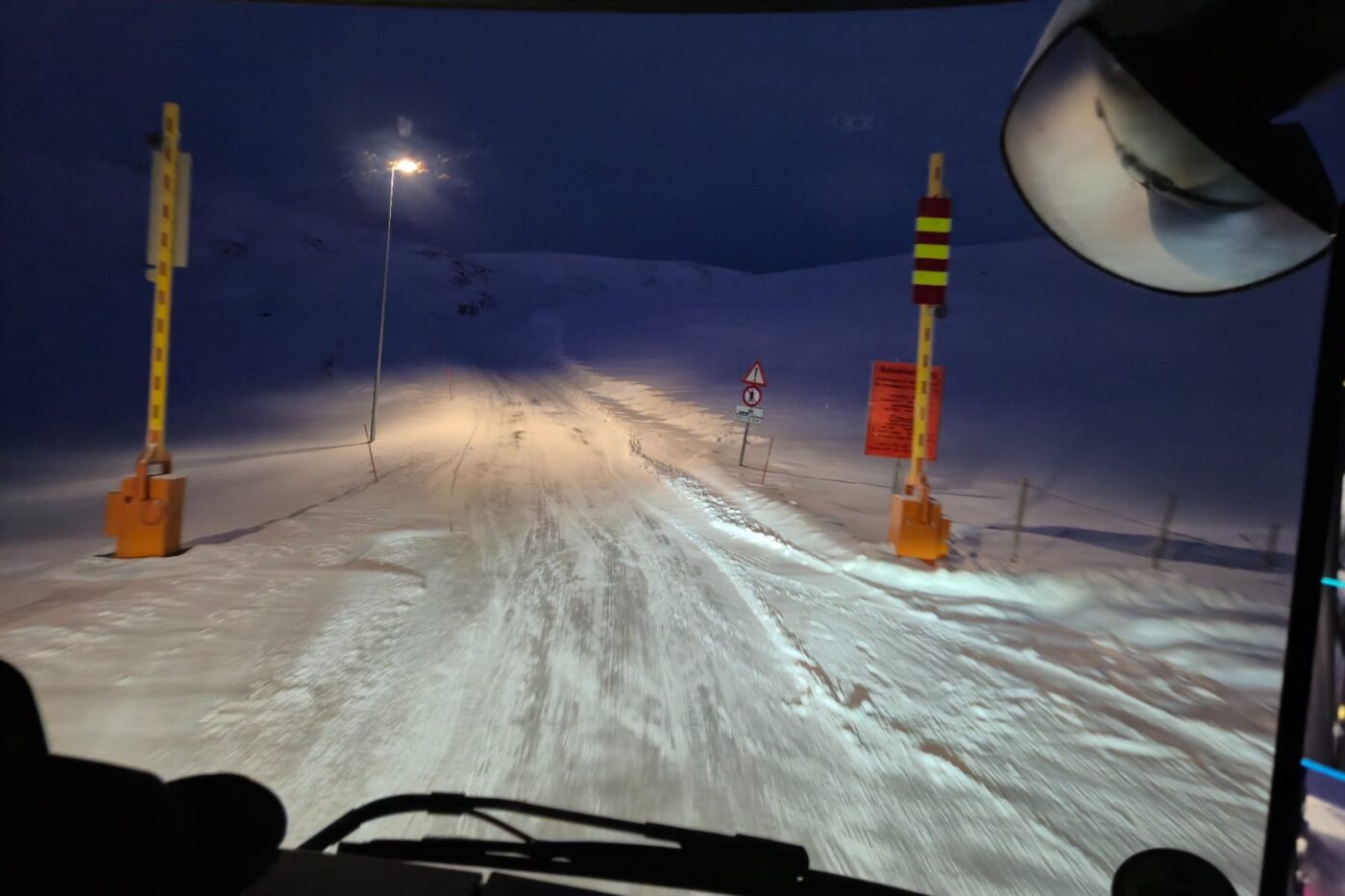
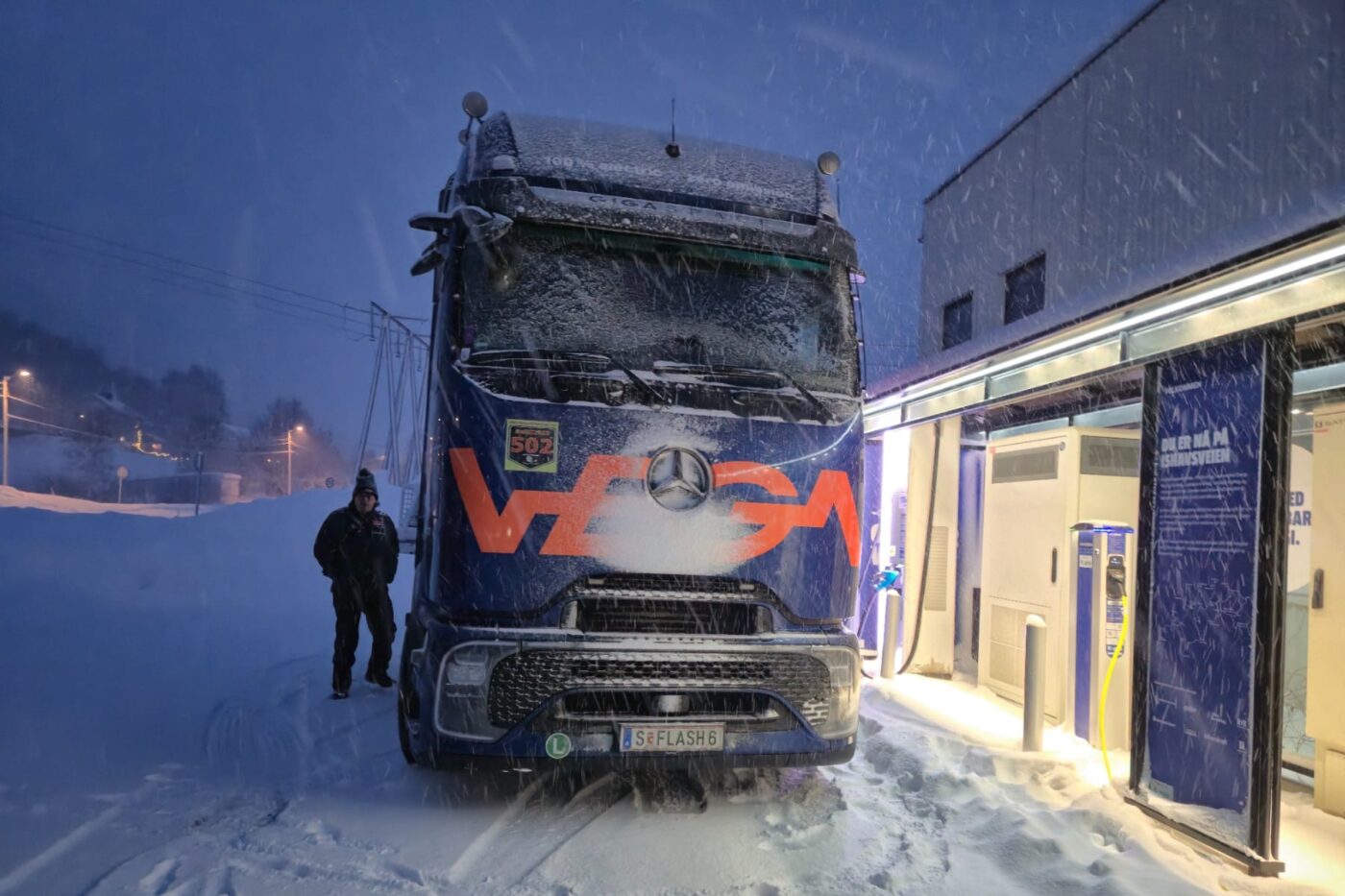
Energy consumption fluctuated significantly. “At best, we were at around 145 kWh per 100 kilometres,” says Herbert Salentinig. “In extremely cold phases, it rose to around 269 kWh.” The most vulnerable components were not the high-voltage batteries but the 12-volt systems. “Displays, control units, starter batteries—all vehicles had difficulties,” explains Salentinig. A well-known issue that manufacturers also encounter during cold-weather testing. For both, this was not a shock but part of the experience. “This happens to all vehicles, regardless of the manufacturer.”
Charging as the biggest hurdle
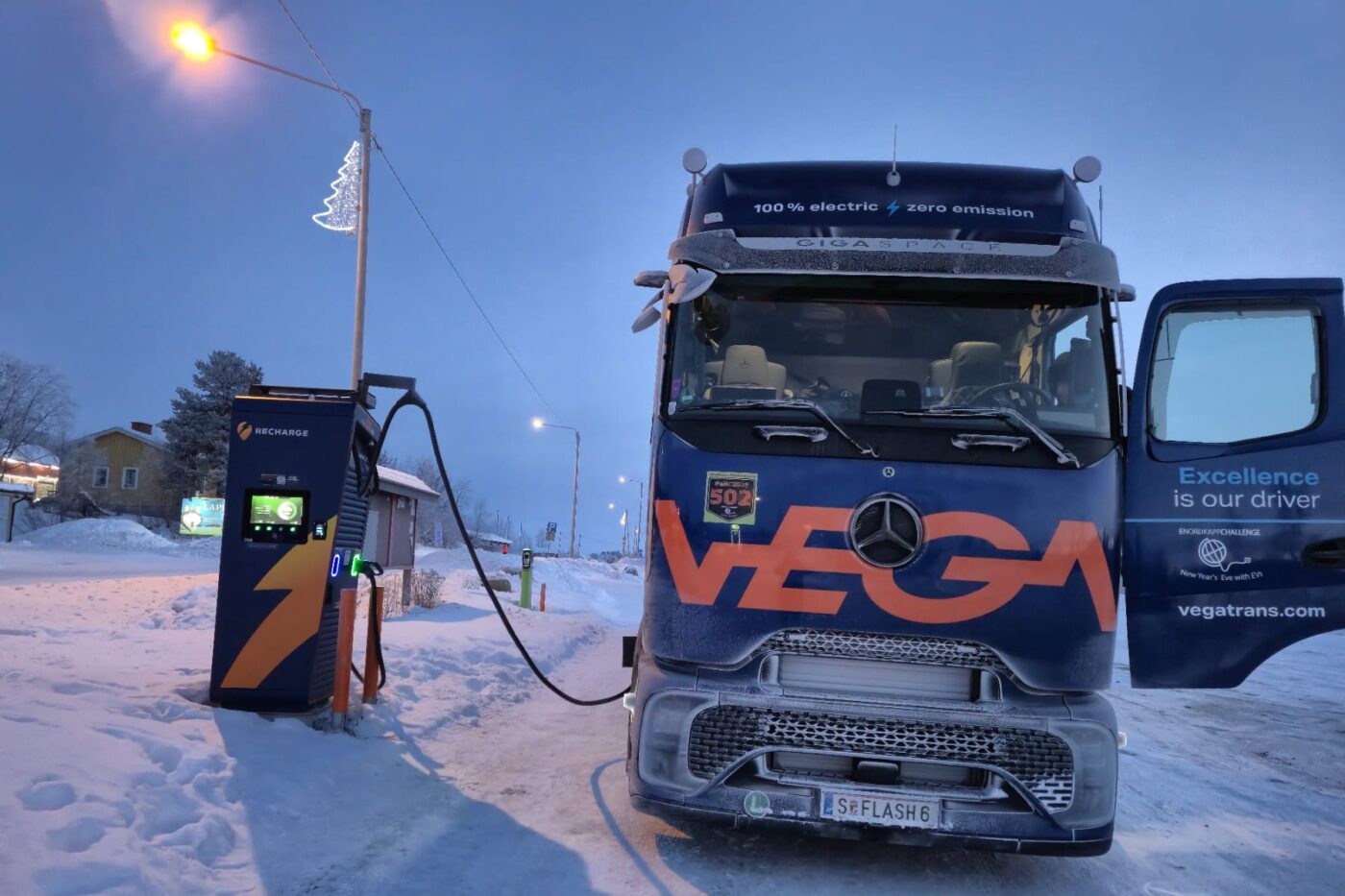
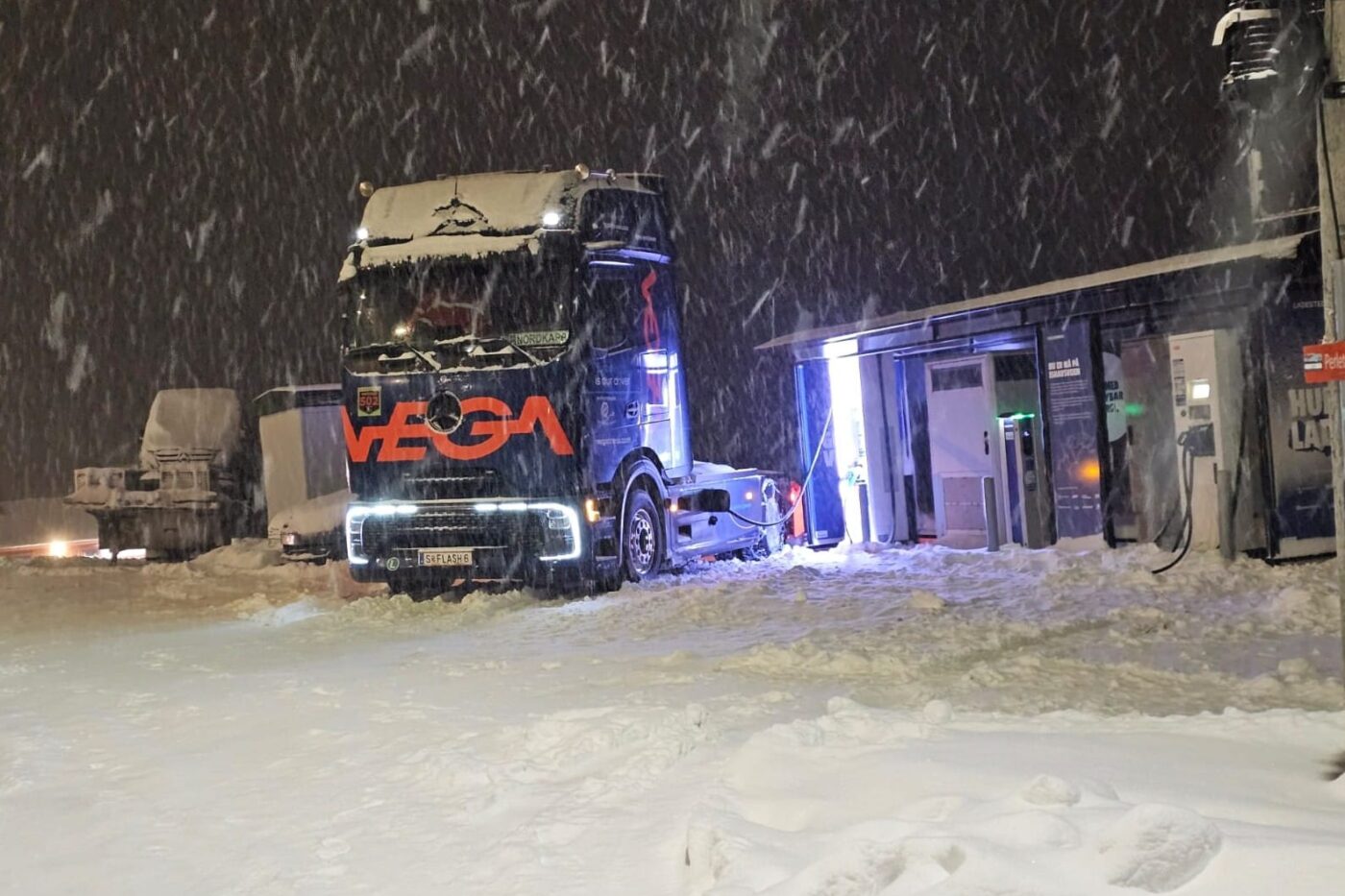
However, the biggest challenge of the entire journey was not driving but charging. While the charging network in southern and central Sweden is relatively well developed, the infrastructure becomes significantly sparser further north. And for a battery-electric truck, many charging points are simply unsuitable. “We can charge at 150 kW, but then we’re stationary for two hours,” says Salentinig. The goal was therefore to achieve charging capacities of at least 175 kW. But even when these were available, space was often lacking. “Many charging stations are designed only for cars. We sometimes had to uncouple and improvise.”
In addition, there were blocked charging points and limited payment options. “Often, you can only pay with a specific credit card, with a limit that isn’t sufficient for a truck,” reports Salentinig. Sometimes, the charging process had to be restarted multiple times. The situation became particularly critical north of the Arctic Circle. “Once, we arrived with twelve percent charge and didn’t know if the station would work,” recounts Silvia Salentinig. Improvisation became part of daily life. Frozen plugs, unresponsive displays, charging stations that only worked after several attempts. “Colleagues even used a hairdryer to get the technology working again,” she says.
What’s the takeaway for everyday use?
The eNordkappChallenge has taken place annually around the turn of the year and is considered one of Europe’s most demanding e-mobility journeys. This year, the approximately 3,500-kilometre route to northern Norway passed through the Swedish Inlandsvägen (E45), a region characterised by vast distances, limited infrastructure, and extreme weather conditions. In winter, temperatures regularly drop below minus 20 degrees, and ice and snow dominate daily life. North of the Arctic Circle, daylight almost completely disappears. For electric vehicles, this means higher energy consumption, reduced charging performance, and little margin for error in route planning.
In fact, Team Vega is not the first to complete the challenge with a battery-electric truck. In 2023, the Swiss company Thomann Nutzfahrzeuge AG participated in the event with a Renault D Wide E-Tech. However, they did so without a trailer. There are, of course, parallels: even then, charging the XXL electric vehicle was one of the biggest adventures on the route.
Despite all the technical challenges, what remains with Herbert and Silvia Salentinig above all is the time they spent together. Hours in the cab, conversations, silence, and concentration. “You depend on each other a lot,” says Herbert Salentinig. “Especially under such conditions.” Comfort also declined rapidly. The cab heating struggled against the cold, and jackets stayed on. “It wasn’t always comfortable,” Salentinig admits. “But we knew why we were doing it.”
The central question is: what can be learned from this extreme journey for everyday use? For Herbert Salentinig, the answer is clear: a great deal. “I can say with certainty that it works,” he says. For fixed routes, battery-electric heavy-duty transport is already practical today. “It’s a mathematical problem. If you plan, it works 120 per cent.”
Salentinig’s employer, Vega, currently operates around 30 electric trucks from Volvo, MAN, and Mercedes, with more on order. In parallel, the company is systematically building its own charging infrastructure at all locations. “In that case, no driver can tell me: ‘It’s not possible.’” The question of economic viability remains open. “It has to be paid for,” emphasises Salentinig. Grants alone are not the solution. “Major customers must be willing to bear the cost. Otherwise, we’ll be handing the next generation a mess.”
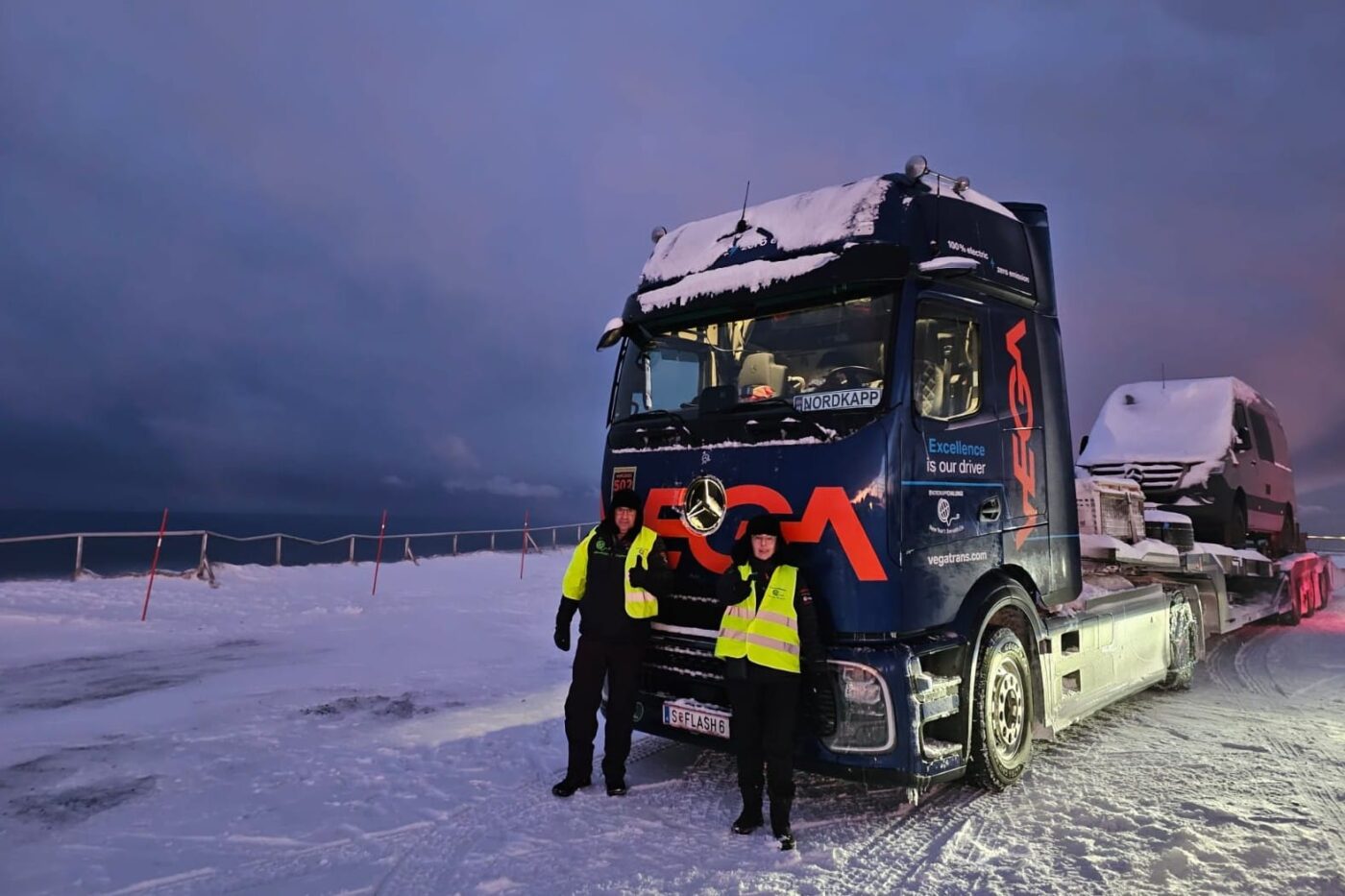
In the end, Herbert and Silvia Salentinig reached the North Cape—this year, the only team with a fully battery-electric tractor unit. No celebration, no staging. Just relief. And pride. “We’ve shown that it’s possible,” says Salentinig. “Not theoretically, but practically.” Like all participants, the couple had to organise their return journey themselves. They are expected back home in mid-January. When asked if they would do it again, both respond with a smile. “In the summer,” says Herbert Salentinig. “When it’s warm.”

0 Comments