

IG Metall confirms name change: facelifted ID.4 will be called ID. Tiguan
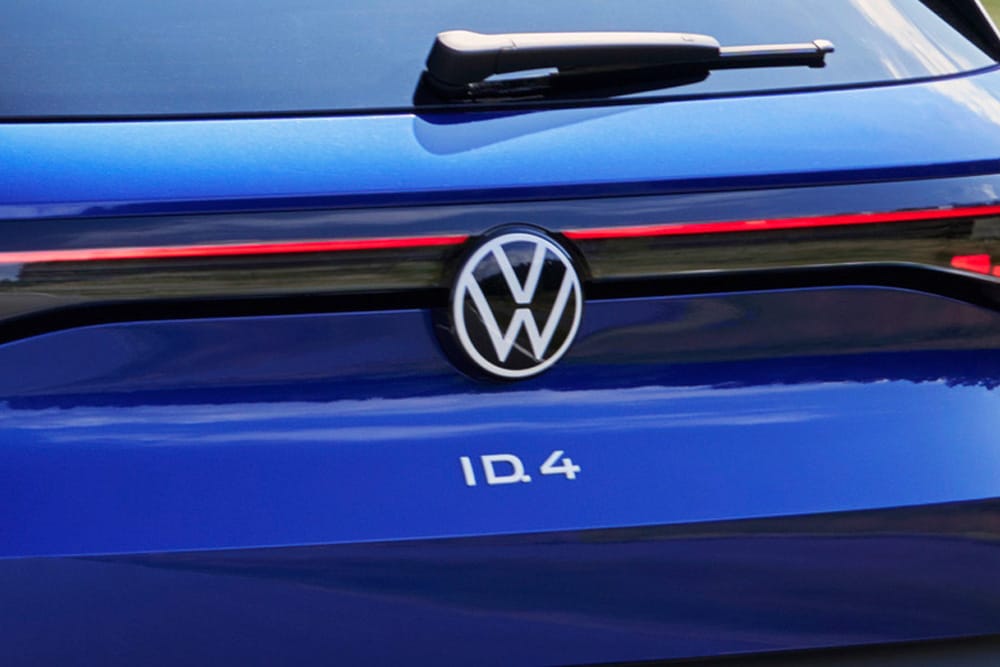
The ID. Tiguan will launch later this year alongside the facelifted battery-electric SUV, for which new spy shots have recently emerged. According to the trade union IG Metall, production of the ID. Tiguan at the Emden plant will continue until the end of 2031. A successor model as an electric midsize SUV from the plant has not yet been decided.
The ID.4 was initially produced exclusively at Volkswagen Group’s Saxon plant in Zwickau, which was fully converted to manufacture electric vehicles based on the MEB platform. Later, an additional production line for the ID.4 was established in Emden, initially operating alongside internal combustion models such as the Passat and Arteon. The Arteon has since been discontinued, while the Passat has relocated to Bratislava for its latest generational update. This created space for the battery-electric ID.7, including its estate variant, to be produced in Emden. There are also rumours about renaming this MEB model to ID. Passat—but neither VW nor IG Metall has confirmed this.
Going forward, the ID. Tiguan will be produced exclusively in Emden. Production of the ID.4 in Zwickau is being phased out, while the Saxon plant will retain the Audi Q4 e-tron and likely also the Cupra Born and partially the VW ID.3. With the facelift, all ID. Tiguan models will be manufactured in Lower Saxony. The SUV coupé ID.5, built in Zwickau, will be discontinued and will not relocate to the Emden plant.
According to Volkswagen, adopting familiar model names with the ID. prefix is intended to strengthen the emotional appeal of its electric models and create a closer connection to the brand’s established model ranges—something the ID.3 and ID.4 have not fully achieved. The first model in this new era was confirmed around IAA Mobility 2025, when the name ID. Polo was announced for the near-production study of the electric compact car, originally planned as the ID.2. The corresponding SUV model will be renamed from ID.s2 X to ID. Cross, following the naming convention of the internal combustion T-Cross, which is positioned as an SUV in the Polo segment.
The facelift will not only align the ID.4’s previously distinct electric design more closely with the Tiguan’s styling—while ensuring the ID. Tiguan remains a recognisable standalone model—but will also introduce technical updates. The electric SUV will transition to the updated MEB+ platform, feature a new entry-level motor, and likely adopt more cost-effective LFP battery cell chemistry in its base variant. Additionally, the recessed door handles will be replaced with traditional pull handles.
Changes are not limited to Volkswagen’s electric models. This week, the company also announced a new brand group board for its volume brands. This board will include a central CFO, Chief Procurement Officer, Chief Production Officer, and Chief Development Officer, who will make key decisions alongside the brand heads of VW Passenger Cars, VW Commercial Vehicles, Škoda, and Seat/Cupra. At the brand level, the structure will include a CEO and a board member responsible for HR, finance, and sales. Separate board positions for procurement, production, and development at the brand level will be eliminated. This restructuring is expected to generate savings of one billion euros in the production sector alone by 2030.
automobilwoche.de (ID. Tiguan; in German), carscoops.com (spy shots)
0 Comments