

New Chevrolet Bolt set to be discontinued again as early as 2027
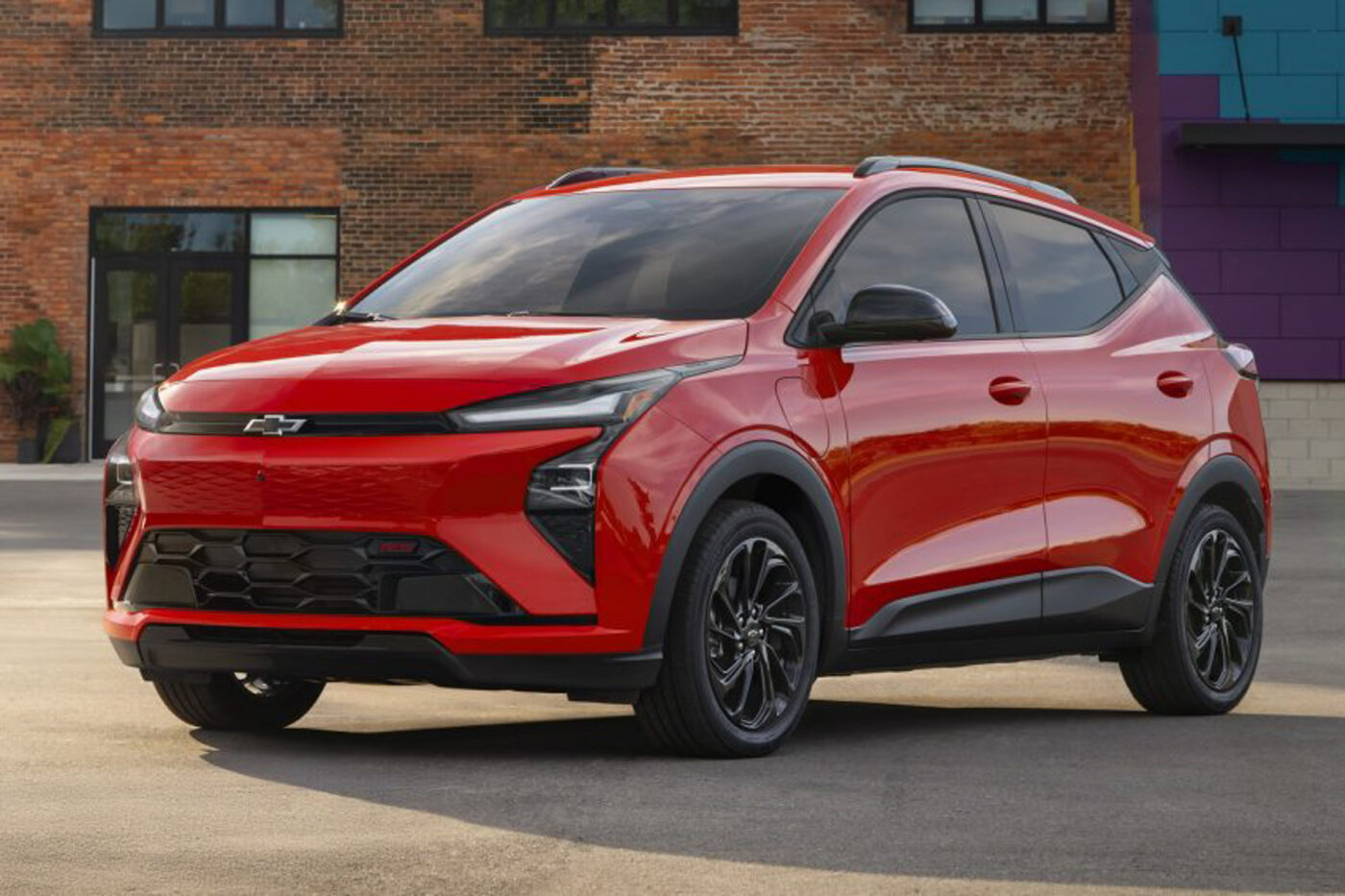
The move does not come as a complete surprise: GM had previously announced that the Chevrolet Bolt for the 2027 model year would be produced in limited numbers. Thanks to a Bloomberg report, we now know when production will cease. The Bolt will continue to be manufactured at the Kansas plant for approximately another 18 months. Currently, it is the only model produced there. GM has also confirmed these plans to InsideEVs: “When we revealed Bolt in October, we said it’d be a limited-run model, which we are bringing back due to strong customer demand,” a Chevrolet spokesperson said. “We also said it would account for the majority of EV volume for Chevrolet in 2026, alongside the Chevrolet Equinox EV. We reiterate that today.”
The reasons for its short market presence are reportedly tied to the plant’s production schedules. GM plans to build the next generation of the Buick Envision at the Fairfax plant, which is currently produced in China, while the Chevrolet Equinox—currently assembled in Mexico—is also set to relocate to Kansas. Both models are internal combustion vehicles. Additionally, InsideEVs speculates that the new Bolt could soon clash with regulatory changes, referring to ‘regulatory changes that GM can’t move fast enough to keep up with.’ The portal does not elaborate further on this point.
What is clear is that GM is under pressure from the previous Trump administration. The elimination of the US tax credit for electric vehicles has dampened domestic demand. At the same time, the manufacturer faces high tariffs, compelling it to shift more production back to the US from abroad. Furthermore, the Trump administration’s relaxed fuel economy standards for cars have given US manufacturers greater leeway to produce internal combustion vehicles.
All of this spells trouble for the Chevy Bolt, which GM has painstakingly reintroduced. Deliveries of the electric compact car are set to resume this month. However, its return is expected to be slow: the Detroit Free Press recently reported that the Fairfax plant is operating on a single shift, while 900 employees remain furloughed indefinitely. Production began in November as previously reported.
As is customary in the US market, the model is being shipped to dealers as a 2027 model year vehicle, even though it will go on sale in its current form in 2026. GM revealed the key details of the second-generation Bolt at a customer event in October: while its range of 255 miles (approximately 410 kilometres) is only marginally higher than that of the first generation, its DC fast-charging capability has been significantly increased to 150 kW. This improvement is due to the Bolt (and its discontinued sibling, the Bolt EUV) no longer being a standalone model in GM’s portfolio but now sharing technology with the Chevrolet Equinox EV. This includes a 157 kW motor and a 65 kWh battery mounted in the underbody.
The price has also decreased, as GM has opted for more robust and cost-effective LFP battery cells in the new model. At launch, the Bolt will be available in the LT trim with the ‘Comfort Package’ starting at $29,990. Later, a more basic 1LT model will follow at $28,995, alongside a sportier RS version priced at $32,995. According to GM Authority, the most expensive variant will be the RS model with the ‘Tech Package’ and panoramic roof, priced at $35,685.
Additional optional features include the semi-autonomous driving system ‘SuperCruise’ for over $3,000. The options list also includes the ‘GM PowerUp 2 NACS Charger’ for $899—however, this is not an in-vehicle NACS charging capability but rather a wallbox with an NACS cable. Alternatively, GM’s Vehicle-to-Home-capable ‘PowerShift’ wallbox can be ordered.
When GM discontinued the first-generation Bolt in 2023, its phase-out drew criticism, as the Bolt and Bolt EUV were two of North America’s most popular and affordable electric models. With the second generation, GM is temporarily reintroducing a more affordable battery-electric vehicle to the US market—though the Bolt remains significantly cheaper than its technical sibling, the Equinox EV, which currently starts at $35,100.
techcrunch.com, insideevs.com



0 Comments