

India: BYD explores localising additional models amid rising demand
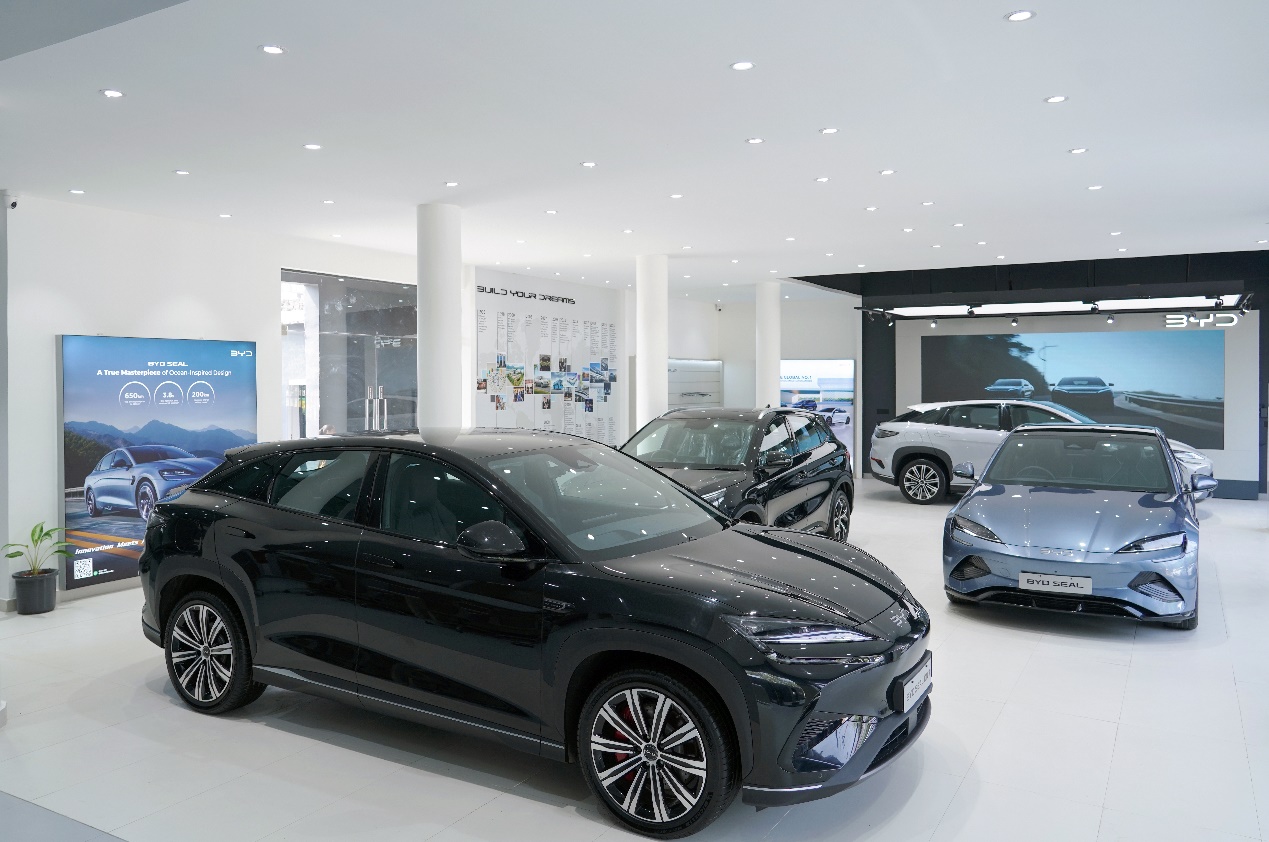
The Chinese automaker offers four models in India, two of which are imported, namely the Seal and Sealion 7, under the GSR 870 (E) rule, which allows companies to bypass local homologation for up to 2,500 CBU or CKD vehicles per year. A Bloomberg report suggests that demand for the CBU range is nearing its limit, prompting the company to consider expanding local assembly operations.
Last year, BYD used 88 per cent of the import quota for the Sealion 7 alone, with around 2,200 units registered. Supply constraints are extending delivery times, leaving dealers with a backlog of several hundred orders. Besides limited availability, steep pricing is restricting the growth of such models. For instance, the Sealion 7 is subject to a 70 per cent import duty and priced at 4.94 million rupees (approx. €44,900) or 5.49 million rupees (approx. €49,900), depending on the variant.
BYD is looking at importing semi-knocked-down (SKD) kits and assembling them locally instead of importing fully built cars. SKD operations are less capital-intensive and easier to secure regulatory approvals than a full assembly plant, which BYD had planned in 2023 in partnership with Megha Engineering and Infrastructure Limited (MEIL), the parent company of electric bus maker Olectra Greentech.
Switching from CBU to SKD would reduce the tariff imposed on the vehicles to 30 per cent, allowing BYD to price its models more competitively. The company already assembles the other two cars in its line-up, namely the Atto 3 and eMax 7, from knocked-down kits at a facility in Sriperumbudur, Tamil Nadu. It has already started the process of securing safety and regulatory certifications to localise more models.
BYD has a network of 47 dealerships across 40 cities in India and sold around 5,500 vehicles last year, up approximately 88 per cent year-on-year. Facing pressure from intensifying competition and reduced subsidies in its home market, the Chinese automaker is strengthening its focus on overseas business. It sold around 1.05 million cars internationally last year and aims to increase that figure by 23.8 per cent to 1.3 million units this year.
0 Comments