

Tesla to build humanoid robots in Fremont instead of Model S/X
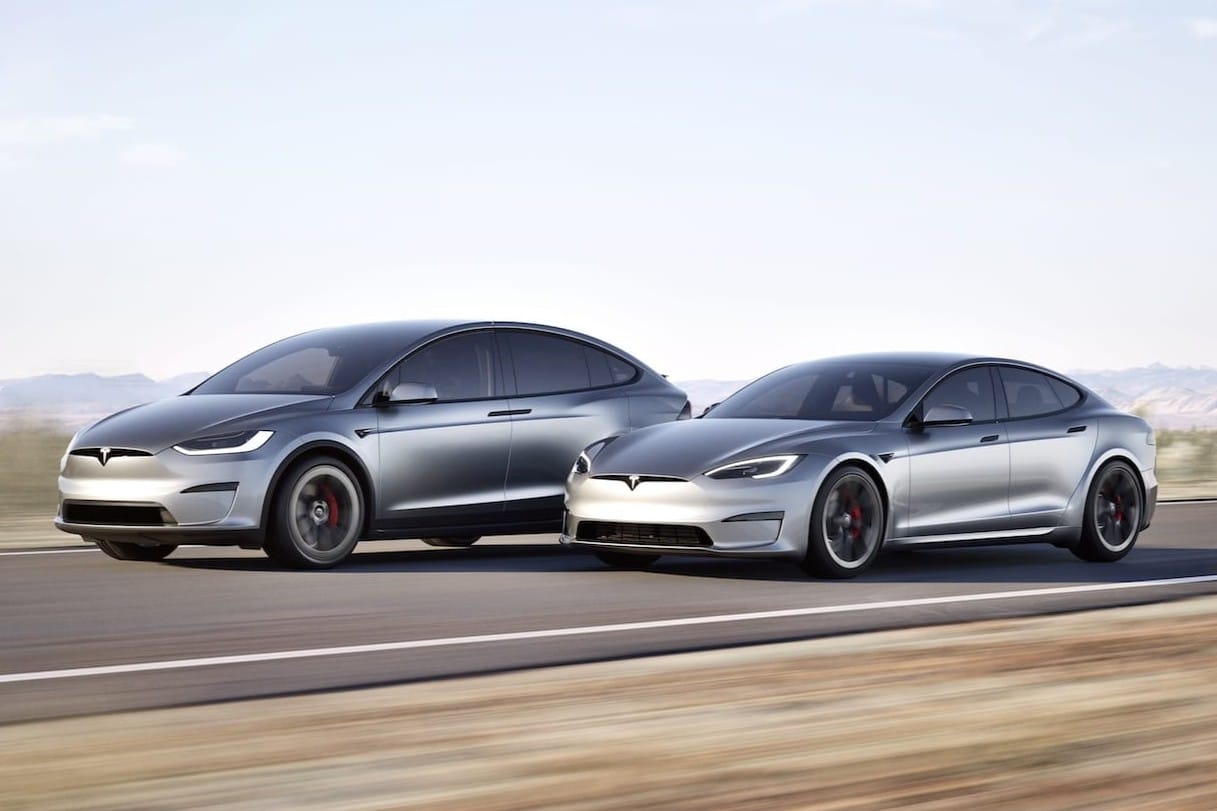
Elon Musk announced this decision during the presentation of the latest financial results. The Model S was Tesla’s second model after the Roadster and has remained in the lineup ever since—albeit with multiple technical and visual upgrades. The core design of the Model S has remained fundamentally unchanged since production began in mid-2012. In 2015, the SUV Model X, featuring the distinctive ‘Falcon Wing’ doors, was introduced and has since been offered in several revised versions.
“It’s time to basically bring the Model S and X programs to an end with an honourable discharge, because we’re really moving into a future that is based on autonomy,” Musk stated. He described the moment as ‘sad’ but necessary for the company’s transformation into a specialist in autonomous driving and robotics.
Other EV models to disappear from the US Market
The timing of the discontinuation of these two Tesla model lines aligns with the company’s long-announced transformation from an electric vehicle manufacturer into an AI and technology conglomerate. Production is not simply being halted; instead, it is being replaced by the Optimus robot. That said, new or dedicated facilities could have been used for robot production if Tesla had been strongly committed to continuing the two premium models.
However, sales figures for these models have been modest for years—exact numbers cannot be determined from Tesla’s reports. Since the introduction of the Cybertruck, the Model S and Model X have been grouped together with the pickup under the category ‘Other Models.’ Of these ‘other models,’ Tesla sold only 50,850 units in 2025—compared to 1.6 million Model 3 and Model Y vehicles. With the US market under President Donald Trump facing an uncertain future, other manufacturers have already discontinued electric models for the US market. Given the already limited sales of the ‘other models’ and the unclear demand in the US, this may have been a factor in the decision to repurpose the Fremont facilities for the Optimus robot.
Moreover, production of the two premium models was not operating at full capacity. With around 51,000 Model S, Model X, and Cybertrucks produced in total, the assembly lines were likely running at only a third of their potential capacity. According to the latest financial report, Tesla can produce 100,000 Model S/X vehicles in Fremont and over 125,000 Cybertrucks across its facilities. Since the exact breakdown within the ‘other models’ category is unknown, no precise conclusions can be drawn about capacity utilisation in Fremont—but it is certainly not optimal.
Tesla expects that producing humanoid robots will require significantly less space than manufacturing electric vehicles. The company plans to produce up to one million Optimus robots on the same floor space currently occupied by production facilities for 100,000 EVs—at least according to its announcement.
To achieve this, Tesla plans to double its investments in 2026 to over 20 billion US dollars. However, the majority of this expenditure will not flow into the traditional business of selling electric vehicles but instead into the Optimus robot, autonomous Cybercab robotaxis, the electric Semi truck, and its own battery and lithium production. “This is going to be a very big capex year,” Musk said. “We’re making big investments for an epic future.”
0 Comments