

Porsche kicks off series production of the Cayenne Electric
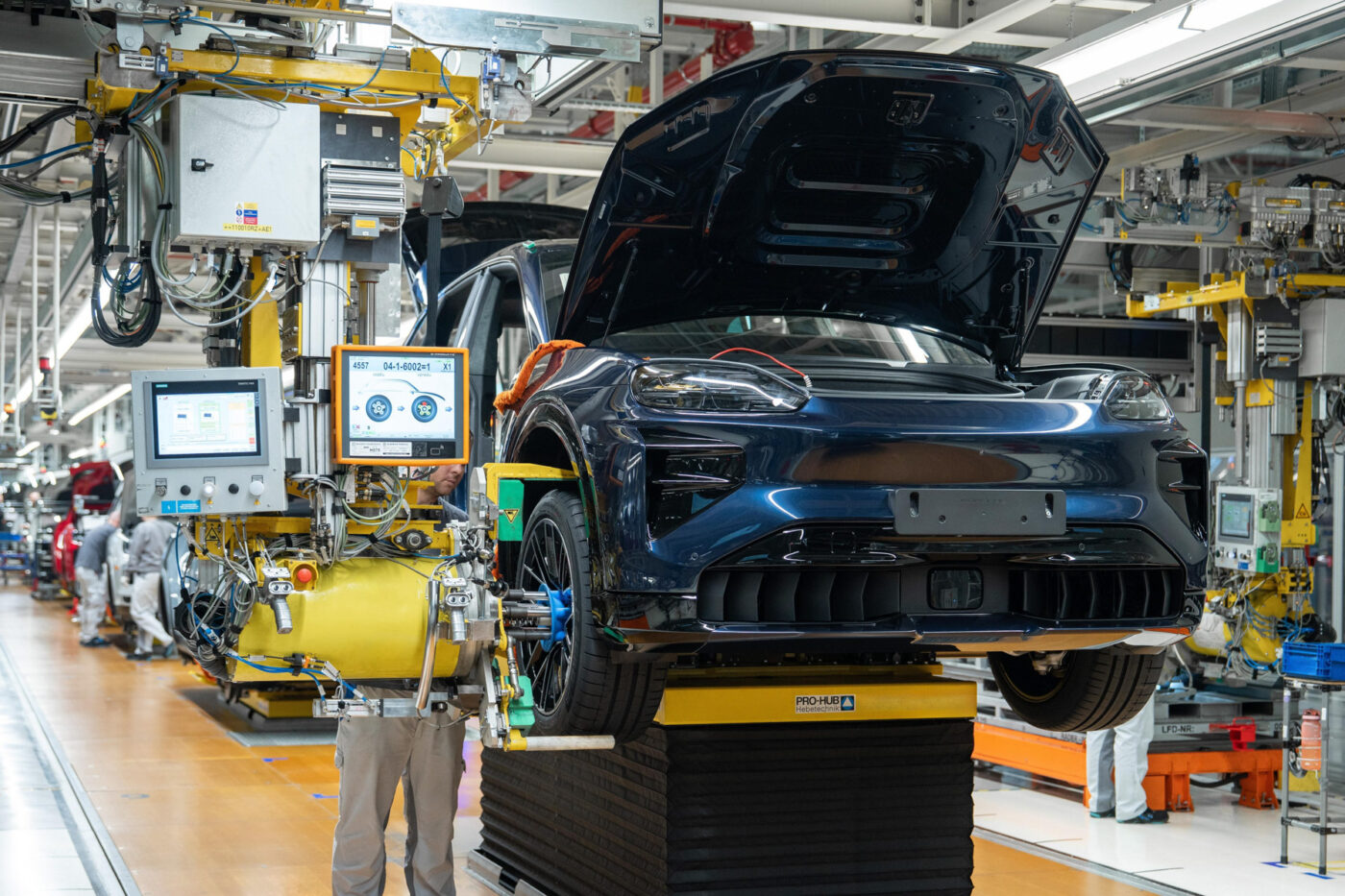
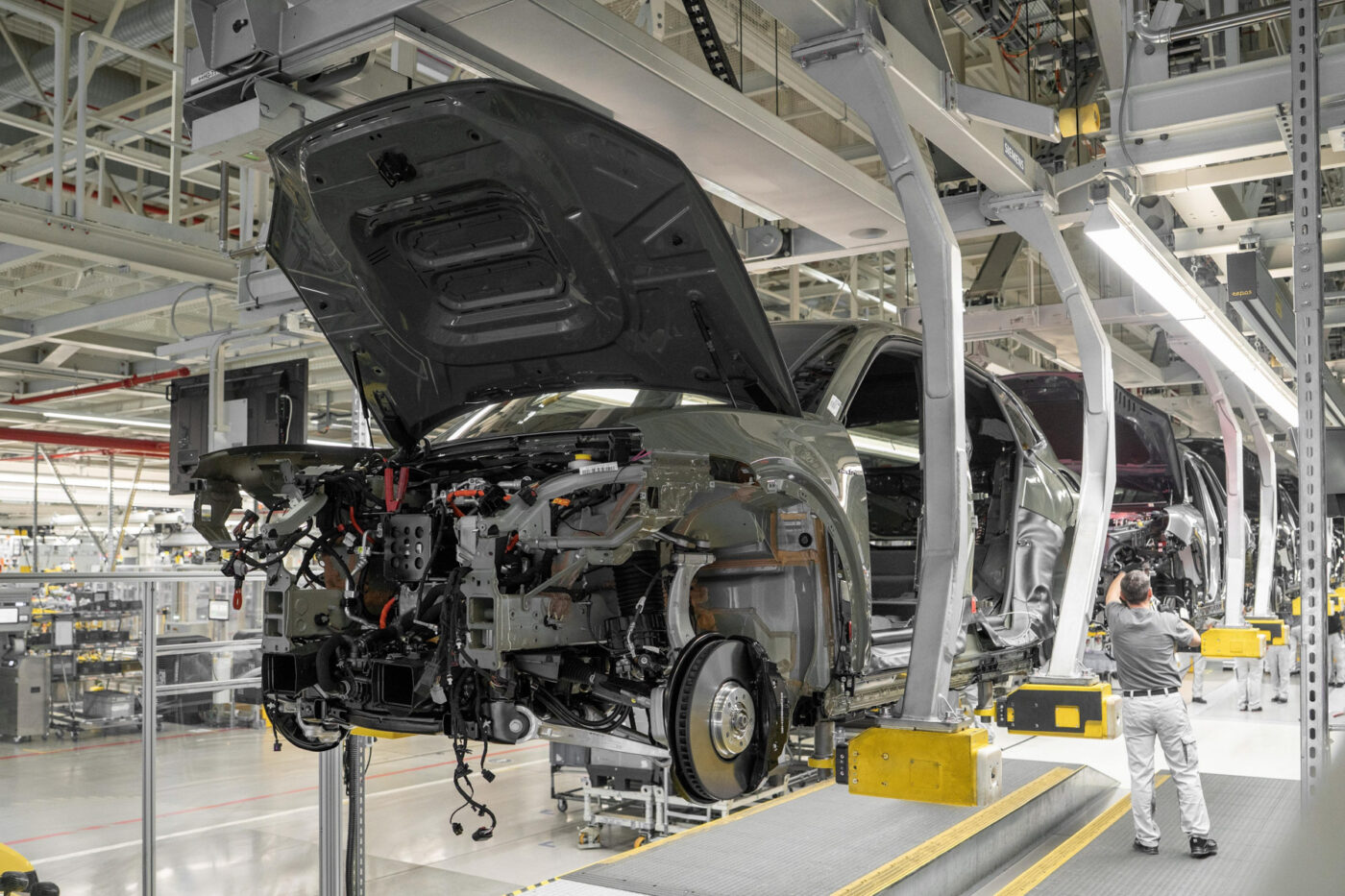
For several years, the VW plant in Bratislava has produced the internal combustion engine (ICE) and hybrid models of the Porsche Cayenne, alongside its platform siblings from Audi and Volkswagen. The new Cayenne Electric, which the Stuttgart-based manufacturer unveiled in mid-November 2025, is based on the all-electric PPE platform but is now built alongside the petrol and hybrid Cayenne models on the same production line in Slovakia.
According to Porsche, this flexible production line enables the company to “respond quickly to changes in demand.” This means the proportions of different model and drivetrain variants can be adjusted based on incoming orders—at least within certain limits.
One limiting factor, however, is battery assembly. For the Taycan and Macan, Porsche previously relied on supplier Dräxlmaier to assemble the ready-to-install battery packs and deliver them to vehicle production. With the electric Cayenne, the automaker has brought battery assembly in-house: together with Porsche Werkzeugbau GmbH, Porsche has established the Porsche Smart Battery Shop in Horná Streda. “The close integration with Porsche Toolmaking was a key success factor: competencies from prototype production could be seamlessly transferred to series production,” Porsche stated. “In a precisely controlled process consisting of cell preparation, stacking, laser welding, foaming, cold plate integration and end-of-line testing, the modules are created under complete quality control.”
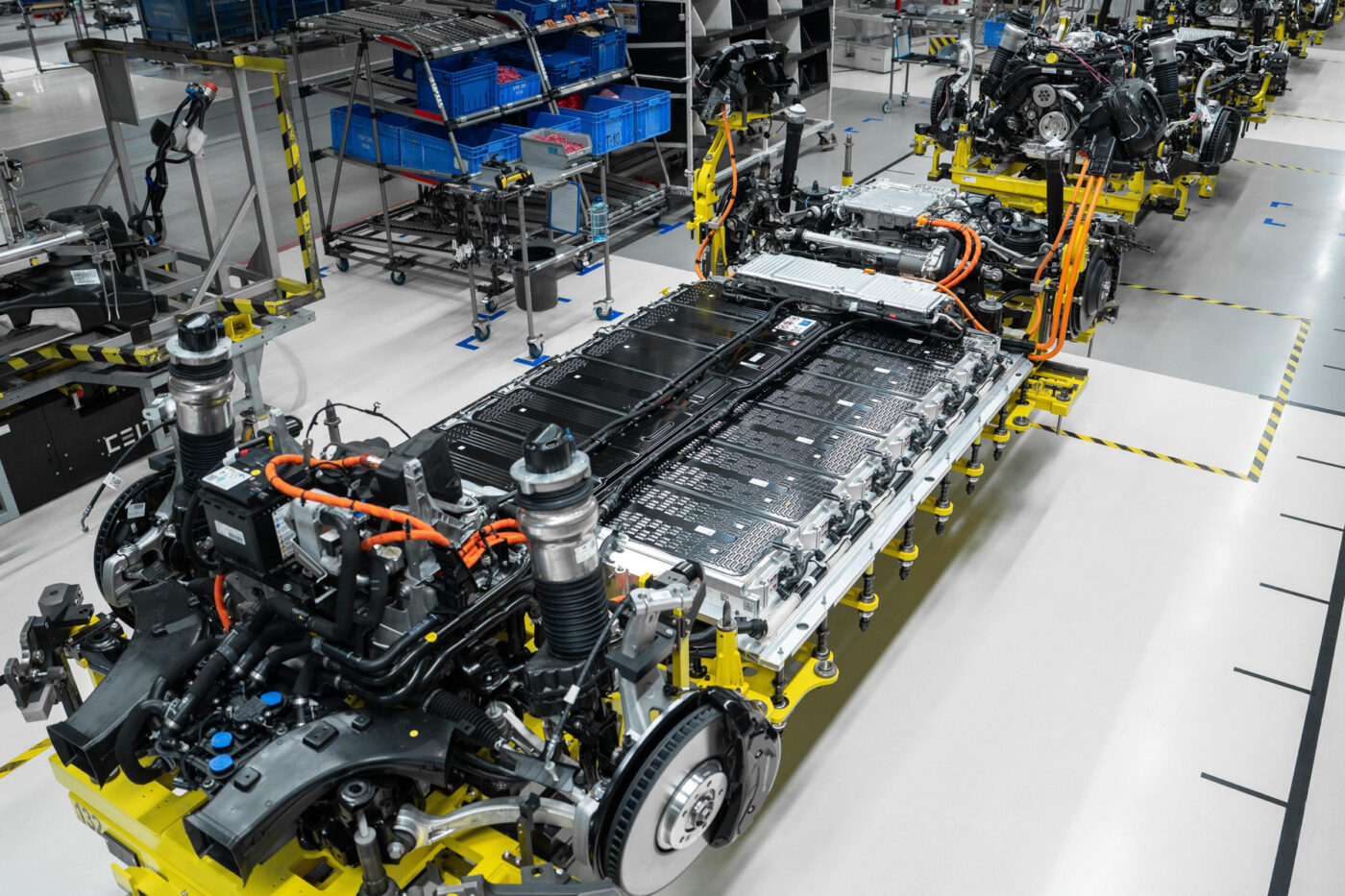
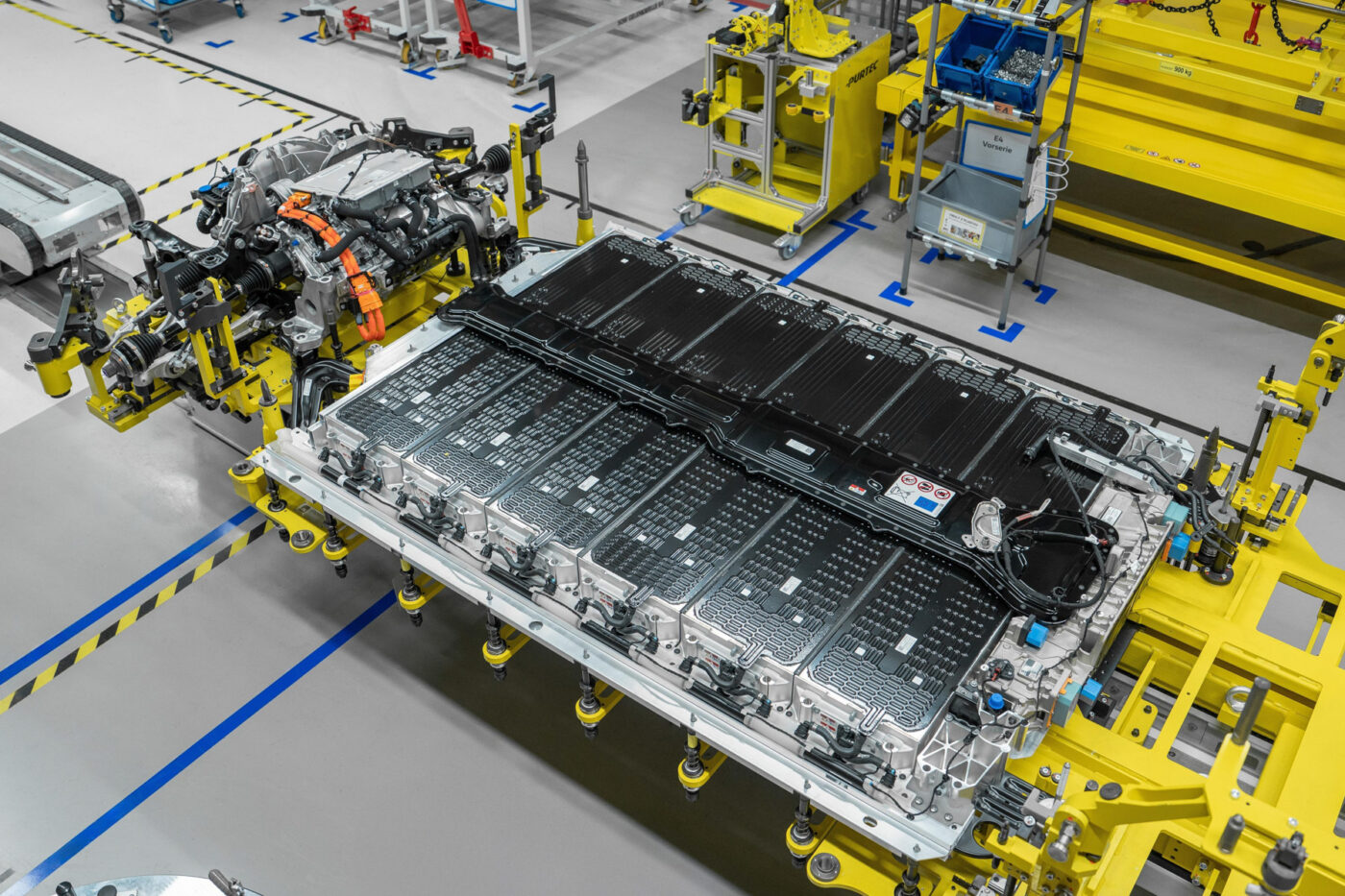
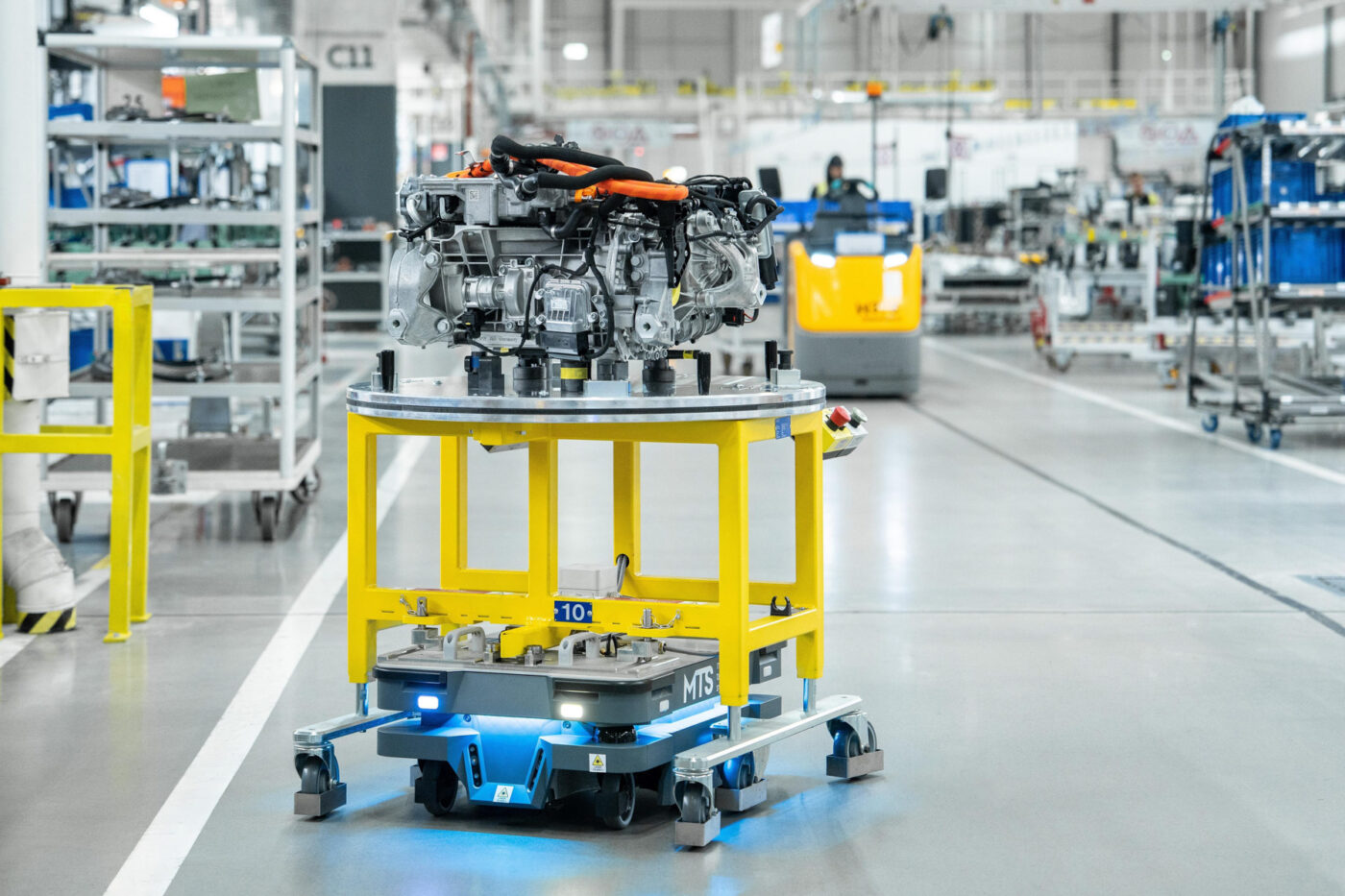
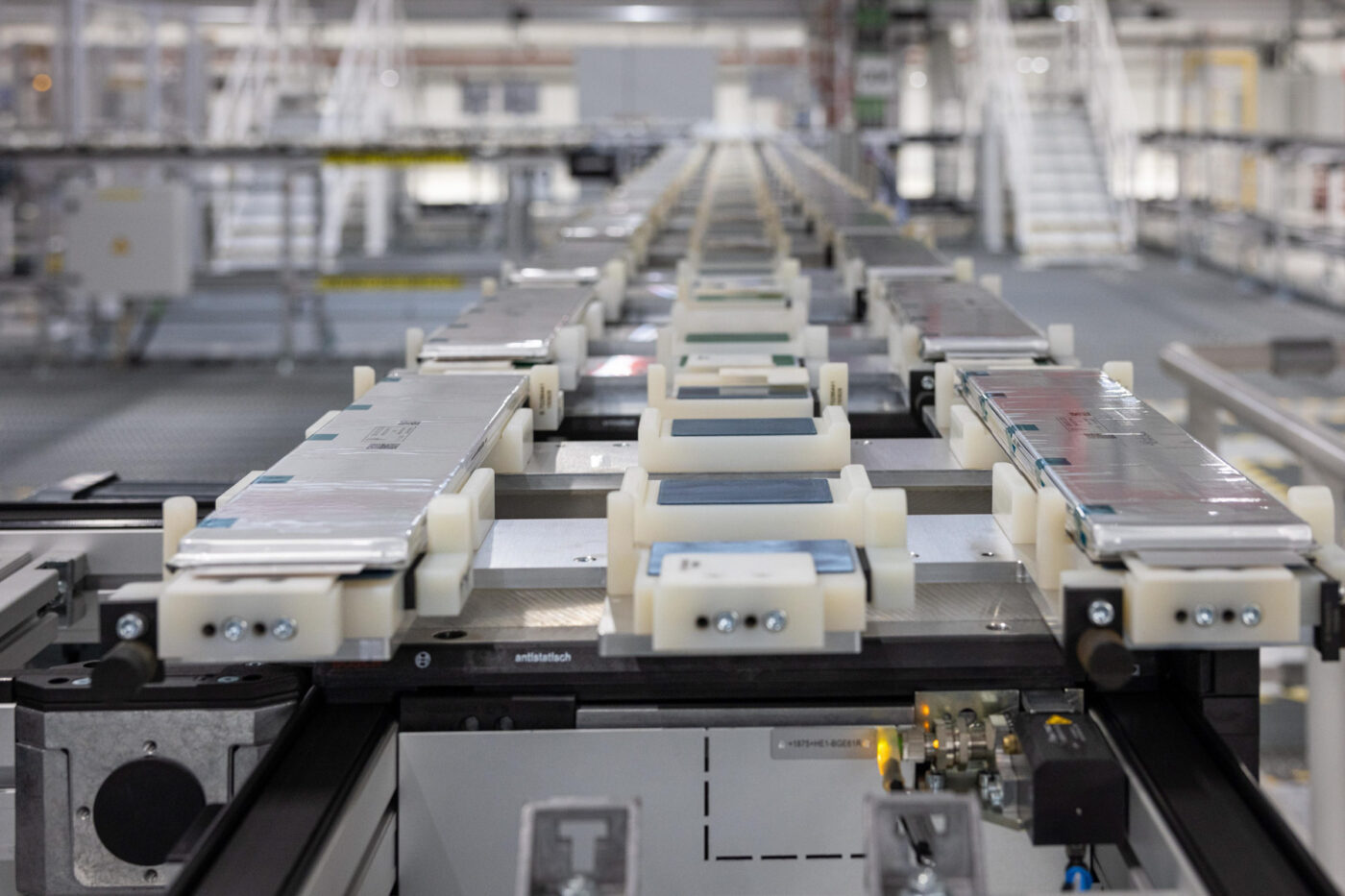
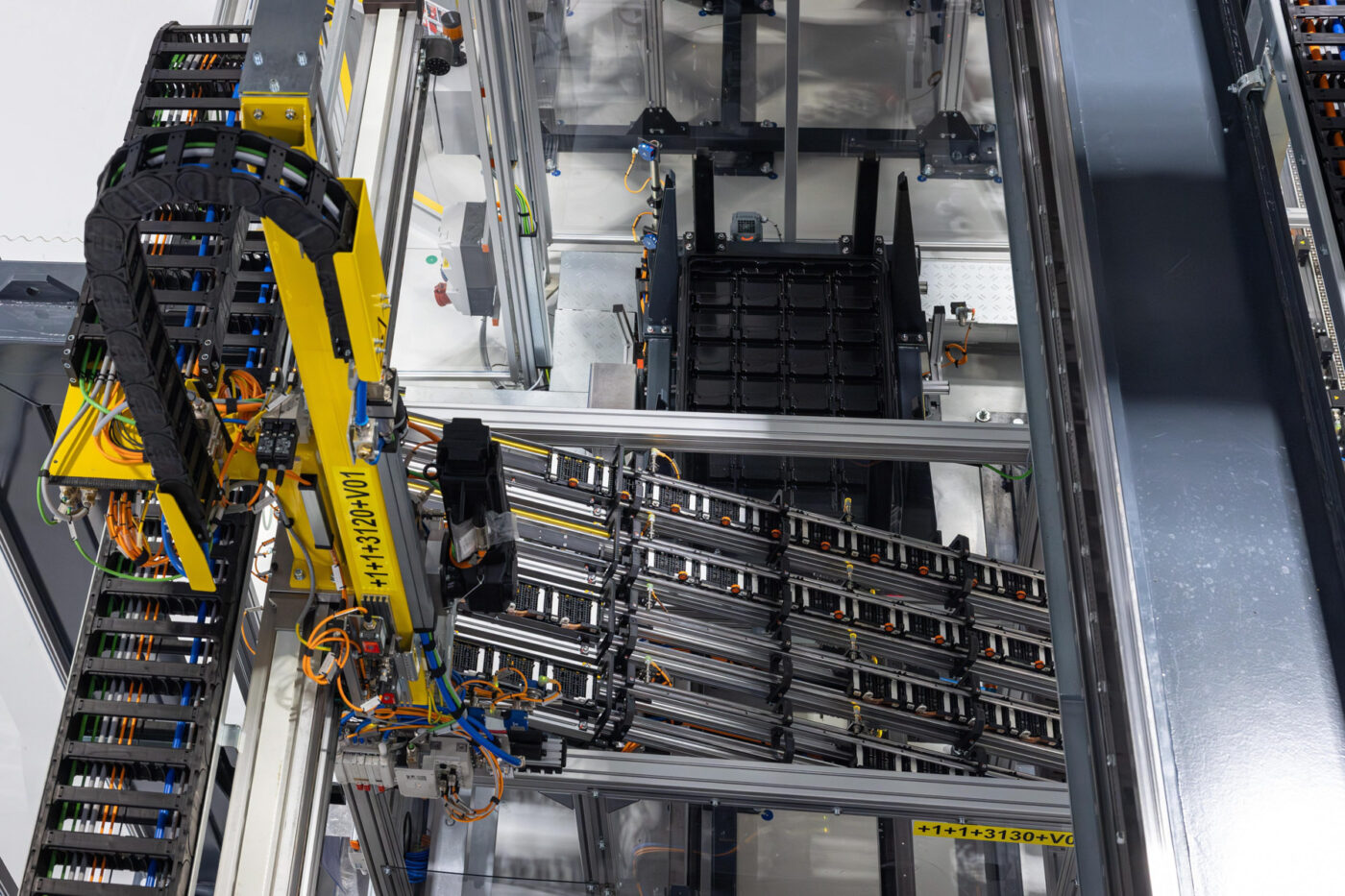
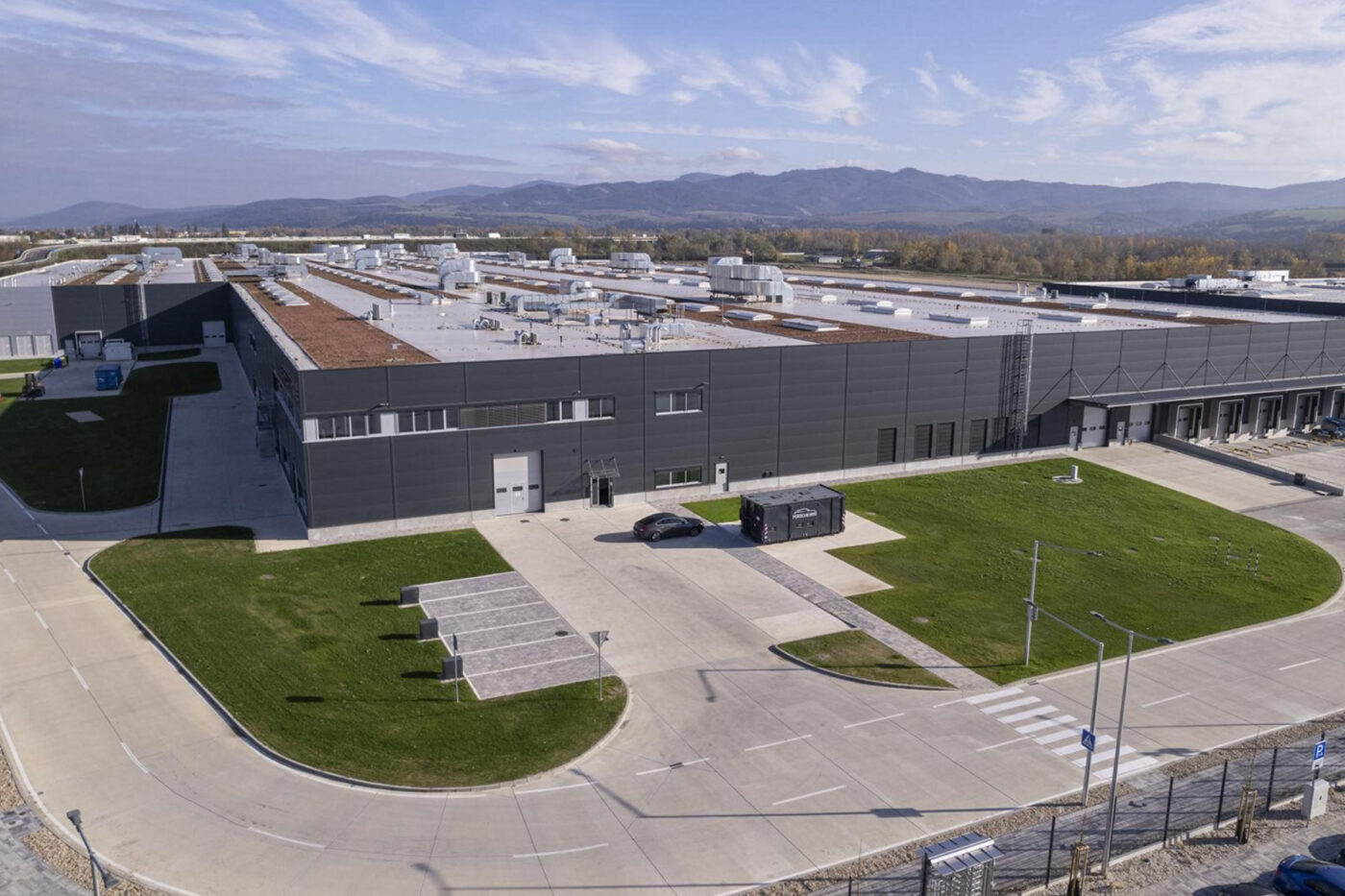
Porsche has not disclosed the production capacity of its in-house facility. However, according to the German automotive publication Automobilwoche, 150 employees in Horná Streda assemble 132 modules per hour in two shifts using pouch cells supplied by LG Energy Solution. As we reported in our tech deep-dive on the new Cayenne Electric, each vehicle requires six of these modules for its 113 kWh battery (108 kWh net). This translates to a theoretical daily production capacity of battery modules for 352 Cayenne vehicles. From Horná Streda, the modules are sent to supplier Webasto, which integrates the modules and power electronics into the battery frame before delivering them to the vehicle plant.
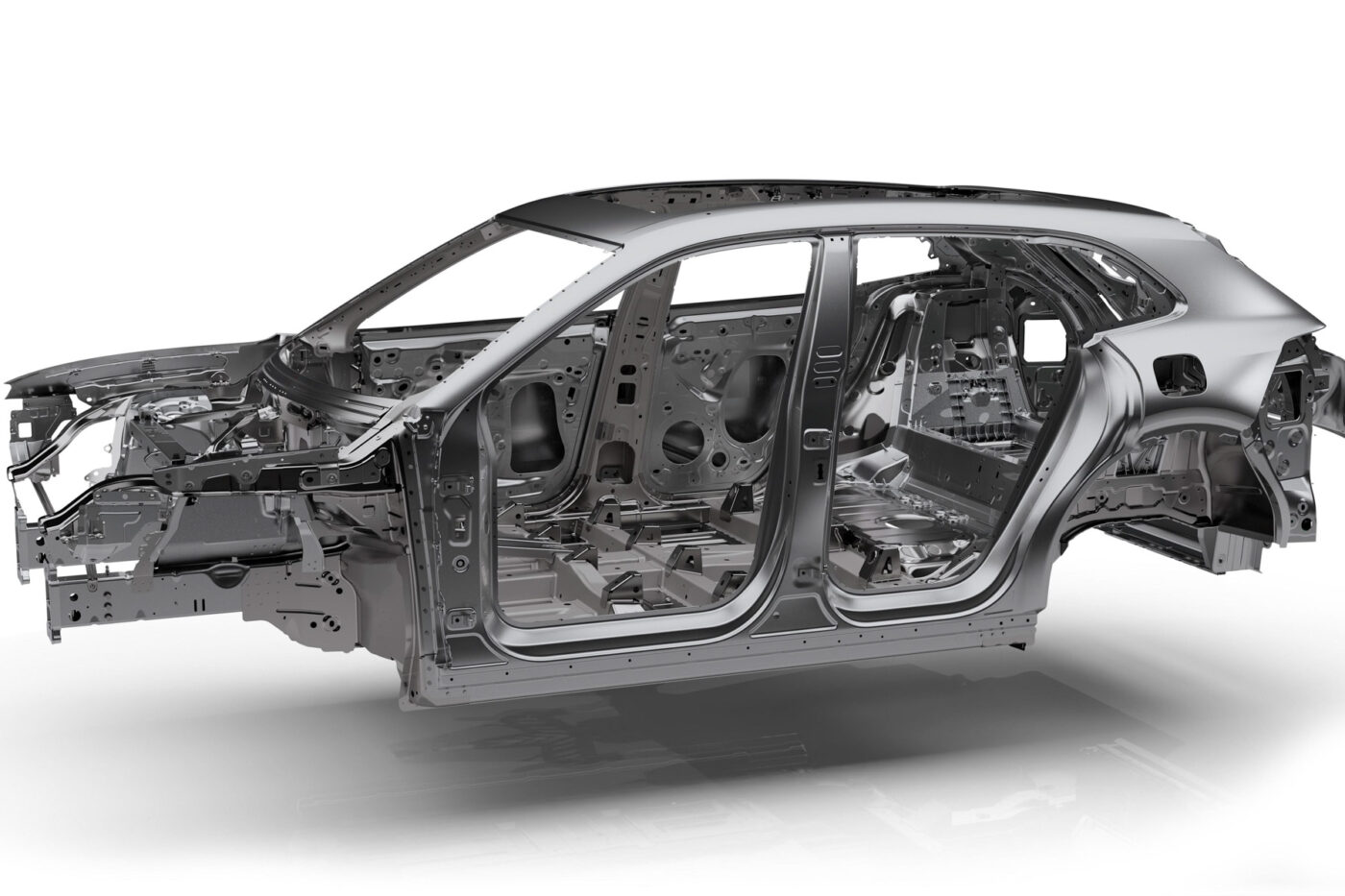
Unlike the first PPE-based Porsche, the Macan, which still uses conventional battery modules and a traditional battery pack with prismatic cells, the Cayenne’s battery is designed as a structural component. With 108 kWh of usable energy, the battery enables a range of over 600 kilometres and supports 800-volt fast charging. While other modern electric vehicles, such as the BMW iX3 50 xDrive, can also achieve a peak charging rate of 400 kW, the BMW takes 21 minutes to charge from 10 to 80 percent with a similarly sized battery. The Cayenne achieves this five minutes faster, thanks in part to its unique cooling concept featuring two cooling plates. This allows the high-voltage battery to be cooled more effectively and maintained within the optimal temperature range for longer—enabling high charging power over extended periods.
Body Components Sourced from Bratislava
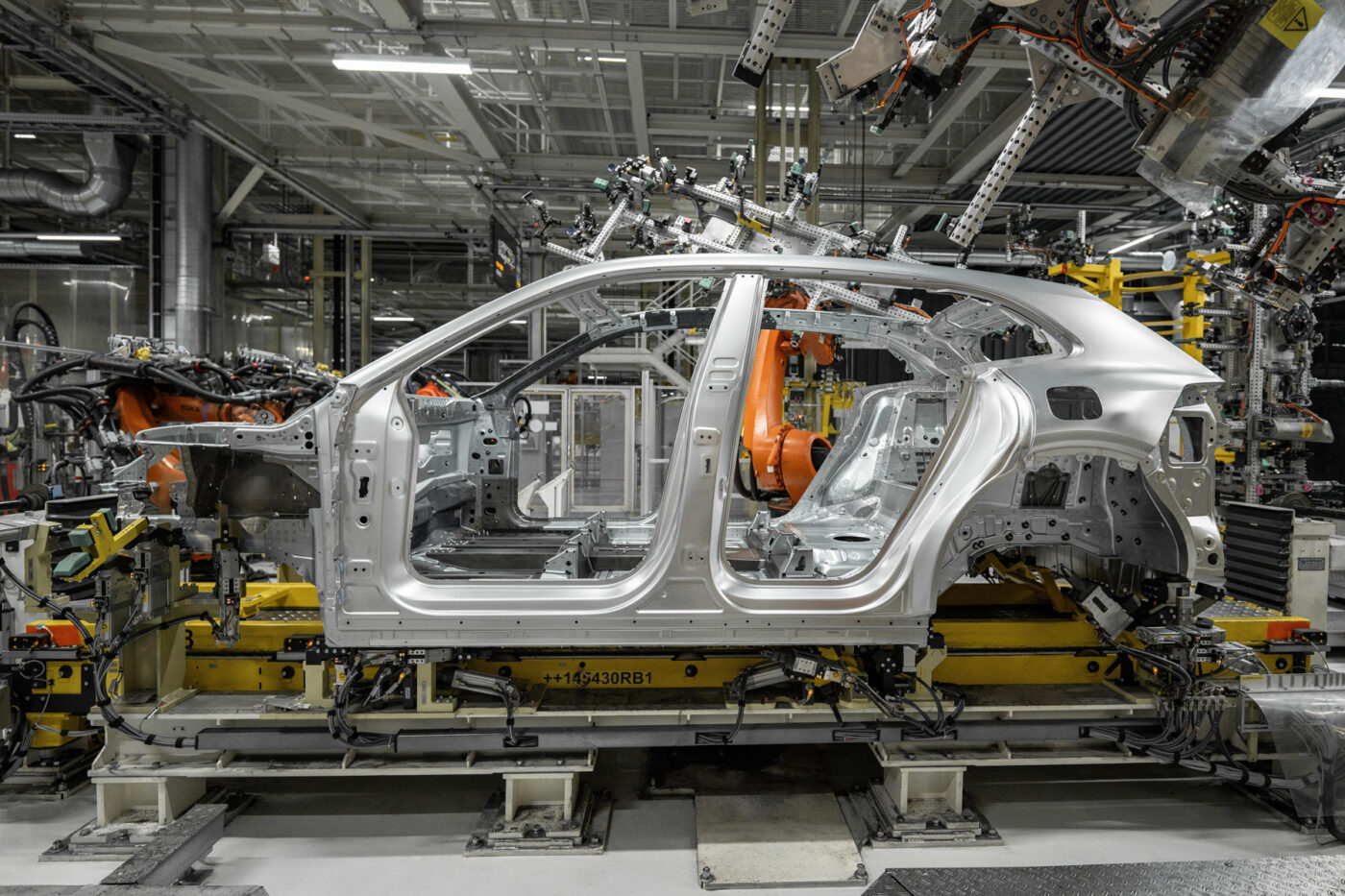
Not only the battery supply chain but also the vehicle plant in the Devínska Nová Ves district has been extensively adapted for the Cayenne Electric. In a new “platform hall”, the skateboard-like chassis is assembled and subsequently fitted with side panels, roof, doors, bonnet, and tailgate, according to Porsche. These components are produced locally at the pressing plant.
“With the Cayenne Electric, we are consistently transferring Porsche’s DNA into the future—with in-house developed battery modules, maximum manufacturing quality, and a production line that seamlessly integrates combustion, hybrid, and electric vehicles,” says Albrecht Reimold, Member of the Executive Board for Production and Logistics at Porsche AG. “This gives us the flexibility we need to reliably meet the highest quality standards, cutting-edge technology, and individual customer requirements in every market worldwide.”
While the Cayenne Electric is now entering series production, the future of two other long-announced electric Porsche model lines remains uncertain. According to Bloomberg, citing sources familiar with the matter, the board is considering abandoning the planned electric versions of the 718 Boxster and Cayman before they even reach the market. Development delays and rising costs are cited as reasons. Porsche declined to comment on the reports.
The development of the electric 718 successors has indeed been far from smooth. Porsche’s engineers have struggled for some time to reconcile the desired driving characteristics of the two-seater sports cars with Porsche’s standards, battery weight, and cost constraints. As part of the once-ambitious electrification strategy, the former board decided to rely on a risky single-sourcing approach for the battery: the high-energy-density battery cells were to be supplied by Northvolt, which would then be assembled into battery packs by Finnish supplier Valmet at a new site in Baden-Württemberg. However, Northvolt filed for insolvency and was acquired by US company Lyten. Battery partner Valmet has since withdrawn from the project in Kirchardt due to delays. As a result, Porsche was left without a battery supply chain for the model—and no public Plan B has emerged to date.
As Bloomberg reports, discontinuing the model line is just one of the options currently under consideration. The new CEO, Michael Leiters, who took over from Oliver Blume on 1 January, has not yet made a final decision.
porsche.com, automobilwoche.de (both Cayenne Electric), wiwo.de (718 rumours, both in German)
0 Comments