

Toyota introduces battery-electric version of its kei-car Pixis Van
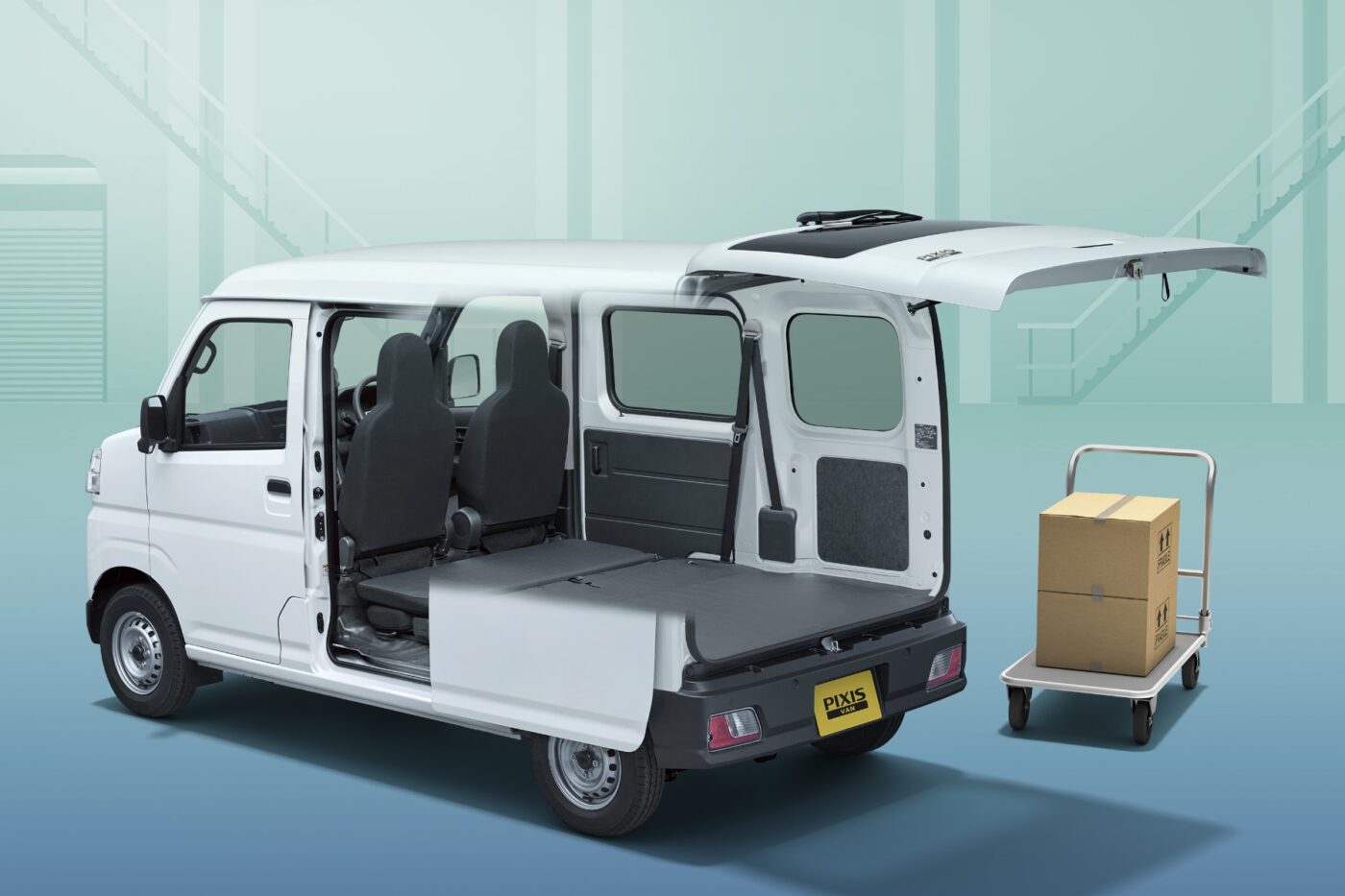
Toyota calls it the Pixis Van BEV, while its subsidiary Daihatsu names it the e-Hijet Cargo, and its cooperation partner Suzuki refers to it as the e Every. All three brands are introducing a battery-electric version of a Kei-van—a very compact commercial vehicle designed for the Japanese market—which is not available in Europe.
For years, all three brands have offered Kei-vans with internal combustion engines, and now fully battery-electric variants are following suit. These are based on a recently developed electric vehicle platform, jointly created by the three manufacturers. As a result, their specifications are similar, though this can currently only be confirmed for the Toyota Pixis Van BEV and the Daihatsu e-Hijet Cargo, whose production versions have now been unveiled. The Suzuki e Every, however, is yet to make its debut, although a near-production study was exhibited at the Japan Motor Show last autumn.
The three Kei-vans each measure approximately 3.40 metres in length, 1.48 metres in width, and 2.0 metres in height. Toyota also specifies a loading length of 1.92 metres, a loading width of 1.27 metres, and a loading height of 1.25 metres for the Pixis Van BEV. Both the Daihatsu and Toyota models are equipped with a 36.6 kWh LFP battery and a motor delivering 47 kW of power. The WLTC range is 257 km.
Toyota states that the fast-charging time is around 50 minutes to reach approximately 80% charge when the low battery warning light illuminates. Normal charging at a typical Japanese output of 6 kW takes about 6 hours.
The Kei-vans also support bidirectional charging: for Vehicle-to-Load (V2L), a 100-volt accessory socket is installed, allowing tools such as electric power equipment to be powered even while driving. This feature is designed to reduce unnecessary waiting times and improve work efficiency. Additionally, the vehicle can supply power to small devices during emergencies, such as a power outage. Vehicle-to-Home (V2H) functionality is also available to power household grids during outages, though a separately available V2H device must be purchased as an accessory to convert the direct current from the vehicle’s fast-charging port into alternating current for household use.
However, the electric kei commercial vehicles come with a hefty price tag: models from Daihatsu and Toyota start at around €17,200—approximately €6,000 more than their internal combustion counterparts. Sales expectations are also initially modest: Toyota anticipates selling 50 units per month, while Daihatsu expects 300 units per month. For comparison, Daihatsu alone sells between 12,000 and 15,000 units of its internal combustion Kei-vans each month.
0 Comments