


Public charging for electric trucks: Gridserve pushes the Electric Freightway in the UK
Gridserve’s Electric Freightway programme is a nationwide public charging network designed exclusively for electric heavy goods vehicles. It will span key freight corridors across the UK. The initiative is intended to address one of the main barriers to the electrification of long-haul and regional freight: the lack of suitable, high-power public charging infrastructure for trucks. Unlike existing mixed-use EV charging hubs, the Electric Freightway will be dedicated to electric heavy goods vehicles (eHGVs) and developed in parallel with depot-based charging at logistics centres and fleet yards.
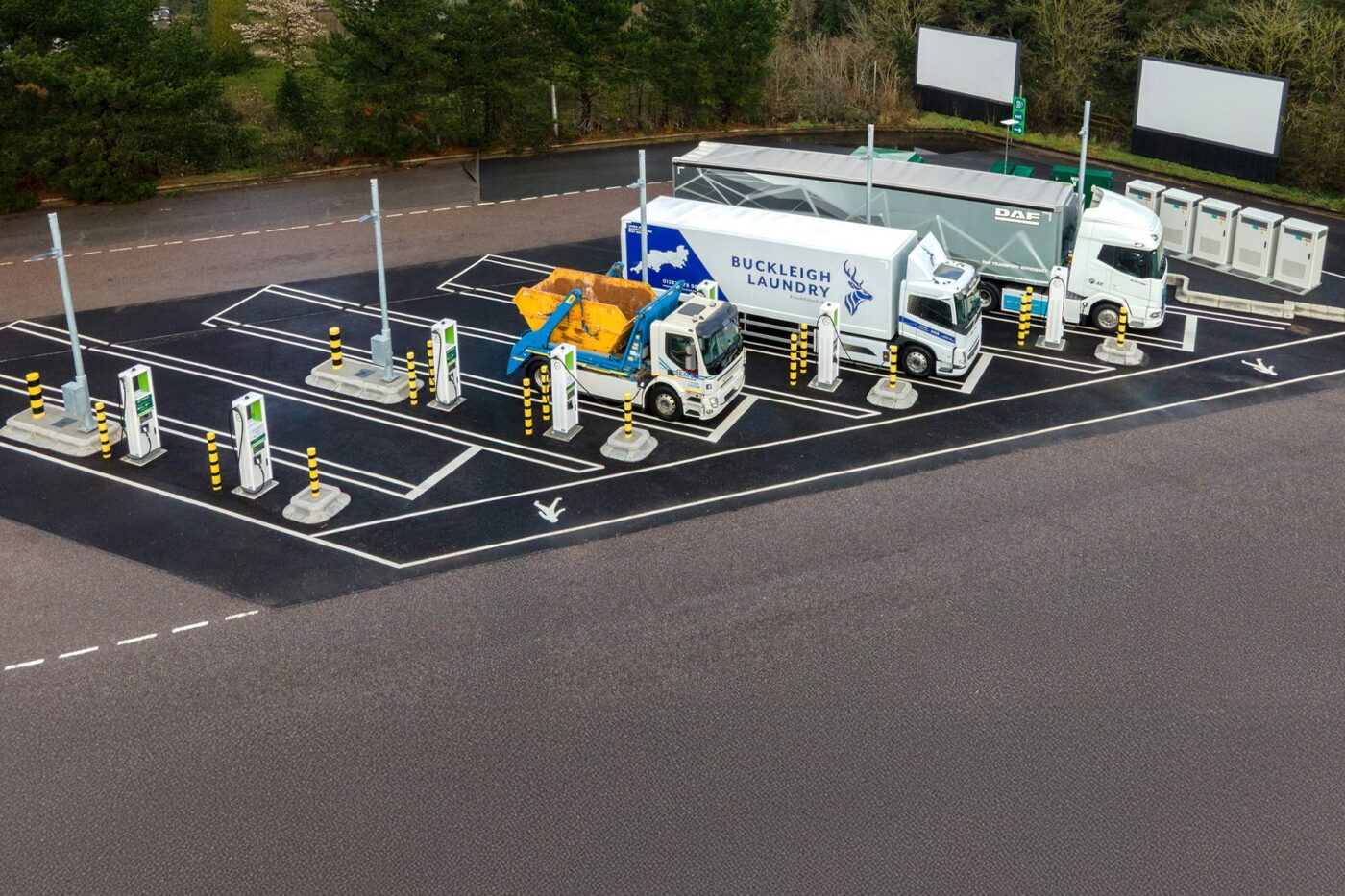
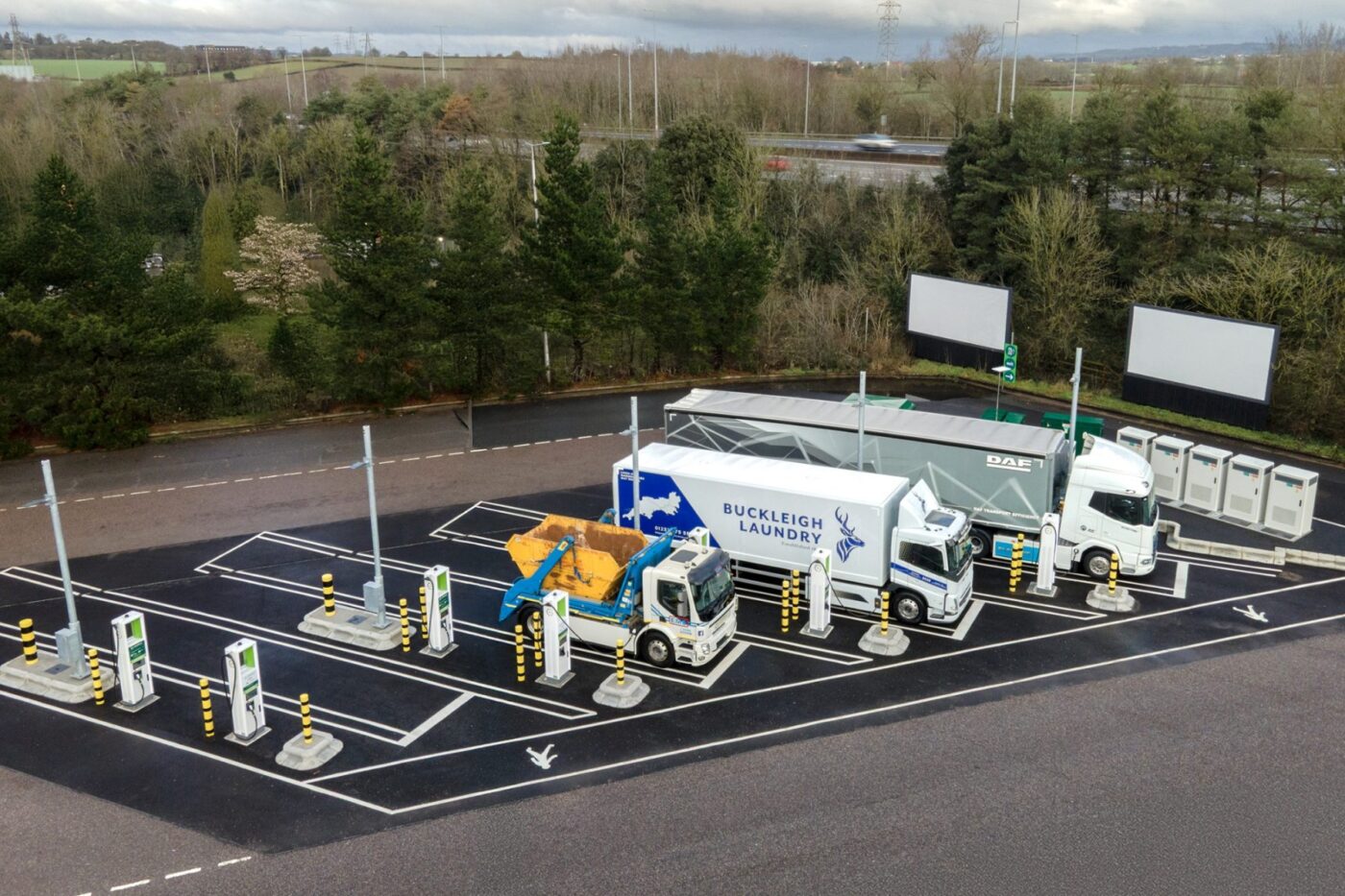
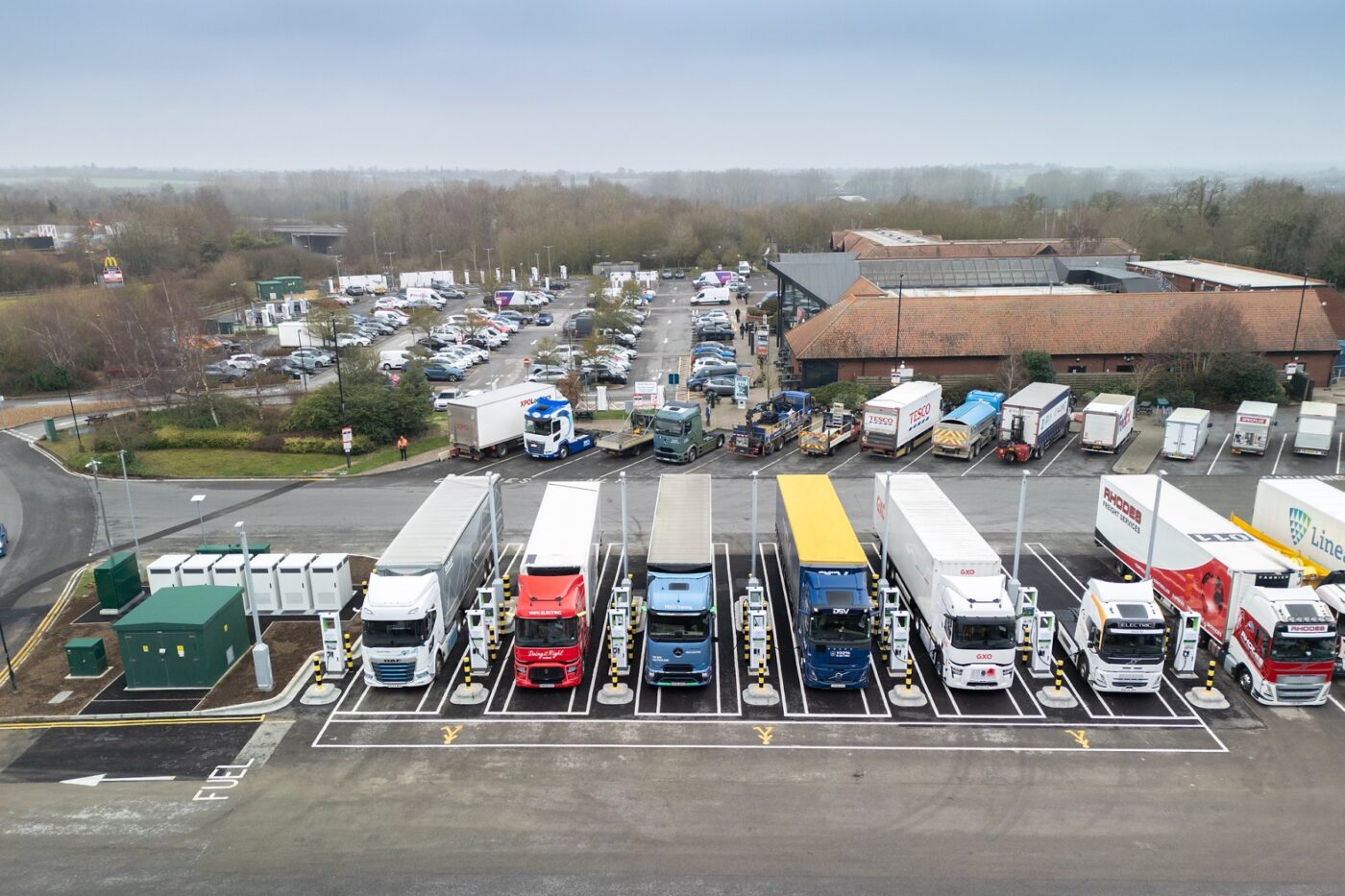
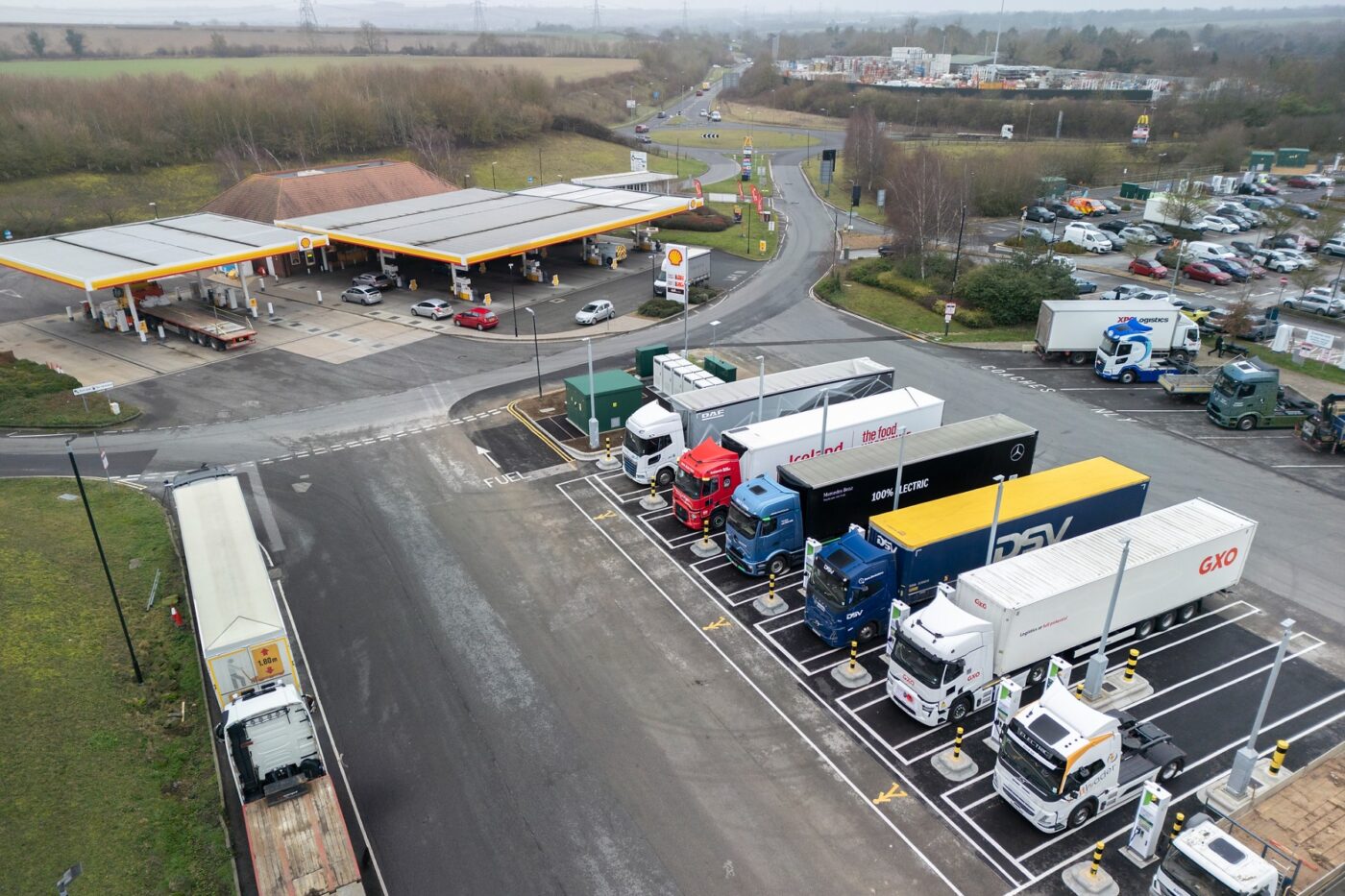
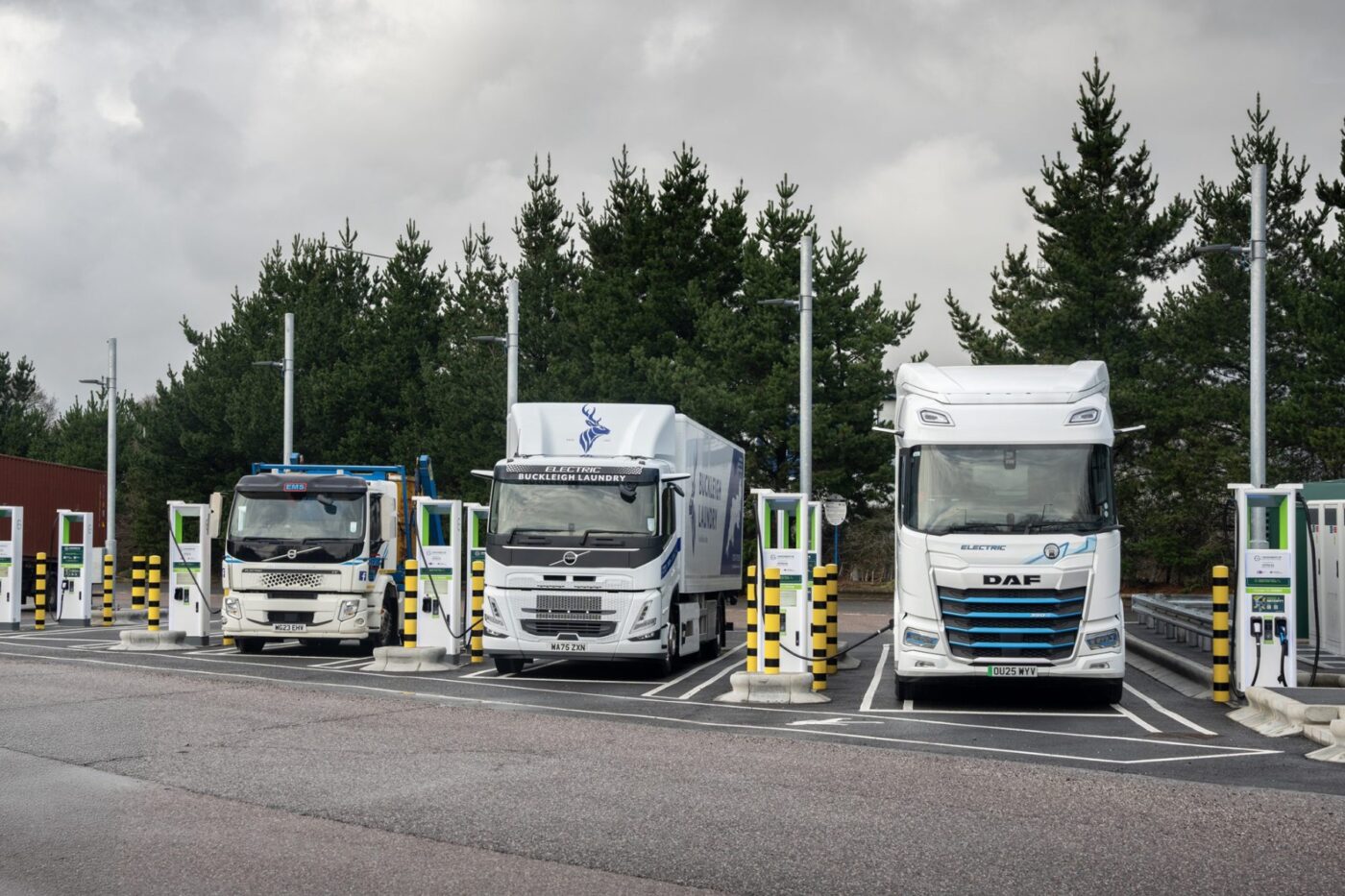
The first two hubs at Extra Baldock and Moto Exeter are now open for use by all hauliers. Extra Baldock opens with six dedicated eHGV charging bays, while Moto Exeter launches with four. Both hubs have been designed specifically for heavy goods vehicles, featuring drive-through bays suitable for different vehicle layouts and charge port positions, custom signage for higher cab heights, and new safety markings.
Additional public hubs planned for the current rollout phase include locations in Tamworth, Thurrock and Leeds Skelton Lake. These sites have been selected based on freight traffic density, site practicality, driver dwell requirements and the availability of grid connections within the required timeframe.
High-power charging designed for heavy-duty operations
Across the Electric Freightway, Gridserve plans to deploy more than 200 high-power chargers, primarily capable of delivering at least 350 kW. According to the company, this reflects the current charging capabilities of early-generation electric trucks, most of which can charge in the 250–350 kW range. Each public eHGV hub will initially offer between four and eight charging bays, with layouts specifically designed for articulated lorries and rigid trucks.
The hubs will feature drive-through configurations and super-wide bays to allow vehicles to charge without reversing or uncoupling trailers. Gridserve says it uses swept-path analysis to ensure safe manoeuvrability for a wide range of truck configurations. Sites will operate 24 hours a day and typically be located at motorway service areas, or truck stops where drivers already have access to restrooms, food and other amenities. CCTV coverage and site lighting are also planned to support security and driver safety. Moreover, the company is working on ‘a booking system pilot to provide confidence around availability,’ but has not shared further details at this point.

While the initial charger configuration is aligned with current vehicle technology, Gridserve emphasises that scalability is a core design principle. Grid connections, civil works and electrical infrastructure are being designed to allow the addition of more chargers and higher power levels as demand increases.
“Each eHGV hub will initially provide between four and eight eHGV charging bays, but the sites are being future-proofed to be able to increase charger provision and capacity when the demand profile increases,” the company emphasises.
Megawatt Charging System (MCS) capability remains part of the longer-term ambition for the Electric Freightway. Although megawatt-capable chargers are not yet widely supported by production vehicles, Gridserve says infrastructure is being designed to be MCS-ready where feasible. Upgrade paths have been incorporated into some early sites to allow megawatt charging to be introduced once vehicle technology and standards mature.
Grid strategy and energy management
High-power freight charging presents significant challenges for grid connections, particularly at motorway locations where available capacity may be limited. Gridserve says it is drawing on its experience as both an EV charging operator and a developer of utility-scale solar farms to manage these constraints. Depending on site-specific requirements, this can include variable grid connections, dynamic load sharing between chargers and the deployment of on-site battery storage to smooth demand peaks.
The company notes that its chargers are capable of dynamically adjusting power delivery to balance available capacity across multiple vehicles. This approach is intended to ensure that eHGV charging can be accommodated without triggering excessive peak demand charges or lengthy grid upgrade timelines, which can add years and high cost to infrastructure projects.
Aligning infrastructure with fleets and funding
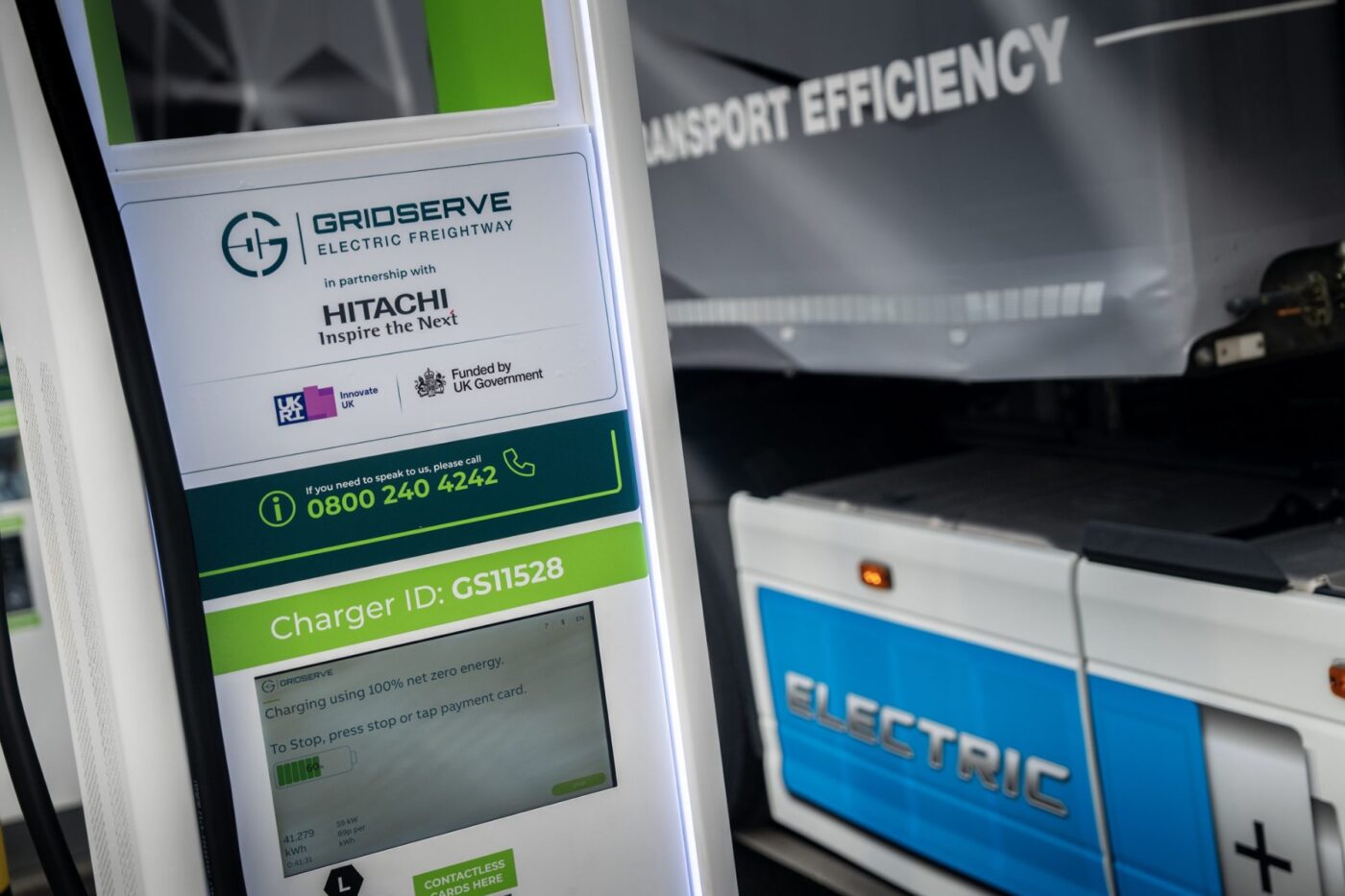
The Electric Freightway programme is being developed in close coordination with truck manufacturers and fleet operators to ensure that charging availability aligns with real-world duty cycles. OEMs, including Volvo Trucks, Renault Trucks and DAF Trucks, are participating, alongside hauliers such as Amazon UK, Royal Mail and United Utilities. These partners provide vehicle and charging data to Gridserve and principal partner Hitachi ZeroCarbon, which is responsible for data collection and analysis over five years.
“The Electric Freightway programme is only as good as the companies and individuals who contribute towards it,” Gridserve said. “They share their driving data with Hitachi ZeroCarbon, so we can better understand the duty cycles, the real-world energy use and charging patterns, so we can develop a nationwide charging network that supports the extended use of these trucks.”
The Electric Freightway is designed as a fully public network, meaning access will be open to all commercial freight operators once sites are operational. Gridserve has not yet announced a pricing model, but has acknowledged that energy costs are a critical factor for hauliers evaluating the transition from diesel to electric trucks.
“We are conscious that the price of energy plays a huge part in a haulier’s operational costs, and could tangibly impact the commercial viability of freight switching to electric,” the company told electrive.
The programme is supported by the UK Government’s Zero Emission HGV and Infrastructure Demonstrator programme, with £62.7 million in funding provided by the Department for Transport and delivered by Innovate UK. Total investment in the Electric Freightway exceeds £100 million, with the remaining funding supplied by Gridserve and its consortium partners. The rollout of public eHGV hubs is expected to continue through to 2030, alongside ongoing data collection intended to inform future government policy and the commercial scaling of electric freight infrastructure.



0 Comments