


Factorial evaluates Philenergy production technology for solid-state batteries
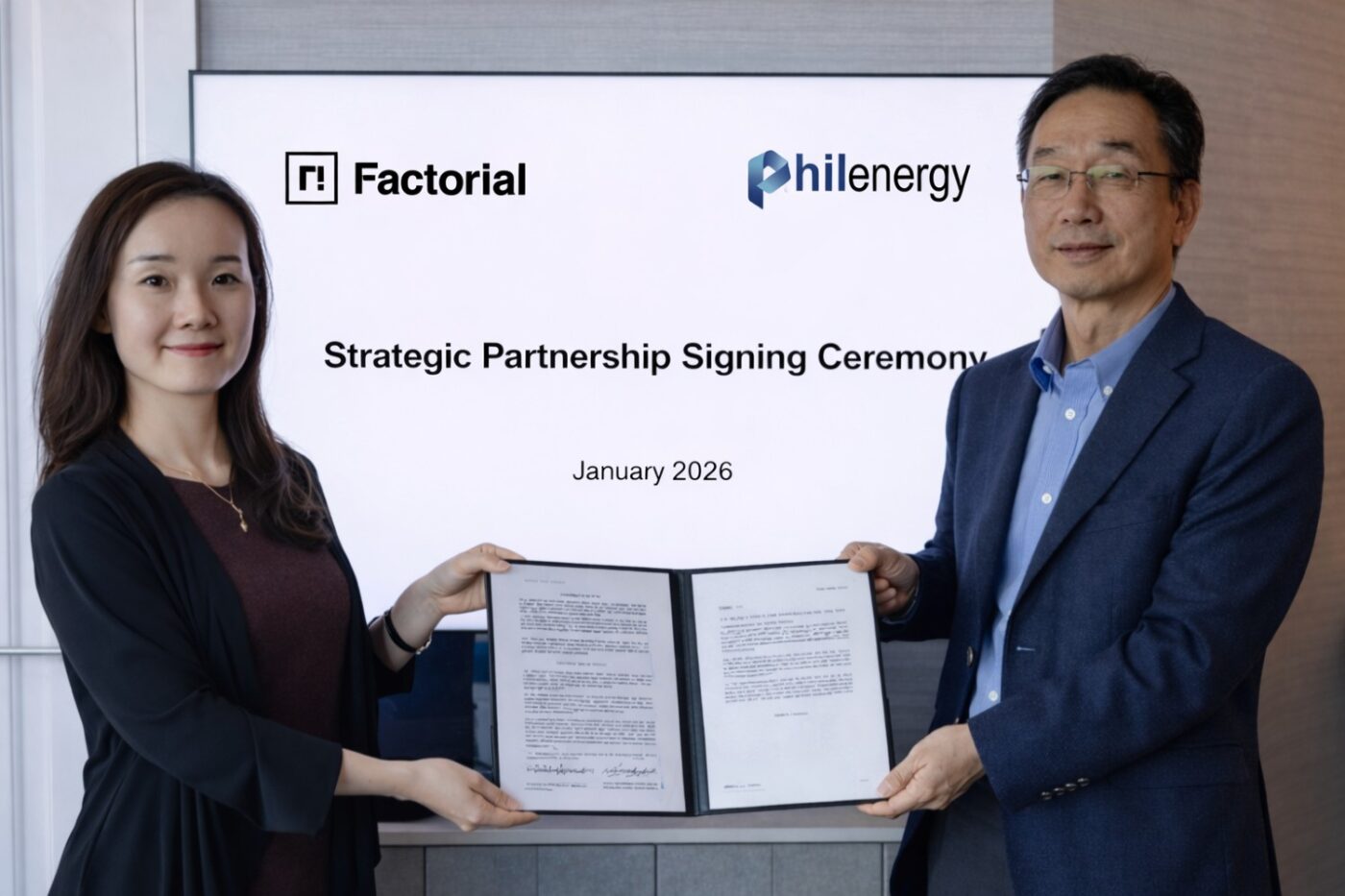
US solid-state battery developer Factorial has signed a memorandum of understanding with South Korea’s Philenergy to advance manufacturing processes for its next-generation cells. The cooperation, described as a ‘strategic manufacturing collaboration,’ centres on the Solstice platform and is intended to ‘explore integrating Philenergy’s world-class production infrastructure and proven supply chain with Factorial’s proprietary battery architecture.’
Philenergy’s portfolio includes automated laser cutting, precision stacking systems, next-generation winding technology and intelligent assembly solutions. According to Factorial, ‘the company’s modular factory architecture delivers capital efficiency, deployment speed, and operational flexibility that traditional fixed-line approaches cannot match.’ The US firm adds that this set-up is expected to help reach ‘volume manufacturing faster while maintaining the rigorous process control demanded by solid-state technology.’
Factorial, which counts Mercedes-Benz, Stellantis and Hyundai-Kia among its strategic investors, is pursuing several parallel development tracks. In June 2024, the company delivered B-samples of its FEST solid-state cells with a capacity of more than 106 Ah to Mercedes-Benz. These cells are reported to reach an energy density of 391 Wh/kg, although it has not been specified whether this figure refers to cell or pack level.
At the same time, Factorial is developing its Solstice cells in close cooperation with Mercedes-Benz. The Solstice programme is currently at A-sample stage and is positioned as the company’s next step beyond its FEST platform, targeting even higher energy density and incorporating a dry cathode coating process. The cell chemistry combines an NMC cathode with a lithium-metal anode.
In September 2024, Factorial stated that Solstice cells could reach an energy density of up to 450 Wh/kg, without clarifying whether this figure refers to cell or pack level. The company said this could enable an increase in electric vehicle range of up to 80 per cent. At the same time, Factorial reported that it had scaled the Solstice cell format to a capacity of 40 Ah, marking a further milestone on the path towards industrialisation.
“The companies that win in next-generation batteries won’t just have breakthrough technology – they’ll have production partners experienced in battery manufacturing and capable of delivering at scale,” said Siyu Huang, CEO of Factorial. “Philenergy brings proven production expertise and infrastructure that matches the ambition of Solstice™.”
“Factorial has established itself as a true technology leader in the solid-state battery space, with deep materials expertise and a clear path toward scalable commercialisation,” said Kim Kwang-il, CEO of Philenergy. “The Solstice platform represents one of the most advanced solid-state architectures in the industry, combining high energy density with manufacturability. We are proud to support Factorial’s vision and contribute our manufacturing capabilities to help bring this breakthrough technology to global markets.”
As a third party, the MoU was also signed by Cartesian Growth Corporation III, the special purpose acquisition company (SPAC) through which Factorial plans a SPAC merger to facilitate a rapid listing on the US stock market.

0 Comments