



Ford Puma Gen-E: What Can Ford’s Europe Bestseller Offer as an Electric Vehicle?
Expectations were high when Ford announced an electric version of its best-selling model in Europe, the Puma. Given the model’s strong sales and sustained demand, the battery-electric variant was expected to generate similar interest. At the same time, the electric Puma was seen as an important step for Ford in reducing its fleet CO₂ emissions in Europe.
However, meeting these expectations requires an attractive overall package for customers. Yet, the Puma Gen-E faced an early setback: with a battery capacity of just 43 kWh, the 4.21-metre-long Ford offers a relatively small battery, achieving a maximum range of 376 kilometres under WLTP conditions. Comparable rivals provide more: the Volvo EX30 offers up to 69 kWh, a not much longer VW ID.3 achieves up to 79 kWh in its underfloor battery – and even the base ID.3 comes with a 52-kWh battery. The Kia EV4 starts at 58 kWh, not to mention the 81 kWh of its larger battery. A 43 kWh battery is more commonly seen in small cars like the Hyundai Inster or the Firefly – even the Renault 5, which remains under the four-metre mark, is available with 52 kWh.
A smaller and more affordable battery might still be acceptable if Ford had positioned the Puma Gen-E as a competitively priced option. However, with a list price of €36,990, the Ford is significantly more expensive than the cheapest ID.3 and only €1,500 cheaper than the base EX30 – and Volvo, it should be noted, is established as a premium brand. There is no need to compare prices with small cars featuring 42-kWh batteries, as the Puma belongs to a larger class. But for those curious: the Hyundai Inster starts at €23,900.

Ford has since announced a battery upgrade for the Puma Gen-E. Later this year, the battery capacity will increase to 46 kWh, raising the WLTP range to 417 kilometres. While this is a step in the right direction, it still falls noticeably short of the competition. This naturally raises the question: will Ford’s concept succeed, and can the Puma Gen-E convince despite these clear disadvantages on paper?
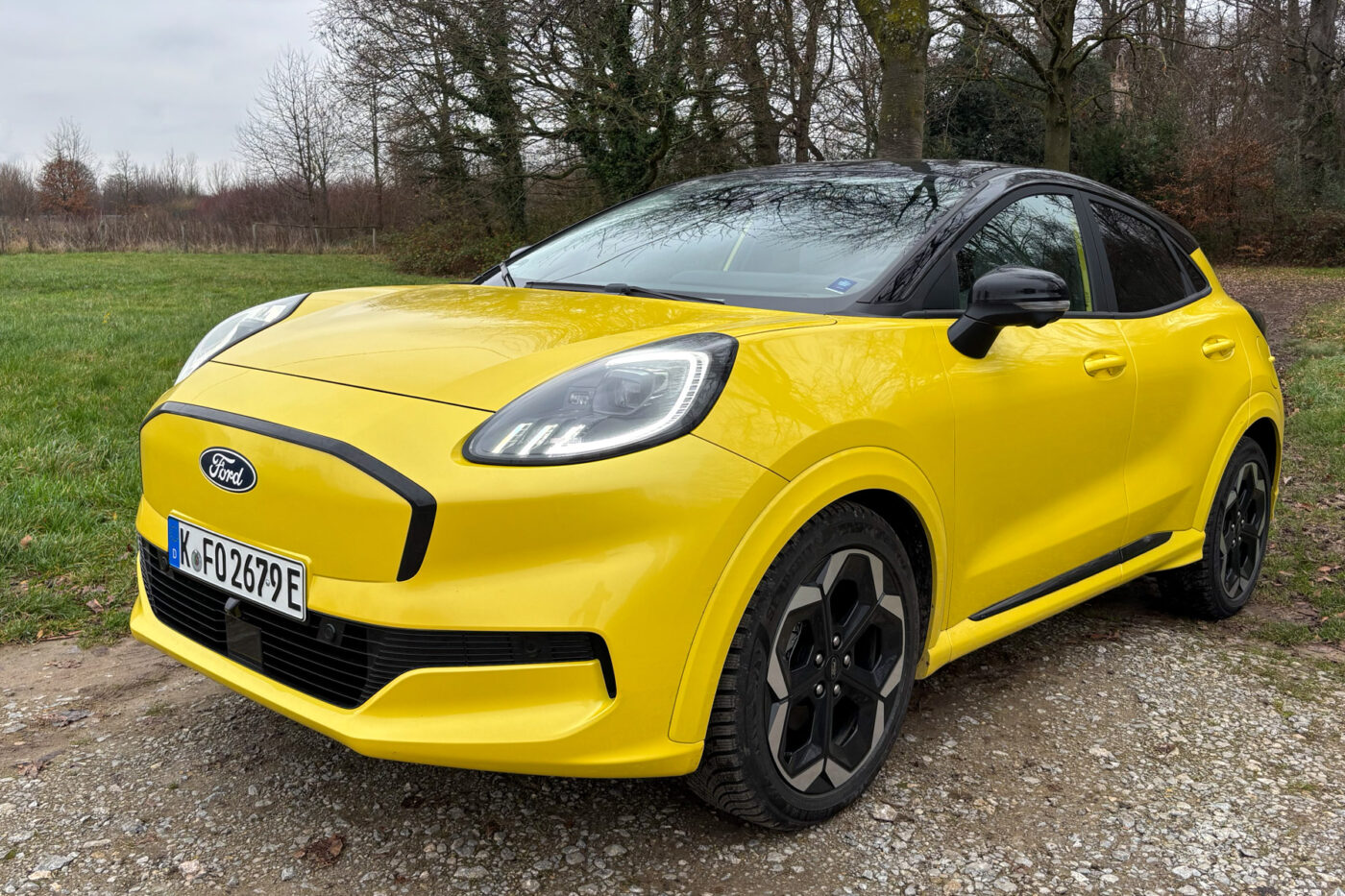
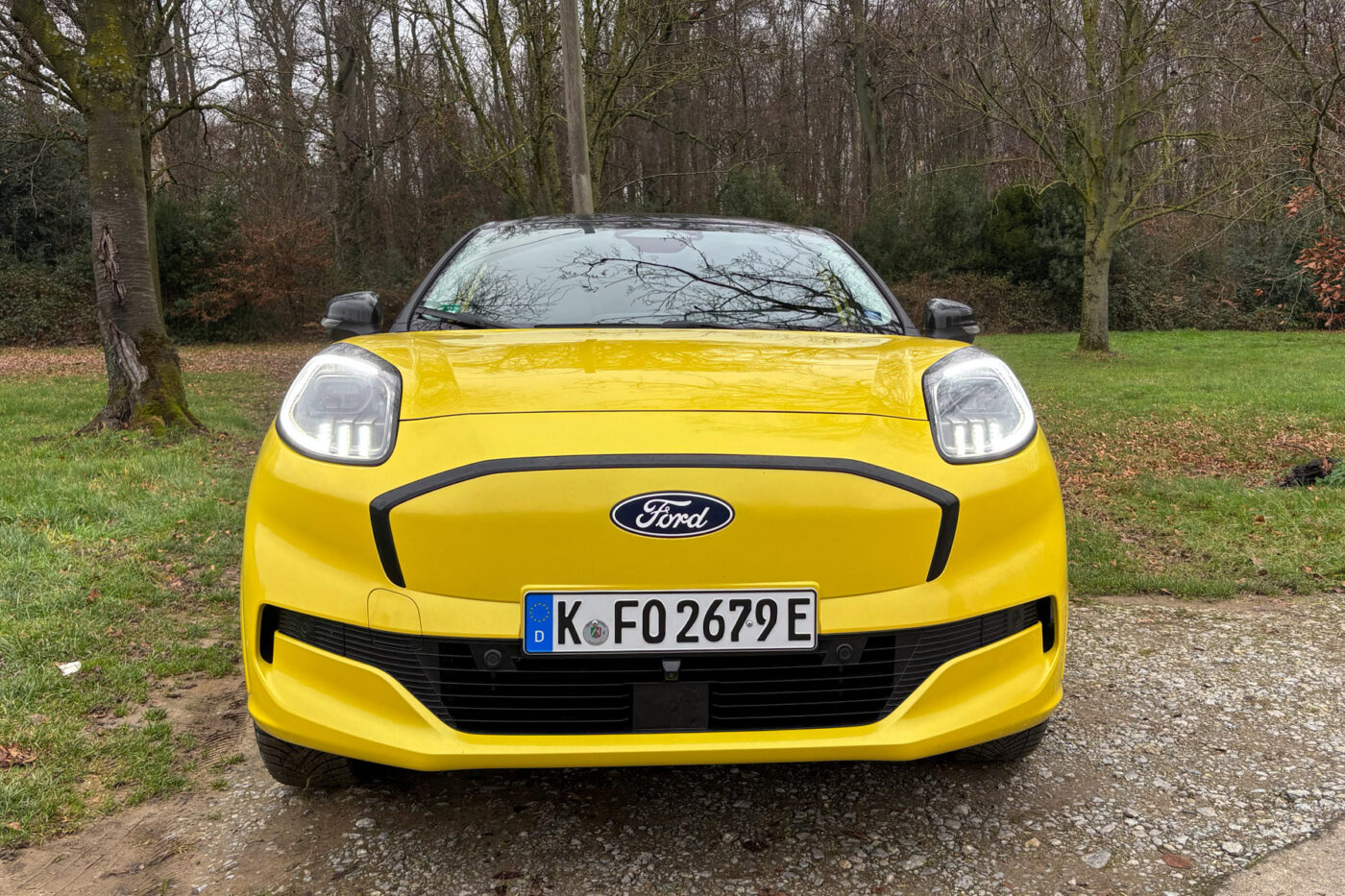
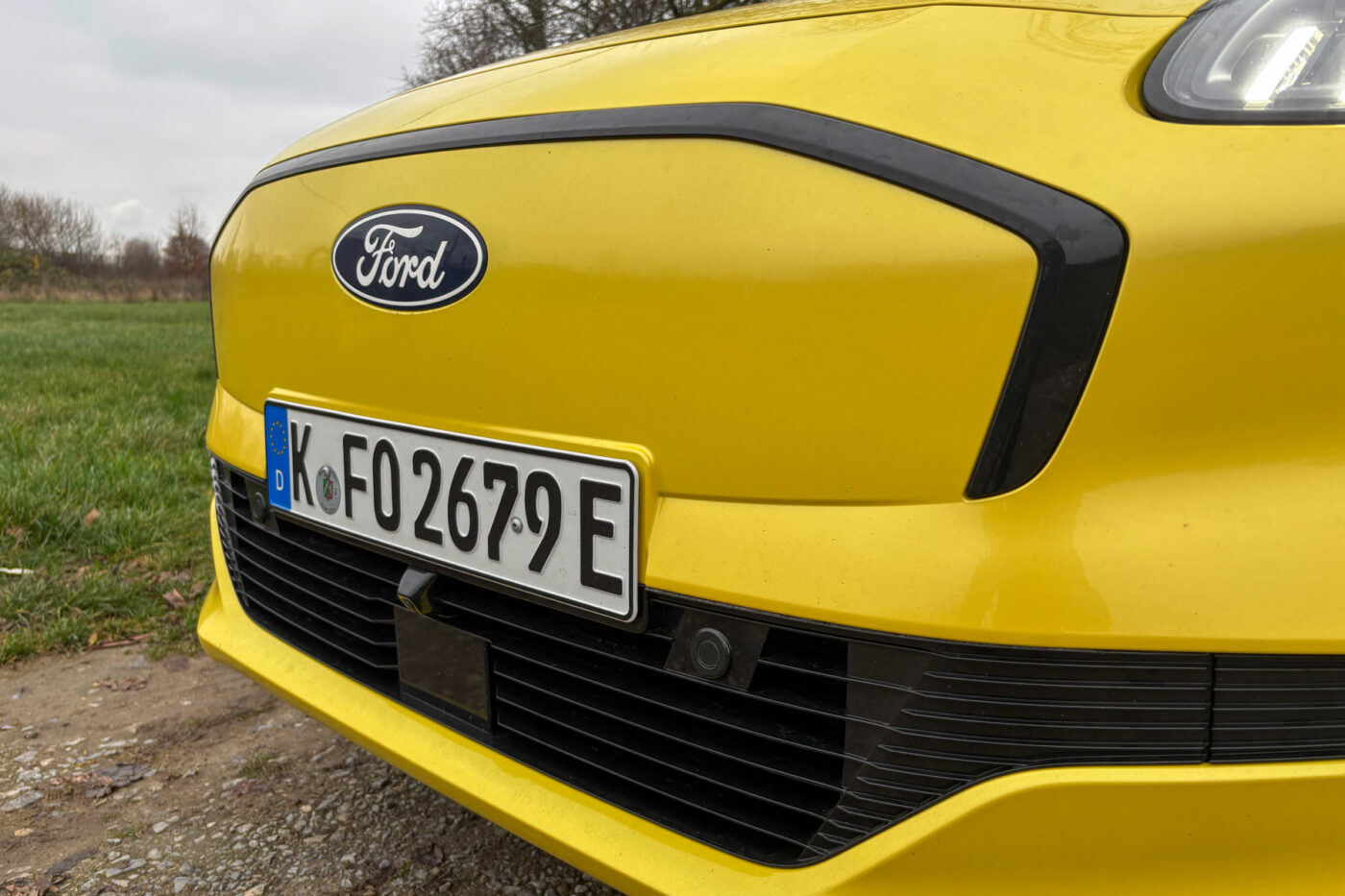
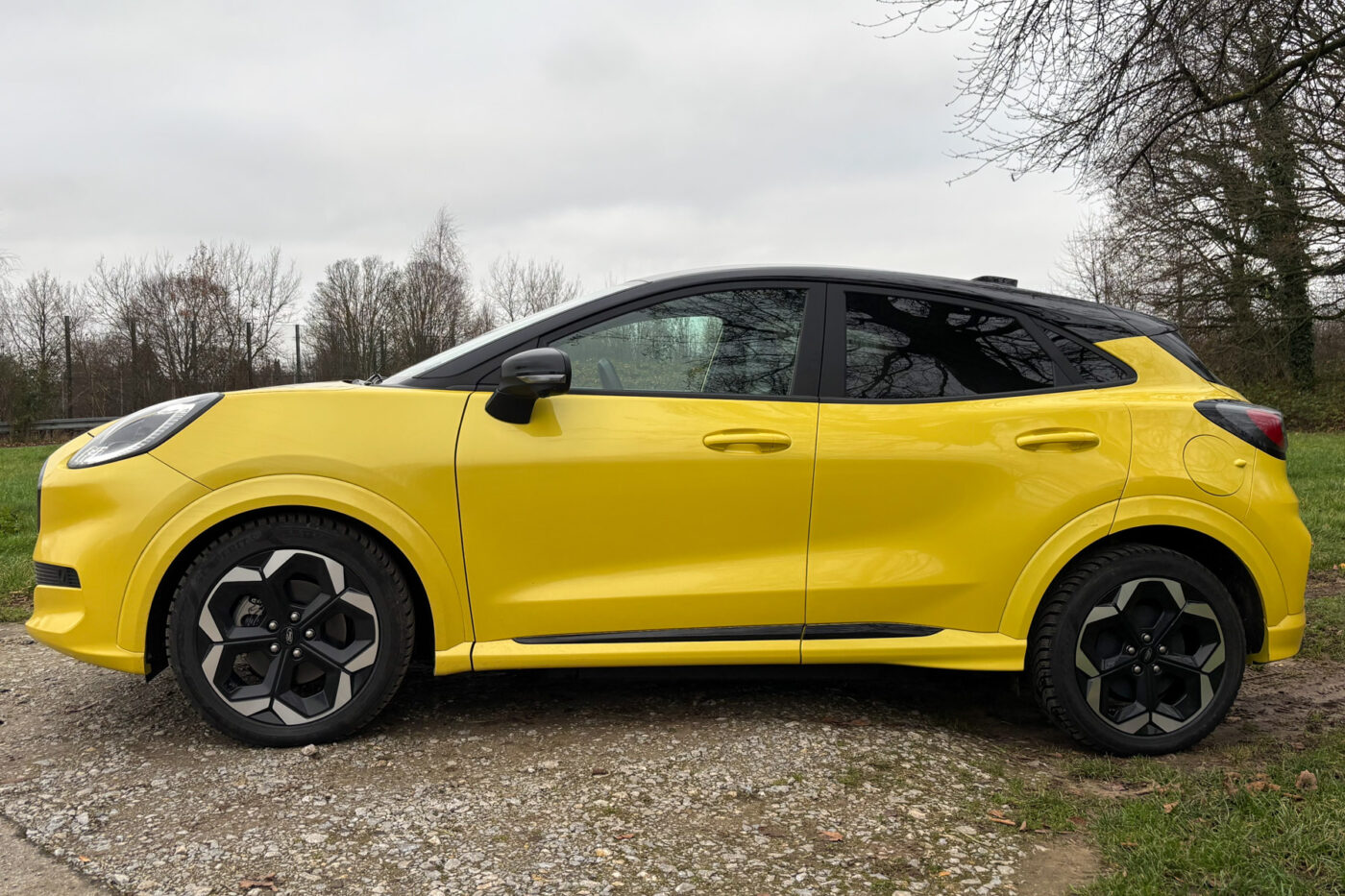
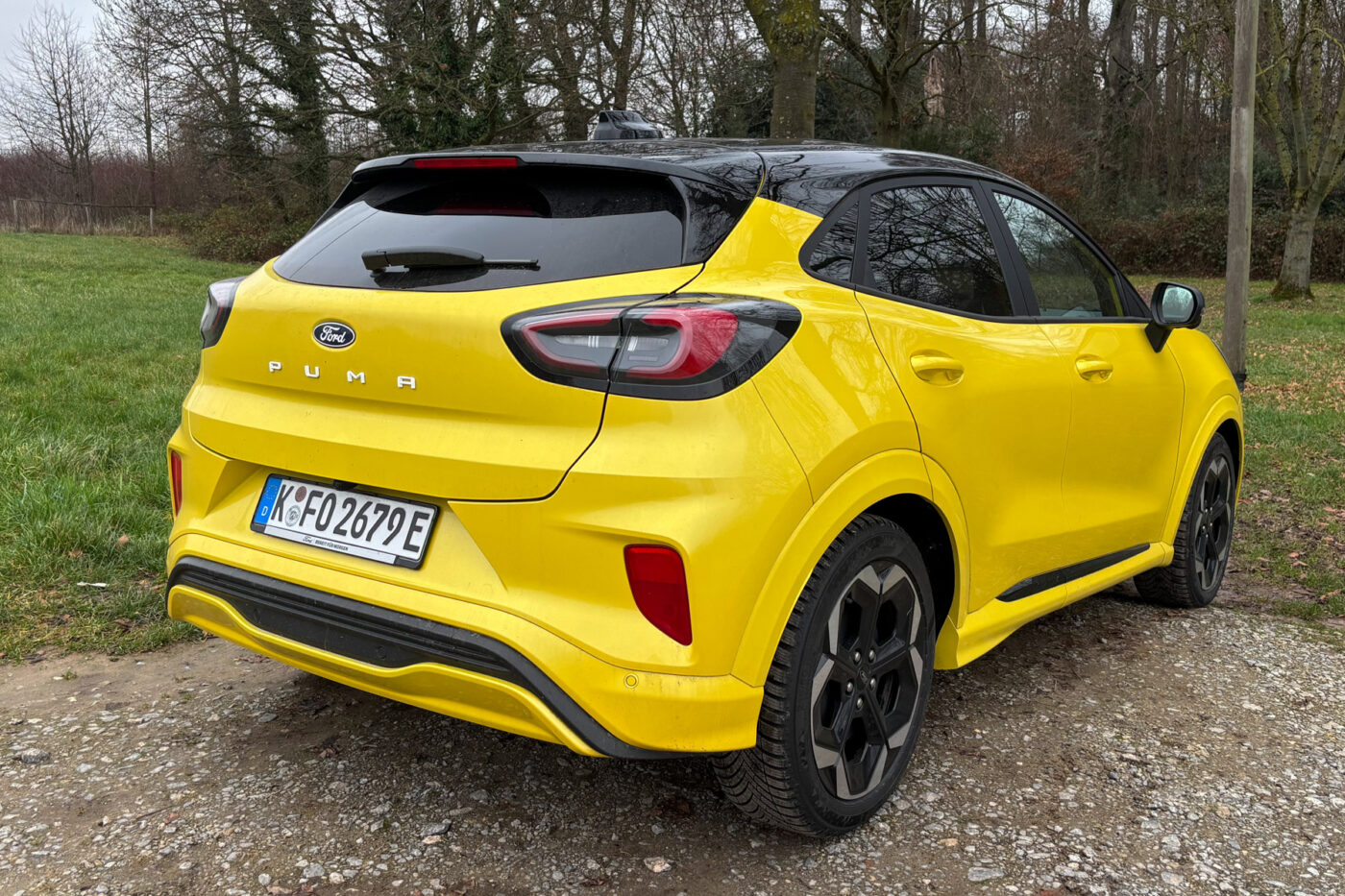
Only a detailed test can provide the answer. The electric Puma is easily recognisable as such. Instead of a radiator grille, the electric version features a closed front, with the shape of the grille only hinted at. Our test car also stands out thanks to its bright ‘Electric Yellow Metallic’ paintwork, which is exclusive to the Puma Gen-E and not available on the combustion-engine variants.
The Puma Gen-E is not a price disruptor
For the test, Ford provided the Puma Gen-E in the ‘Premium’ trim, which starts at a list price of €39,400. With the driver assistance package, winter package, and contrast paintwork featuring a black roof and black exterior mirrors, the price rises to €41,450. The equipment does not alter the technical specifications: the test vehicle still features the 43-kWh battery, with a 124 kW electric motor powering the front axle. With a standardised consumption of 13.7 to 14.5 kWh/100 km, decent real-world ranges should still be achievable thanks to its good efficiency.
In fact, efficiency is one of the Puma Gen-E’s strengths. Despite the test taking place in winter, the car maintained remarkably good efficiency: on mild days with single-digit positive temperatures, consumption of 14 kWh/100 km was achievable on rural roads, while the on-board computer showed 16 kWh/100 km on motorways at cruising speeds of 120–130 km/h – resulting in a real-world range of roughly 270 kilometres. However, when temperatures dropped just below freezing and the car, which had cooled down overnight, needed to be fully warmed up for an early-morning trip from Düsseldorf to the Frankfurt area, consumption rose to just over 20 kWh/100 km under the same driving conditions – reducing the range to just over 200 kilometres.
Reminiscent of the BMW i3
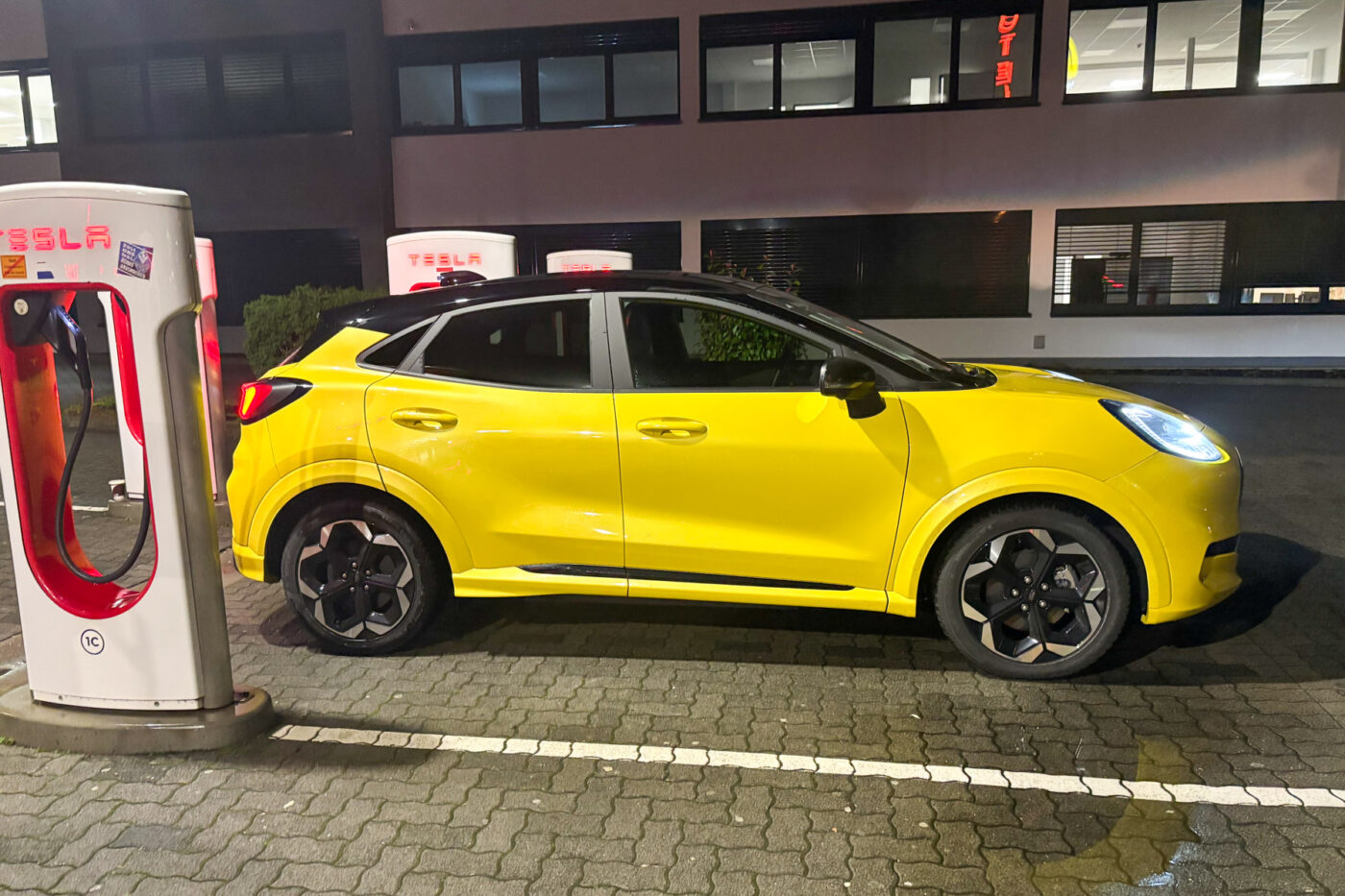
This personally reminded me of the BMW i3, which I drove for several years with its 42-kWh battery. In winter, it offered around 200 kilometres of motorway range, and slightly more in milder temperatures. For the aforementioned trip from Düsseldorf to the Frankfurt area, a charging stop is therefore essential. However, there is a significant difference compared to the i3: while the BMW required up to half an hour at a fast charger with a maximum charging power of 50 kW, the Puma charges much faster.
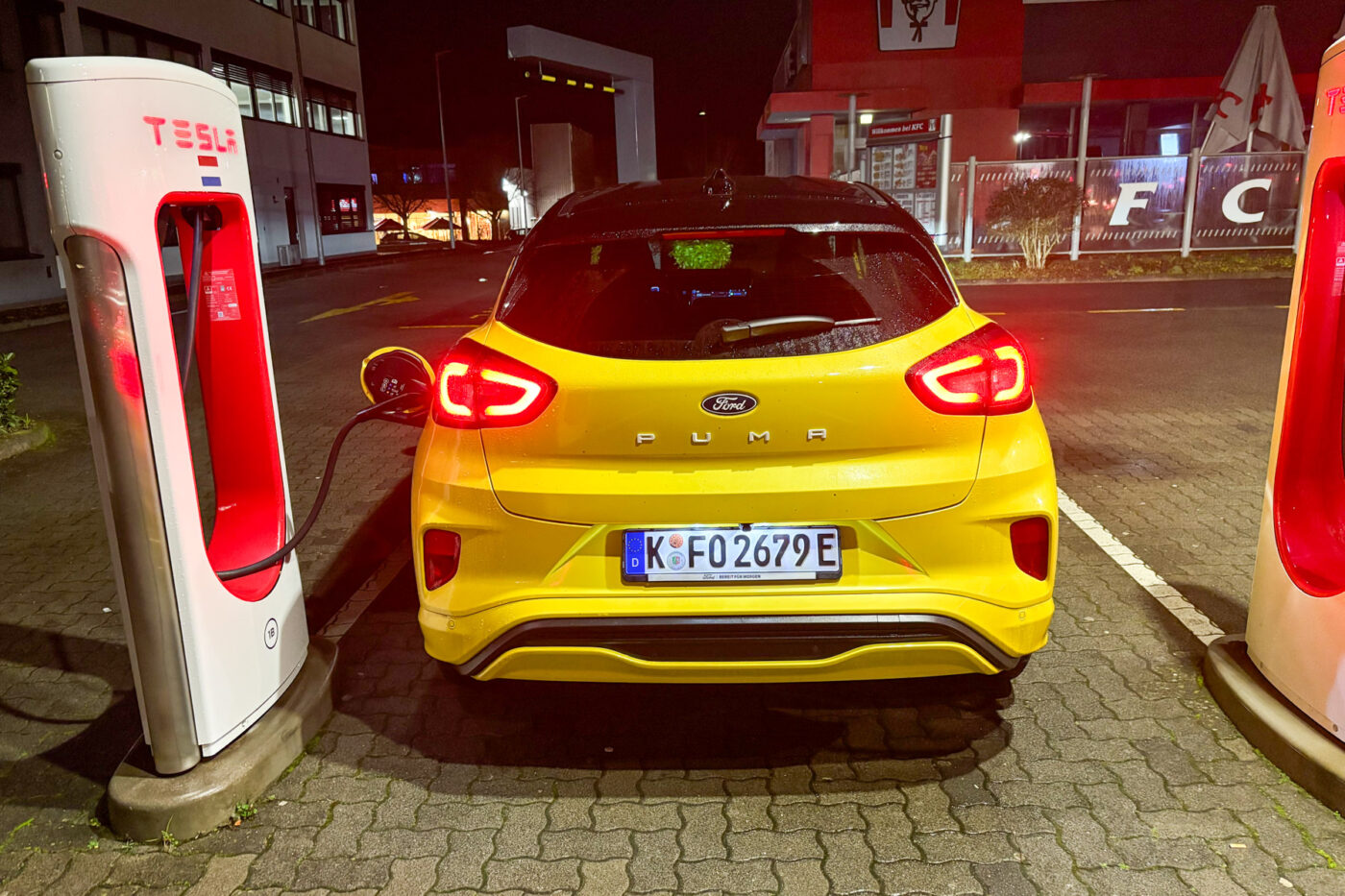
The Puma Gen-E can maintain its maximum charging power of 100 kW not just briefly but over an extended period – up to over 50% state of charge. After that, the charging power gradually decreases, stabilising at around 50 kW between 75% and 88% before dropping abruptly to just over 30 kW. The charging curve is more than respectable, allowing for quick top-ups – just over 22 minutes for a standard charging session from 10% to 80% is impressive. Moreover, this charging behaviour was reproducible even at low temperatures, indicating that Ford has the thermal management well under control.
Nevertheless, Ford could still improve the route planning with automatically scheduled charging stops, as under certain conditions, this can lead to significant miscalculations. If you plan a route with a full battery – for example, after charging overnight at your home wallbox before a long trip – you should not start the route planning immediately but only after driving a few kilometres.
The reason: with a 100% charge, our test car assumed a range of 315 kilometres and apparently used this value for navigation calculations. For the aforementioned trip from Düsseldorf to Rüsselsheim (250 kilometres), no charging stop was planned at all, while the route from Düsseldorf to Berlin (615 kilometres) was supposed to require just two stops.
At the first stop, 242 kilometres away, the car was projected to arrive with 23% battery remaining. While this might be accurate if calculating with a 315-kilometre range, such a range is practically unattainable on the motorway in winter.
However, after driving just a few metres, the situation changes: with 99 per cent charge remaining, the on-board computer suddenly displayed a more realistic range of 196 kilometres (at temperatures around freezing). For the trip to Rüsselsheim, the system then planned a charging stop in Limburg an der Lahn, with an estimated 18 per cent battery remaining upon arrival. For the route to Berlin, the planning now included not two but five charging stops.
To take advantage of the favourable charging curve, the system schedules several short charging breaks up to about 60–70 per cent state of charge. If you opt for longer charging stops, you might save one stop on this route. But the trend is clear: in winter, you will need to visit a fast charger every 100 to 150 kilometres. The Puma Gen-E (as was predictable given its 43 kWh battery capacity) is therefore not a long-distance car for frequent drivers.
Still, the Puma Gen-E is well-suited for shorter trips or as a classic second car – and not just for those with a fixed charging option at home or work. Thanks to its reliable DC charging performance, the battery can be charged, for example, at a fast charger at the supermarket during shopping or at a restaurant without any time loss. Another advantage of the small battery: with 11 kW AC charging power, the battery is almost fully charged within four hours, before most providers start applying blocking fees.
When using the Puma Gen-E in everyday situations and ignoring its long-distance range limitations, it is easy to see why the Puma sells so well. The car is practical with its numerous storage compartments, comfortably accommodates four adults, and fits into almost any parking space thanks to its 4.21-metre length.
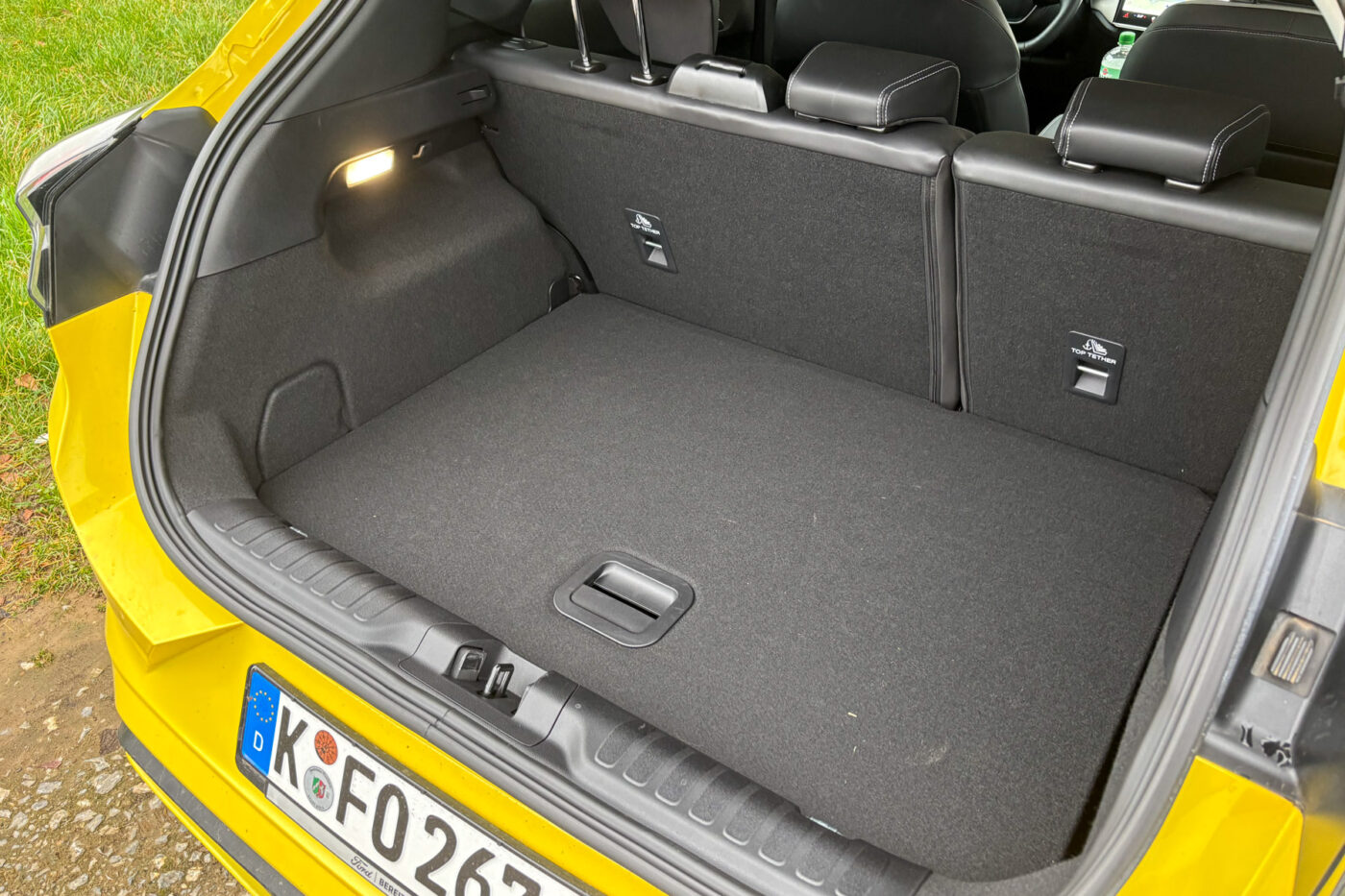
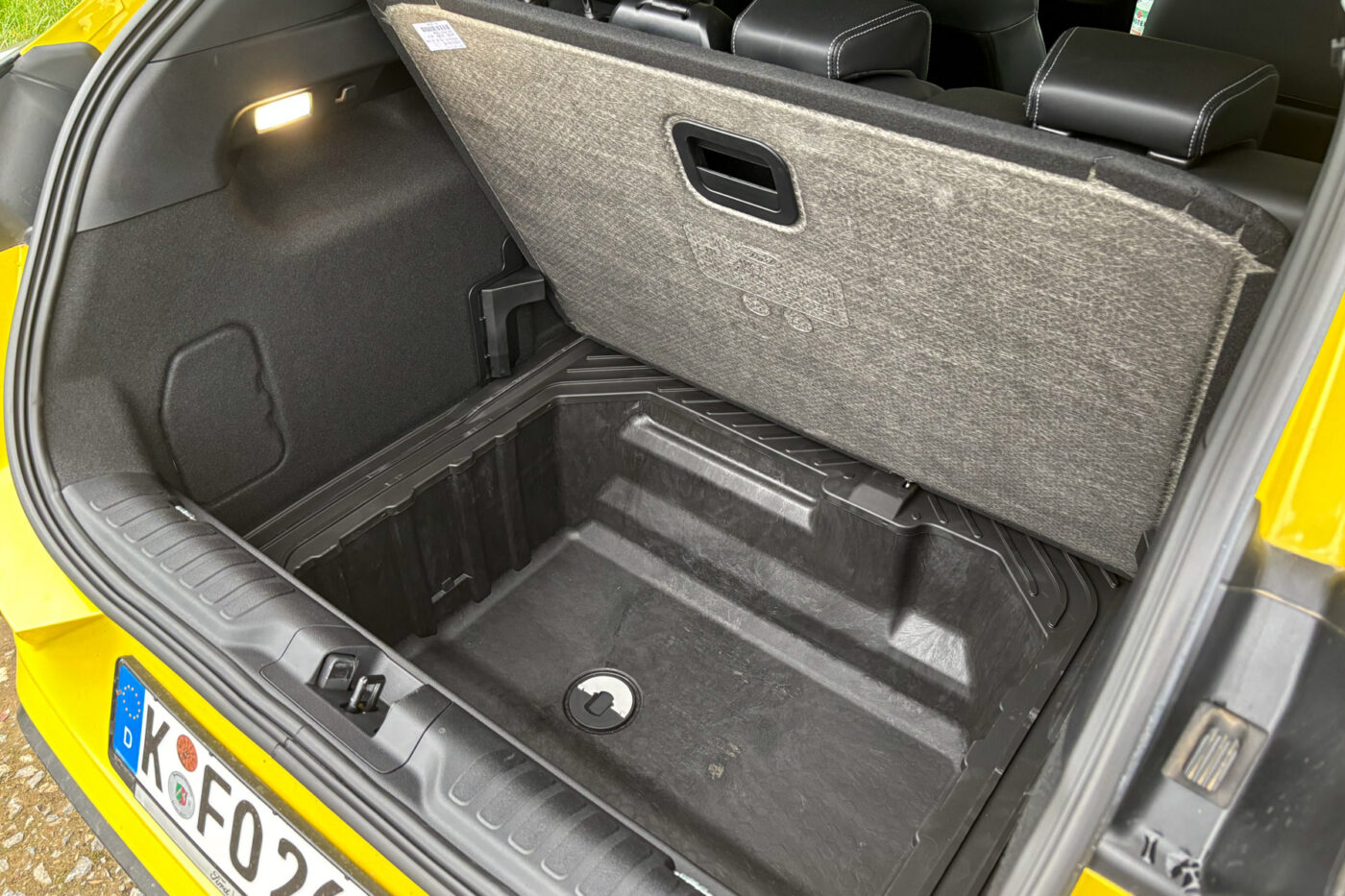
The Puma Gen-E even offers more space than its combustion-engine counterpart: the Puma features an 80-litre ‘Mega-Box’ under the boot floor as additional storage – Ford designed the rear axle to make this space highly usable. Since the Gen-E no longer requires an exhaust system, the storage compartment is even larger at 145 litres and is consequently called the ‘Giga-Box.’ This is truly unique in this segment! Combined with the regular boot, the Puma Gen-E offers 574 litres of storage – with the rear seats in place and without folding the backrests. The Giga-Box is also washable and features a water drain, making it ideal for transporting less clean items.
Plenty of space and practical details
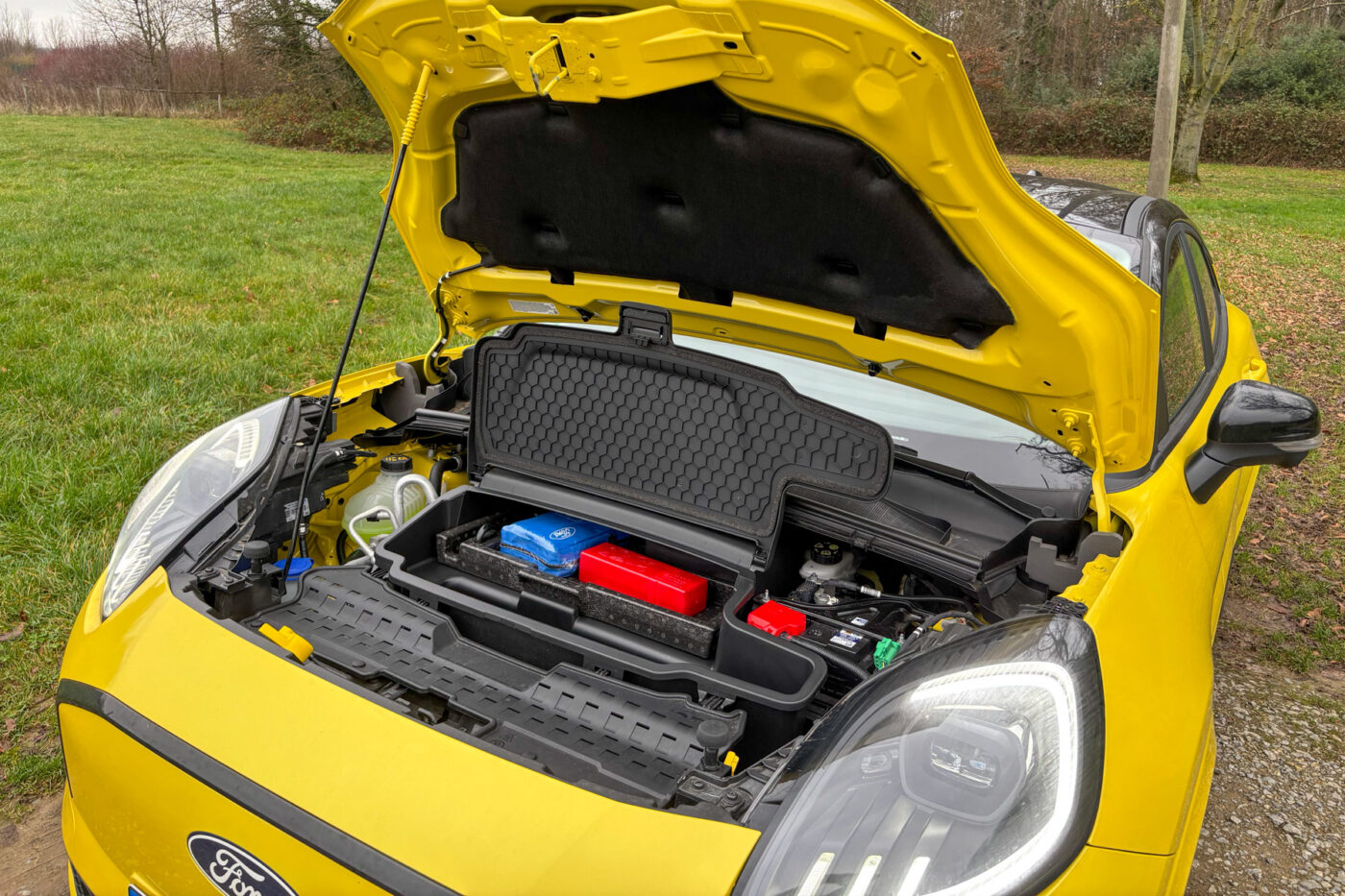
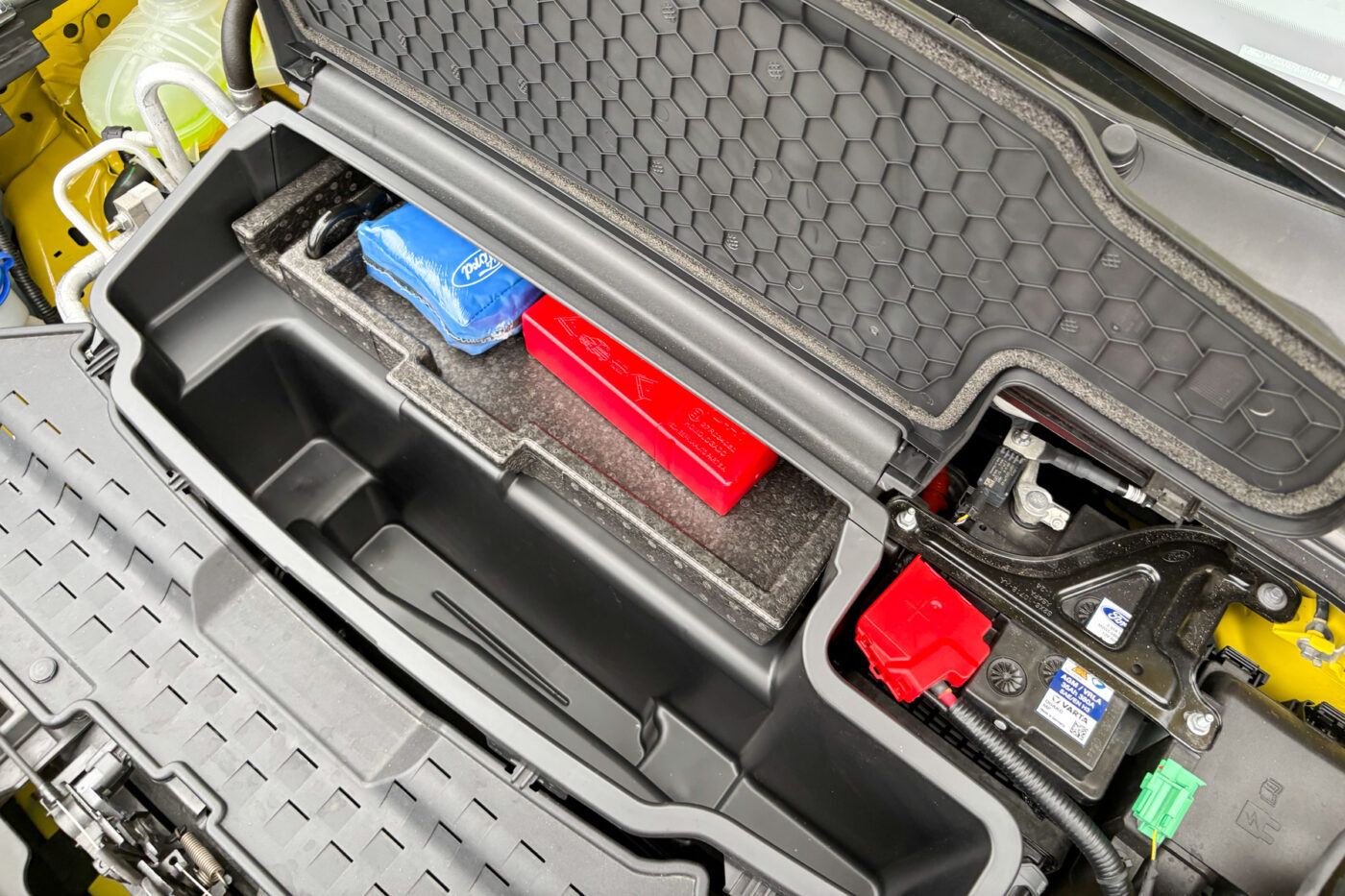
By the way, the charging cable does not need to rattle around in the boot or the Giga-Box: despite the electric motor being located at the front axle, Ford has integrated a small frunk, allowing the charging cable and other items like the first-aid kit or warning triangle to be stowed under the bonnet – indirectly creating even more usable space in the rear.
The Puma Gen-E drives pleasantly dynamically, even if the factory specification of 8.0 seconds for the sprint to 100 km/h does not sound particularly sporty. The steering and suspension, however, are fun to use and strike a good balance between dynamics and comfort – models in this segment are often tuned too softly and feel detached.
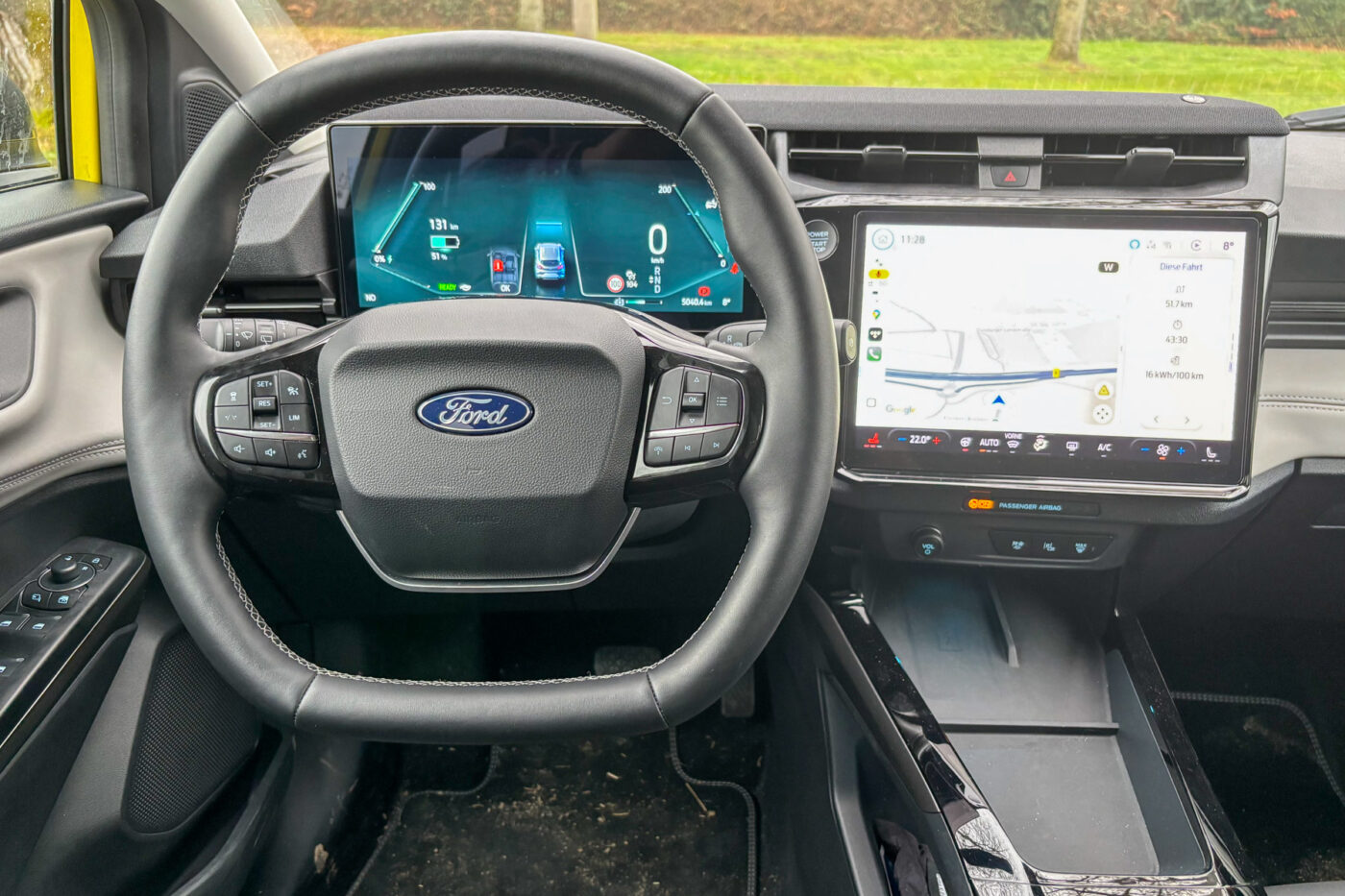
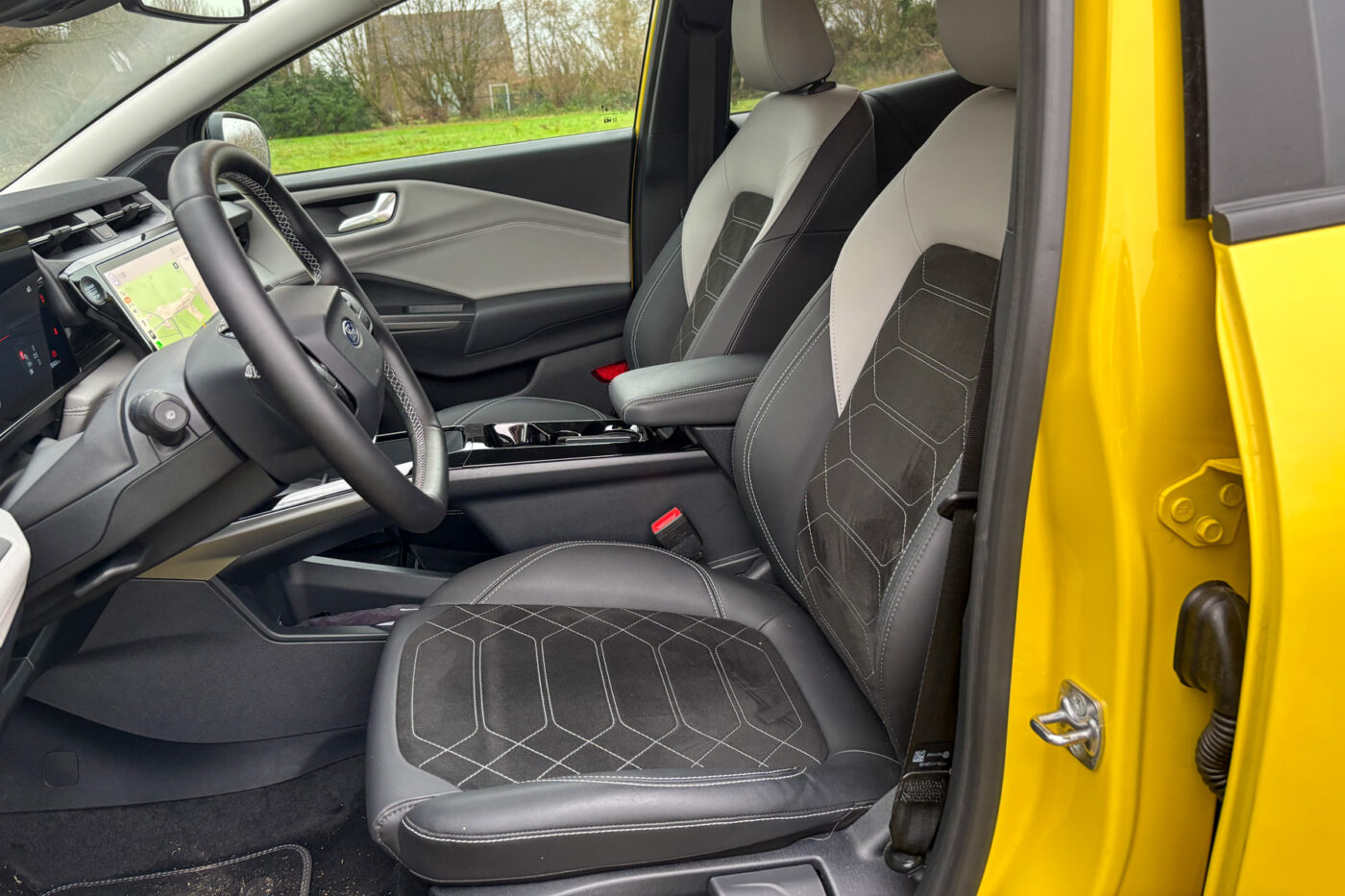
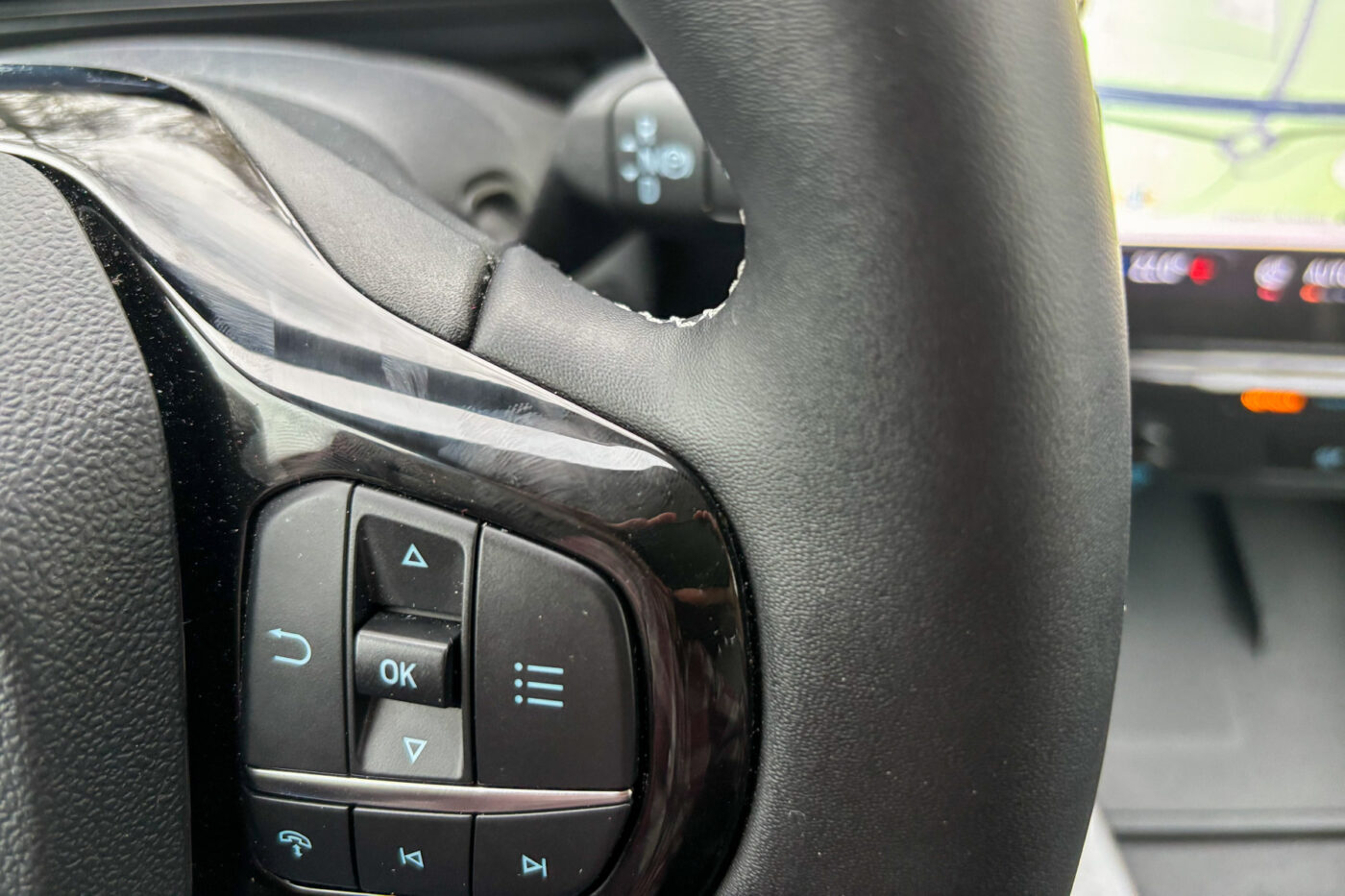
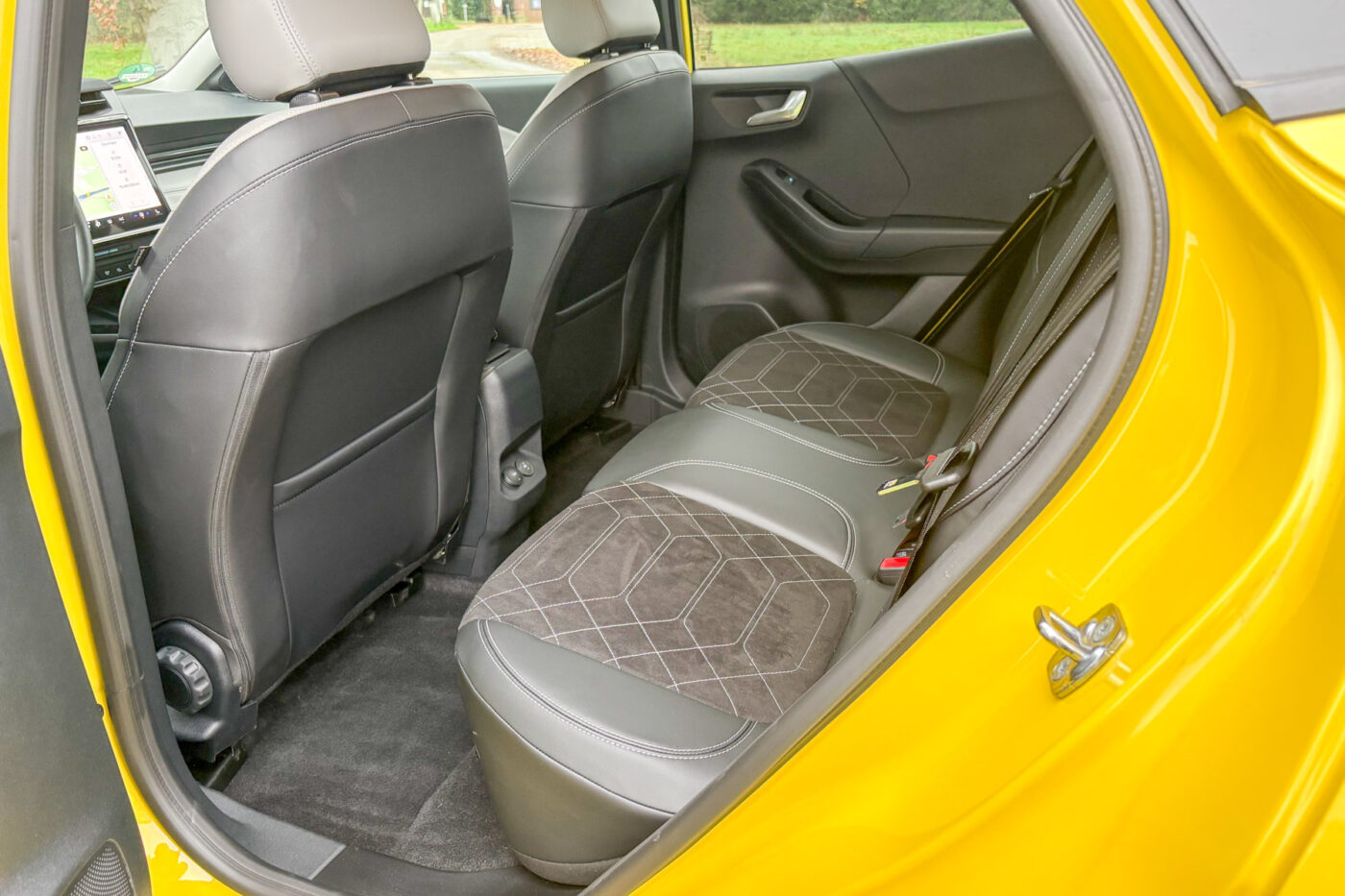

The interior, with its storage compartments and displays, also largely impressed during the test. The controls are very intuitive, as the most important functions either remain permanently visible in a bar at the bottom of the touchscreen, designed with clear icons, or are accessible via dedicated, tactile buttons on the steering wheel. While the steering wheel may initially seem somewhat cluttered – especially when compared to a Tesla or the Leapmotor B10 – the functions are easy to understand and can be operated blindly with minimal practice.
On the downside, the steering wheel and interior feature a relatively high proportion of black high-gloss plastic, which quickly accumulates dust and fingerprints and is prone to scratching – for example, the bracket leading to the large storage compartment in the centre console, where the inductive smartphone charging pad is located.
Personally, I am also not a fan of square steering wheels that are flattened at the top – I find a round steering wheel much more comfortable for manoeuvring, cornering and navigating roundabouts. However, in the case of the Puma, I understand why the steering wheel is flattened at the bottom: it is exceptionally large for this vehicle segment and would likely extend into the driver’s knee space otherwise.
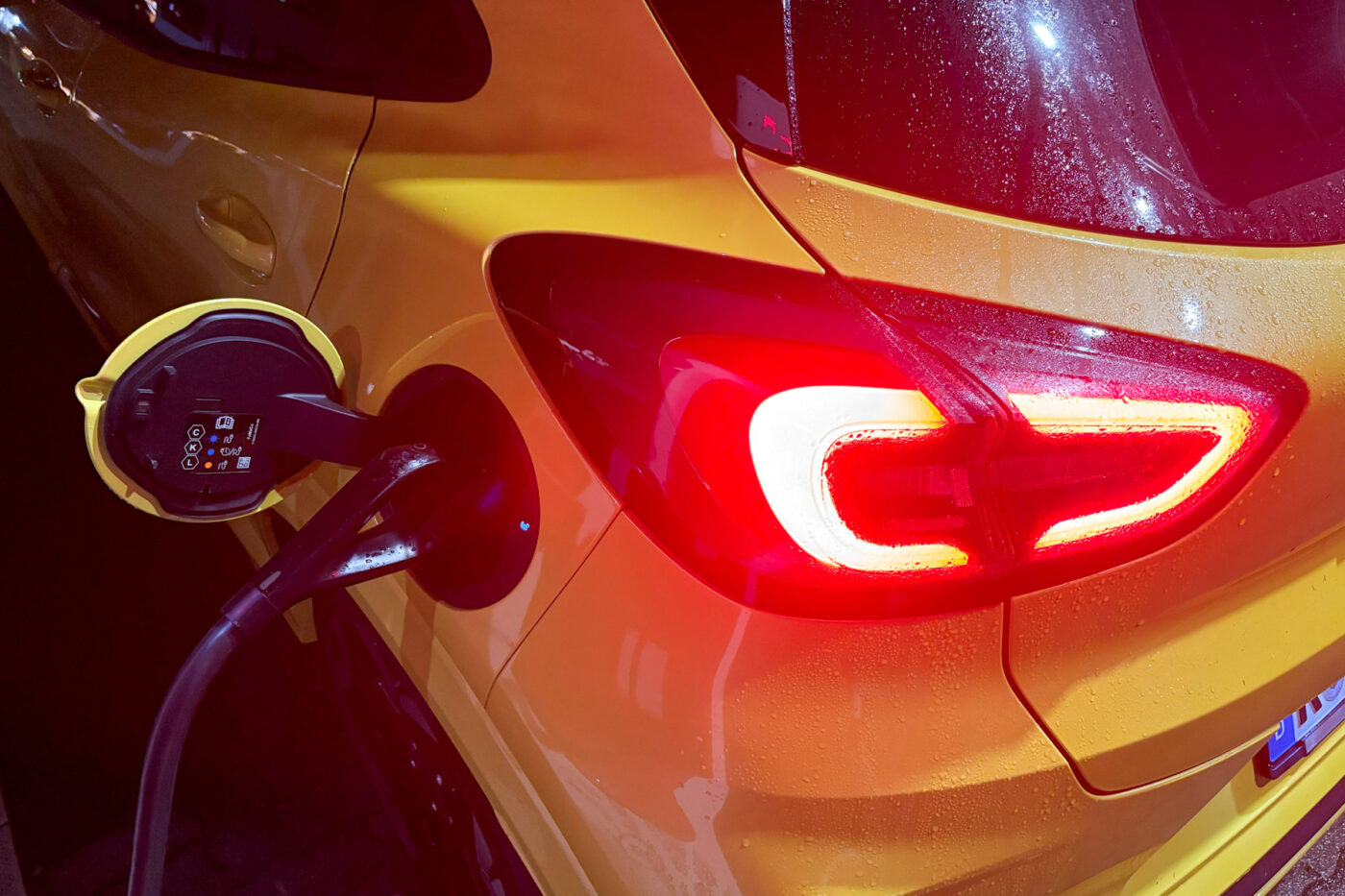
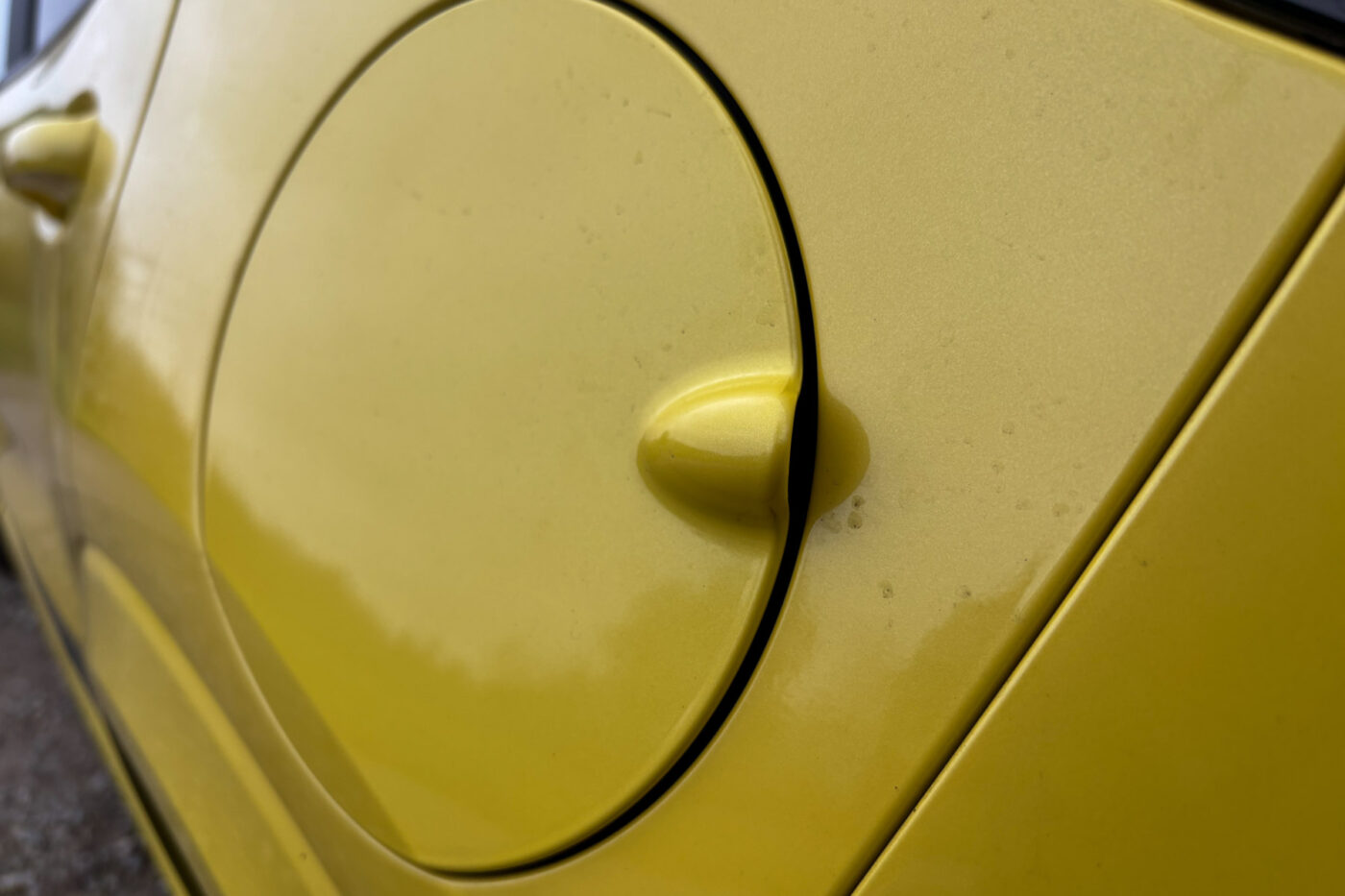
While the material selection in the interior can be criticised, everything is neatly assembled, and the transitions in our test car fitted well. The same cannot be said for the bodywork: there was a visible misalignment between the bonnet and the wing, and the charging flap did not close flush – it always protruded by a few millimetres. Such details might be more forgivable in a true price disruptor – but the Puma Gen-E is not a budget car and is relatively expensive for what it offers. Therefore, the build quality must be flawless.
Conclusion: If only the price wasn’t an issue…
The Puma Gen-E is, first and foremost, a Ford Puma with a battery-electric powertrain, offering all the advantages of its combustion-engine counterpart – and even more, thanks to the large GigaBox in the rear. Whether with the 43 kWh battery, as in our test car, or the upcoming 46 kWh version, range is likely to remain a key factor in the purchasing decision.
Here, the Puma Gen-E, despite its good efficiency, falls short of the competition. Those already familiar with electric vehicles and charging infrastructure may not be deterred by this. However, a real-world winter range of 200 to 250 kilometres is unlikely to convince newcomers to switch to electric mobility.
Or at least not if you have to pay nearly €37,000 list price – or almost €41,500, as was the case for our test car. However, if there is a good leasing offer or private customers can take advantage of the Ford bonus of €5,000 when purchasing an electric vehicle in Germany (and perhaps additional upcoming incentives), the Puma Gen-E quickly becomes price-competitive with the combustion-engine Puma. In that case, its lower operating costs might make it an attractive choice after all.



0 Comments