


Arval Fleet Barometer sees rising demand for used and electric vehicles
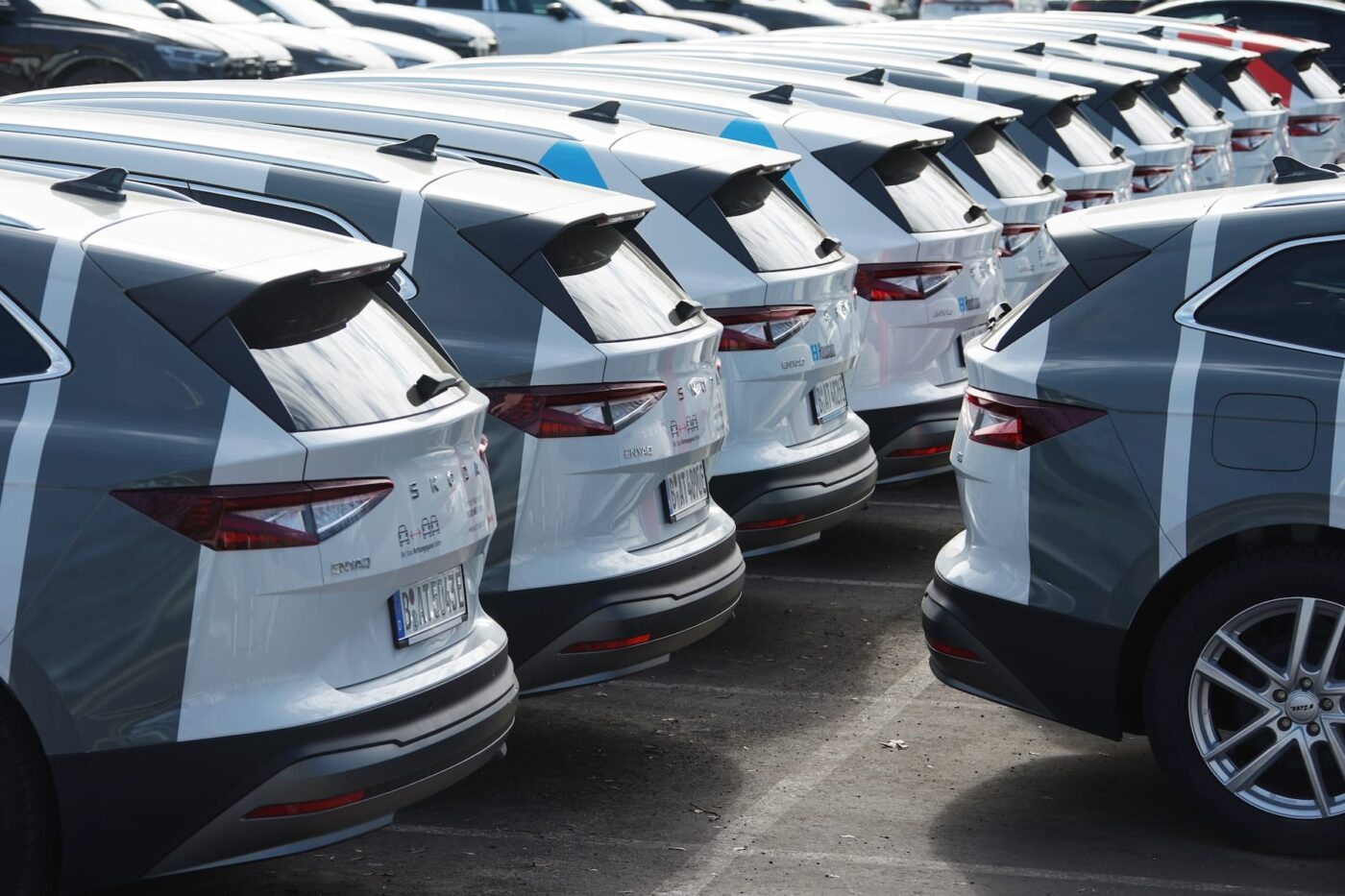
The Arval Fleet and Mobility Barometer is compiled annually based on a global survey of fleet decision-makers and is described by the company as an ‘industry reference for fleet and mobility trends.’ For the latest edition, 10,157 decision-makers from 33 countries were surveyed between August and November 2025, including 300 in Germany. In the German sample, just over half of the companies had between one and 99 employees, while 27 per cent employed between 100 and 999 people and 20 per cent had 1,000 employees or more.
The results are clear: according to the latest Fleet and Mobility Barometer 2026, 92% of the surveyed companies expect a stable or growing fleet volume over the next three years. However, most fleet managers anticipate a stable inventory, with only 15% expecting growth. “This trend has remained consistent for three years and aligns with the European average,” Arval notes.
The Arval Mobility Observatory is part of Arval, the leasing subsidiary of the French banking group BNP Paribas. Clients are likely to welcome the next finding: leasing is the predominant financing method for fleet vehicles. 31% of the surveyed companies use finance leasing as their primary method, while 29% opt for full-service leasing, meaning that 60% of fleet vehicles are leased. Direct purchase still plays a significant role at 31%, while other financing methods are less common.
EV in German fleets above EU average
Alternative drive technologies continue to gain importance. 84% of German companies have already implemented at least one alternative drive technology or plan to do so within the next three years. Among the respondents, 70% are already actively using battery-electric vehicles. This puts Germany significantly above the European average, which, according to the Arval survey, stands at 57%.
Companies cite alignment with the CSR directive (38%) as the main reason for electrification, but they also see it as an opportunity to reduce environmental impact (38%) and fuel costs (34%). However, one reason has gained particular relevance: around 30% of respondents named the expansion of low-emission zones as a factor (+8%).
Another trend is even more surprising than the increasing electrification of fleets: 46% of the surveyed German companies have already integrated used vehicles into their fleets, while a further 39% are considering this within the next three years.
“This trend is evident across all regions and company sizes,” Arval states. “Additionally, it is notable that companies are keeping their vehicles for longer. Instead of the previous average of 4.9 years, companies now retain their vehicles for about half a year longer (5.5 years).”
The combination of these two trends—used electric vehicles in fleets—is also a viable option.
“Concerns about range loss in used electric vehicles are unfounded. Our data shows that battery capacity remains at around 93% after approximately 70,000 kilometres,” said Katharina Schmidt, Head of Consulting at Arval Mobility Observatory. “Used electric vehicles can thus play a key role in accelerating and making the transformation of corporate fleets more cost-effective.”
However, the transition to electric vehicles—whether new or used—still presents challenges. 63% of companies see the lack of charging solutions as the biggest obstacle to adopting electromobility. Missing charging points at employees’ homes (31%) or at the company (27%), as well as high acquisition costs (25%), hinder the transition. Nevertheless, 88% of companies are willing to financially support home charging stations for their employees.
“We see, on the one hand, that the lack of charging points remains the biggest challenge for transitioning to electric mobility in fleets,” said Schmidt. “At the same time, the companies we surveyed show a strong willingness to financially support charging stations at their employees’ homes. This is a positive signal for the electrification of fleets.”
Another finding from the 2026 Fleet and Mobility Barometer concerns perceptions of electric vehicles: the share of companies citing limited range as a barrier has increased. While only 8 per cent identified range as an issue in the previous survey, this figure has risen to 18 per cent in the latest edition.
This contrasts with ongoing improvements in vehicle technology, as current models entering the market offer ranges of around or above 800 kilometres alongside shorter charging times. One possible explanation is that electromobility is reaching a broader group of fleet managers, including those with little or no prior experience of electric vehicles, who are more likely to express concerns about range.
Source: Information via email (in German)


0 Comments