


Renault to build electric Scénic and Rafale in Spain from 2028
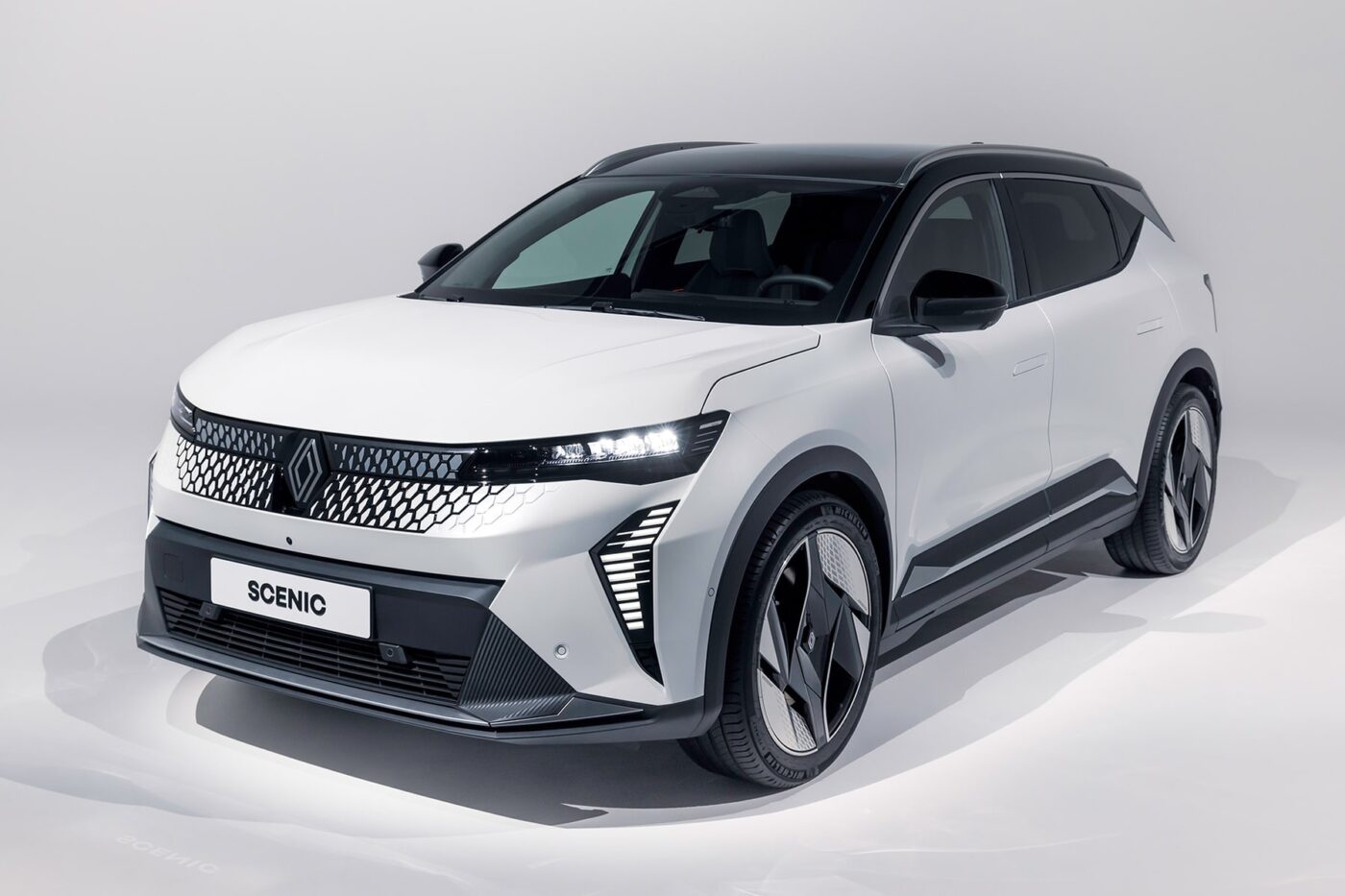
Speculation had already emerged in recent months that Renault was considering Spain as a production location for some of its battery-electric passenger cars. Now, Josep María Recasens has provided further details.
The President of Renault Group Spain reportedly presented the company’s industrial plan during wage negotiations with trade unions. Recasens confirmed that three new models are planned for the Palencia plant, including two fully electric models and one range-extender version. However, the implementation of this plan depends on reaching an agreement with the trade unions, which is still pending.
Here’s what is confirmed: Renault currently produces compact and mid-size models at the Palencia plant, but only as plug-in hybrids. Specifically, the Renault Austral, Espace, and Rafale are manufactured there. The Spanish plant was opened by the manufacturer in 1978.
Renault Spain has also revealed key details about the electrified models planned for Palencia: La Tribuna de Automoción reports that these will include the second generation of the Scenic E-Tech, the battery-electric successor to the Rafale, and a range-extender version of the Scénic. These models are set to be produced from 2028 on the new platform called RGEV Medium 2.0, which the Renault Group introduced two weeks ago in its FutuREady strategy plan.
For context: Unlike Renault’s current electric platforms, the RGEV Medium 2.0 is an 800-volt architecture designed to underpin vehicles from the B+ to D segments. According to Renault, the platform is so flexible that it supports all body styles—from saloons to SUVs and vans/MPVs. Additionally, Renault announced two weeks ago that the platform will enable ‘ultra-fast charging in just ten minutes’ by 2030.
The battery for the RGEV Medium 2.0 features a cell-to-body architecture with a packing efficiency of 70 per cent. The battery pack is expected to require 20 per cent fewer components and be compatible with prismatic cells, blade cells, and pouch cells—the latter being highly unusual for cell-to-body concepts. Renault has not yet disclosed the targeted energy content for these battery packs.
However, the range is expected to reach up to 750 kilometres under the WLTP cycle for the fully electric versions. The platform will also support range-extender powertrains, which could achieve up to 1,400 kilometres in range with emissions of less than 25 grams of CO₂ per kilometre. This explains why the Scénic with a range extender will also be based on the RGEV Medium 2.0.
When these passenger cars begin production in Palencia in 2028, they will reportedly be the first models based on the new platform. If the timeline holds, the current Scénic will be replaced relatively quickly, as the first generation was only introduced in 2024. As it stands, this model will be succeeded after just four years.
Currently, all of Renault’s battery-electric cars are still produced within the ElectriCity production network, established in 2021, which combines the northern French plants in Douai, Maubeuge, and Ruitz. Maubeuge serves as the competence centre for light commercial vehicles, such as the Renault Kangoo, while battery-electric passenger car models like the Renault 4, Renault 5, and Scenic E-Tech are produced in Douai.
The Renault Twingo E-Tech, however, will soon be manufactured in Novo Mesto, Slovenia—meaning Renault’s exclusively French production of battery-electric cars will soon be a thing of the past.
François Provost took over as CEO from long-time Renault chief Luca de Meo last year and has since been realigning the group’s strategic direction. Provost has already scaled back the costly motorsport activities of the Alpine brand, which were expanded under de Meo, and reportedly plans to fully reintegrate the spun-off electric vehicle division Ampere back into the group. In December, he halted most of Mobilize’s car-sharing projects and reintegrated the previously independent unit, along with its remaining activities, back into the group.
Changes also appear to be underway at the joint venture for connected electric vans, Flexis (a collaboration with the Volvo Group and logistics provider CMA CGM). Reports suggest that Renault intends to take over the venture entirely. Flexis was also founded during Luca de Meo’s tenure.
forococheselectricos.com, latribunadeautomocion.es
0 Comments