


Hina and FAW conclude long-term test of sodium-ion electric truck battery
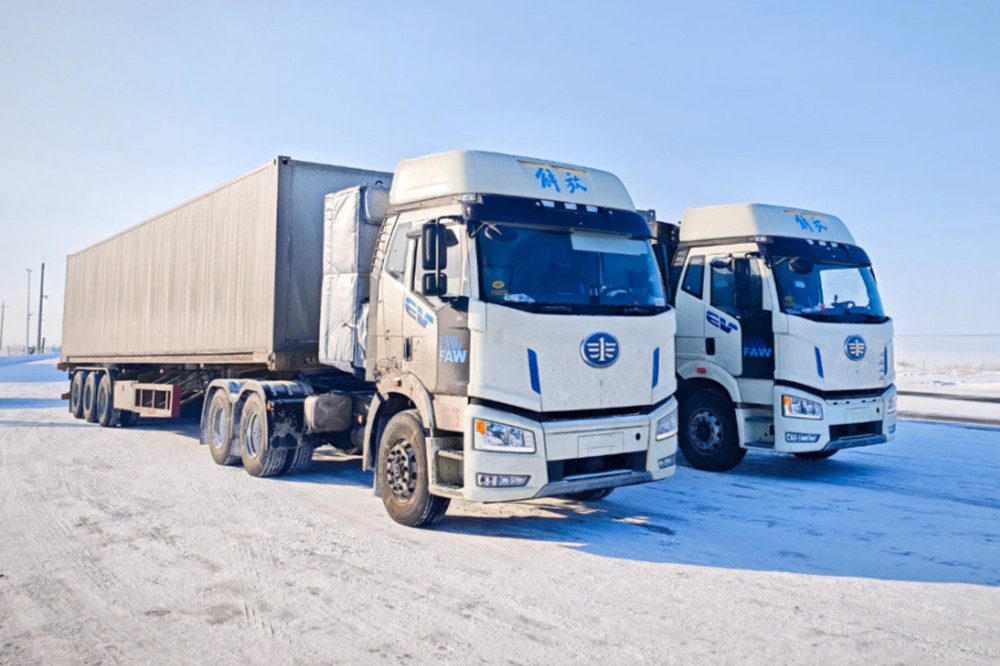
The validation project involved a battery-electric tractor unit of the FAW Jiefang J6P model, equipped with a sodium-ion battery developed by Hina Battery specifically for commercial vehicles. The battery had a capacity of 339kWh. Its specifications largely align with the solution presented by Hina in 2025: even at extreme temperatures of -40°C, the battery retained over 90 per cent of its usable capacity.
This addresses the well-known issue of performance loss and range reduction in conventional battery-electric trucks with lithium-ion batteries during winter. According to FAW Jiefang, the truck manufacturer under the state-owned FAW Group, the battery is ideally suited to meet market demand for alternatively powered trucks in the cold regions of Northeast and Northwest China. It also unlocks new potential for the electrification of freight transport in extremely cold areas.
Another advantage is its excellent fast-charging performance. The vehicle supports ultra-fast charging and boasts an exceptionally long lifespan. According to the manufacturer, a full charge takes only 20 to 25 minutes, significantly reducing charging time and improving the efficiency of logistics and transport operations. Additionally, the battery is designed to withstand over 8,000 fast-charging cycles, far exceeding industry standards.
Sodium-ion batteries are considered a promising alternative to lithium-ion batteries. They deliver excellent performance at low temperatures, are regarded as particularly safe, and can be produced in a resource-efficient manner. While lithium, cobalt, and nickel are often mined at high environmental cost and are available only in a few regions worldwide, sodium is one of the most abundant elements on Earth. It can be sourced cost-effectively and almost anywhere, for example, from table salt or seawater.
The biggest drawback of sodium-ion batteries, however, is their significantly lower energy density compared to lithium-ion batteries. This means that more space is required to achieve the same storage capacity. Hina Battery states that the current generation of its sodium-ion batteries achieves an energy density of over 165 Wh/kg at the cell level. As a rule, to match the range of a battery-electric truck with NMC batteries, the sodium-ion battery pack would need to be significantly heavier and bulkier. This, in turn, would directly reduce the payload—the actual capacity available for transport by logistics providers.

0 Comments