


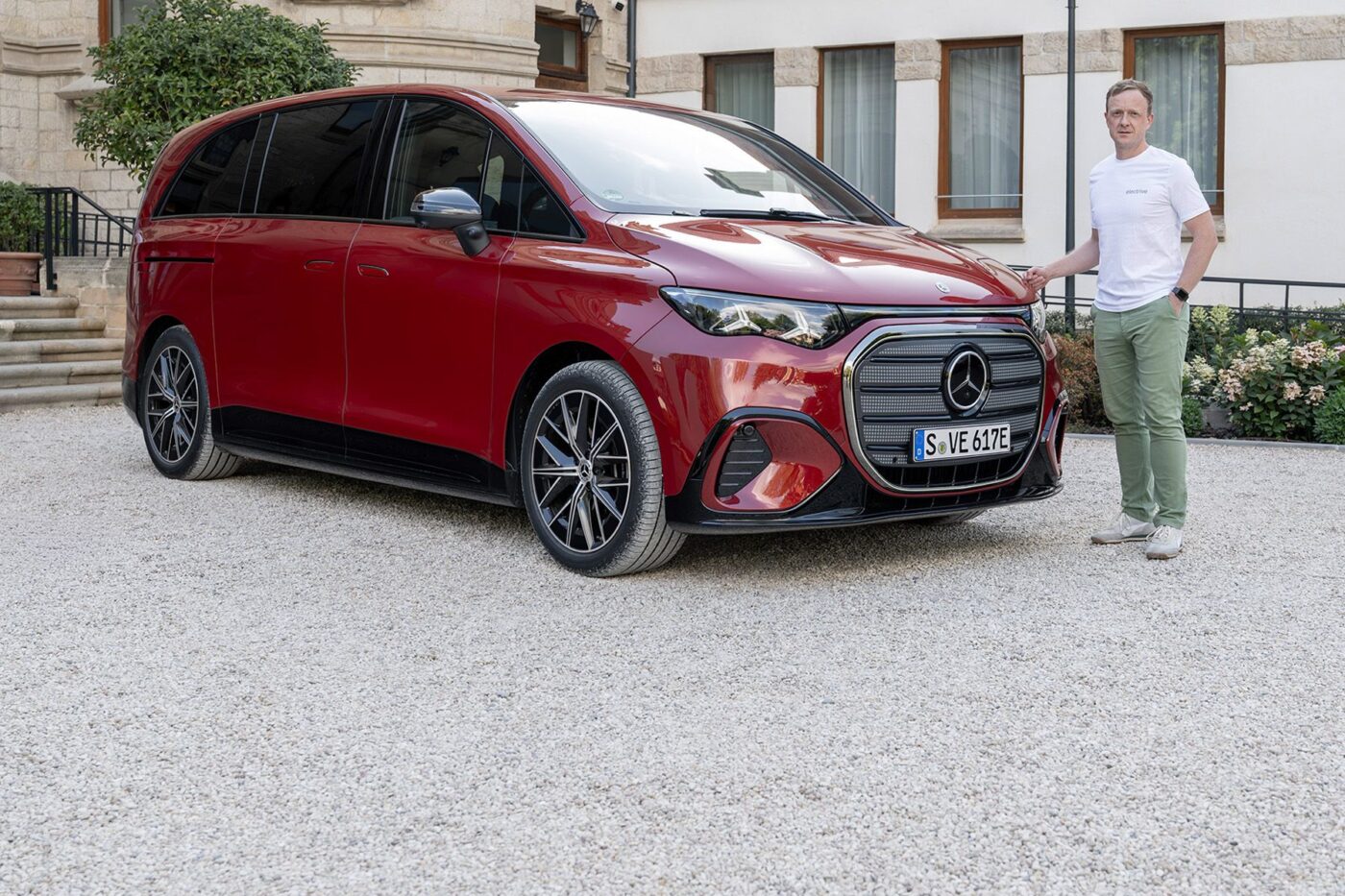
Mercedes VLE first drive: Luxury electric travel with 800-volt technology and open windows
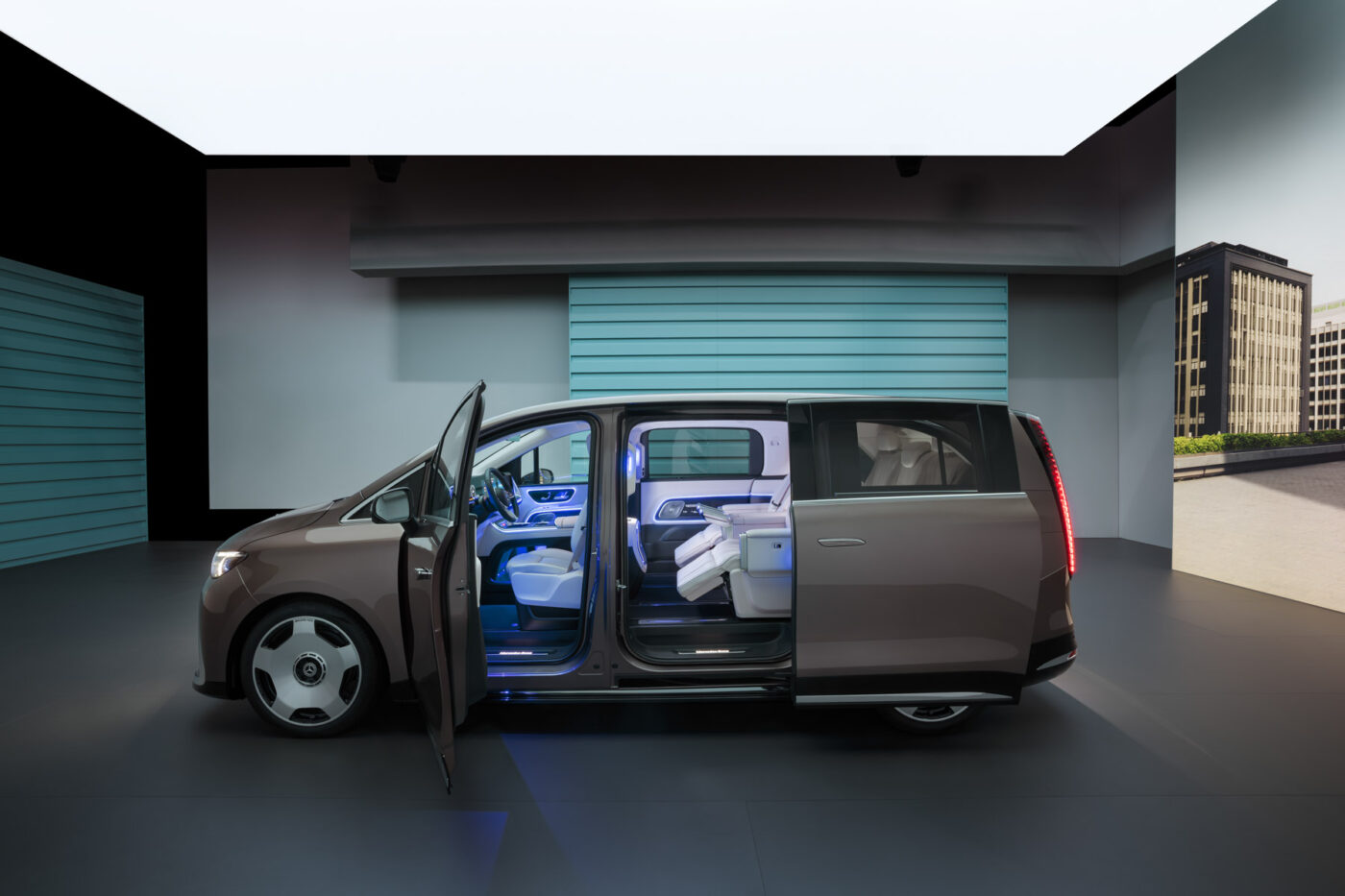
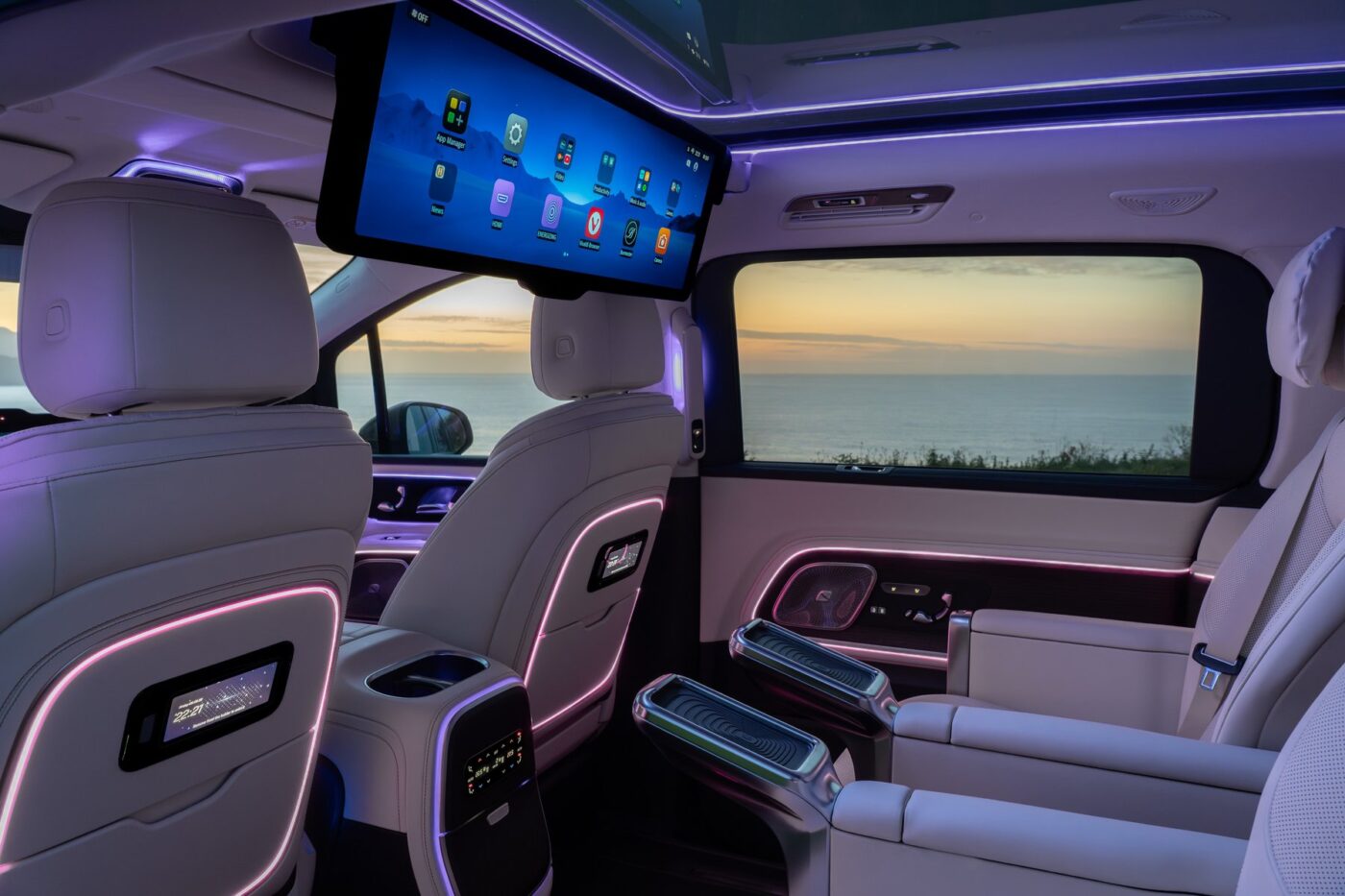
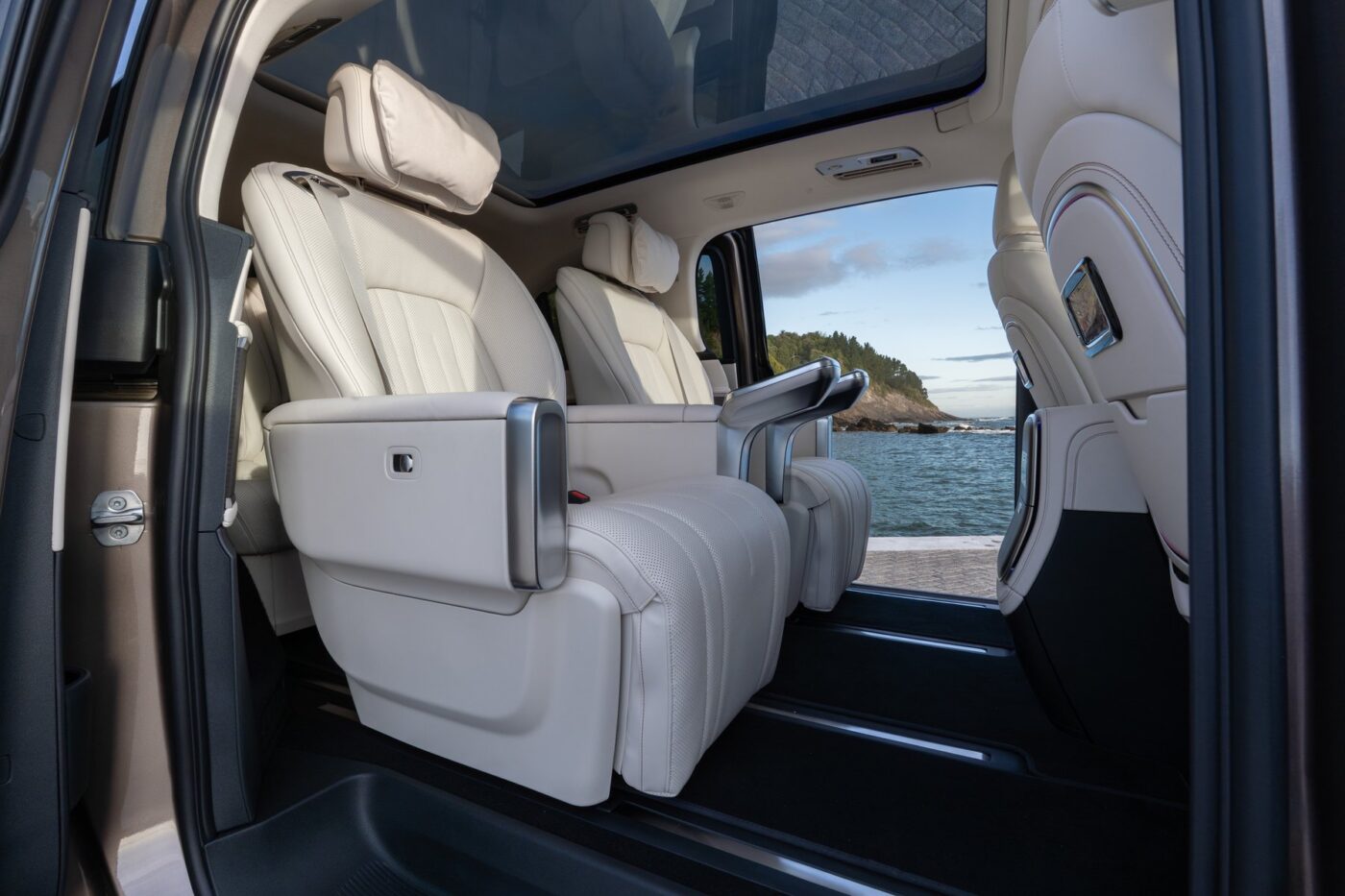
At the touch of a button, the rear windows – fully retractable into the sliding side doors – close automatically. This is no small engineering feat. Moments later, the privacy blinds lower and a huge 31.3-inch screen folds down from the roof lining. We begin our test drive in the rear seats – exactly where Mercedes-Benz wants VLE customers to spend their time.
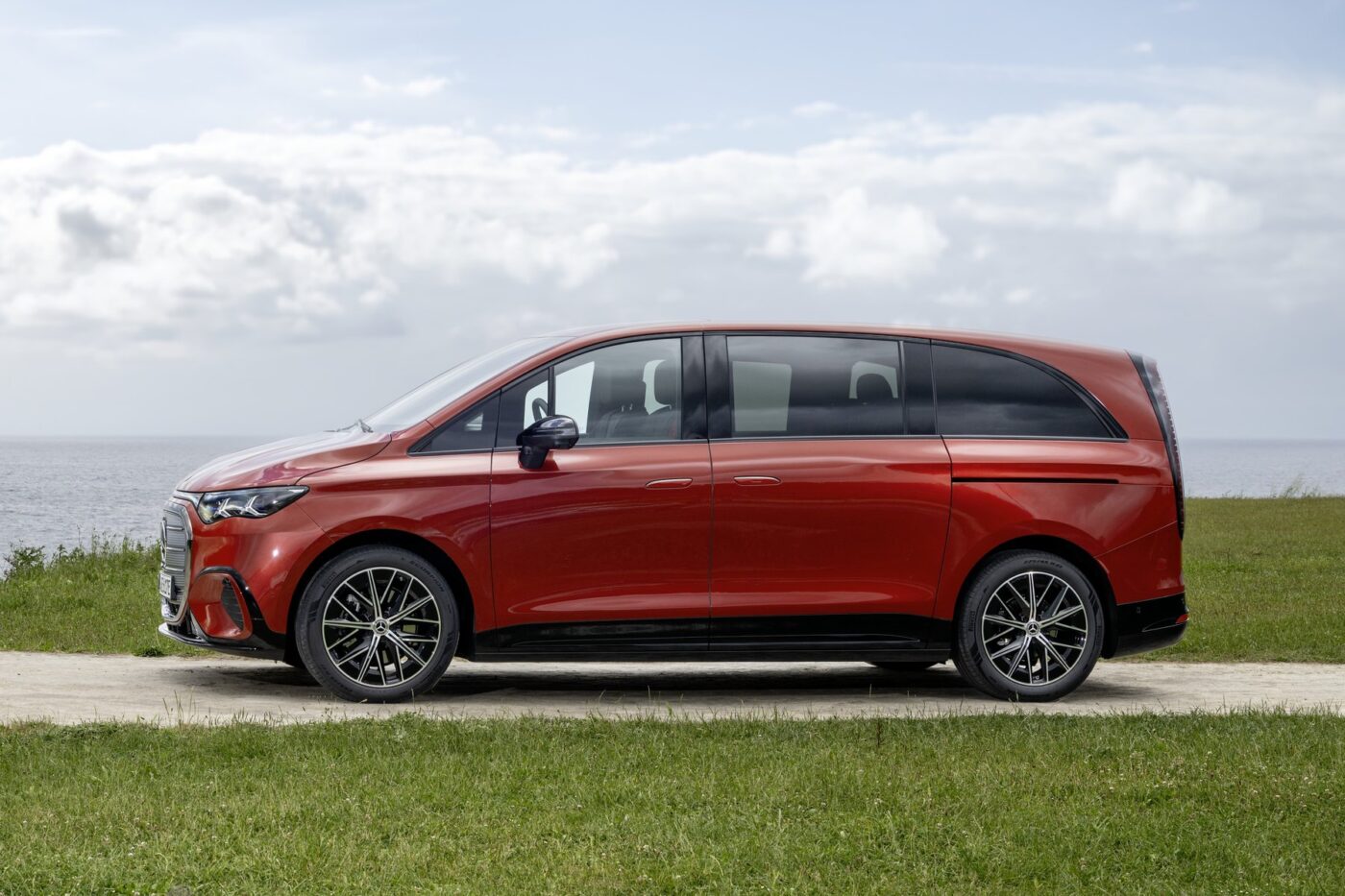
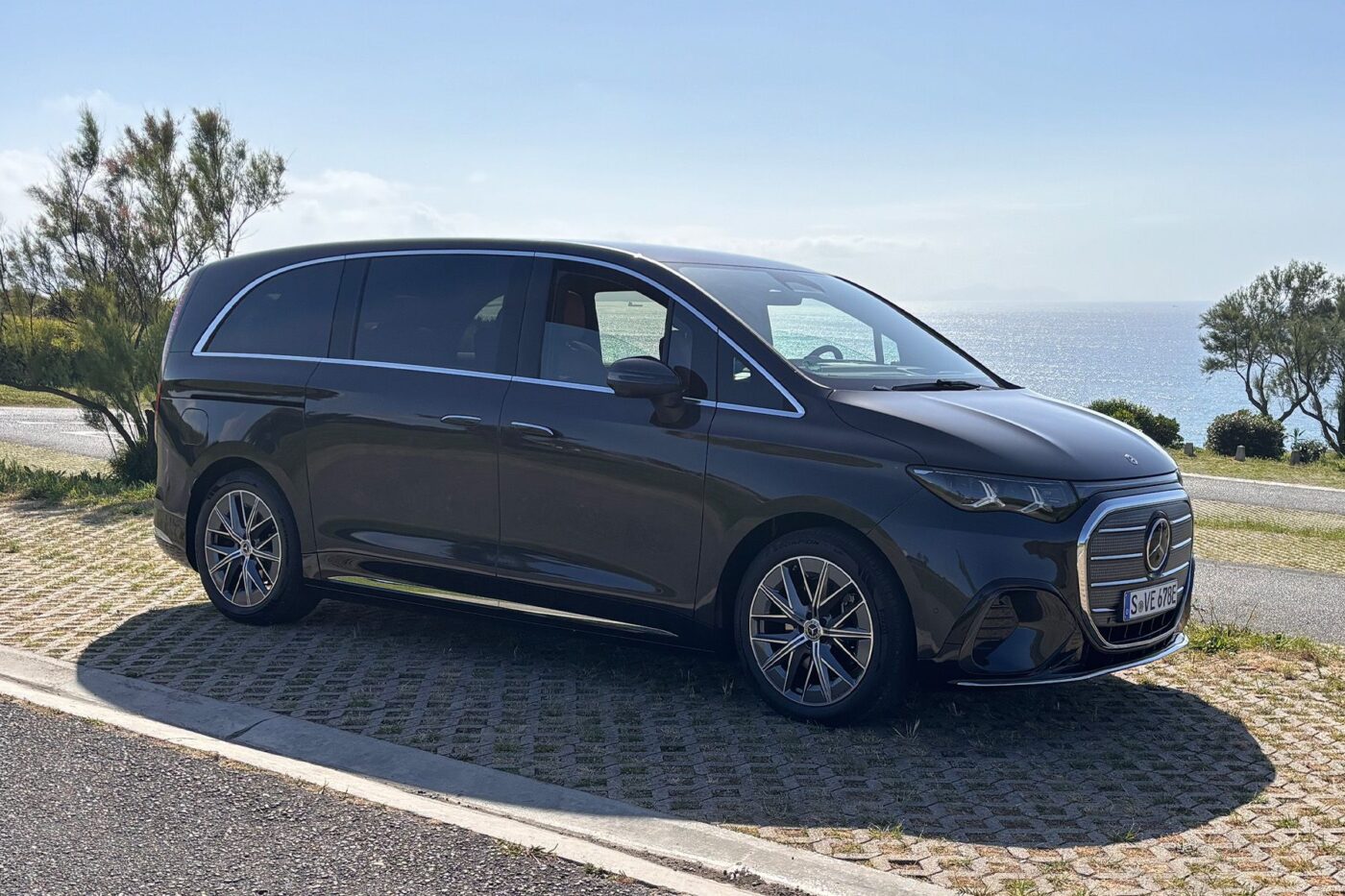
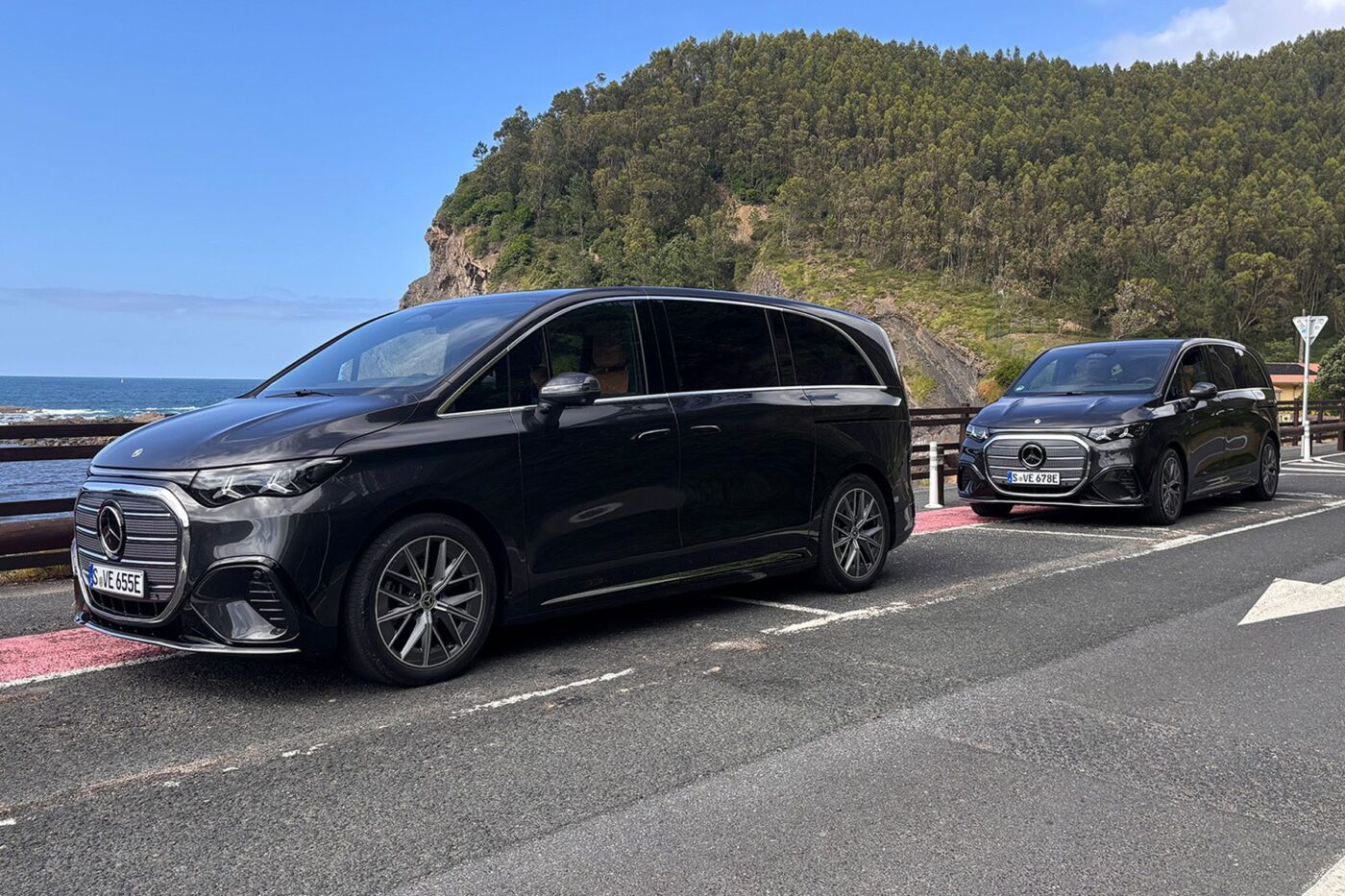
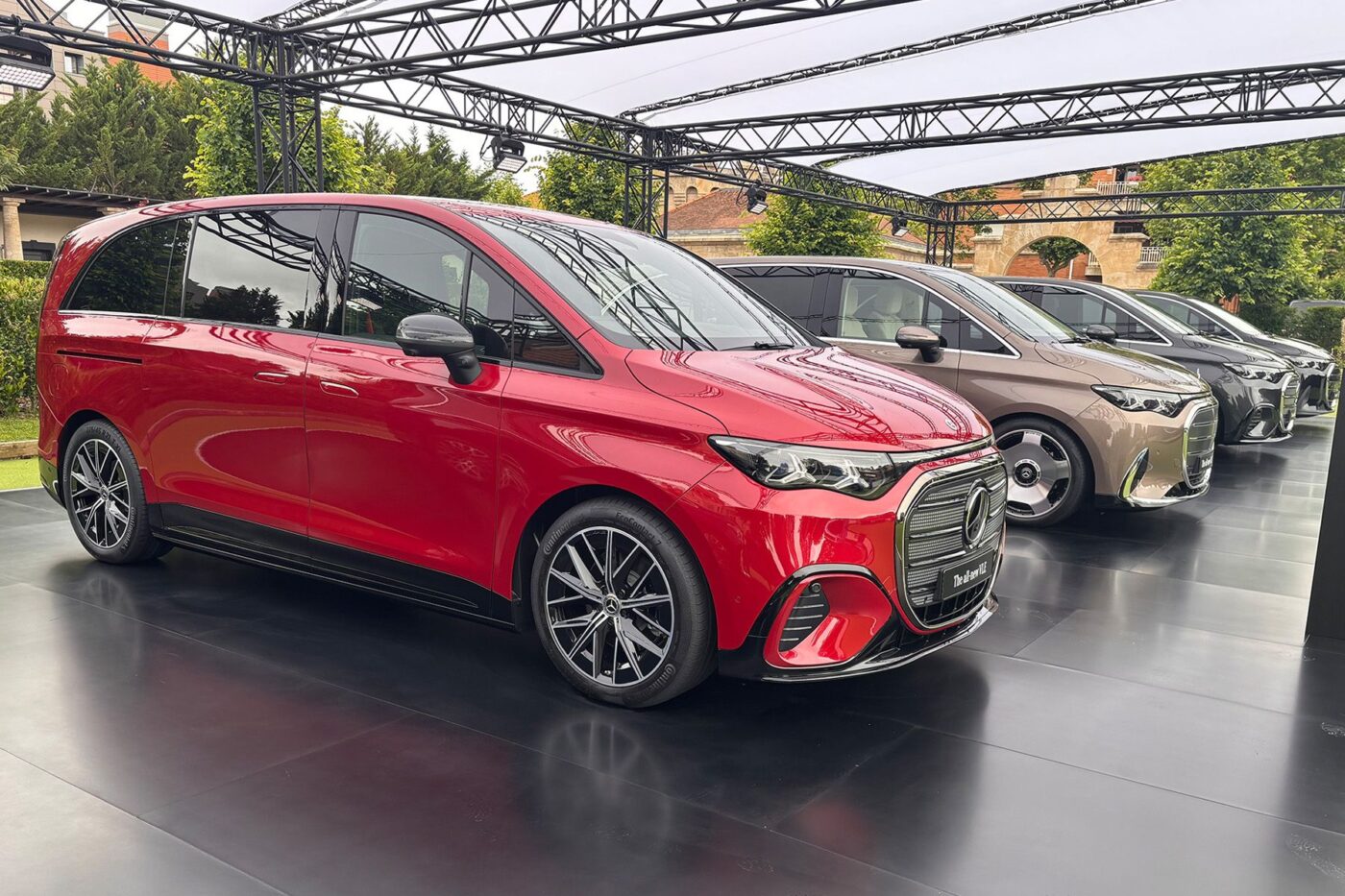
With the VLE, Mercedes is making a clear break from the traditional van image. The 5.30-metre-long model is positioned as an all-electric luxury saloon for passenger transport rather than a conventional people carrier. There will be no commercial variant for tradespeople or delivery operators. According to Chief Developer Benjamin Kaehler and his team, the electrically retractable second-row windows are among the vehicle’s standout features. The engineers say customer feedback played a key role in the decision, noting that no other van currently offers such a solution.
Powertrain and battery: two output levels, large battery pack
At launch, Mercedes will offer the VLE 300 with front-wheel drive. The electric motor on the front axle delivers 203 kW (276 hp) and provides a torque of 378 Newton-metres. Later, a more powerful model variant, the VLE 400 4Matic, will follow, featuring two electric motors, a system output of 310 kW (421 hp), and all-wheel drive. Both powertrain variants use a lithium-ion battery with 115 kWh of usable energy capacity. The cells, supplied by CATL, utilise a chemistry based on nickel, manganese, and cobalt. For an entry-level option, a variant with LFP cell chemistry and an 80 kWh capacity is planned for 2027.
First impressions from the test drive
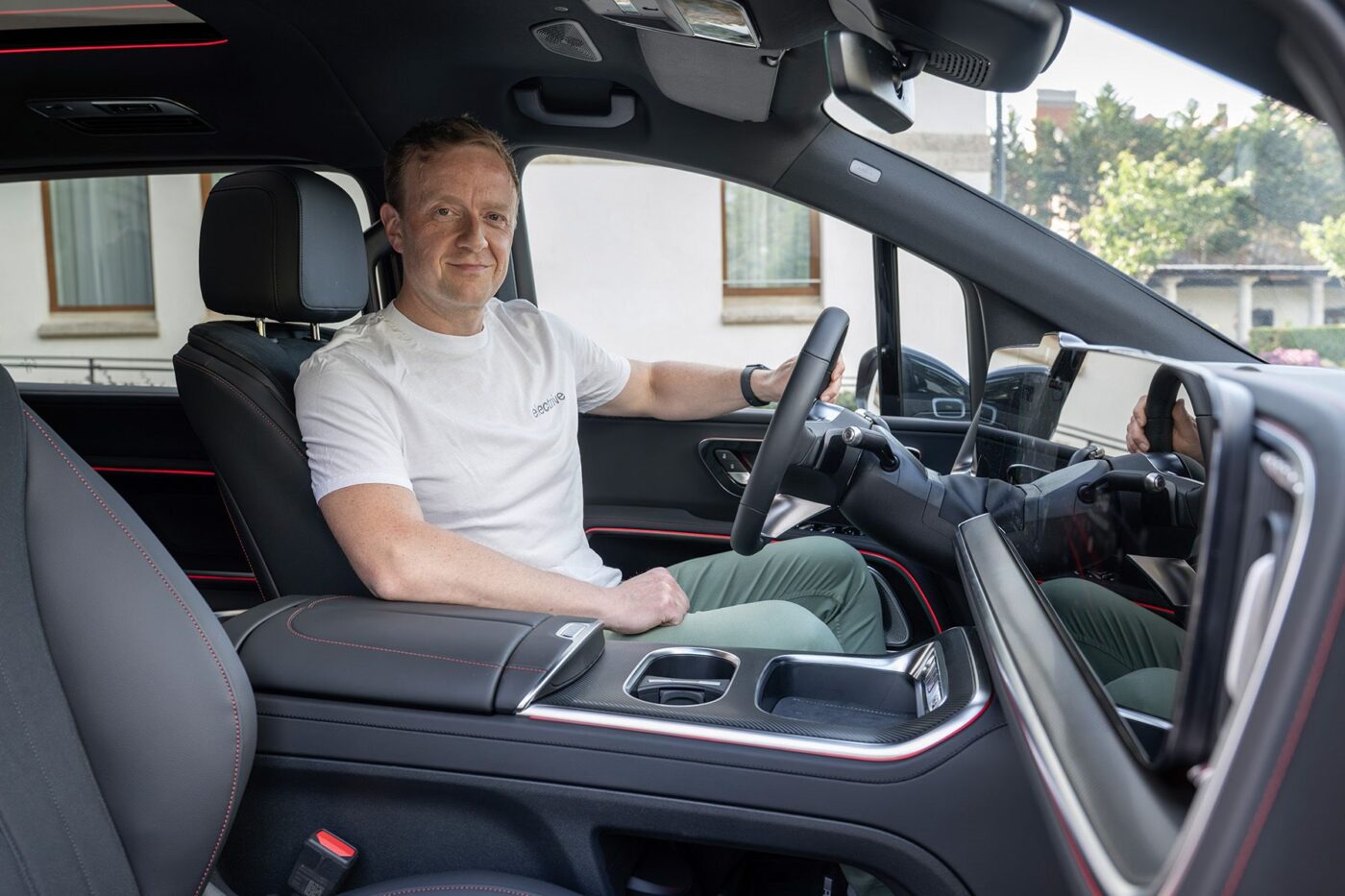
Once behind the wheel, one thing became immediately apparent: despite measuring 5.30 metres in length, two metres in width and 1.94 metres in height, the VLE is remarkably easy to manoeuvre through traffic. Part of the reason lay in its front-end design. The engineers positioned the front axle well ahead of the driver’s seat, giving the vehicle a steering feel more akin to that of a mid-sized passenger car.
The winding coastal roads around Bilbao also exposed the limits of the front-wheel-drive setup. Under hard acceleration out of tight corners, the front tyres quickly approached their traction threshold, prompting noticeable intervention from the electronics to maintain grip. The VLE 400 handled these situations with greater confidence. Its second motor on the rear axle provided all-wheel drive when required and boosted system torque to 570 Nm. An intelligent clutch, known as the Disconnect Unit, automatically disengages the rear motor when conditions allow, helping to reduce energy consumption.
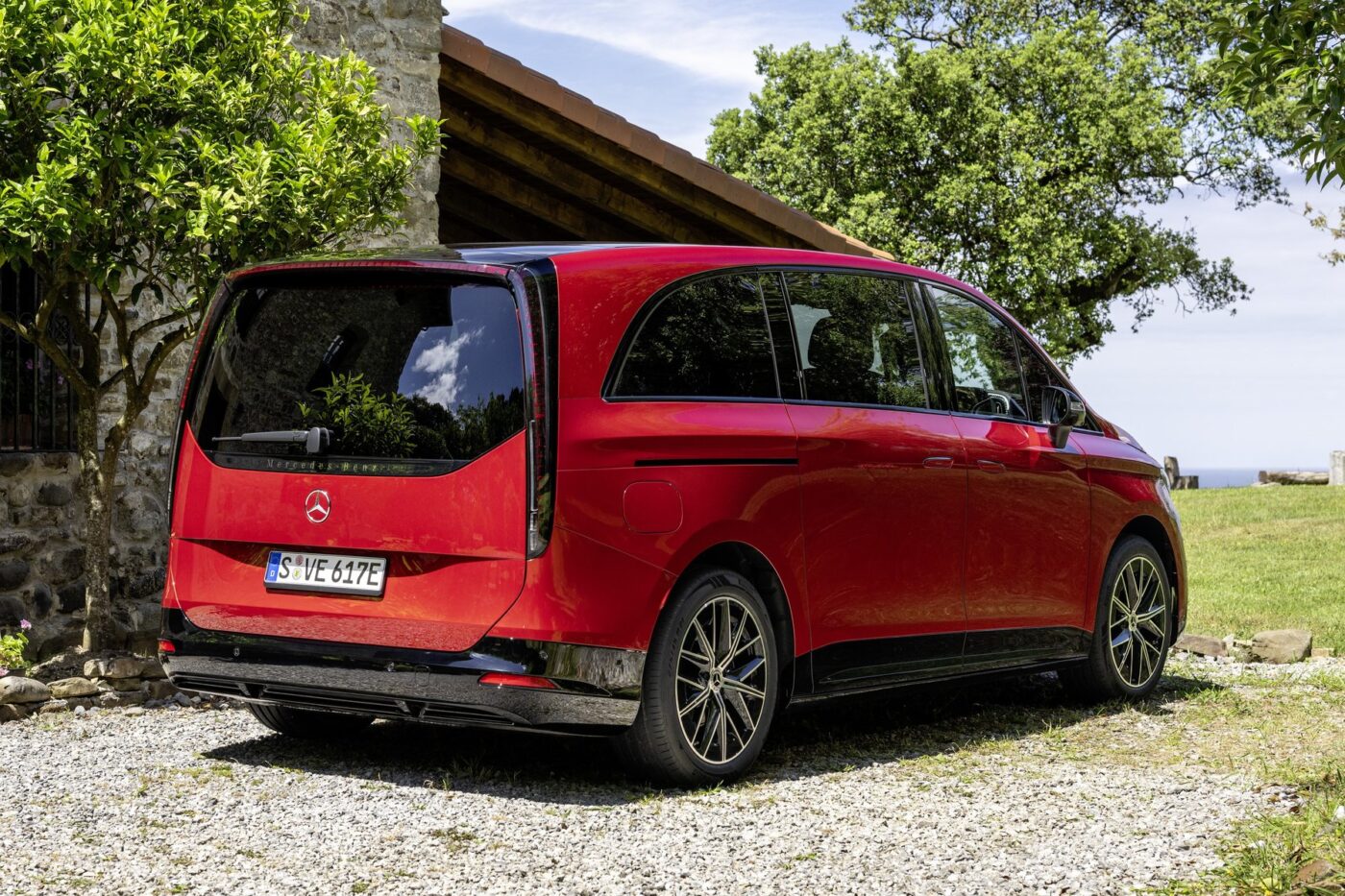
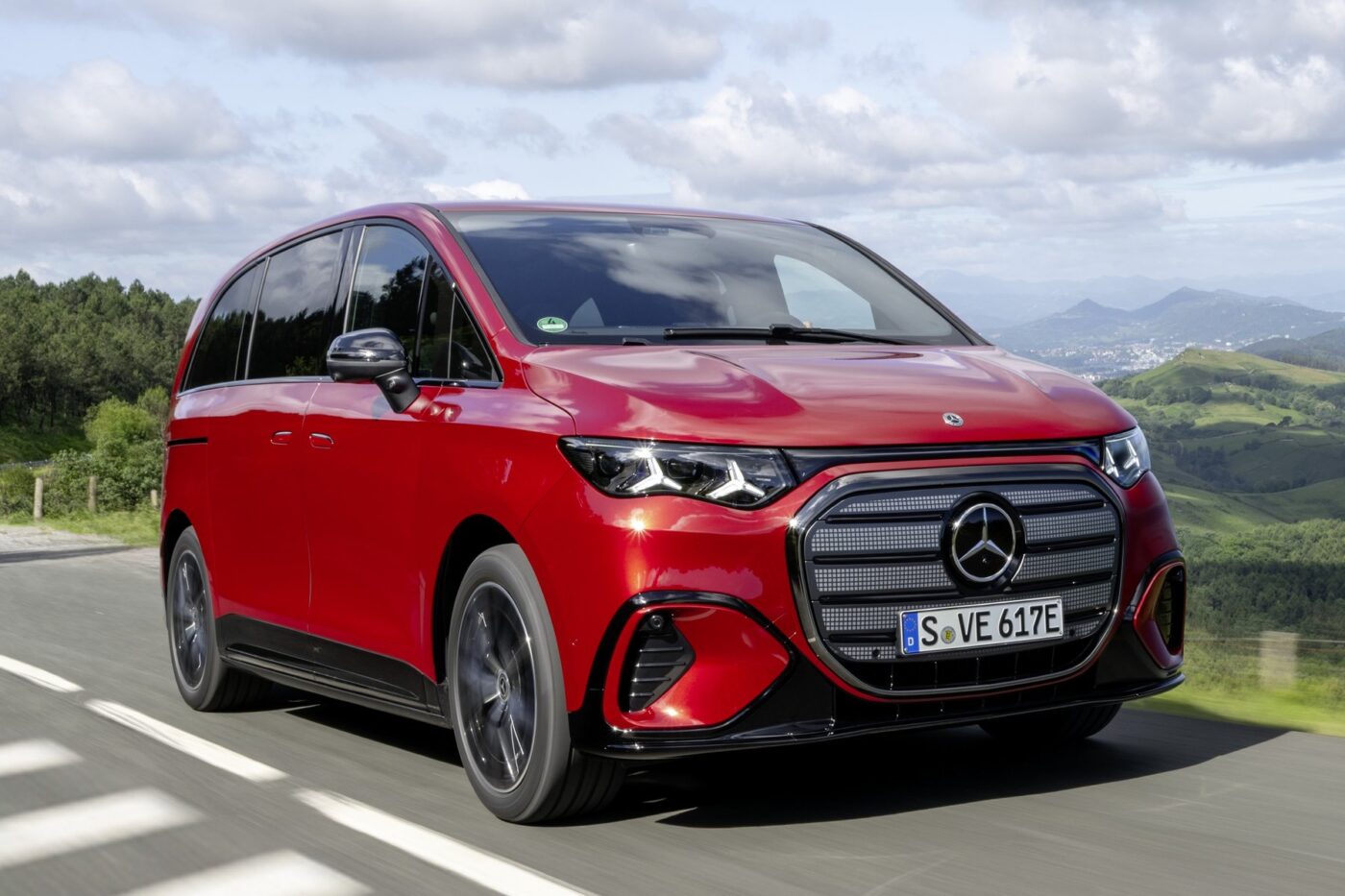
Agile and intelligent on the road
The dampers of the Airmatic air suspension adjusted each wheel individually, easily compensating for uneven road surfaces and potholes. The numerous speed bumps around Bilbao were absorbed with little effort, significantly reducing the need to brake in advance. At the rear axle, Mercedes mounted the dampers diagonally, a layout more commonly associated with racing cars, to keep the underbody as flat as possible. According to the engineers, this was a key development goal. The design also maximised comfort when carrying passengers and luggage, as it eliminated edges and uneven surfaces beneath the floor.
One of the standout features was the rear-axle steering, which turned the rear wheels by up to seven degrees. At speeds below 60 km/h, the rear wheels steered in the opposite direction to the front wheels, reducing the turning circle to just 10.9 metres. Above 60 km/h, they turned in the same direction as the front wheels, improving stability during rapid lane changes.
In practice, the large VLE felt surprisingly agile and handled more like a compact car than a 5.30-metre people mover. Even the tight roundabouts and steep approach angles encountered around Bilbao posed no challenge.
Digital functions were controlled by Mercedes’ proprietary MB.OS operating system, running on what Chief Developer Benjamin Kähler described as a ‘water-cooled supercomputer.’ One area where the new software architecture showed a clear step forward was the optional parking assistant. Unlike the system in the current CLA – the first model to feature MB.OS – the assistant no longer relied on guidance lines on the ground.
During a demonstration in an unpaved gravel car park on the coast, the system completed the manoeuvre quickly and precisely. It identified a tight parking space between two vehicles and autonomously steered the VLE into position without first having to drive past the space to measure it.
Consumption and range designed for long-distance travel
The VLE 300 was designed with long-distance travel in mind. According to Mercedes-Benz, it offered a WLTP range of more than 700 kilometres on a single battery charge, while energy consumption was rated at between 18.4 and 20.7 kWh/100 km. “This is roughly equivalent to 2 litres of diesel per 100 km,” noted Chief Developer Benjamin Kähler during the presentation ahead of the test drive.
Aerodynamics also played a key role in the vehicle’s efficiency. At speeds above 110 km/h or when Sport mode was selected, the body automatically lowered by 15 millimetres, further reducing the already low drag coefficient of 0.25. With all eight seats occupied, this translated into an energy consumption of between 2.3 and 2.6 kWh per passenger per 100 kilometres. Mercedes argued that this gave the VLE a per-occupant efficiency advantage over conventional small electric cars used in typical commuting scenarios.
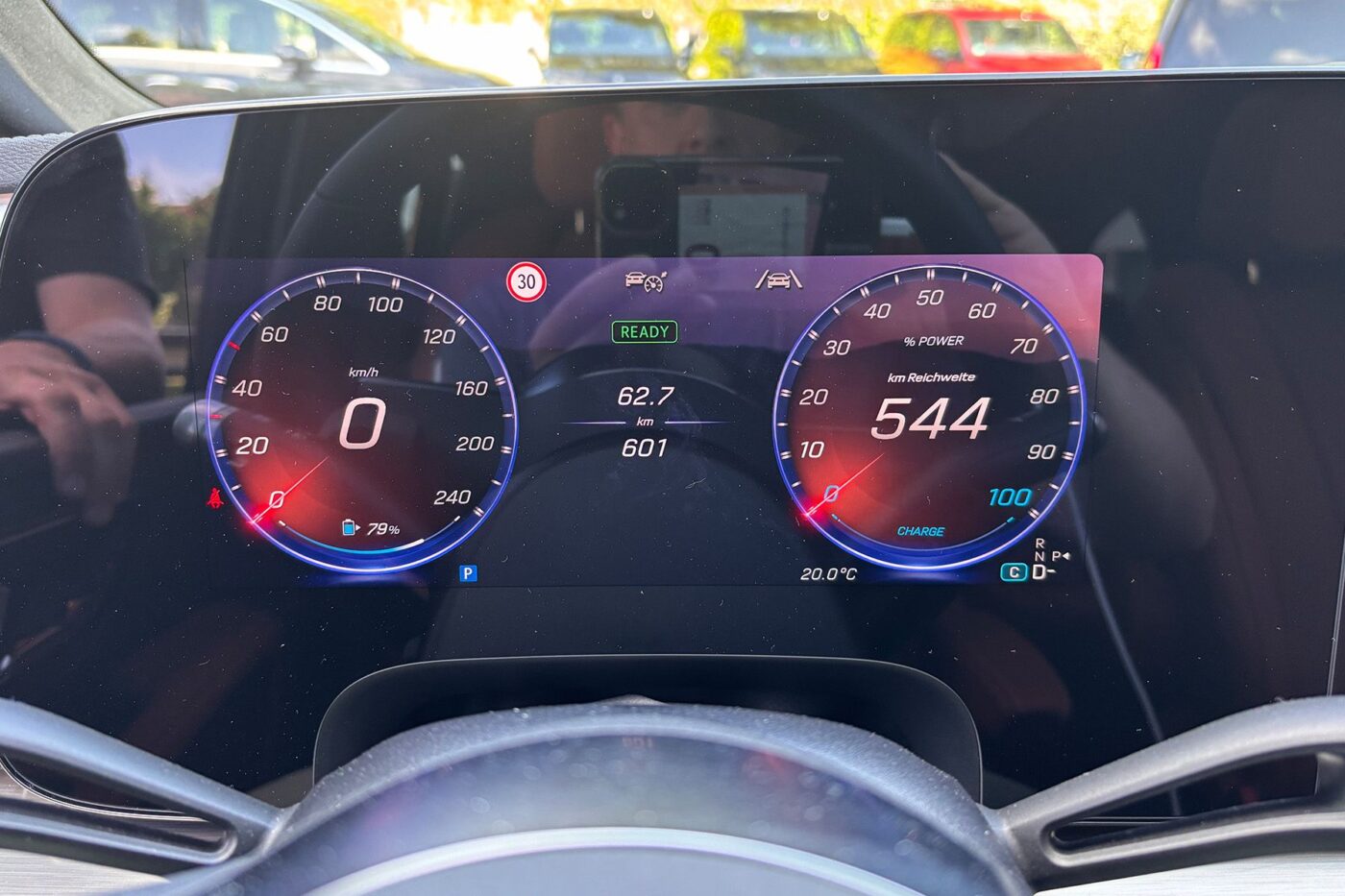
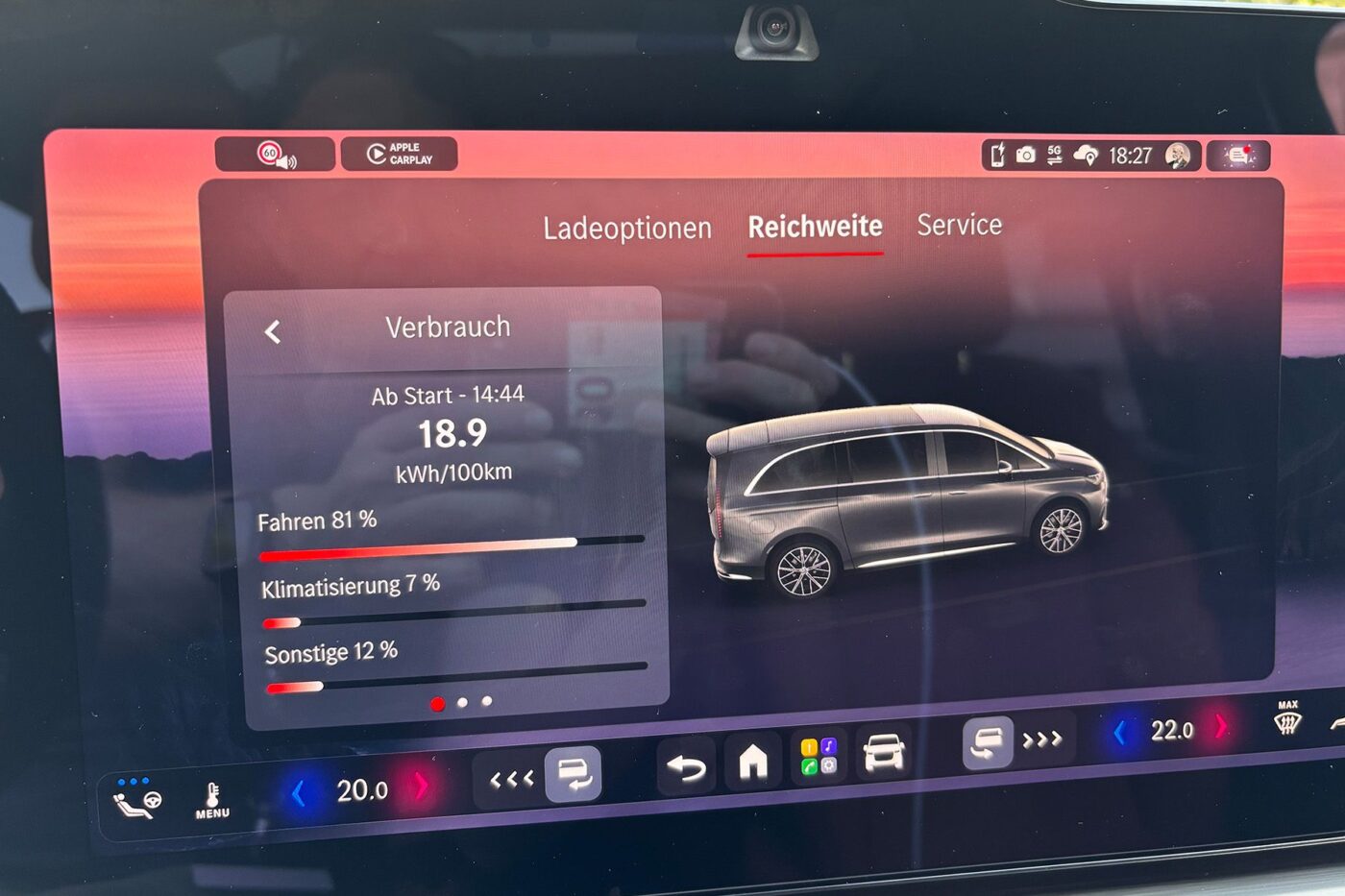
For our 60-kilometre drive on the country roads around Bilbao, the onboard computer reported an exemplary average consumption of 18.9 kilowatt-hours. While we dynamically climbed some hills, there were no motorway sections. Additionally, the weather conditions were ideal at around 20 degrees—no air conditioning was needed. How the VLE performs on German motorways will be revealed in a more detailed test later.
800-volt technology and acoustic feedback
Thanks to its 800-volt architecture, the battery supported DC charging at more than 300 kW when connected to a compatible fast charger. Under ideal conditions, Mercedes-Benz said the VLE could recover enough energy in 15 minutes for up to 355 kilometres of additional WLTP range. As Kähler put it: “That’s why you should order an espresso instead of a cappuccino during your charging stop.”
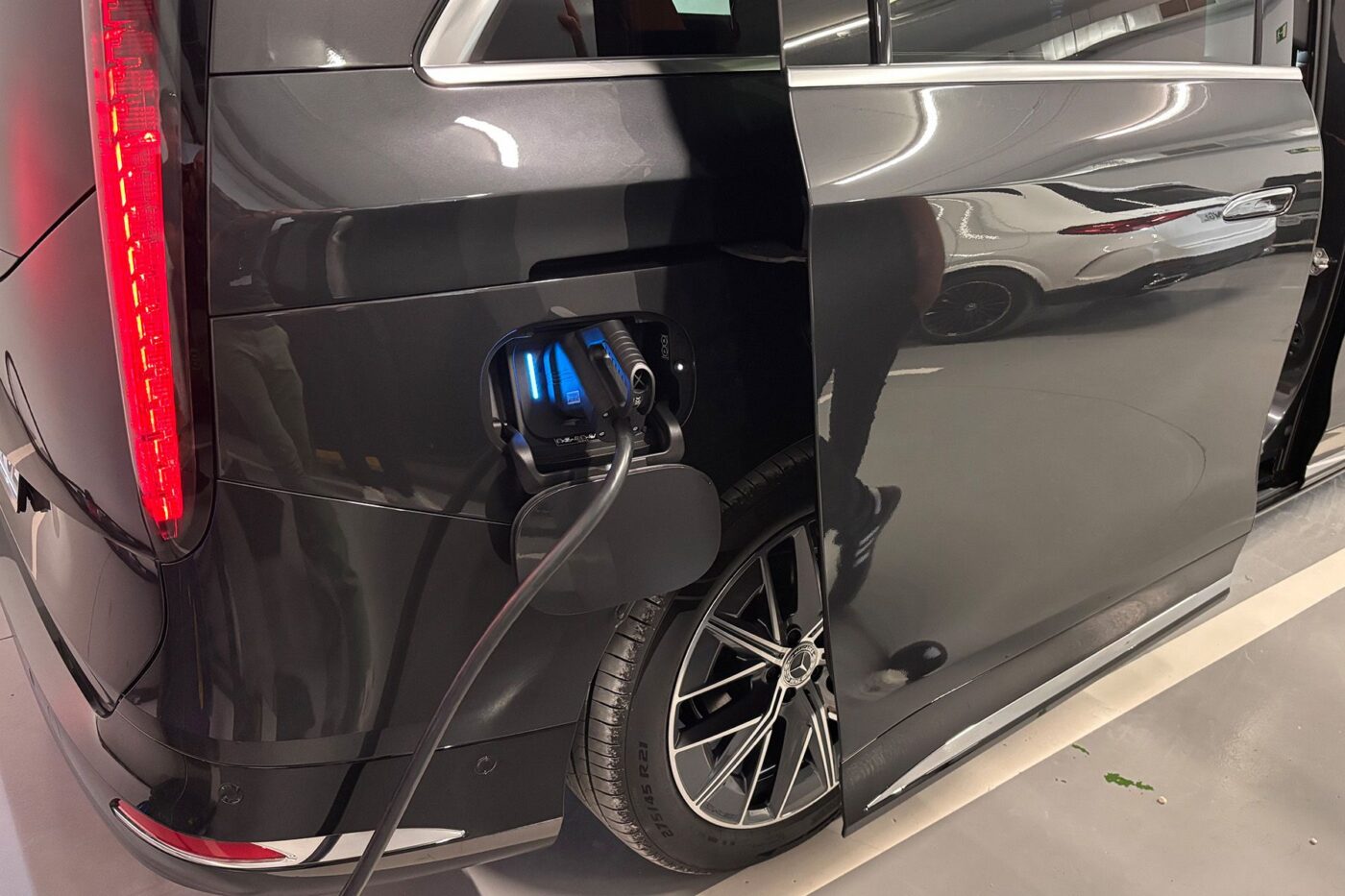
One detail that stood out during a charging check in the hotel’s underground car park was the dedicated charging sound, which acoustically confirmed when the charging connector had been properly connected or disconnected. For AC charging, the VLE came as standard with an 11 kW onboard charger, while a 22 kW version was available as an option. The vehicle also supported bidirectional charging. Mercedes expected its corresponding ecosystem to be ready soon, enabling vehicle-to-home (V2H) functionality.
As is typical for Mercedes models, the charging port was located at the rear right of the vehicle. The charging flap opened electrically and folded downwards, supported by two brackets. When the flap was open, the right-hand electric sliding door automatically limited its opening range accordingly.
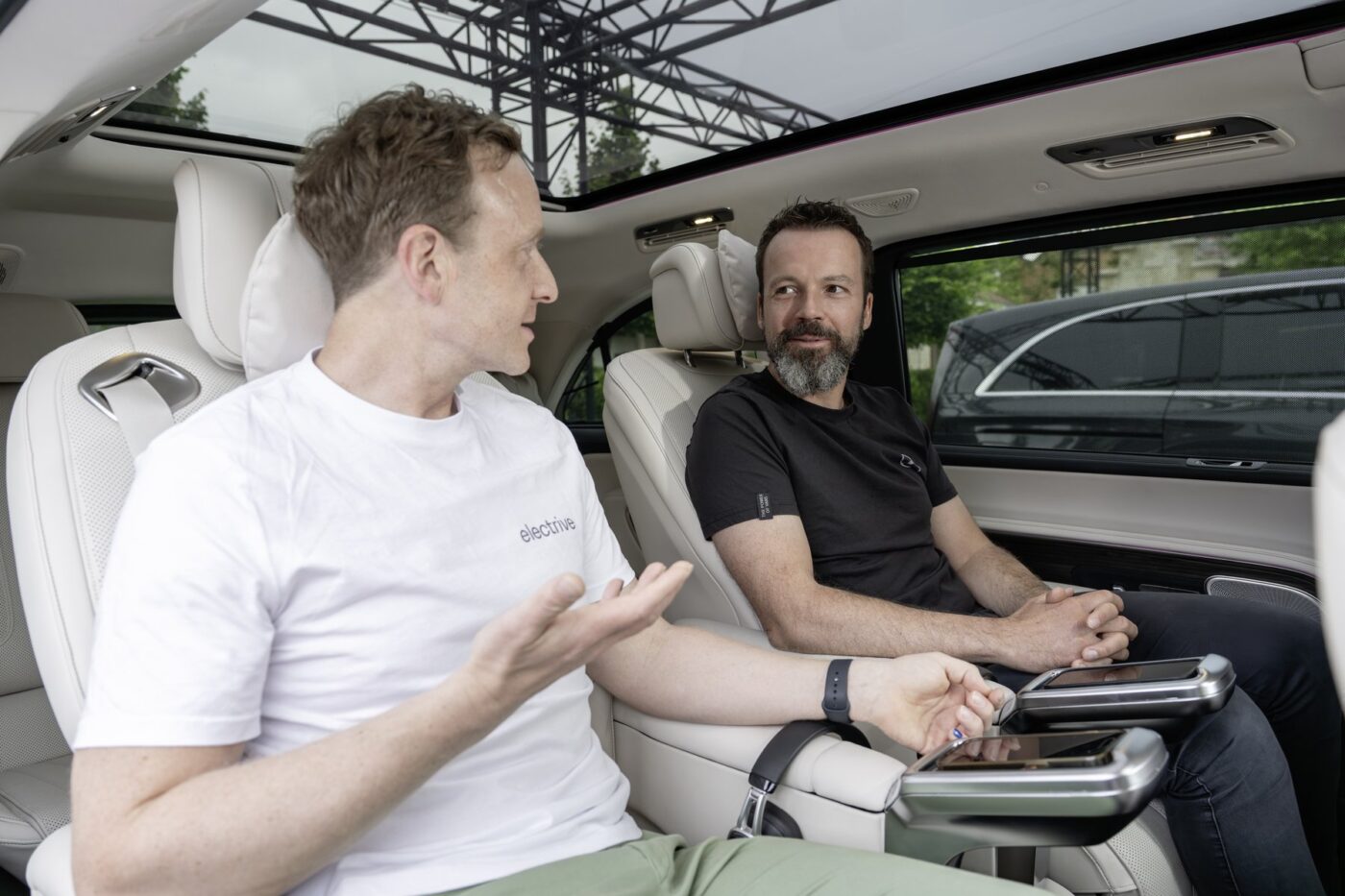
Lounge atmosphere with a star
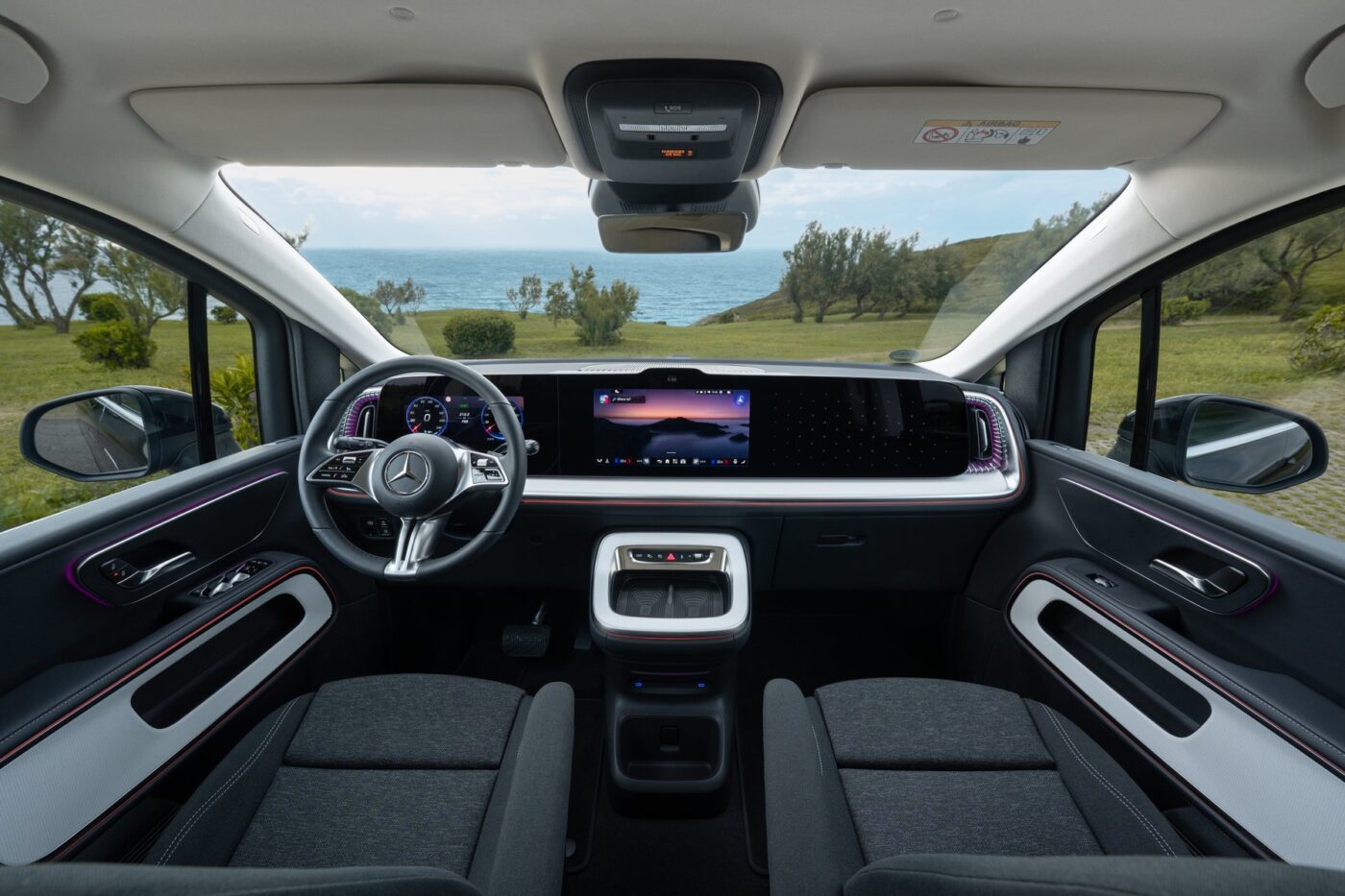
The interior offered a level of flexibility that surpassed even large estates and SUVs. Customers can choose from three newly developed individual seat designs and two bench-seat configurations, allowing seating for up to eight passengers in the rear. The mechanical comfort seats featured the Roll & Go concept, enabling them to slide along a rail system, be removed with ease and rolled away effortlessly.
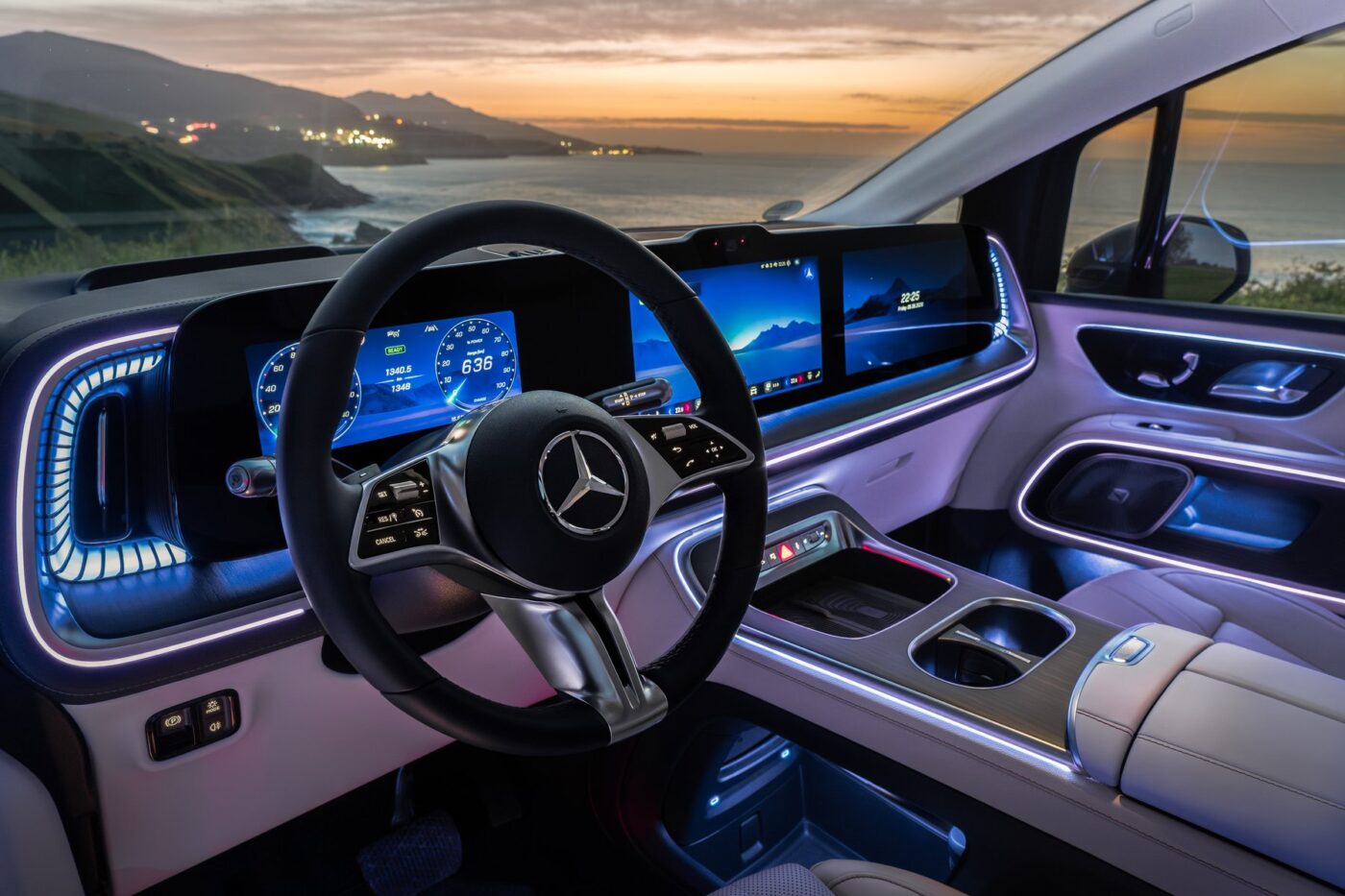
The cockpit is dominated by the optional MBUX Superscreen, which visually combines the instrument display, central touchscreen and front passenger display beneath a single glass surface. At the rear, the premium entertainment package, featuring a 31.3-inch screen with split-screen functionality, completed the vehicle’s high-end infotainment offering.
With all seats removed, the VLE provides up to 4,078 litres of load capacity – a figure rarely required for luggage alone, but one that highlighted the vehicle’s versatility.
Conclusion
The VLE 300 starts at €82,260. Mercedes plans to expand the range next year with the more affordable VLE 250, which will feature an LFP battery. As a five-seater, the entry-level variant will be available from €64,804.
Drivers holding only a Class B driving licence will need to pay attention to the vehicle specification. The VLE can be configured with a gross vehicle weight of either 3.5 or 3.7 tonnes, while a Class B licence permits vehicles up to 3.5 tonnes.
With the VLE, Mercedes has created an electric large-format people mover that combines generous interior space, digital luxury and passenger-car-like driving characteristics. Whether used as a hotel shuttle or a spacious family vehicle for long-distance travel, it presents itself as a well-conceived electric vehicle that pairs advanced technology with a strong focus on practicality.
0 Comments