


Alpine provides preview of the electric A110
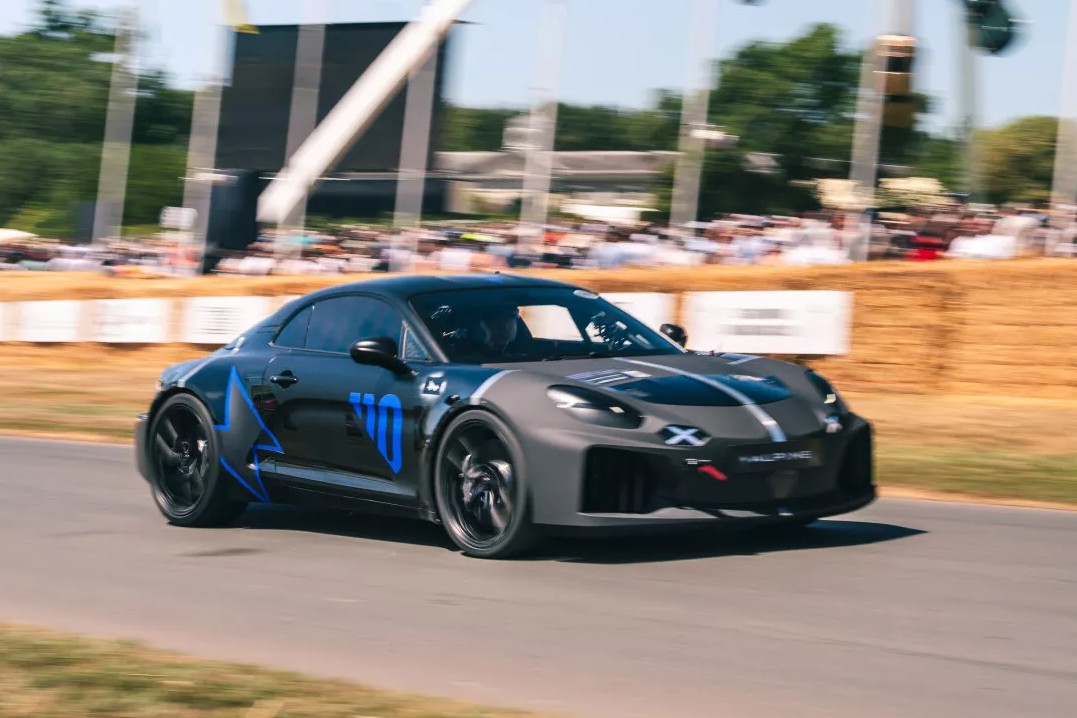
Last autumn, Alpine confirmed its plans to transform the A110 into a fully electric sports car. At the time, it was announced that the second generation of the internal combustion model would be phased out, with the third generation set to enter the market as a purely battery-electric vehicle. Now, following the end of production for the current A110 in Dieppe, its successor is taking shape. The A110 Future is Alpine’s first drivable development vehicle for the new electric generation of its iconic model.
For Alpine, electrifying the A110 is not merely another powertrain shift for one of its models. Since the brand’s return in 2017, the two-seater has embodied its core values of “lightweight design, agility, and driving pleasure”. In an interview with electrive in May this year, Amaury Marzloff, Managing Director of Alpine Germany, emphasised that the electric sports car is not a side project for Alpine but one of the brand’s central future initiatives.
The A110 Future is based on the Alpine Performance Platform (APP). This architecture was developed specifically for electric performance models and is designed to accommodate various body and drivetrain configurations. The prototype showcased features a two-seater coupé layout.
The electric powertrain of the A110 Future consists of two electric motors on the rear axle. Alpine describes these as 3-in-1 electric machines with 800-volt silicon carbide inverters and permanent magnet synchronous technology. The motors can reach speeds of up to 21,500 revolutions per minute. However, no performance data has been disclosed.
The company says the Alpine Active Torque Vectoring 2.0 and Wheel Slip Torque Control manage load shifts and torque during acceleration and deceleration, helping to reduce understeer when entering and navigating corners. Both functions are part of a comprehensive control system for brakes, steering, battery, and thermal management, which is designed to adapt flexibly to the platform’s RWD/AWD configurations.
A particularly striking feature is the battery arrangement, as Alpine is not using a conventional large battery pack but instead a split dual-battery system distributed between the front and rear axles. Twenty-five per cent of the battery energy is located at the front, and 75 per cent at the rear. This approach allows Alpine to maintain the roof height at the level of the current A110 while enabling a characteristically low sports car seating position.
The battery system operates at 800 volts and utilises Cell-to-Pack technology across two levels. The battery housing is made from high-pressure die-cast aluminium and is designed to contribute to structural rigidity. Additional features include a centralised battery management system and aluminium cable connections. Alpine also mentions a 400-volt boost charging system, though no details about its function or future charging performance have been provided, and Alpine says it is not releasing further details at this stage.
More details about the A110 will require patience. While Alpine has extensively used simulations in its development process to reduce reliance on physical prototypes and save time and costs, the specifications for suppliers were reportedly finalised before joint physical tests. A market launch date has not yet been announced.

0 Comments