




Amaury Marzloff
Director of Alpine Germany
Marzloff has been heading Alpine in Germany since September 2025. He holds French and German citizenship and brings nearly 25 years of experience in marketing and sales, including roles at Mobilize Financial Services and RCI Banque.In Germany, Marzloff reports to Florian Kraft, Managing Director of Renault Germany. Within Alpine, he reports to Marco Magnanini, Alpine Commercial Director at the group's headquarters in Paris.
linkedin.comAlpine sees its electric sports car as more than a niche project
Mr Marzloff, Alpine is a legendary sports car brand. Now that Alpine has had the opportunity to design a completely independent model for the electric era, it has not created a two-seater electric sports car but an SUV crossover. Why is that?
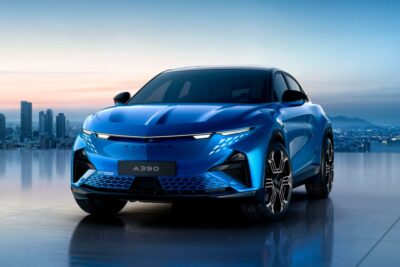
Since Alpine’s rebirth in 2017, we have very deliberately started with a clear, iconic statement to emotionally recharge and reposition the brand. With the A290 and now the A390, we are pursuing a targeted strategy to open Alpine up to new customer groups: performance-oriented, design-savvy, urban drivers who are often already experienced in electric mobility. The A390 is not a niche product for pure enthusiasts but a consciously accessible entry point into the world of Alpine, combining everyday practicality, comfort, and sporting credibility. Alpine is currently reinventing itself as a brand: by 2030, seven new models will be introduced as part of the so-called ‘Dream Garage’, translating our performance DNA into different vehicle concepts. The classic electric two-seater remains firmly part of the plan — it will arrive at the right time, with the right technology, and on a platform specifically developed for it, the APP.
How strongly is the Alpine brand established among car buyers in 2026 — let’s say outside France? The brand’s golden years are long past, and the new A110 is known mainly to car enthusiasts. And now you’re introducing a model that seems far removed from the brand’s origins.
Alpine may have been less visible outside France in recent years, but it never completely disappeared — the brand still enjoys recognition and emotional appeal, particularly among performance-oriented customers. With the A290 and A390, we are significantly expanding our target group to include people looking for a sporty, individual vehicle that stands out from the crowd. The A390 is a central element of our internationalisation strategy, as it marks Alpine’s first foray into a more volume-relevant segment without diluting the brand’s core values. Alpine customers expect performance and design but increasingly want to combine these with electric mobility, comfort, and everyday practicality. This is precisely where the A390 GTS comes in, with acceleration from 0 to 100 kilometres per hour in 3.9 seconds. Classic Alpine virtues such as a lightweight driving feel, intuitive handling, and a certain French flair remain central.
Within the Renault Group, it makes sense for a third brand to cover the premium segment alongside Renault as the volume brand and Dacia as the budget brand. But wouldn’t it have been easier to establish a new brand rather than revive Alpine, which has faded from memory in many markets?
Alpine possesses something that cannot be artificially created: a credible motorsport history and a clearly recognisable DNA cultivated over decades. Our task is not to preserve this history but to translate it into the future and reinterpret it in a contemporary way. Electric mobility is not a break with the past but a new means of expressing Alpine’s core values, such as precision, agility, and driving pleasure. In France, Alpine has never faded from memory and enjoys strong emotional roots, which we are gradually bringing to Germany. The story of Jean Rédélé, his passion for driving in the Alps, and the brand’s origins form the cultural core that we are modernising and taking international.
How do you strike a balance in marketing between building something new and integrating the brand’s heritage? Many of Alpine’s original fans likely have little interest in electric vehicles.
We think of Alpine not in nostalgic terms but in terms of principles: for us, brand heritage does not mean petrol, noise, or retro design, but lightness, precision, and immediate driving pleasure. Electric mobility does not conflict with these values — in fact, characteristics such as instant power delivery, a low centre of gravity, and precise torque distribution enhance this driving experience. Technologies like Active Torque Vectoring, an almost ideal weight distribution, and direct steering enable a highly agile driving feel, even with a vehicle weight of around two tonnes. Our ambition is to create a driving experience with electric vehicles that feels intuitive, nimble, and emotional — regardless of the powertrain.
Alpine currently offers three models — the A110 as a petrol-powered car, the A290 as a dynamic version of the electric Renault 5, and now the A390 as an independent electric model. How will the portfolio evolve?
As part of the electric ‘Dream Garage’, we are expanding our portfolio to seven model ranges by 2030. The A290 represents urban, emotional performance, while the A390 is the sporty all-rounder that combines everyday practicality and dynamism. The emotional heart of the brand will be a fully electric successor to the A110, based on the specially developed Alpine Performance Platform (APP). The portfolio will be complemented by additional models, such as an elegant four-seater coupé (A310), which will bring our sporting DNA to a new segment and further enhance the brand’s appeal.
What role does an electric sports car play for Alpine? Porsche is struggling with the electric Boxster. Could Alpine capitalise on this?
The electric sports car is no side issue for Alpine but one of the brand’s central future projects. Our definition of sportiness is not based on top speed or pure performance figures but on agility, precision, direct responsiveness, and emotional control. With the Alpine Performance Platform, we are specifically developing battery-electric sports cars that highlight these qualities. The electric successor to the A110 will enter the market when technology, battery density, weight, and cost come together in a compelling package. Our goal is not to be the first, but to do it right — consistently in line with the brand’s ethos.
Is the technology already advanced enough to build an attractive electric sports car that doesn’t cost a fortune?
Technological development in electric mobility is advancing rapidly, and battery-electric sports cars are fundamentally feasible today. For Alpine, however, the key is ensuring that performance, range, weight, and driving feel are in a balanced ratio. Thanks to the economies of scale within the Renault Group and our own platform strategy, we can deploy high-performance technology without completely decoupling price structures from the market. A battery-electric Alpine must feel lightweight, inspire emotionally, and remain practical for everyday use — only then does it make sense both technically and economically.
Mr Marzloff, thank you for the conversation!

1 Comment