


Dublin Airport introduces Ireland’s first pantograph chargers for electric buses
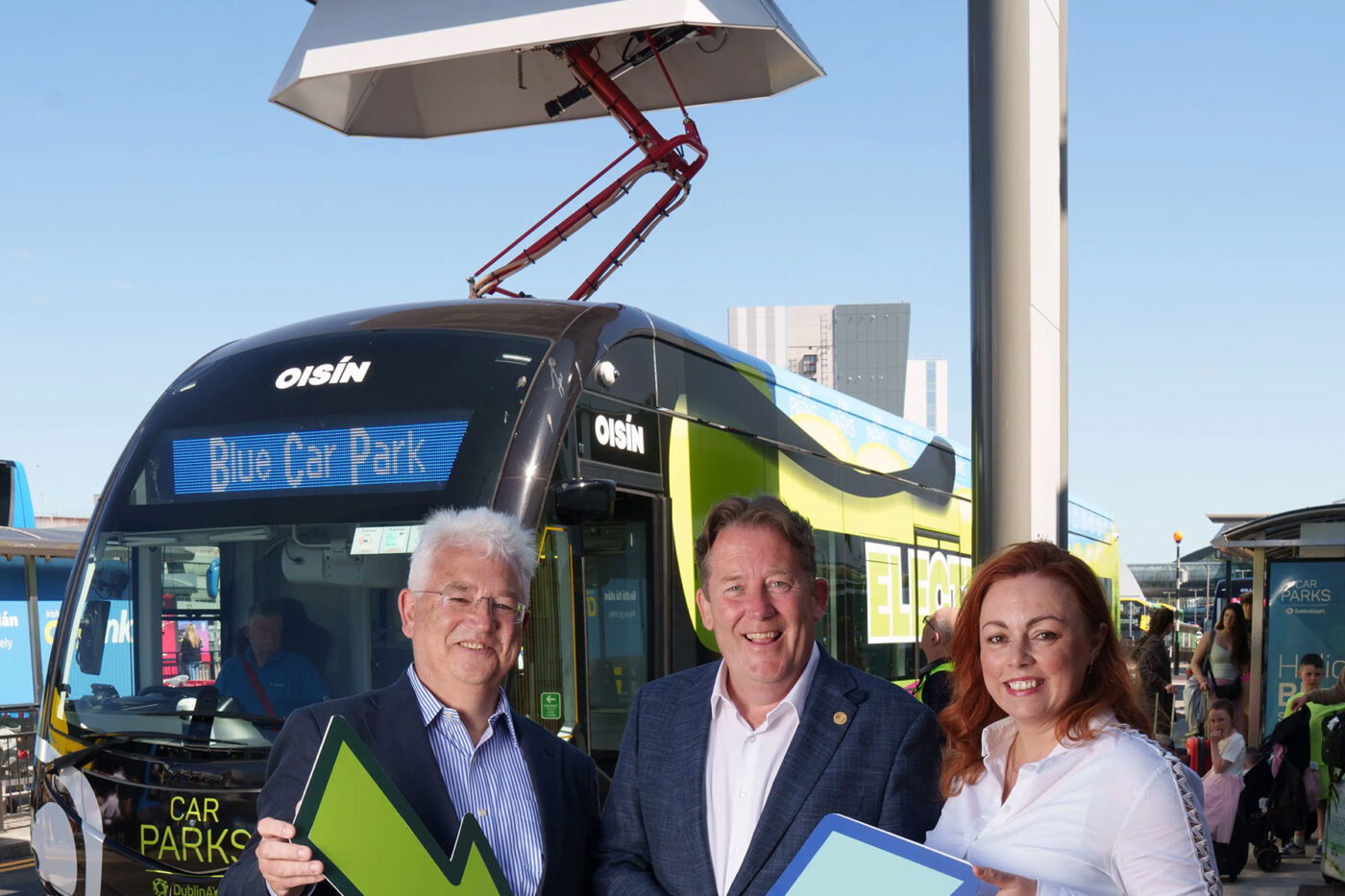
Airport operator daa has commissioned a new pantograph charging system at Dublin Airport to support the introduction of 14 zero-emission shuttle buses operated by Aircoach. The infrastructure is Ireland’s first of its kind and enables buses to recharge during scheduled route stops rather than relying solely on depot charging.
The pantograph system enables rapid charging at the end of the shuttle routes, allowing buses to recharge during scheduled stops rather than returning to a depot during the day. The technology is designed for high-frequency routes and helps reduce downtime while improving service reliability.
The new electric shuttle fleet can carry up to 120 passengers per journey and serves around 2.5 million passengers annually travelling between Dublin Airport’s car parks and terminal buildings. In addition to the pantograph chargers, a dedicated seven-bay depot charging facility provides overnight and backup charging capacity.
€17 million investment supports airport electrification
The investment includes the pantograph infrastructure as well as major voltage upgrades required for the charging system. Part of the funding comes from a €4.7 million grant from the European Commission through the Connecting Europe Facility – Alternative Fuels Infrastructure Facility (CEF AFIF).
The project forms part of the wider Dublin Airport Campus Electrification (DACE) programme, which includes additional electric vehicle charging infrastructure aimed at reducing emissions across the airport campus.
Aircoach has invested a further €11 million in the electric bus fleet. According to daa, replacing diesel buses with electric vehicles will reduce carbon emissions by more than 1,470 tonnes of CO₂e annually.
Vincent Harrison, daa Chief Commercial and Development Officer, explained: “Dublin Airport is delighted to be the first location in Ireland to harness the benefits of fast, pantograph charging for our electric shuttle buses. This type of charging is well suited to high-frequency fixed routes, enabling smaller batteries and fast ‘opportunity’ charging instead of lengthy depot charging. This means cleaner, quieter and more reliable journeys for passengers.”
Electric fleet forms part of wider decarbonisation strategy
The transition of airport vehicles to electric power is part of daa’s broader sustainability strategy. Andrea Carroll, daa Director of Sustainability, highlighted: “Decarbonising our airport vehicles is a key part of daa’s ambitious sustainability strategy. The conversion to electric fleet will reduce the carbon impact of passenger journeys to and from the airport, complementing other initiatives across the airport campus and increasing the resilience of our fleet.”
Dublin Airport has received certification at ACA Level 4+ for carbon management and is continuing to expand the use of lower-emission technologies across its operations. The airport said that 82 per cent of its light commercial fleet, including cars and vans, has already transitioned to low-emission vehicles, while its entire heavy vehicle fleet has moved away from diesel towards hydrotreated vegetable oil (HVO) or electric power.
The airport is also supporting wider transport decarbonisation projects, including MetroLink and BusConnects, which are intended to reduce passenger emissions when travelling to and from Dublin Airport.

0 Comments