

EU presents action plan for securing critical raw materials
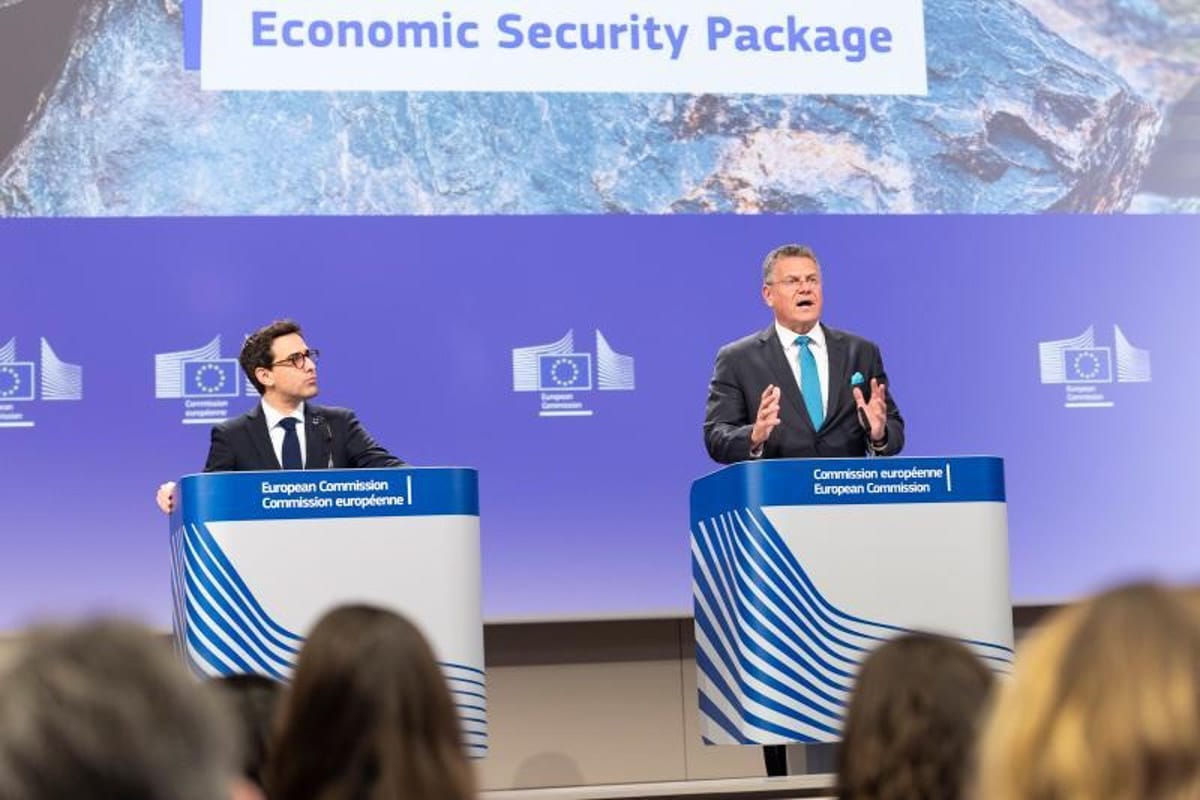
Building on the Critical Raw Materials Act, the initiative aims to provide funding and concrete tools “to protect industry from geopolitical and price shocks, promote projects on critical raw materials in Europe and beyond, and partner with like-minded countries to diversify supply chains,” as stated by the Commission. Over the next twelve months, EU funding totalling three billion euros will be made available for specific projects.
This funding is intended to accelerate EU-relevant projects by “mobilising financial de-risking tools.” It is also noted that the three billion euros will be used to “provide alternative supplies in the short term.” The measures are therefore not solely focused on domestic extraction projects, as these often take many years to progress from planning to operational status.
In addition to financial support, the Commission has announced plans for “removing regulatory bottlenecks,” targeting factors that contribute to important projects being implemented very slowly in the EU, if at all.
“The Commission, European Investment Bank and Member States are already unlocking financial support for priority projects, such as for the Vulcan’s lithium extraction project in Germany, and the Greenland Resources’ Malmbjerg molybdenum project,” the statement reads. “The Commission will further pursue win-win investment projects under Global Gateway with emerging markets and developing economies.” Here, too, a balance between financial support and regulatory simplifications is to be struck.
One of the concrete measures is the establishment of a ‘European Critical Raw Materials Centre’ in early 2026. This centre will “provide market intelligence, steer and finance strategic projects using tailored instruments with private and public partners, and act as portfolio manager for diversified and resilient supply chains, including through joint purchasing and stockpiling.” Additionally, work is underway with Member States on a coordinated EU strategy for the stockpiling of critical raw materials, with a pilot project set to launch in early 2026.
However, the action plan goes beyond mere promotion. To protect the EU single market and strengthen supply chain resilience, the plan includes “monitoring, crisis coordination and defence against hostile interference.” In the second quarter of 2026, the Commission aims to “tighten safeguards against harmful foreign influences and leverage the EU’s market power to enhance resilience.” Restrictions on the export of scrap and waste from permanent magnets are also proposed to bolster Europe’s recycling capacity. In spring 2026, the Commission plans to introduce export duties on aluminium scrap and potentially copper.
To bring more critical material supply chains into the EU while simultaneously diversifying them, partnerships with “like-minded countries” are planned. Collaborations are envisaged with Brazil and Canada, for example. “The EU is also working on dedicated investment frameworks for integrated critical raw materials value chains with Ukraine, Western Balkans and its Southern Neighbourhood,” the statement adds.
This article was first published by Sebastian Schaal for electrive’s German edition.
0 Comments