

Candela P-12 electric hydrofoil arrives in Norway
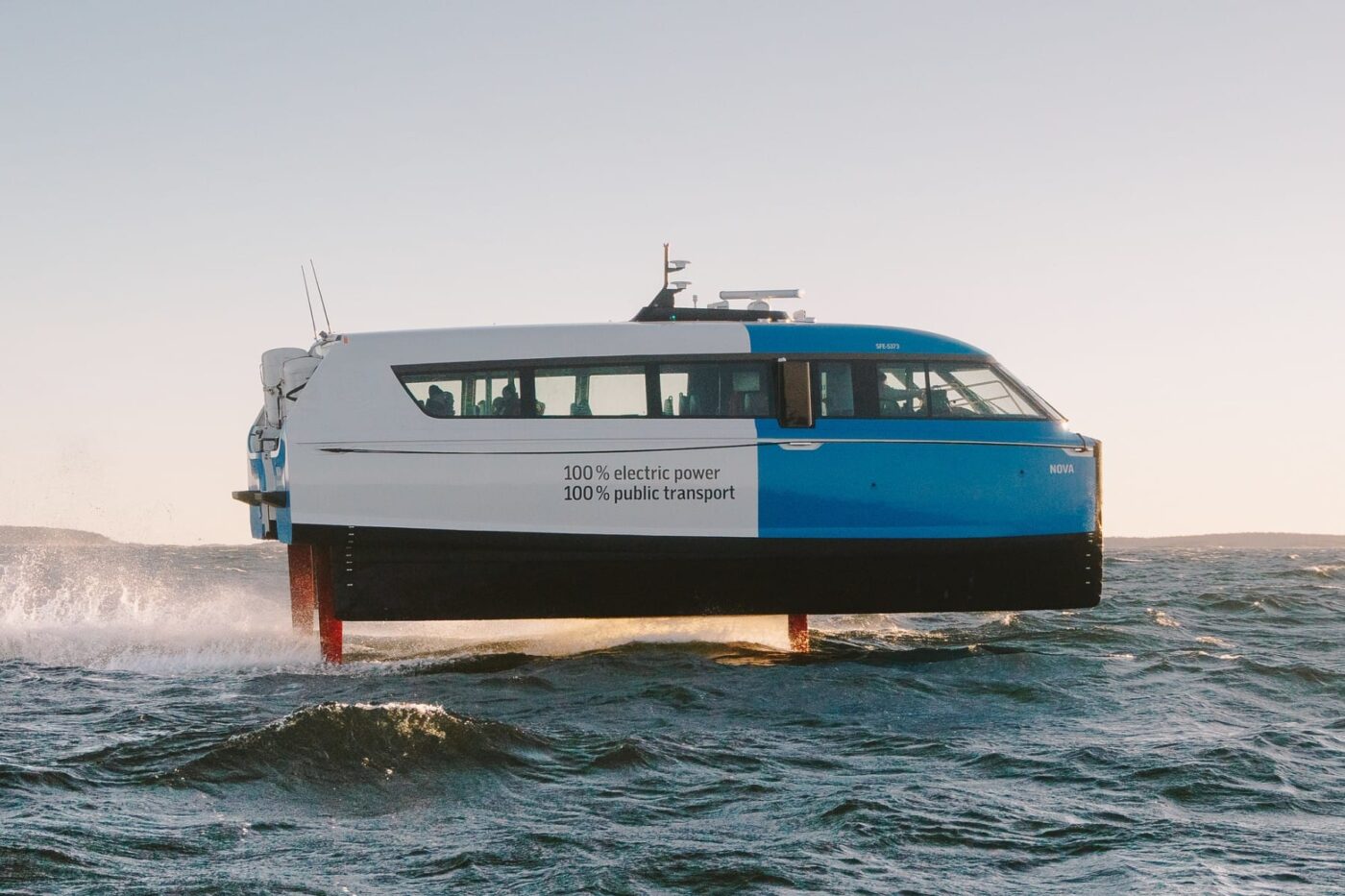
The Candela P-12 is known for its hydrofoil technology: the vessel’s hull is lifted one metre above the water’s surface by hydrofoils, producing almost no noise at a cruising speed of 25 knots (46 km/h). This makes it appear as if the electric boat is flying over the water.
In Stockholm, this innovative mode of transport has been in use for commuters since last year, ferrying passengers from Ekerö, the fastest-growing island suburb of Stockholm on Lake Mälaren, to the city centre 15 kilometres to the east. Candela recently announced that the Candela P-12 will also be deployed in Stockholm’s archipelago, a sprawling collection of thousands of islands extending east from the city centre to the open Baltic Sea.
This model could also prove transformative for the greater Trondheim area. As part of the Frostabåten project—a collaboration between property developers, the Norwegian University of Science and Technology (NTNU), and regional and municipal authorities—the Candela P-12 will operate on a trial basis between Frosta Brygge, north of the city, and Trondheim itself from mid-December to the end of January.
The Frostabåten project is temporarily reviving a ferry service on this route, which was discontinued in 1970 after briefly operating with a diesel-powered PT-20 hydrofoil ferry in its final year. While that vessel offered fast travel times, it proved too costly to operate. The Candela P-12, with its high cruising speed and range, aims to build on this legacy while addressing modern commuter challenges—not only in Trondheim but potentially in other regions of Norway as well.
Norway’s fjords carve deep into the landscape, making the shortest route often a direct crossing by water—yet suitable ferry connections are rarely available. Take Frosta, for example: a newly built coastal community with sweeping views of the fjord. The journey by car or bus to Trondheim’s city centre takes around 90 minutes. With the Candela P-12 crossing the fjord, the trip is reduced to just 30 minutes, saving commuters roughly two hours each day.
“We’re bringing flying boats back to Trondheim — but this time they are electric, whisper quiet, and vastly more efficient,” said Alexander Sifvert, Head of Candela’s European operations. According to the company, the P-12’s efficiency could also resolve a bottleneck that has hindered Norway’s ambitious electrification of its diesel ferry fleet. Despite national targets for emission-free fjords and strong political support, electrifying high-speed routes has proven challenging. Conventional electric fast ferries with traditional hulls consume too much energy, require expensive megawatt-scale charging systems, and still offer limited range. The P-12, however, is charged using a cost-effective and mobile DC fast charger similar to those used for electric cars.
0 Comments