
CATL to sharpen focus on sodium-ion batteries
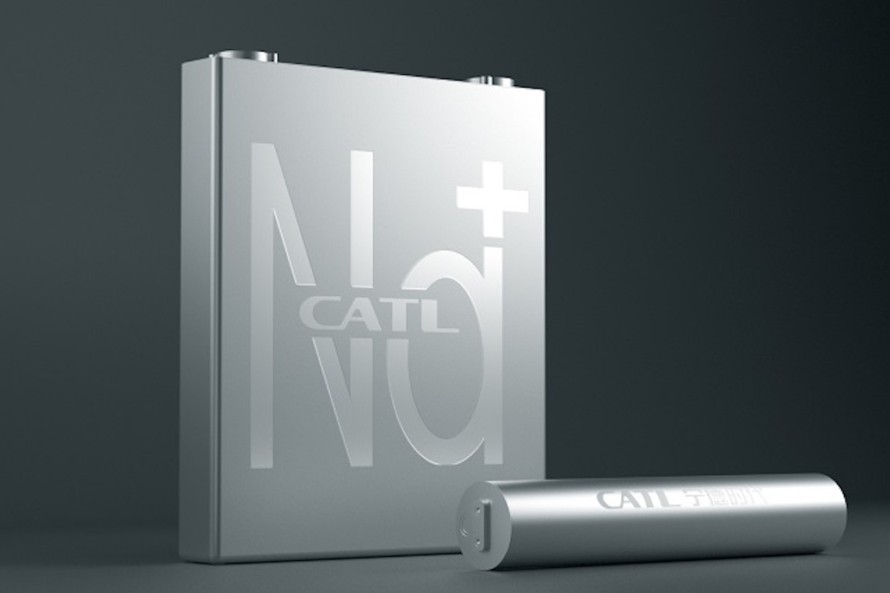
CATL aims to grow its sodium-ion battery business. As announced at a supplier conference, sodium-ion batteries will be deployed on a large scale starting this year in battery swap stations, passenger cars, commercial vehicles, and stationary energy storage systems.

Catl na ion batterie
Image: CATL

One of the key reasons for the increased focus on sodium-ion batteries is the sharp rise in lithium prices, which is driving up the cost of current lithium-ion batteries. Chinese outlets report that, at a conference in Ningde with its suppliers, CATL has now made it clear that sodium-ion and lithium-ion batteries will form a new ‘Dual-Star’ trend in the future.

CATL was one of the first battery manufacturers to introduce its own sodium-ion battery in mid-2021. The first generation reportedly achieved an energy density of 160 Wh/kg. In 2024, a further generation with 200 Wh/kg was announced. For comparison: lithium-ion batteries with liquid electrolyte are limited to around 350 Wh/kg. In April 2025, CATL introduced its new sodium-ion battery brand Naxtra at its Tech Day and has since been marketing the so-called Naxtra battery for passenger cars with an energy density of up to 175 Wh/kg.

Sodium-ion batteries are increasingly being highlighted as an alternative as lithium prices rise. As the price curve had remained relatively low recently, manufacturers had held back. However, in China, the prices for battery-grade lithium carbonate have surged by over 50 percent in the past three months—reaching more than 110,000 yuan (€14,000 euros) per tonne. This has already led some domestic lithium iron phosphate (LFP) manufacturers to halt production, as customers are apparently unwilling to absorb the cost increases.
cnevpost.com, carnewschina.com

2 Comments

about „CATL to sharpen focus on sodium-ion batteries“
Rein
02.01.2026 um 17:04
While comparing energy density to the highest (most expensive) 350 Wh/Kg NCM based chemistries is needed, the better comparison is to the widely available LFP chemistries. LFP batteries available currently in vehicles are in the 150-200 Wh/Kg. CATL’s 175 Wh/Kg is not as energy dense at its leading 205 Wh/Kg LFP batteries. However it is as good as many of LFP being used in vehicles today. All while buffering its supply chain from the volatile Lithium market. Also to consider are the advantages of sodium ion at the pack level due to better thermal & gas release characteristics, which can allow for less complex & lighter pack requirements. Similar to how LFP pack level requirements compare to NCM to help offset some the cell level energy density between them.
William Tahil
07.01.2026 um 15:30
So the price of lithium is just coming back to a level that makes existing production in Chile and Australia profitable and immediately Chinese LiFePO4 manufacturers are halting production? If the rest of the world wants to break free of Chinese EV dominance - in other words, still have a car industry - they need to decouple from Chinese dictated lithium prices.

Leave a Reply to William Tahil Cancel reply

Your email address will not be published. Required fields are marked *